
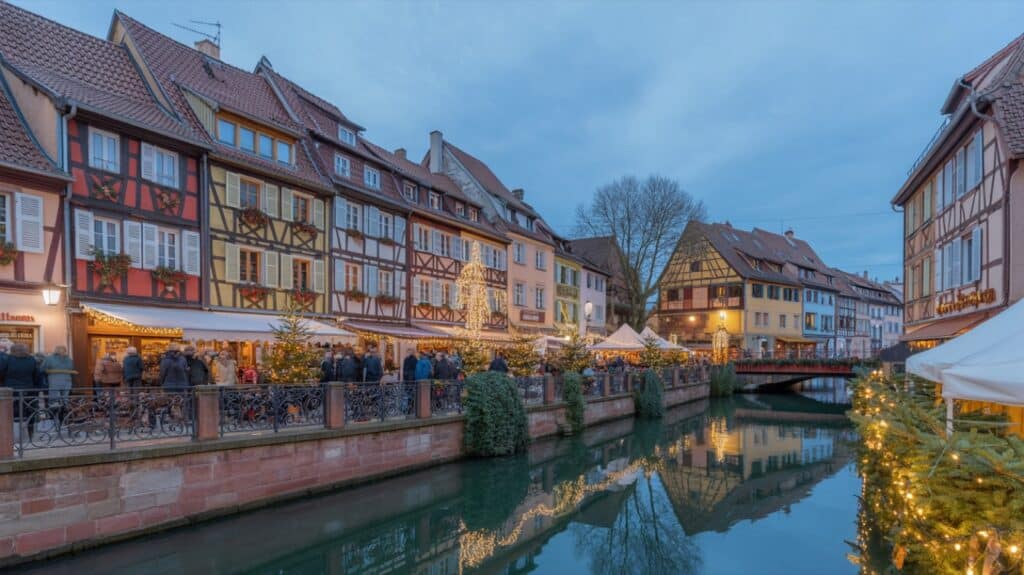
 Illustrative image
Christmas market weekend in Alsace: Colmar and around
A Christmas market weekend in Alsace based around Colmar fits into two full days, or three if you add Friday evening. The town has several markets in its historic centre, and the villages of the Wine Route (Kaysersberg, Riquewihr, Eguisheim, Ribeauvillé, Turckheim) are all within easy reach. Enough to put together a tight itinerary, with or without a car, over a Friday evening, a Saturday and a busy Sunday. For a longer trip, the article Planning a trip to Alsace, the land of Christmas sets out a three to four-day itinerary starting from Strasbourg; this one stays focused on Colmar and the surrounding area.
Planning a Christmas market weekend in Alsace, around Colmar
Colmar Christmas market opens on 23 November and closes on 29 December 2026. The town doesn't have one market but six, spread across the historic centre: around Place de l'Ancienne Douane, in the Little Venice quarter, on Place Jeanne-d'Arc and the neighbouring squares. You can walk round all of them without a complicated map, which makes a short weekend easy to organise. A couple or a family coming from Paris, Lyon or northern France can fit this plan into two full days, arrive on Friday evening to gain a few hours, or make do with a Saturday-Sunday round trip if the calendar doesn't allow more.
The chalets sell bredele, wooden decorations and gingerbread; for the history of these little Alsatian biscuits and their most common recipes, the magazine has an article on bredele. To warm up, there's mulled wine on almost every street corner: the magazine looks at the different kinds of mulled wine and says where to find the recipe to make it at home. For savoury specialities, the magazine's article on Alsatian Christmas specialities covers the classics you'll find on the stalls, from pretzels to choucroute sold in small portions.
Friday evening: arrive and get a feel for the market
The direct Paris-Strasbourg-Colmar line gets you to the town by TGV without changing, in the late afternoon or evening depending on the train you choose. From Lyon, the route goes via Strasbourg or Mulhouse, with one change. Colmar station is a few minutes' walk from the historic centre, so there's no need to hunt for a taxi when you arrive on a December evening.
On a Friday evening in Advent, the chalets stay open late enough for a first loop around the centre: a mulled wine, a stroll through the illuminated Little Venice quarter, dinner in a winstub before heading to bed. Winstubs often have a short menu built around choucroute, baeckeoffe or tarte flambée, a safe bet for a first dinner without searching for long. This first taste sets the tone for the weekend, with no pressure to see everything on arrival, since Saturday and Sunday are still ahead of you.
Saturday: Colmar in the morning, the Wine Route in the afternoon
Saturday morning is a good time to see Colmar market again in daylight, at a more relaxed pace than the evening before: the decoration and craft stalls are easier to browse, and it's often the right moment to buy bredele to take home. In the early afternoon, two villages on the Wine Route can be reached by train or car.
Kaysersberg
The village is the birthplace of Albert Schweitzer, and its Christmas market is laid out around the castle and the river that runs through the centre. The steep lanes climbing towards the vineyards offer a different view over the rooftops, covered in snow in the years when it settles. The site's Kaysersberg Christmas market page details where the chalets are and the entertainment on offer.
Riquewihr
Its ramparts and colourful half-timbered houses make Riquewihr a classic stop on the Wine Route, Christmas market or not. Rue du Général-de-Gaulle has most of the chalets, between winegrowers' shops and craft stalls. The Riquewihr Christmas market page gives details of the village's chalets and opening hours.
Sunday: Eguisheim, Ribeauvillé and Turckheim, or the Munster valley
Sunday means making a choice: take in a third and fourth village on the Wine Route, or head to the Munster valley for a different kind of lunch before catching the train or hitting the road at the end of the day.
Eguisheim, Ribeauvillé and Turckheim
Eguisheim, built in concentric circles around its former castle, can be visited in a short morning: in December, the lanes that are full of flowers in summer give way to facades decorated with garlands and fir trees. Ribeauvillé is laid out along its Grand-Rue, with three castles on the hill above the village, visible from several points in the centre. Turckheim, more modest, still has its historic night watchman and a small market, a good choice to finish the morning without rushing. The Eguisheim Christmas market, Ribeauvillé Christmas market and Turckheim Christmas market pages explain how each one is organised.
The Munster valley and the repas marcaire
For a break from the markets, the Munster valley has farm inns (fermes-auberges) serving a traditional repas marcaire: meat pie, roïgabrageldi (potatoes and bacon), Munster cheese and blueberry tart. The word “marcaire” refers to the valley's cattle farmers, who took the cows up to the high pastures in summer; the farm inn carries on this rural tradition with a hearty meal served in a rustic setting. Many of these farms cut their hours in winter, and some close outside the hiking season: a phone call and a booking before driving up will save you from finding the door shut.
| Village | What makes it stand out | Site page |
|---|---|---|
| Kaysersberg | Birthplace of Albert Schweitzer, castle and river in the centre | Kaysersberg |
| Riquewihr | Ramparts and colourful half-timbered houses | Riquewihr |
| Eguisheim | Village built in concentric circles | Eguisheim |
| Ribeauvillé | Grand-Rue and three castles on the hill | Ribeauvillé |
| Turckheim | Historic night watchman, compact market | Turckheim |
Nearby attractions if you extend the weekend
The two-day plan works on its own, but a few extra stops fit in well if you arrive early on Friday or have a bank holiday Monday next to the weekend. Several excursions slot into a slightly longer programme, as long as you check current opening times before setting off: between winter closures and school holiday periods, schedules vary from one attraction to another.
- Europa-Park is less than an hour's drive from Colmar, over the German border: a paid theme park, best planned as a full day rather than a quick detour. Details are on the site's Europa-Park page.
- Haut-Kœnigsbourg castle stays open for much of the winter, with reduced hours at this time of year; some years, it hosts Christmas-themed events. Check the monument's calendar before you go, as dates change from one year to the next.
- The Parc du Petit Prince in Ungersheim usually ends its season before winter: opening in December isn't guaranteed from one year to the next. Confirm on the park's website before adding it to your plans.
- Strasbourg can be reached by TER regional train from Colmar without changing, during the day or in the evening to see its own market. The Strasbourg Christmas market page gives you an idea of what awaits you there.
- The Écomusée d'Alsace, near Ungersheim, recreates a traditional Alsatian village from half-timbered houses dismantled and rebuilt on the site. The Écomusée d'Alsace page details the visit and its winter arrangements.
Ungersheim alone has two of these stops, the Écomusée and the Parc du Petit Prince, so you can group them into a single car trip from Colmar rather than making several journeys.
To see how these stops relate to one another and find other markets in the region, the magazine's selection of Christmas markets in Alsace widens the focus to the whole region.
Getting there and around without a car
This corner of Alsace is well served by train. Colmar can be reached by direct TGV from Paris, without changing, via Strasbourg. Once there, TER trains on the Strasbourg-Sélestat-Colmar-Mulhouse line link Strasbourg, Sélestat and Mulhouse at regular intervals, handy for a day trip without needing a car.
For Wine Route villages not served by rail, there are regular bus routes during the day; some years, extra shuttles run during Advent between Colmar and the neighbouring villages, though this isn't guaranteed from one year to the next: Colmar tourist office can confirm whether this service will run in 2026. Without a confirmed shuttle, a return trip by regular bus or a car share arranged from your accommodation remains the safest way to reach Kaysersberg, Riquewihr or Eguisheim on a day when your schedule doesn't leave time to walk.
For parking, the town has park-and-ride car parks on the outskirts, a useful option on days when the centre is full. Within Colmar, everything is done on foot: you can cross the historic centre from end to end without transport, which makes the car almost unnecessary once it's parked.
Where to stay around Colmar
Two approaches work equally well for this weekend. Staying in Colmar itself, ideally near the centre or the Little Venice quarter, lets you go from the evening market to the morning market without transport. Staying in a village such as Eguisheim or Obernai (a little further north, on the way to Strasbourg) changes the pace of your days and puts you right on the Wine Route.
Hotels in Colmar's historic centre cover a wide range, from family-run guesthouses to rated hotels, with mostly small establishments rather than big chains. B&Bs in the villages often offer a compromise between the charm of a half-timbered house and quick access to the surrounding vineyards. Prices rise sharply on Advent weekends, and availability soon gets tight at the charming places in the historic centre: booking several weeks ahead is the most useful habit, whatever option you choose.
Weekend budget for two
A Christmas market weekend in Alsace breaks down into four main items:
- Transport: return train ticket, or fuel and tolls for a car journey from Paris, Lyon or northern France.
- Accommodation: one or two nights in Colmar or in a Wine Route village, depending on the option chosen above.
- Meals: a winstub on the first evening, possibly a farm inn in the Munster valley, and market food (pretzels, flammekueche, sausages) the rest of the time.
- Shopping on site: mulled wine, bredele, wooden decorations, local crafts bought at the chalets.
Prices vary a lot depending on when you book and the type of accommodation; with no precise figure to give here, the most reliable guide is to compare offers when you book rather than rely on a general estimate. A stay on weekdays, avoiding December Saturdays, almost always costs less than an Advent Saturday at the height of the season. Two days are enough for a first taste of Colmar and the Wine Route, but the plan is easy to extend if you have more time: the article Planning a trip to Alsace, the land of Christmas starts from Strasbourg over three to four days and covers a wider area of the Alsace region. To vary your hot drinks at the market, the article on mulled wine variations goes beyond the classics you'll already have tried in Colmar's chalets.
Where to stay near the markets mentioned
Availability with our partners, town by town.
Reviewed and approved by the editorial team
A question, a mistake or a problem on this page? Write to us
Also worth reading
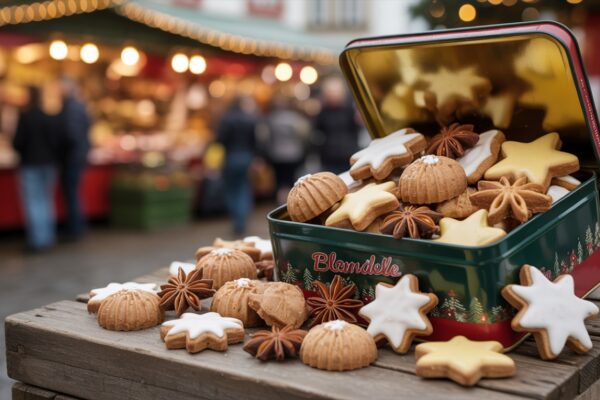
Bredele, the little biscuits that make an Alsatian Christmas
Bredele are to an Alsatian Christmas what the tree is to the living room: a given. From late November onwards, kitchens across Alsace smell of…
Read the article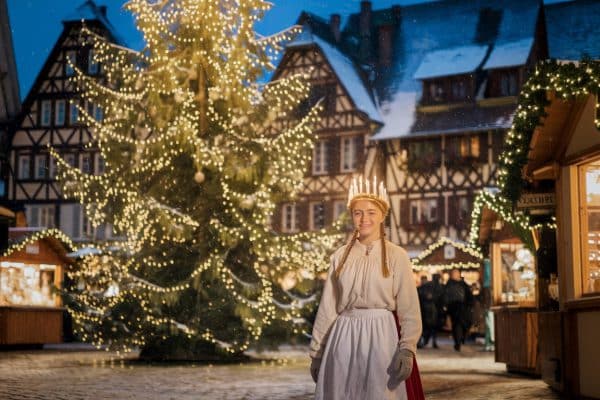
5 traditions to know before you visit
From medieval origins to today's markets Christmas markets date back to the 14th century, in the German-speaking towns of central Europe. In France, it is…
Read the article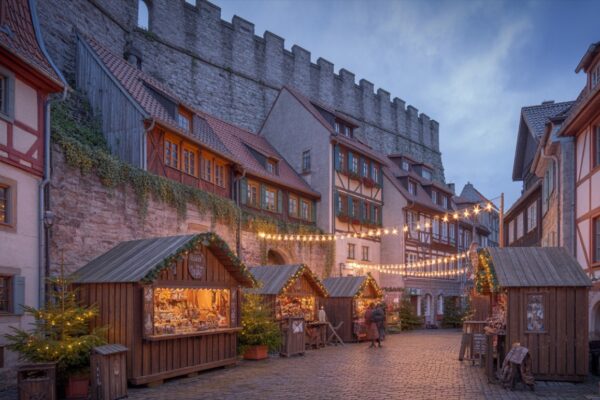
The Most Beautiful Medieval Christmas Markets in France
Our pick of the most beautiful medieval Christmas markets in France: Provins, Carcassonne, Ribeauvillé, Sarlat and the fortified towns of Alsace.
Read the article