
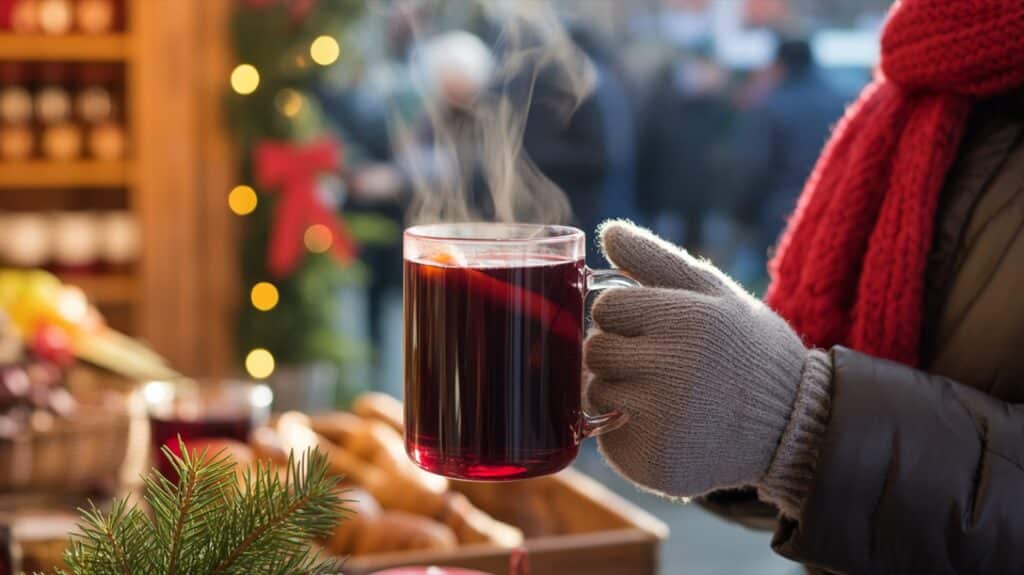
 Illustrative image
 Mulled Wine and Its Variations, from Alsace to Scandinavia
Mulled wine is the drink that unites every Christmas market in Europe, from the Alsatian chalet to the Berlin stall, by way of the tables of the far north. Each country puts its own stamp on it: a blend of spices, a grape variety, sometimes a flame. The same gesture, holding a steaming cup in both hands in front of a wooden chalet, takes a different form depending on where you set foot. This article gives no recipe, as that is the territory of our partner site recette-vin-chaud.com; instead, it tells how one and the same idea, wine warmed and spiced, changes from one country to the next, sometimes to the point of doing without wine altogether. A tour of Europe that follows borders as much as habits, from the banks of the Rhine to the Scandinavian fjords.
| Drink | Country | Base | Distinctive feature |
|---|---|---|---|
| Glühwein | Germany | Spiced red wine | Mug with a deposit |
| Alsatian mulled wine | France (Alsace) | Red wine, sometimes white with Gewurztraminer | Served at the Christkindelsmärik |
| Glögg | Sweden, Denmark, Finland | Spiced red wine | Flaked almonds and raisins |
| Luxembourg mulled wine | Luxembourg | Spiced red wine | Mug with a deposit, as in Germany |
| Punsch | Austria | Juice, spices and spirits | Sweeter, not based on pure wine |
| Feuerzangenbowle | Germany | Mulled wine and flaming rum | The spectacle of the flame |
| Hot cider | France (West) | Cider | Regional alternative to wine |
A drink that goes back to the Roman Empire
Long before it was linked to Christmas markets, heated spiced wine already had a much older history. The Roman cook Apicius describes, in his collection De Re Coquinaria, a wine with honey and spices called conditum paradoxum, already enjoyed under the Roman Empire. It served mainly to mask the taste of oxidised wine, at a time when keeping wine was a hit-and-miss affair. Salt, pepper and cinnamon were worth a fortune back then, and drinking spiced wine was more a way of displaying your social rank than of simply warming up. That same need to fix a wine that was too sour or badly kept runs through several centuries, before it became a pleasure sought for its own sake, far removed from any necessity.
In the Middle Ages, the recipe grew sweeter: the texts of Chrétien de Troyes, in the 12th century, mention “piment”, a sweetened, scented wine. Around 1390, people spoke of hippocras, supposedly in honour of Hippocrates. Montpellier became a recognised trading centre for it as early as 1249, thanks to the port of Lattes and its imports of spices from the East: the city even supplied the table of King Henry III of England. This trade route explains why mulled wine long remained a festive drink reserved for wealthy tables, before becoming the drink of the many at today's markets. In France, in the 19th century, the drink took the name “vin à la française”, served hot and flavoured with cinnamon in inns.
German Glühwein and its deposit mug
In Germany, mulled wine is called Glühwein, meaning “glowing wine”. It is the go-to drink at German-speaking Christmas markets, served in a ceramic or glass mug decorated in the town's colours. The mug works on the same principle almost everywhere: a deposit is added to the price of the drink, and customers then choose either to return it to the stall for a refund or to keep it as a souvenir.
The design changes every year at some markets, which prompts some regulars to come back each season to complete their collection. The habit is firmly rooted locally: nobody is surprised to see a customer walk off with their mug under their arm instead of handing it back at the counter. The ritual exists in Cologne as much as in Nuremberg, two of the German markets most popular with visitors from abroad. Many visitors go home with a collection of these mugs, built up market after market, without even meaning to at first. Some markets even offer a different mug for each week of Advent.
Alsatian mulled wine, red and white with Gewurztraminer
In Alsace, the red version still dominates at the stalls, spiced with cinnamon, cloves and orange peel, in the tradition of the Christkindelsmärik in Strasbourg. A white variation also exists, made with Gewurztraminer, the emblematic grape of the Alsace vineyards, rounder and less acidic than its red cousins. The choice reflects local wine production: Alsace has grown Gewurztraminer for a long time, and serving it hot is a way of showcasing a local grape rather than importing just any red wine. It is often served in a clear glass rather than the German ceramic mug, so you can see the colour of the wine before you even taste it.
Stalls that serve it usually announce it on a chalkboard, next to the classic red, so you can choose at a glance. You will find this white version at several markets in the wine country, in Colmar as in the neighbouring wine villages, where wine is part of the scenery all year round. Alsatian mulled wine often goes with gingerbread or a few bredele, to nibble as you walk between the chalets.
Scandinavian glögg, a royal tradition
Head to the far north for another version, glögg. The tradition goes back to the 16th century: King Gustav I of Sweden had a spiced wine made with Rhine wine, sugar, honey, cinnamon, ginger, cardamom and cloves. The drink won popular favour around 1600 and took its current name, which means “heated wine”. From the 1890s, Swedish merchants sold ready-made versions in decorated bottles, so that everyone could heat it up at home.
Denmark says gløgg, Finland glögi: three spellings, one family. At Scandinavian markets, glögg is often served with flaked almonds and raisins at the bottom of the glass, a habit Germany and Alsace do not share. In Sweden, the drink also goes beyond the Christmas market: it features on the festive table too, served before dinner, whereas in Germany or Alsace it remains mostly linked to the open-air market stalls. Some versions are fortified with a dash of brandy or aquavit, poured just before serving, to make the warmth last once the cup is empty.
Mulled wine in Luxembourg and Austrian Punsch
Luxembourg also serves its own version of mulled wine at the markets in the capital, Luxembourg City, with the same deposit mug system as its German neighbour. Further south, in Austria, the hot drink of choice is called Punsch. It plays a role similar to Glühwein at the markets in Vienna or Salzburg, but stands apart because of its base: closer to a mix of juice, spices and spirits than to pure wine. The base sometimes varies from one stall to the next, with no single rule, which is exactly why it is worth trying several at the same market.
The result is sweeter, almost syrupy, and comes in colourful versions depending on the stall. At a single Austrian market, several kinds of Punsch sometimes line up on the same counter, one orange, one redder, another almost brown, each with its own blend of spices and its own name, enough to baffle a visitor who came looking for a simple classic mulled wine.
Feuerzangenbowle, a spectacle above all
At some German markets, one stall stands out with a bluish flame: the Feuerzangenbowle. Above the mulled wine, a rum-soaked sugarloaf burns on its tongs and the caramel dripping from it flavours the drink: people come as much to watch as to drink. The tradition was born in the 18th century, after the arrival of sugar imported from the colonies, and German student fraternities adopted it in the 19th century under the name Krambambuli.
Its popularity took off again after the Second World War, driven by a film that became a cult classic, Die Feuerzangenbowle (1944), starring Heinz Rühmann: around Christmas or New Year's Eve, it is still regularly shown on German television. The taste is reminiscent of Danziger Goldwasser, a herb and spice liqueur with flakes of gold. The show often draws a small crowd while the flame dies down and the sugar finishes melting into the wine: some stalls offer the version in an individual mug, while others keep the preparation for a large bowl shared between several people. It is as much a performance as a drink.
Hot cider, apple juice and alcohol-free versions
Wine is not the only possible base. In western France, several markets replace wine with local cider, a logical alternative in apple country. Hot cider follows the same idea as wine, warmed with cinnamon and sometimes a touch of honey, without ever becoming a step-by-step recipe here. If you are looking for an alcohol-free break, or a drink made with children in mind, several options come up from one market to the next:
- Hot cider: the regional version of warmed wine, served mainly in western France. It is heated with cinnamon, sometimes with a hint of honey.
- Hot apple juice: spiced like mulled wine, without the fermented base, made with children in mind. The gesture stays the same, a hot cup held in both hands in front of the chalet.
- Alcohol-free mulled wine: grape juice and spices, offered at most chalets next to the classic version. Stalls usually mark it on their chalkboard to avoid any mix-up when ordering.
- Hot chocolate: the option that always wins over the youngest, served at almost every market. Some stalls add whipped cream or marshmallows as an extra.
The taste strays a little from the original, but the spirit of the steaming cup, held in both hands in front of a wooden stall, stays intact. This option exists almost everywhere, for families, designated drivers or simply for evenings when you fancy something other than a glass of wine.
What it costs, from one market to another
Prices vary little from chalet to chalet at the same market, but a bit more from one country to another. In Strasbourg, mulled wine costs around €3-4 a cup, a ballpark figure you will find at most Alsatian markets. In Switzerland, in Montreux as elsewhere in the country, prices are shown in Swiss francs, a currency to bear in mind before you get your card out at the counter.
At German markets, the mug deposit is almost always added to the displayed price of the Glühwein, and refunded when you return the mug. Paying in cash is still common at some stalls, especially outside France, something to check before you queue: bring a few local coins or notes, it saves an unpleasant surprise at the counter, especially at markets that do not yet accept cards for small amounts. To make mulled wine yourself at home, quantities and steps can be found on recette-vin-chaud.com, the site that specialises in it. From one chalet to the next, the price on the board always comes second to what really matters: a moment in the warm, a cup in your hands, between two illuminated stalls.
Making it at home
This article deliberately gives no recipe: quantities, spice choices and infusion times are worked out elsewhere. They are gathered on recette-vin-chaud.com, a site that does nothing else, with around thirty versions and two reference pages, one on spices and ingredients, the other on technique.
You will find most of the variations covered here: the Alsatian mulled wine, the Scandinavian glögg with its almonds, or the alcohol-free versions so the children can join in at the same table. The principle never changes: a wine you never let boil, whole spices rather than ground ones, and a gentle infusion. Everything else is a matter of taste and region.
Which Christmas market serves the best mulled wine?
The two Alsatian strongholds and three great German markets, where the deposit mug is part of the ritual.
 Dates to be confirmed
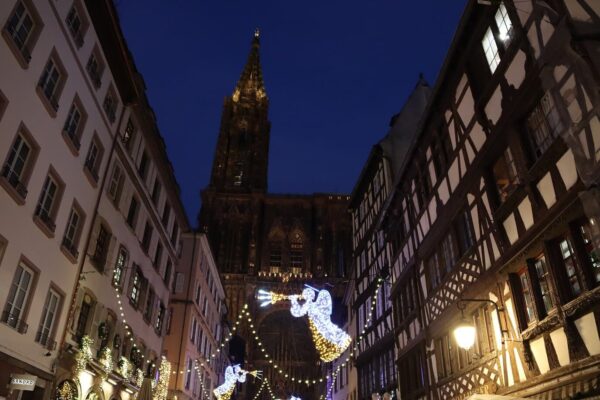
Strasbourg Christmas Market
Strasbourg
Worth the trip
 Opens in 45 days
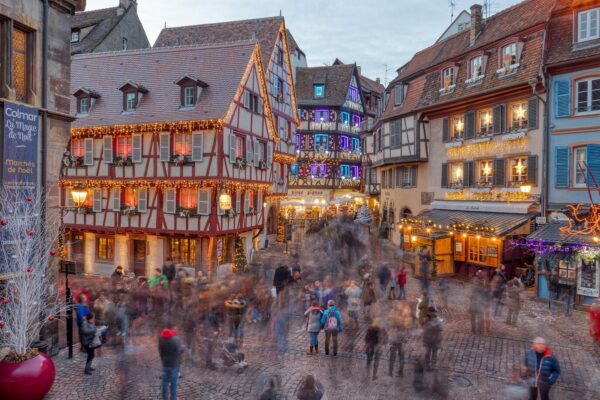
Colmar Christmas Market
Colmar
From 23 November to 29 December 2026
Worth the trip
 Opens in 49 days
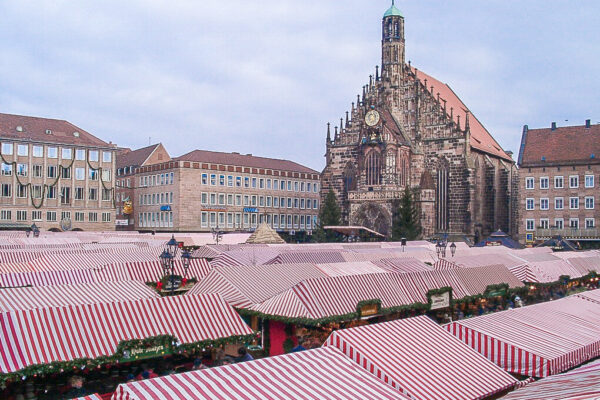
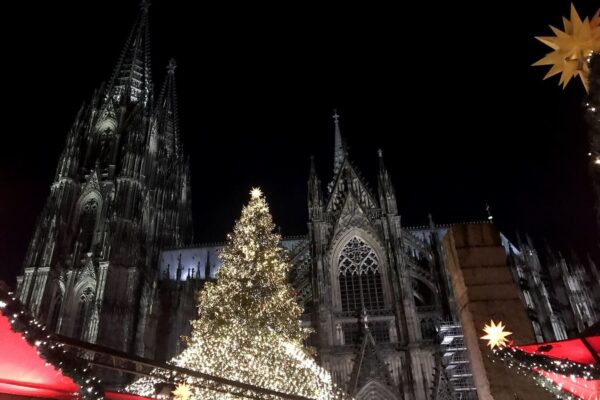
Nuremberg Christmas Market
Nuremberg
From 27 November to 24 December 2026
Worth the trip
 Opens in 38 days
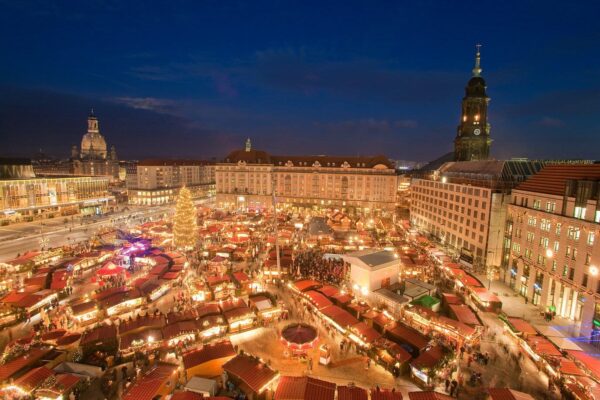
Cologne Christmas Market
Cologne
From 16 November to 23 December 2026
Worth the trip
 Opens in 47 days
Dresden Christmas Market
Dresden
From 25 November to 24 December 2026
Worth the trip
Reviewed and approved by the editorial team
A question, a mistake or a problem on this page? Write to us
Also worth reading
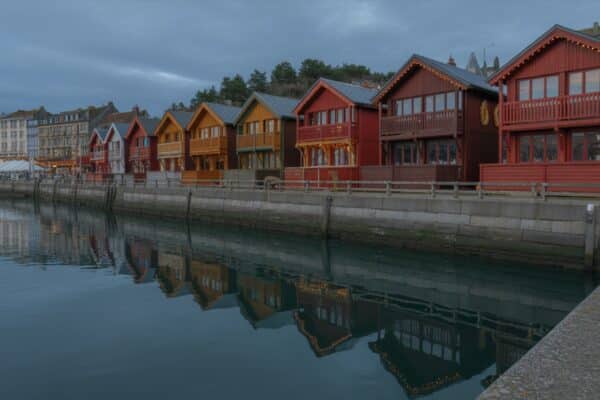
Christmas markets in Brittany: harbours, crêpes and illuminated stone
Our pick of Christmas markets in Brittany: Rennes, Saint-Malo, Vannes, Quimper, Locronan, Brest, Lorient and Saint-Brieuc, between harbours and crêpes.
Read the article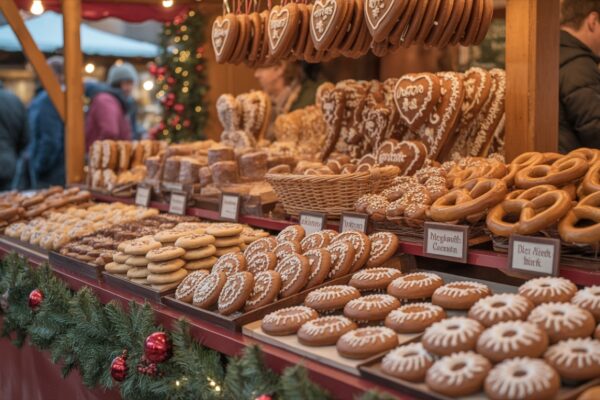
Alsatian Christmas Specialities: a Guide to the Treats of the Market
Bredele, gingerbread, manala, pretzel, tarte flambée: the guide to Alsatian Christmas specialities and the markets where you can taste them.
Read the article
Christmas Markets with Children: Which Ones to Choose
Which family Christmas market should you choose? Ice rink, rides, Father Christmas, workshops: our selection by town and by age, with practical tips.
Read the article