
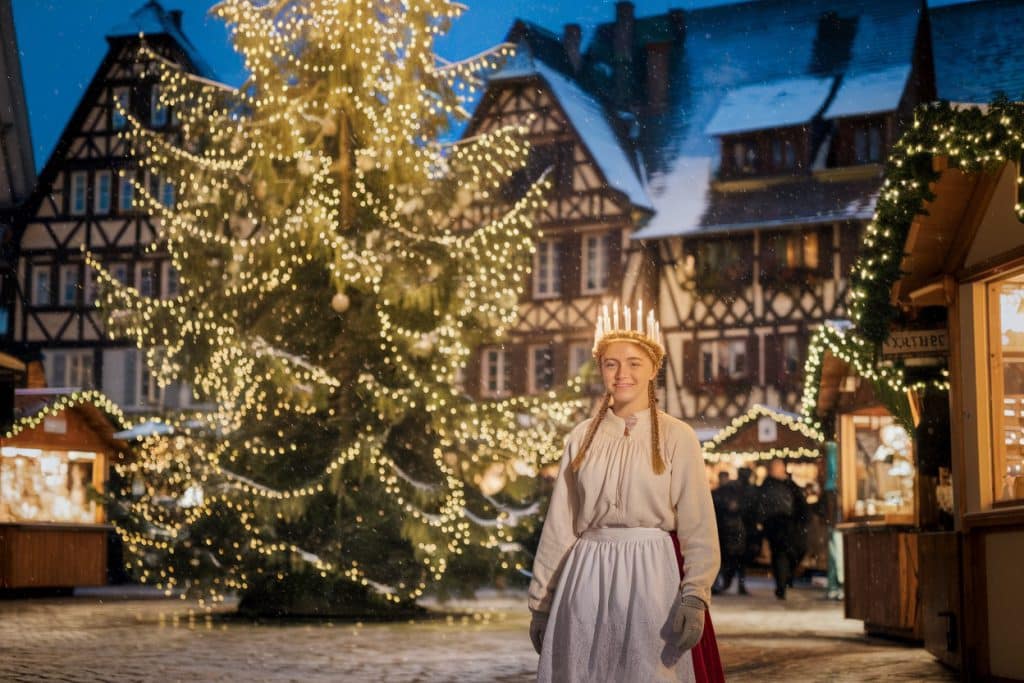
 Illustrative image
 5 traditions to know before you visit
From medieval origins to today's markets
Christmas markets date back to the 14th century, in the German-speaking towns of central Europe. In France, it is the Christkindelsmärik in Strasbourg that claims the longest tradition, running since 1570. Back then, these markets were where people stocked up before winter. The decorations and the sweet treats came later.
1. The Christkindel, Alsace's central figure
In Alsace, it is not Father Christmas who hands out the presents. It is the Christkindel (the Christ Child), portrayed by a young woman dressed in white and wearing a crown of candles. This 16th-century Protestant tradition gave the Strasbourg market its name. Every year, the city chooses its Christkindel from among the young women of Strasbourg.
2. The great fir tree, a symbol born in Alsace
The Christmas tree tradition was born in Alsace. The first documented decorated tree dates from 1521, in Sélestat. The one on Place Kléber in Strasbourg stands around 30 metres tall. Switching on its lights at the end of November marks the official start of the season.
3. Bredele, the family baking marathon
In Alsace, Advent means bredele. These small dry biscuits are baked as a family from late November onwards: spritz, almond schwowebredele, cinnamon stars, vanillekipferl. They are stored in tin boxes and offered to every visitor throughout December.
4. Saint Nicholas, the feast before the feast
6 December is a key date in the east and north of France. Saint Nicholas walks the streets handing out sweets, accompanied by Père Fouettard, his whip-wielding sidekick. In Metz, the parade draws thousands of spectators. On the markets, it is often the liveliest day of all: concerts, and free mannele and gingerbread handed out to the crowd.
5. The Christmas lights
Montbéliard has made its Lumières de Noël its trademark, with a trail of lights that transforms the whole town. In Strasbourg, the front of the cathedral hosts a free sound and light show. Our tip: come at nightfall, around 5pm. Once the lights are on, the markets take on a whole new dimension.
What these traditions tell you
Every Christmas market reflects the history of its region. Alsace draws on its Germanic roots. The north blends Flemish and Picard traditions. Lorraine keeps the memory of Saint Nicholas alive. Understanding these traditions before you visit changes the way you see things: the chalets are no longer just pop-up shops, but the heirs to several centuries of history.
Reviewed and approved by the editorial team
A question, a mistake or a problem on this page? Write to us
Also worth reading
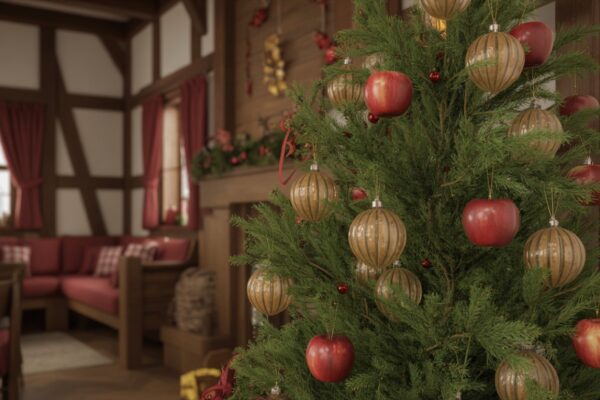
The Christmas tree, a story born in Alsace
The history of the Christmas tree, from the medieval tree of paradise to Sélestat in 1521, then the glass baubles and its spread across France.
Read the article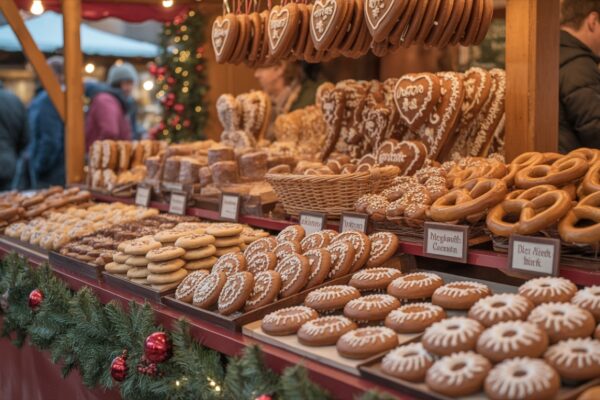
Alsatian Christmas Specialities: a Guide to the Treats of the Market
Bredele, gingerbread, manala, pretzel, tarte flambée: the guide to Alsatian Christmas specialities and the markets where you can taste them.
Read the article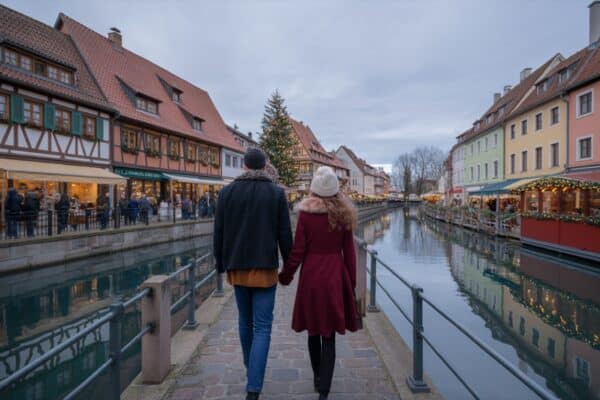
Romantic Christmas Markets: 11 Getaways for a Weekend for Two
Our pick of romantic Christmas markets for a getaway as a couple: Colmar, Riquewihr, Honfleur, Annecy, Sarlat and the ideal setting for two.
Read the article