
Where to find Sélestat Christmas Market
Highlights of Sélestat Christmas Market
- Birthplace of the Christmas tree: first written mention in 1521, kept at the Humanist Library (UNESCO)
- Three cobbled squares in the medieval centre, between half-timbered houses and the churches of Sainte-Foy and Saint-Georges
- “1521 : la tradition de l'arbre de Noël” exhibition and suspended trees tracing the history of decorations
- Alsatian treats from the Maison du Pain d'Alsace: bredele, pain d'épices, christstollen
- Excellent train links, an ideal base for exploring the Wine Route
Where to stay near Sélestat Christmas Market
Hotels, flats and rooms around the market, for the dates of your stay.
Check availability with our partners
Specialities to try
The flavours that make this market what it is
Bredele
Christmas biscuits
pain d'épices
Spiced gingerbread
christstollen from the Maison du Pain d'Alsace
mulled wine
pretzels and Meisenthal glass baubles
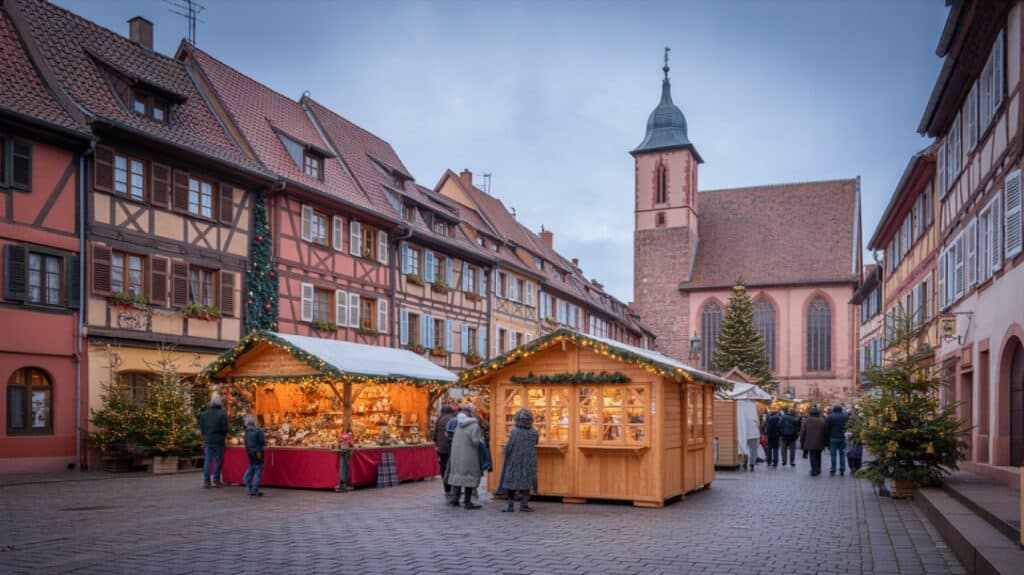
Between Colmar and Strasbourg, at the foot of Haut-Kœnigsbourg, Sélestat holds a title that often surprises visitors arriving on its cobbled squares: this is where, in 1521, a clerk wrote the earliest known record of the Christmas tree. The Sélestat Christmas market lays out its illuminated chalets in a listed historic centre, home to the Humanist Library and the churches of Sainte-Foy and Saint-Georges. The town has made the story of the tree the common thread of all its decorations, and it genuinely changes the visit.
A Christmas market in Sélestat, on the trail of the 1521 tree
The chalets are spread over three squares in the medieval heart: Place d'Armes, Place du Dr Maurice Kubler and Place de la Victoire. You move from one to the next in a few minutes, between half-timbered houses and Renaissance façades, with the church towers keeping watch over it all. The scale is that of a mid-sized Alsatian town, with its bredele stalls selling by weight, its steaming cups of mulled wine and its counters of Meisenthal baubles lined up by colour.
The real highlight goes beyond the chalets. At the Humanist Library, the exhibition “1521 : la tradition de l'arbre de Noël” (1521: the Christmas tree tradition) displays the famous municipal account book in which the town paid forest wardens to guard the young fir trees cut in the nearby woods, three days before Christmas. This short entry in the town accounts is today the oldest known written mention of the Christmas tree, and the document is inscribed on UNESCO's Memory of the World Register. Sélestat claims to be its birthplace, and the town has built its whole Christmas trail around that story.
In the church of Saint-Georges, a dozen suspended fir trees trace the evolution of Christmas decorations from the 16th century to the present day: candles, red apples, gilded paper and then blown-glass baubles, each tree telling the story of an era. Sainte-Foy, the former Romanesque collegiate church, hosts a monumental chandelier made of coloured Meisenthal glass baubles, hanging beneath the nave. You go from food counters to church vaults without leaving the quarter, which gives the market a depth that chalets alone can't offer.
Treats and Alsatian specialities
Alsatian food has pride of place, championed here by the Maison du Pain d'Alsace, right next door to the market. You'll find bredele in every form, the small dry Christmas biscuits that come in dozens of recipes, from aniseed shortbread to cinnamon biscuits and butter stars. Alongside, soft pain d'épices and christstollen, a dense brioche with candied fruit and icing sugar, slip easily into your suitcase. You nibble it all as you walk, a cup of mulled wine in hand. If the smell of cinnamon makes you want to recreate the atmosphere at home, the Alsatian mulled wine recipe needs just a few spices and a good Riesling.
Savoury food isn't forgotten: warm pretzels, crisp tartes flambées and fairground sausages do the rounds of the stalls, enough to fill a gap before carrying on round the squares. The craftspeople also sell products to take away: honey, jams, terrines and of course Meisenthal blown-glass decorations, whose craft is the subject of an exhibition.
- Bredele: Alsatian Christmas biscuits, with aniseed, cinnamon, almonds or butter, sold by weight on several stalls.
- Pain d'épices and christstollen: two classics from the Maison du Pain d'Alsace, to take home in your suitcase.
- Mulled wine and hot apple juice with spices: the drinks that keep you warm as you wander between the three squares.
- Pretzels and tartes flambées: for something savoury, before or after touring the chalets.
- Meisenthal baubles: blown-glass decorations from the Moselle glassworks, showcased in a dedicated exhibition.
Entertainment, opening hours and getting to Sélestat Christmas market
The programme blends heritage and staging. The Parade du Sapin (Tree Parade) winds through the streets, a tree hunt sends young and old after clues hidden around town, and the dreamlike show “Les allumeurs d'étoiles” (The Star Lighters) lights up the evenings. St Nicholas makes his rounds in early December, as tradition dictates in Bas-Rhin.
As for dates, the tourist office announces the 2026 edition from 20 November to 27 December on the three squares. In practice, the market usually opens Sunday to Thursday from 11am to 7pm and on Fridays and Saturdays until 8pm, closed on 25 December. The 2026 opening hours remain to be confirmed on the tourist office website. Entry is free.
Sélestat is very easy to reach by train: the station is on the Strasbourg, Colmar, Mulhouse line, about twenty minutes from Strasbourg, and the historic centre is within walking distance of the platforms. By car, the town has several free car parks around the centre, including Schweisguth, Tanzmatten and the municipal stadium, with a few hundred spaces between them. The three market squares are step-free, which makes visiting easier in a wheelchair or with a pushchair.
What to see nearby, between vineyards and Haut-Rhin villages
Sélestat sits on the border between Bas-Rhin and Haut-Rhin, well placed for extending your day along the Wine Route. The Colmar Christmas market and its six moods are about twenty minutes to the south, while the wine villages in the area offer a completely different, more intimate scale. The Ribeauvillé Christmas market, with its medieval re-enactment, and the Riquewihr Christmas market, in one of the most beautiful villages in France, are easy to visit in the same week. Sélestat then becomes a well-connected base between two capitals of Alsatian Christmas.
Our tip
Set aside time for the Humanist Library and the church of Saint-Georges before the chalets, then head to Colmar or the nearby wine villages for the end of the day.
Reviewed and approved by the editorial team
Checked on against 3 official sources. Detailed sources available on request.
A question, a mistake or a problem on this page? Write to us
Markets nearby
 Opens in 45 days
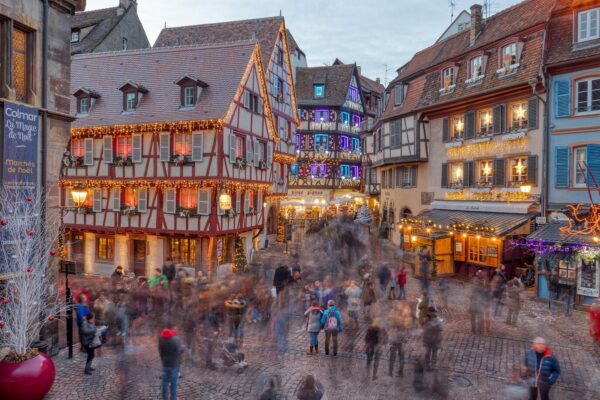
Colmar Christmas Market
Colmar
From 23 November to 29 December 2026
Worth the trip
 Opens in 49 days
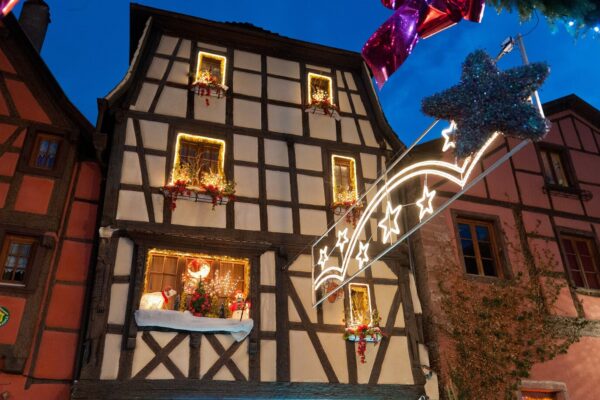
Riquewihr Christmas Market
Riquewihr
From 27 November to 20 December 2026
Worth the trip
 Opens in 49 days
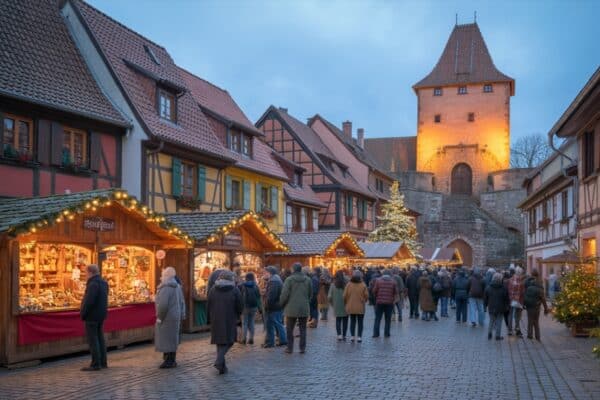
Bergheim Christmas Market
Bergheim
From 27 November to 6 December 2026
Local favourite
Activities nearby
Parks and sites running a Christmas programme less than an hour's drive away. They aren't Christmas markets, and admission is charged.
 Opens in 50 days
Event
Opens in 50 days
Event
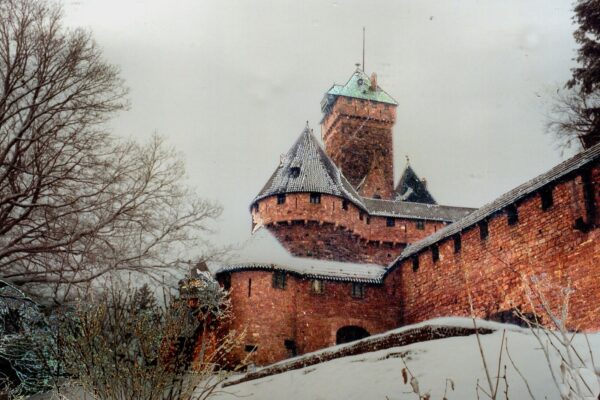
Haut-Koenigsbourg Castle at Christmas
Orschwiller
From 28 November to 31 December 2026
Day out · Event
 Opens in 50 days
Park
Opens in 50 days
Park
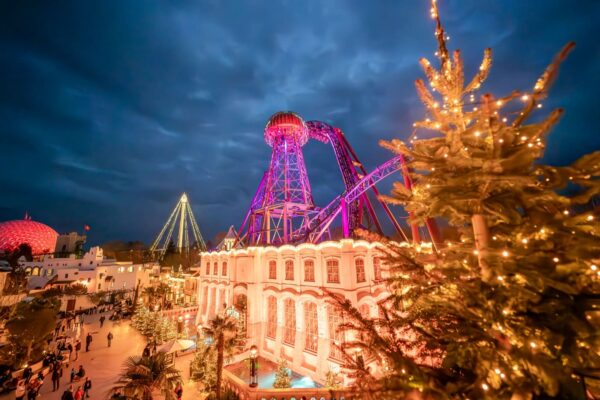
Europa-Park at Christmas: Winterzauber
Rust
From 28 November to 9 January 2027
Worth the trip · Park
 Opens in 56 days
Park
Opens in 56 days
Park
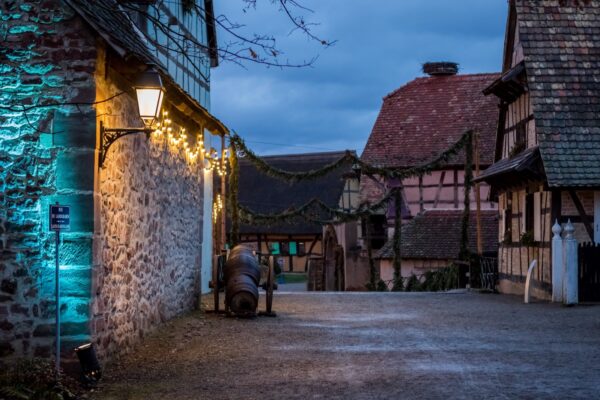
Écomusée d'Alsace at Christmas: the village in festive dress
Ungersheim
From 4 December to 3 January 2027
Worth the weekend · Park