
Christmas markets in Christmas Markets in Spain
Five Christmas destinations in Spain: Barcelona’s Fira de Santa Llúcia and its 215 stalls of nativity scenes in front of the cathedral, Madrid’s Plaza Mayor and its 104 chalets until 31 December, Seville’s Feria del Belén, the chalets on the paseo del Urumea in San Sebastián and the Vigo lights around a 45-metre tree. The markets open in late November, the festivities last until the Cabalgata on 5 January, and you pay in euros.
Markets in the region (4)
 Dates to be confirmed
Barcelona Christmas Market
Barcelona
Worth the weekend
 Opens on 1 December
Madrid Christmas Market
Madrid
From 1 to 31 December 2026
Worth the weekend
 Dates to be confirmed
Seville Christmas Market
Seville
Day out
 Opens on 1 December
San Sebastián Christmas Market
San Sebastián
From 1 December to 6 January 2027
Day out
Christmas parks and activities (1)
Paid admission, shows and lights: Christmas outings that aren't markets. The full selection
Regional specialities
Nativity scenes (belenes), figurines and buildings, often made by the traders in Seville; caganer and tió in Barcelona; Christmas trees, moss, cork, ramets de la sort and eucalyptus branches; simbombes (Barcelona) and zambombas (Madrid); novelty jokes and toys in Madrid; churros, buñuelos and chestnuts in Seville, churros and mulled wine at La Navideña in Madrid; crafts (ceramics, jewellery, leather goods, hats, toys, glass) on the paseo de Recoletos.
Christmas traditions
Tió fed from 8 December and beaten on Christmas Eve in Catalonia; caganer, the good-luck charm of Catalan and Valencian nativity scenes, born in the Baroque era; Cabalgata de Reyes on 5 January in Barcelona (6pm), Madrid (6pm, 5 January 2027) and Seville (Ateneo, since 1918); roscón de Reyes handed out at Puerta del Sol on the morning of 5 January; toy fair on Barcelona’s Gran Via before the Kings; Seville’s nativity trail, including the brotherhoods’ scenes; Feria de Santo Tomás on 21 December and Olentzero on 24 December in San Sebastián.
Christmas markets in Spain open in late November, or as early as late October or early November in Seville depending on the year, and the longest ones close in early January, after the Cabalgata of the Three Kings on 5 January. The stalls sell nativity scenes and their figurines first and foremost, the caganer and the tió in Barcelona, novelty jokes in Madrid. You pay in euros.
Christmas markets in Spain, city by city
The Barcelona Christmas market, the Fira de Santa Llúcia, has been documented since 1786 in front of the cathedral, on the avinguda de la Catedral and the Pla de la Seu. In 2025, 215 stalls of nativity scenes, figurines, Christmas trees and tiós opened from 28 November to 23 December, every day from 10am to 9pm; the City publishes the 2026 dates around November. A second fair, at the Sagrada Família, has been held since 1962 and now has around a hundred stalls.
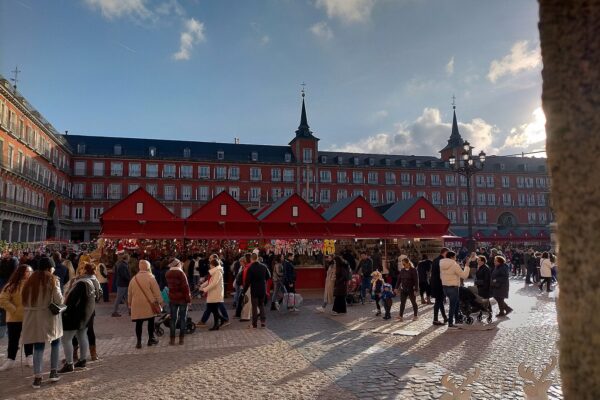
The Madrid Christmas market lines up 104 chalets in a U shape around the statue of Philip III, on the Plaza Mayor, from late November to 31 December 2026, from 10am to 9pm and until 10pm on Fridays, Saturdays and the eve of public holidays. The City dates it back more than a century. The paseo de Recoletos hosts the Feria Mercado de Artesanía from 1 to 30 December 2026, and the plaza de España the ice rink and the 40 chalets of La Navideña.
The Seville Christmas market is a nativity fair, the Feria del Belén, between the cathedral and the Archivo de Indias; its 32nd edition opened from 8 November to 23 December 2025, and the 2026 dates had not been published as of 12 October. Around it, a trail of some fifteen nativity scenes and five neighbourhood markets, from the Setas to the Prado de San Sebastián.
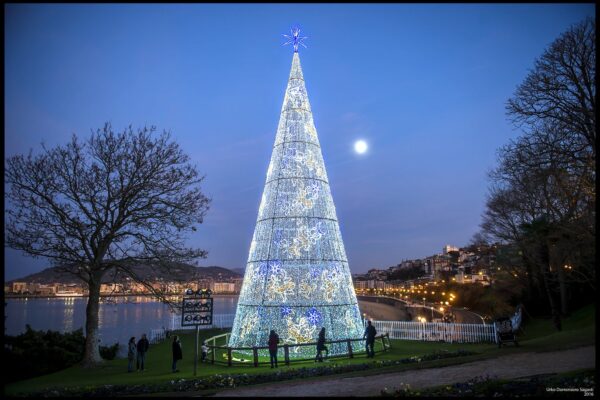
The San Sebastián Christmas market sets up its chalets from 1 December 2026 to 6 January 2027 on the paseo del Urumea and the plaza Ramón Labayen, along the river, every day from 10:30am to 2pm and from 4:30pm to 8:30pm, with free entry; a craft market accompanies it on the plaza Cataluña, in the Gros district. On Monday 21 December 2026, the Feria de Santo Tomás turns the centre into a farmers’ market around txistorra and cider, with 162 stalls in 2024. From Hendaye, Euskotren’s Topo drops you in the city centre.
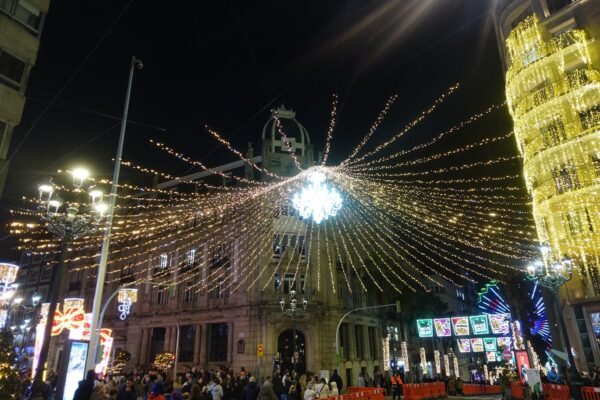
The Vigo Christmas lights are among the best known in Spain: a 45-metre light tree at the Porta do Sol, 460 streets and squares lit up, a 54-metre Ferris wheel and four Christmas markets in 2025, including the Cíes Market and its 75 chalets. That year, the city switched on at 8pm on Saturday 15 November and switched off on Sunday 11 January 2026; the 2026 switch-on date had not been published as of 12 October, and the mayor speaks of a switch-on in November.
Nativity scenes, caganers and zambombas: what the markets sell
The belén, the nativity scene, is at the heart of all three markets: 90 stalls of nativity scenes and figurines in Barcelona in 2025, figurines to build your own belén in Madrid, figurines and buildings in Seville, often made by the traders themselves. Barcelona adds the caganer, tiós of every size, Christmas trees, moss and simbombes; Madrid, zambombas, toys and novelty jokes. Churros are found at Seville’s neighbourhood markets, with buñuelos and chestnuts, and at La Navideña in Madrid, with mulled wine. Crafts have fairs of their own: the paseo de Recoletos in Madrid (ceramics, jewellery, leather goods, hats, toys, glass) and the Jardines de Cristina in Seville.
Christmas traditions in Spain
In Catalonia, children feed the tió from 8 December, the feast of the Immaculate Conception; the log “makes” the presents on Christmas Eve when beaten with sticks. The caganer, born in the Baroque era, is considered a good-luck charm and exists only in the nativity scenes of Catalonia and the Valencian Country. On 5 January, the Cabalgata de Reyes parades through all three cities: in Barcelona from 6pm according to the January 2026 programme, in Madrid on 5 January 2027 at 6pm from the plaza de San Juan de la Cruz to Cibeles, in Seville with the Ateneo, which has organised it since 1918. On the morning of 5 January 2026, 7,500 slices of roscón de Reyes were handed out at Puerta del Sol in Madrid. Toys have their own fair before the Kings arrive: the Fira de Reis, on Barcelona’s Gran Via, from 18 December to 6 January. In the Basque Country, the Feria de Santo Tomás on 21 December marks the start of Christmas, and on 24 December Olentzero, the charcoal burner who brings the presents on Christmas Eve, roams San Sebastián with Mari Domingi.
Getting to Spain and travelling between the markets
No direct train runs from Paris to Madrid: according to the specialist press, Renfe withdrew its applications for train paths to Paris on 2 April 2026, and the journey goes through Barcelona. The rail press reports direct Lyon-Barcelona and Marseille-Madrid AVE trains, one a day in each direction. From France, check the operators’ timetables before you book. Between the cities, Turespaña gives around two and a half hours by AVE from Madrid to Barcelona and from Madrid to Seville alike. The airports are Josep Tarradellas Barcelona-El Prat, Adolfo Suárez Madrid-Barajas and Seville.
Practical tip
In 2025, all three markets were open at the same time from 28 November to 23 December. Madrid runs until 31 December, Seville opens as early as November, and Barcelona waits until November to publish its 2026 dates. All three fairs are free to enter. In Madrid, the chalets close at 10pm on Fridays and Saturdays; in Seville, the Feria del Belén takes a break between 2pm and 5pm on weekdays.
Where to stay in Christmas Markets in Spain
Check availability with our partners