
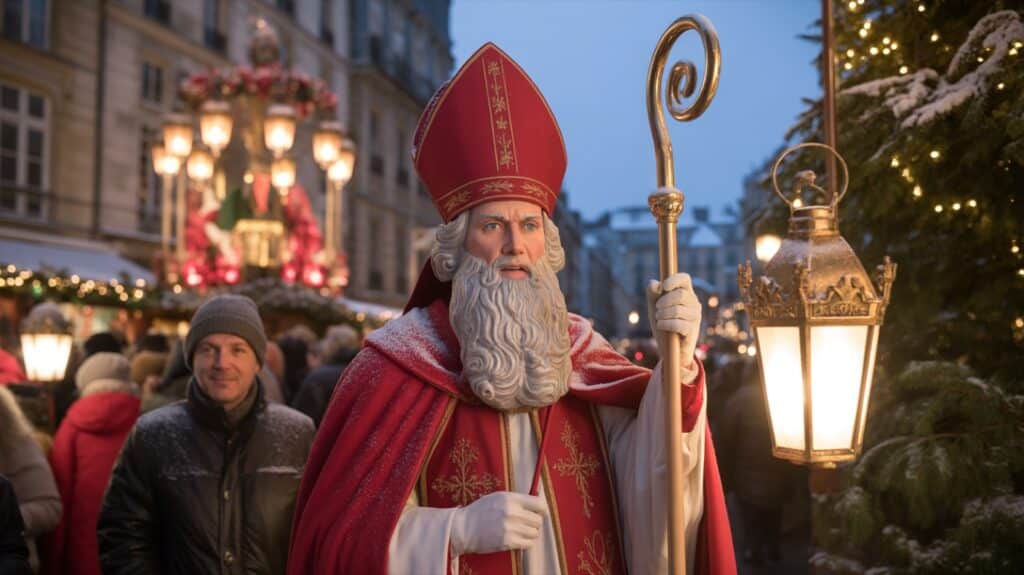
 Illustrative image
 Saint Nicholas and Père Fouettard: 6 December in eastern France
In eastern and northern France, the festive calendar starts well before 25 December. On 6 December, Saint Nicholas Day, the patron saint of children travels from town to town, a big book under his arm and a rather grim companion at his side. In Lorraine, Alsace and Flanders, this date sometimes carries more weight than Christmas itself. It’s a tradition that goes back to the Middle Ages, carried by a gruesome legend, parades that draw huge crowds, and a treat shaped like a little man. Along the way, it also gave birth to a certain Father Christmas.
Who was Nicholas of Myra, the bishop who became the patron saint of children
Behind the character lies a real man. Nicholas was born towards the end of the 3rd century in Patara, in Lycia, a region of present-day Turkey. He became bishop of Myra, died on a 6 December in the middle of the 4th century, and his reputation for generosity has come down through the centuries. He is credited with countless miracles and a marked taste for discreet gifts to the poorest.
His remains were moved to Bari, in Italy, at the end of the 11th century, which spread his cult across Europe. A relic, a finger bone according to tradition, then arrived at Saint-Nicolas-de-Port, near Nancy, making Lorraine a major centre of devotion. The basilica that houses the relic still draws pilgrims every year. Nicholas became the patron saint of the region, but also of children, schoolchildren, sailors and prisoners. This role as protector of childhood explains why, even today, it’s the little ones who wait for him most eagerly. One miracle also earned him his status as protector of young women: he is said to have saved three poor sisters from destitution by throwing purses of gold through their window, enough to give them a dowry. This act of discreet giving shaped his reputation for good.
The legend of the three children and the salting tub
You can’t understand the celebration without its founding story, which is enough to chill the blood despite its happy ending. The folk song has been telling it for generations in eastern France.
Three children who have gone gleaning in the fields get lost at nightfall. They see a light, knock on a butcher’s door and ask him for shelter. The man lets them in, then kills them, cuts them up and throws them into his salting tub to make salt pork. Seven years later, Nicholas passes by the house and asks the butcher for that very salt pork. Unmasked, the butcher collapses. The bishop stretches three fingers over the barrel and brings the children back to life.
However crude it is, this story carried a crystal-clear message for its time: goodness triumphs, innocence is protected, and evil gets its comeuppance. The refrain “Ils étaient trois petits enfants qui s’en allaient glaner aux champs” (“There were three little children who went gleaning in the fields”) is still sung in Lorraine schools as 6 December approaches.
Père Fouettard, the dark figure born in Metz
Beside the radiant saint walks a dark silhouette, with a black beard and a whip in hand: Père Fouettard, “Father Whipper”. His role is clear. Nicholas rewards good children with sweets, Père Fouettard threatens the others with the whip and lumps of coal.
The most widespread account of his origin links him to the siege of Metz by Charles V, in 1552. To keep their spirits up while the emperor besieged the city with his troops, the tanners’ guild is said to have made a grotesque effigy of Charles V, armed with a whip. The city held out, the besieger withdrew, and the grimacing figure stayed in people’s memories. He was later added to the Saint Nicholas procession, as a bogeyman. In Alsace, he goes by the name of Hans Trapp and takes on even more sinister features, inherited from a robber knight of Rhineland folklore. In the Germanic and Alpine regions, that role falls to the Krampus, a horned creature that takes the threat much further than the French Père Fouettard. In the Netherlands, Sinterklaas has a companion of his own too, but that is another story, told further down. This duality between the saint and his henchman shapes the whole celebration: the reward only has value because a punishment is lurking nearby. The message to children fits in one sentence, and it hasn’t aged a day since the Middle Ages: be good, or watch out for the whip and the coal.
The great Saint Nicholas parades
6 December isn’t only celebrated at home. It takes to the streets, with music, in processions that draw huge crowds. In Nancy, these celebrations have been on France’s national inventory of intangible cultural heritage since 2018, and the city is even aiming for UNESCO recognition. The parades bring generations together: parents who went as children bring their own, and the scene plays out the same way from one decade to the next.
- Nancy holds the most spectacular parade, around a theme that changes every year, with illuminated floats, brass bands and a big fireworks display. Nancy Christmas market is in full swing during these days of celebration.
- Metz, the birthplace of Père Fouettard, has Saint Nicholas appear on the balcony of the Opéra-Théâtre on the first weekend of December. Metz Christmas market carries the celebration on across the city’s squares.
- Épinal lines up more than sixty floats and brass bands along a three-kilometre procession, in the town famous for its popular prints. Épinal Christmas market goes hand in hand with the event.
- Mulhouse and southern Alsace also mark the day with plenty of lanterns. Mulhouse Christmas market blends the Saint Nicholas tradition with that of the Christmas tree.
Further north, the celebration is also alive in Flanders and parts of the Nord, where Saint Nicholas sets the rhythm of early December. It’s hard to mention the processions without thinking of Strasbourg Christmas market, where the Alsatian capital celebrates the saint alongside its Christkindelsmärik, or of Lille Christmas market, rooted in the Flemish sphere of influence.
What Saint Nicholas hands out: sweets, gingerbread and little brioche men
The reward for good children has its classics. Each region puts forward its own speciality, but a few constants come up everywhere in the east.
Gingerbread has pride of place, especially in Épinal, where tradition has each Saint Nicholas gingerbread decorated with a picture from the town’s famous Imagerie print works. If you want to understand why this treat goes so well with the celebration, our article on gingerbread traces its history. In Alsace, bakers’ windows fill up from early December with another emblematic treat.
| Treat | Region | What it represents |
|---|---|---|
| Manala / Mannele | Alsace | Little brioche man, a figure of Saint Nicholas or of the three children |
| Gingerbread | Lorraine, Vosges | Often decorated with an Épinal print |
| Bredele | Alsace | Little festive biscuits handed out throughout Advent |
| Clementines and chocolates | All over eastern France | The classic contents of the little shoe left out the night before |
The manala, the little Saint Nicholas brioche man
The manala deserves a closer look, as it embodies the celebration all on its own. This little man made of brioche dough, with eyes of raisins or chocolate chips, is eaten at breakfast or as an afternoon snack on 6 December. Its name comes from Alsatian: Mannele in the Bas-Rhin, Manala in the Haut-Rhin, two ways of saying “little man”. This pronunciation quarrel still livens up Alsatian tables: our article on Saint Nicholas Day as a foretaste of Christmas goes into it in detail, between Bas-Rhin and Haut-Rhin.
The custom dates back to the 15th century and the symbolism is still debated. For some, the little figure represents Bishop Nicholas himself. For others, it recalls the three children from the salting tub brought back to life. Either way, biting into a manala means replaying the legend in your own way. The dough, for its part, holds no mystery: a brioche rich in butter and milk, sometimes flavoured with lemon zest or a dash of orange blossom water, shaped into a little man before baking. Alsatian bakers sell mountains of them around 6 December, and many families prefer to knead them at home, getting the children to press in the raisin eyes. Our article on the manala covers its recipe, its variations and the best places to find it at the markets. Children happily slip them into a pocket next to a handful of bredele, the little biscuits that go with the whole of the Alsatian Advent.
From Saint Nicholas to Father Christmas: a direct line
The white beard, the long coat, the handing out of presents, the book listing the good children: Father Christmas owes a great deal to the bishop of Myra. The thread is clear enough once you follow it.
In the Netherlands, Saint Nicholas became Sinterklaas, an old man with a long white beard dressed in a red bishop’s robe, wearing a mitre and holding a crosier. Dutch settlers took this figure to North America in the 17th century. There, the name Sinterklaas gradually turned into Santa Claus. In the 19th century, American poets and illustrators, including Thomas Nast and the author of the poem “A Visit from St. Nicholas”, stripped the character of his religious attributes and gave him a sleigh, reindeer and a home at the North Pole. The date shifted along the way: the saint who came on 6 December moved to Christmas night.
Sinterklaas does not travel alone: Zwarte Piet, “Black Pete”, the helper who hands out sweets and presents on the evening of 5 December, goes with him. His image, face painted black and a page’s costume, was fixed in the mid-19th century by an illustrated book by the schoolteacher Jan Schenkman. For a long time he carried the birch to punish naughty children; that role has gone. Since the early 2010s, the character has been contested in the Netherlands: for his critics, the black face, red lips and earrings form a stereotype inherited from the era of slavery, and the UN committee against racial discrimination has asked the country to act. Things have moved on. At Sinterklaas’s national arrival and in most towns, Piet now only has traces of soot, as if he had just come down the chimney: this is the “roetveegpiet”. Some Dutch people are attached to the traditional character (38% wanted only him in an Ipsos I&O poll from November 2024), but at a Dutch or Flemish market, you will mostly come across sooty Piets. In Flanders, public television now shows only these “roetpieten”.
A useful point, often garbled: Coca-Cola did not create the red suit, which already existed around 1860. What the brand did was make it the norm worldwide in the 1930s, through its end-of-year campaigns. The result is the jolly grandfather who comes on the night of 24 to 25 December. But his ancestor still hands out his sweets on 6 December in eastern France, with no sleigh, on foot or in a horse-drawn carriage, faithful to his bishop’s crosier. The two figures coexist in homes in Lorraine and Alsace: Saint Nicholas for early December, Father Christmas for Christmas Eve.
Celebrating Saint Nicholas today
The celebration keeps a real popular vitality, far from simple shop-window folklore. In schools in Lorraine and Alsace, children still learn the song of the three children and look forward to 6 December. The parades draw crowds every year from all over the region and well beyond.
If you want to experience it, the best thing is to time your visit to a market for the first weekend of December, when the processions take place. A slice of warm manala, an Épinal gingerbread, a steaming mulled wine between your fingers, and the scene is complete. On that last point, our guide to mulled wine and its variations helps you choose the version to make at home. Another seasonal food landmark: gingerbread and Advent biscuits turn up on almost every stall in the east. To go further, take a look at Colmar Christmas market and Reims Christmas market, two stops that keep the tradition alive in their own way. 6 December doesn’t just start the countdown to Christmas. It reminds us where a good share of our winter rituals come from, between a 4th-century bishop, a repentant butcher and a little brioche man.
Where to stay near the markets mentioned
Availability with our partners, town by town.
Reviewed and approved by the editorial team
A question, a mistake or a problem on this page? Write to us
Also worth reading
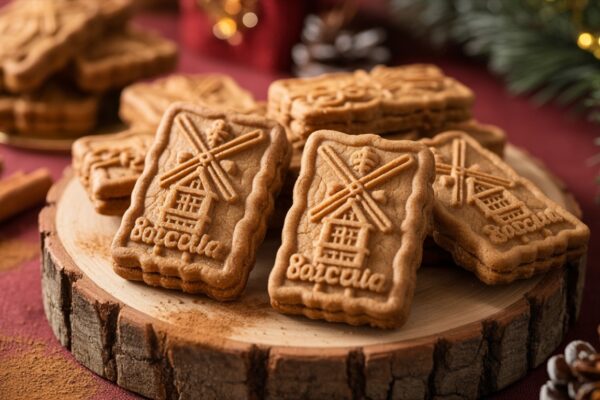
Speculoos, the little carved biscuit that tells the story of Saint Nicholas
Speculoos, the brown sugar biscuit linked to Saint Nicholas: Flemish origins, wooden moulds, spices and where to taste it at Christmas markets in northern France.
Read the article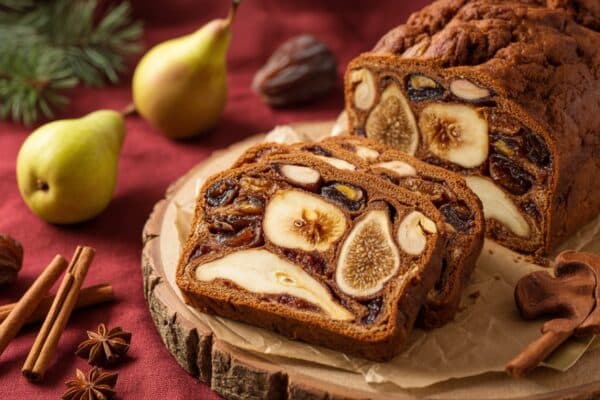
Berawecka: the Dried-Fruit Christmas Bread of Alsace
Berawecka, a bread of dried fruit and pears steeped in kirsch, is an Alsatian Christmas speciality. Its origins, what goes into it and where to find it.
Read the article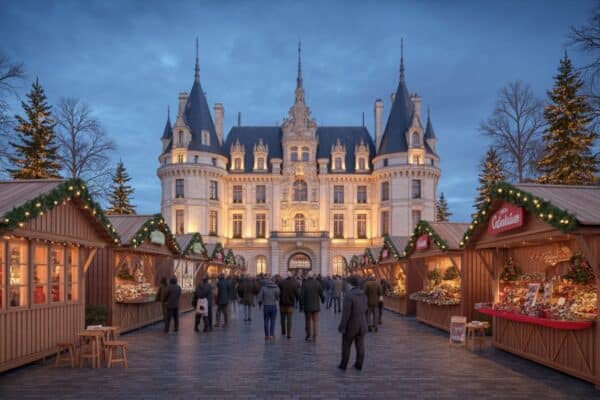
Celebrating Christmas in a royal setting: our château markets
Christmas market at a château: our pick of the finest estates (Chantilly, Versailles, Vincennes, Lunéville, Pau) for a royal setting.
Read the article