
Christmas markets in Île-de-France
Paris and its region concentrate a dozen or so Christmas markets, from the monumental (Tuileries, La Défense) to the intimate (Saint-Germain, Montmartre). The advantage: with public transport this dense, you can visit several in a weekend without a car.
Markets in the region (7)
 Dates to be confirmed
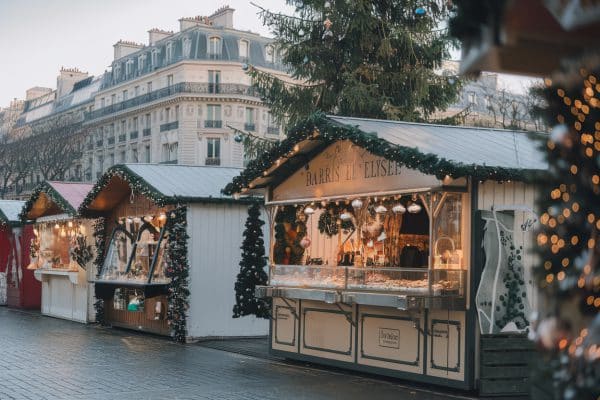
Paris Christmas Market
Paris
Worth the weekend
 Opens in 64 days
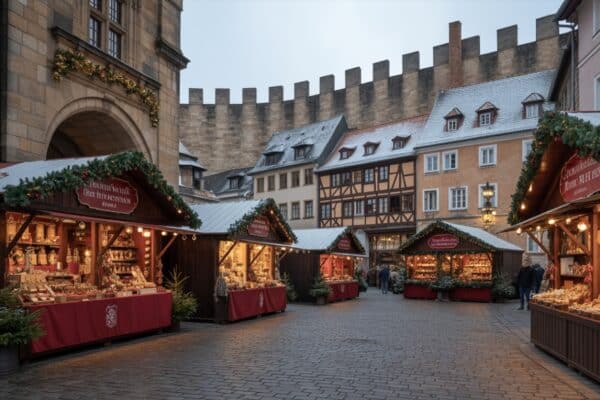
Provins Christmas Market
Provins
From 12 to 13 December 2026
Day out
 Dates to be confirmed
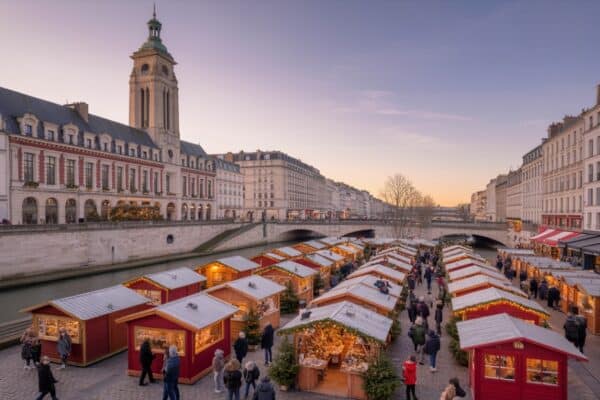
Boulogne-Billancourt Christmas Market
Boulogne-Billancourt
Local favourite
 Dates to be confirmed
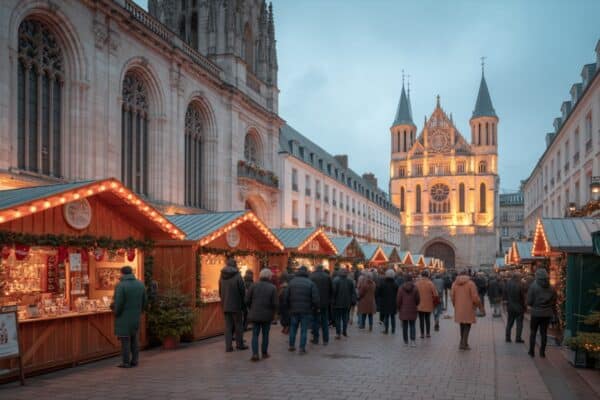
Meaux Christmas Market
Meaux
Local favourite
 Opens in 34 days
La Défense Christmas Market
La Défense
From 12 November to 31 December 2026
Day out
 Dates to be confirmed
Christmas in Versailles: the Makers’ Markets
Versailles
Day out
 Dates to be confirmed
Saint-Germain-en-Laye Christmas Market
Saint-Germain-en-Laye
Local favourite
Christmas parks and activities (2)
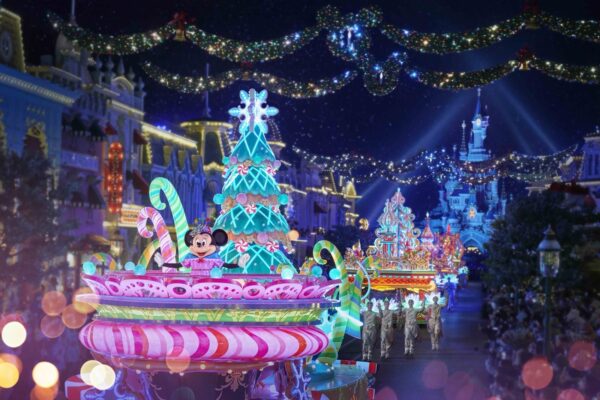
Paid admission, shows and lights: Christmas outings that aren't markets. The full selection
Regional specialities
Roast chestnuts, crêpes, mulled wine, raclette, foie gras, hand-made chocolates, oysters and champagne.
Christmas traditions
Paris switches on the Champs-Élysées lights in late November at an official ceremony. The department stores (Galeries Lafayette, Printemps) unveil their animated window displays, a genuine Parisian tradition since the 19th century.
Paris and its markets: the capital in Christmas mode
Paris cannot claim Strasbourg's centuries-old tradition, but the capital makes up for it with the sheer number of markets and the beauty of its urban settings. Every winter, a dozen or so markets set up across the arrondissements, from the most central to the most residential. The Tuileries, La Défense, Saint-Germain-des-Prés, Montmartre: you are spoilt for choice.
Paris's big advantage is how easy it is to get around. The métro, the RER and the buses let you visit two or three markets in a single day without ever touching a car. An afternoon at the Tuileries, an evening in Montmartre, a wander through the Marais the next day: the itinerary builds itself as you go.
The markets worth your time
The Tuileries Christmas Market
Set in the Jardin des Tuileries, between the Louvre and Place de la Concorde, this is the largest market in Paris. A hundred or so chalets line the garden's paths, with a big wheel offering a view of the illuminated Eiffel Tower. You will find a bit of everything: crafts, regional French food, wooden toys, Christmas decorations.
The setting is spectacular. The garden's trees are dressed in lights, and the view along the obelisk and the Champs-Élysées gives the scene rare depth. The rides and attractions also make it a good choice for families.
La Défense and the esplanade
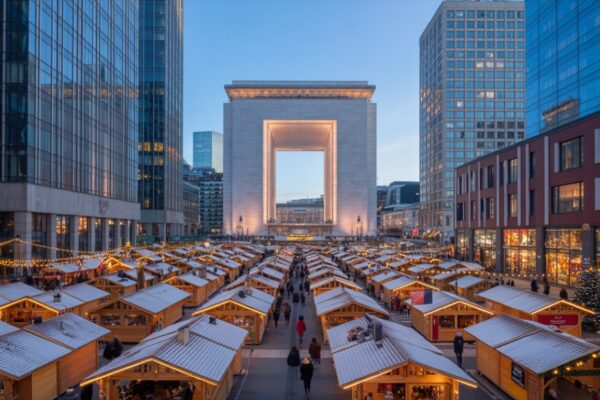
The La Défense market puts its chalets on the esplanade, at the foot of the Grande Arche. It is a large-scale affair, with around 350 chalets in some years, which makes it one of the biggest in Île-de-France by number of stallholders. The mix of contemporary architecture and Christmas lights makes for a striking contrast.
The neighbourhood markets
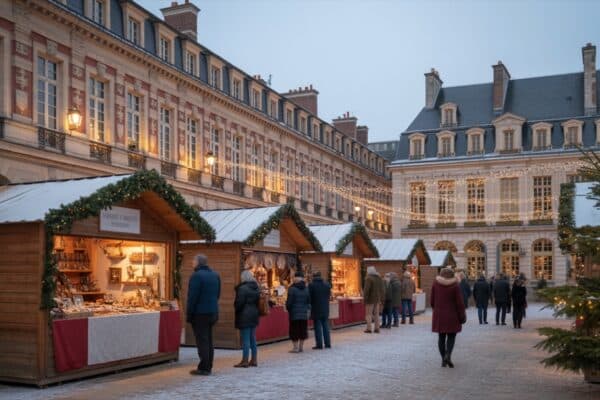
The smaller markets often have more charm. Saint-Germain-des-Prés hosts a little market on the square, with hand-picked artisans and producers. In Montmartre, the chalets set up at the foot of the Sacré-Cœur, and the village feel of the district adds to the warmth. The market on Place des Abbesses, when it takes place, remains one of the most authentic in the capital.
The department store windows
Not a market strictly speaking, but a Parisian tradition that has endured since the 19th century. Every year the Galeries Lafayette and Printemps, on Boulevard Haussmann, unveil animated window displays on a new theme. Automata, miniature sets and lighting effects tell a story behind each pane. The queue can be long at weekends, but the show is free.
The giant tree under the dome of the Galeries Lafayette is another annual fixture. Suspended in mid-air and decorated by an artist or a fashion house, it catches the eye from the moment you walk into the entrance hall.
What to eat at the Paris markets
Paris's Christmas markets are French food in concentrated form. The classics are all there: mulled wine, roast chestnuts, crêpes, raclette melted in front of you. But Paris also draws producers from all over France: foie gras from the South-West, cheeses from the Auvergne, Montélimar nougat, hand-made chocolates from the great houses.
Oysters and champagne make a notable appearance at some markets, especially the Tuileries and Saint-Germain. It is a chance to try a seafood platter in the open air, wrapped up in a coat, glass of white in hand. Not many cities can offer that in December.
The lights, a show in their own right
The Champs-Élysées open the season every year with the official switch-on ceremony in late November. The trees on the world's most famous avenue are dressed in lights, and the display runs until January. The Eiffel Tower, sparkling every evening, completes the picture.
Away from the main avenues, plenty of shopping streets compete in creativity: Rue du Faubourg-Saint-Honoré, Rue Montorgueil, Place Vendôme. The façades of the department stores, the luxury hotels and the boutiques form a trail of light you can follow on foot from the Opéra to the Concorde.
Practical tips
The Paris markets generally open in mid-November and close between 28 December and 7 January depending on the site. The Tuileries stays open latest, sometimes into the first week of January.
To avoid the crowds, aim for weekdays in the early evening (5pm-7pm). December weekends are packed, especially at the Tuileries and on the Champs-Élysées. Wednesday afternoons are quiet at the neighbourhood markets but busy at the Tuileries because of the families.
Budget-wise, Paris prices apply: a mulled wine comes in around €5, a raclette between €8 and €12, and roast chestnuts between €4 and €6 a cone. Entry to the markets is free everywhere.
Getting around: the métro is your best friend. Tuileries (line 1) for the garden, Grande Arche (line 1) for La Défense, Saint-Germain-des-Prés (line 4) for the Left Bank, Anvers (line 2) or Abbesses (line 12) for Montmartre.
Where to stay in Île-de-France
Check availability with our partners