
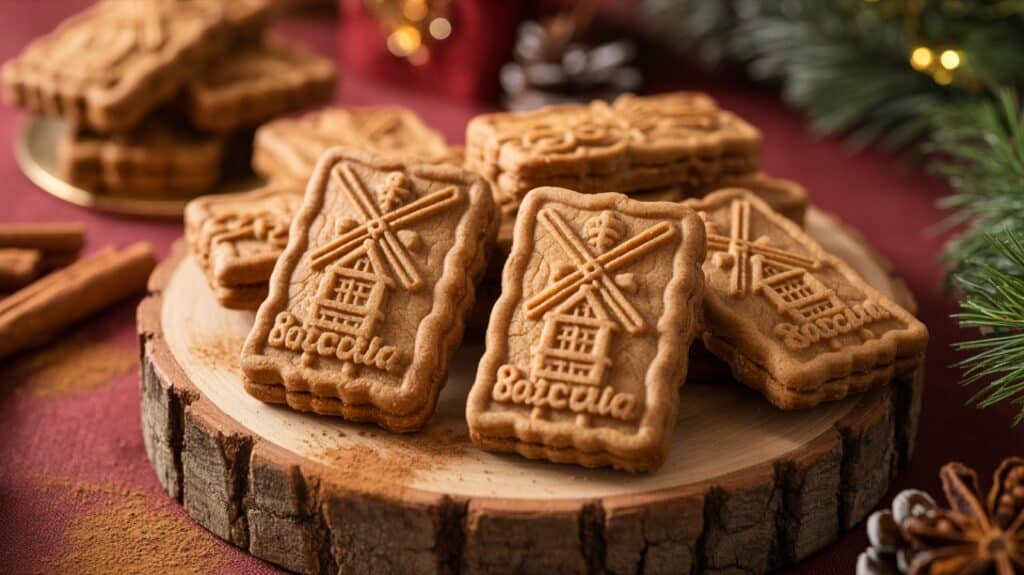
 Illustrative image
 Speculoos, the little carved biscuit that tells the story of Saint Nicholas
Crunchy, caramel-brown, fragrant with cinnamon and cloves: speculoos is one of those treats you would recognise with your eyes closed at a Christmas market in northern France. Behind the biscuit lies a Flemish story several centuries old, a patron saint of children and hand-carved wooden moulds. Here is a short journey into what really sets speculoos apart from other festive sweets, and where to track it down among the chalets.
Where does speculoos come from?
Speculoos was born in the 17th century in Flanders, then part of the Spanish Netherlands. This historic county is now split between Belgium, northern France and the Netherlands, which explains why the biscuit turns up on both sides of the border. Originally it was a seasonal treat, tied to end-of-year celebrations rather than everyday eating.
Its name is up for debate, and that is part of its appeal. One theory links it to the Latin speculum, a mirror, a reference to the carved moulds that print a pattern into the dough. Another derives it from species, spices. A third, more colourful one sees it as a blend of the Dutch spek (a sweet treat) and klaas, short for Sinterklaas, in other words Saint Nicholas. Three theories, none settled, and the mystery is part of the charm.
In its early days, speculoos was anything but an everyday biscuit. Its spices came from far away, carried along the trade routes that fed the Flemish ports. Cinnamon, cloves and nutmeg were expensive, and a biscuit packed with them was a small luxury kept for special occasions. That is why it became attached to the December festivities rather than the daily table. This festive side has never left it, even once spices became affordable and the biscuit available all year round.
The link with Saint Nicholas
You can't talk about this biscuit without mentioning 6 December. In northern France and Belgium, Saint Nicholas is the great bringer of presents for children, long before Father Christmas. Speculoos found its way into the celebration: it was given to the youngest, often moulded in the likeness of the saint himself, mitre on his head and crozier in hand.
One legend says that Saint Nicholas, patron saint of schoolchildren, comforted three sad children he met on his way by handing them speculoos. True or embroidered over time, the story anchors the biscuit in a world of generosity and childhood. To understand the full meaning of this feast and all its traditions, our article on Saint Nicholas Day fills in the picture. At the markets in Lille or Valenciennes, biscuit Saint Nicholas figures often stand proudly next to the big gingerbread figures.
The biscuit also had a practical role on the day itself. Giving a child a moulded speculoos meant handing over a small edible image of the saint who watched over them. In families in northern France and Belgium, the custom has been passed down unbroken, and many grandparents still remember the biscuit they received on waking up on 6 December. This continuity explains the place speculoos keeps on end-of-year stalls, somewhere between nostalgia and unashamed indulgence.
Wooden moulds, the signature of speculoos
What makes a speculoos look like a speculoos is first of all its relief. The oldest method is to press the dough into a carved wooden mould, which leaves a crisp imprint on the surface of the biscuit once it is turned out. Saint Nicholas, windmills, animals, figures: the patterns told little stories, at a time when printed images were still rare.
These moulds, carved from hardwood such as pear, were often handed down from one generation of bakers to the next. Even today, a few biscuit makers still work with traditional moulds, and you can spot their carved pieces on market stalls. It is a detail that changes everything to the eye: a hand-moulded speculoos, with its sharply defined edges, lacks the slightly smooth regularity of a factory biscuit.
The technique takes a bit of skill. The dough, firm and well spiced, is pressed into the hollow of the floured mould, then knocked out in one sharp movement to keep the relief clean. Too soft, and it spreads and the pattern is lost; too dry, and it cracks. Old moulds, some more than a century old, carry images no one makes any more: ships, figures in costume, scenes of Flemish life. At a market, finding a baker who displays their moulds next to their biscuits is often a sign of careful work.
The spices that make all the difference
The aroma of speculoos rests on a warm, enveloping blend. Cinnamon dominates by a long way, followed by sharper notes.
- Cinnamon: the aromatic base, used generously, and the first thing you smell.
- Cloves: an intense touch that adds depth.
- Nutmeg: warm and slightly woody, it rounds everything off.
- Cardamom and ginger: two lively touches that wake up the blend.
- Coriander: more discreet, it brings a fresh note in the background.
Every biscuit maker adjusts the proportions, and that is where a bakery's personality comes through. Some push the cinnamon, others lean on the cloves or add a hint of aniseed. The blend has a lot in common with gingerbread spices, which is why the two treats are sometimes confused. Our gingerbread guide explains the differences; the main thing to remember is that speculoos goes for a dry crunch, while gingerbread stays soft and is cut into slices.
Another difference lies in the fat. Speculoos contains butter, which gives it its melt-in-the-mouth quality once the crunch has passed, whereas gingerbread is built mainly around honey. Two spiced biscuits, two textures, two roles on the Christmas table: one is nibbled by hand, the other is served in slices with foie gras or cheese. It would be a shame to mix them up, as each has its own territory.
Brown sugar, the real secret of the crunch
If speculoos crunches and takes on that deep brown colour, it owes it to one specific ingredient: cassonade, also called dark vergeoise. In Belgium it is known as candi sugar. This brown sugar, rich in molasses, caramelises as it bakes and gives the biscuit its slightly toffee flavour and dark colour.
That is what draws the line between speculoos and most classic dry biscuits, which are made with white sugar. The caramelised brown sugar brings the colour, the caramel note and that texture that snaps cleanly. A good speculoos does not crumble: it crunches, then slowly melts with a coffee or a hot chocolate.
Baking does the rest. In a moderate oven, the sugars in the cassonade brown, the spice aromas are released and the biscuit takes on that recognisable amber colour. Resting the dough in the fridge, which many bakers do, helps the flavours come together before baking. It is this invisible detail that separates a flat speculoos from a biscuit where every bite releases its cinnamon and caramel. Nothing complicated, but a know-how you can taste in the first mouthful.
Speculoos, speculaas, Spekulatius: one family
The biscuit changes name with every border you cross, while remaining a close cousin. In Belgium it is speculoos, a spelling that matches the Brabant pronunciation. In the Netherlands it is speculaas, the original Old Dutch form. In Germany, Spekulatius plays the same role on Advent tables.
| Name | Region | Distinctive feature |
|---|---|---|
| Speculoos | Belgium, northern France | Brown sugar, spices, often moulded as Saint Nicholas |
| Speculaas | Netherlands | Original form, traditional wooden moulds |
| Spekulatius | Germany | Advent biscuit, sometimes with almonds |
Three names, one idea: a spiced, moulded biscuit made for Saint Nicholas and Advent. The variations come down mainly to local technique and a few more or fewer spices.
From Saint Nicholas to the spread
Speculoos has enjoyed a modern second life. The Belgian company Lotus Bakeries, founded in 1932 in Lembeke and specialising in biscuits from the start, launched a speculoos spread in 2008. The idea was already out there: a Dutch home cook had posted a homemade recipe on her website as early as 2002. The product was a big success and is now a fixture on shop shelves around the world.
At markets in northern France, this spreadable version now sits alongside the original biscuit. Bakers often sell it in jars, next to shortbread sold by weight. One more way to make the pleasure of speculoos last once you are back home.
The spread now comes in two textures: smooth or with biscuit pieces. It goes everywhere, on morning toast as well as in desserts, as a crêpe filling or melted into a hot chocolate. This success has taken speculoos out of its seasonal slot: you can find it on shelves all year round. But it is at a Christmas market, among the lights and the smell of spices, that the biscuit finds its original setting and its full meaning.
Where to taste speculoos at Christmas markets
Hauts-de-France remains the biscuit's heartland, but the east is not far behind. A few towns welcome speculoos among their chalets, each with its own local flavour:
- In Lille, the big wheel and the chalets draw biscuit makers from the north, with moulded speculoos and shortbread by weight front and centre.
- In Douai and Cambrai, the Flemish tradition shows right down to the food stalls.
- In Valenciennes and Dunkirk, the Belgian border is close, and speculoos has its own dedicated place.
- In Arras and Béthune, the Flemish-style squares make a ready-made setting for nibbling a spiced biscuit.
- In Lorraine, homeland of Saint Nicholas, the markets in Nancy and Metz give pride of place to treats moulded in the saint's likeness.
Speculoos goes very well with a hot drink that echoes the same spices. A cinnamon mulled wine makes an ideal companion; for the recipe, our article on mulled wine and its variations tells you which one to pick and where to find it. Between the crunchy biscuit and the steaming cup, you have one of the most comforting pairings of winter.
How to spot a good speculoos
A few pointers help you choose at a stall. Colour first: a deep brown signals a good dose of caramelised brown sugar, while a biscuit that is too pale often lacks character. Texture next: it should snap cleanly, without crumbling to dust. Aroma last, with a clear cinnamon and that hint of clove lingering at the end.
Hand-moulded biscuits, with their well-marked reliefs, are as much a pleasure to look at as to eat. They carry a craft that industrial production has partly erased. At a market, chatting for two minutes with the baker will often tell you everything you need to know about their recipe and spices. That, in the end, is what speculoos is: a simple little biscuit that carries centuries of Flemish history in its relief.
Where to stay near the markets mentioned
Availability with our partners, town by town.
Reviewed and approved by the editorial team
A question, a mistake or a problem on this page? Write to us
Also worth reading
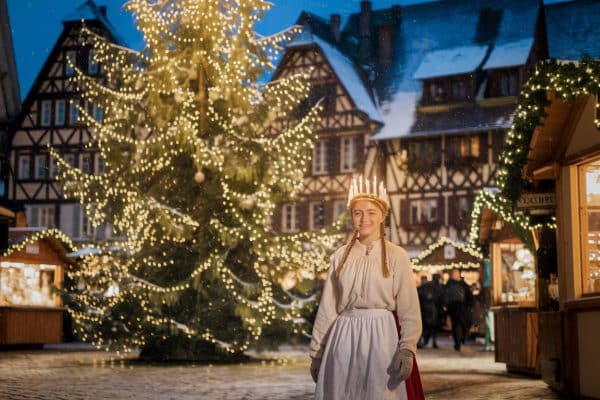
5 traditions to know before you visit
From medieval origins to today's markets Christmas markets date back to the 14th century, in the German-speaking towns of central Europe. In France, it is…
Read the article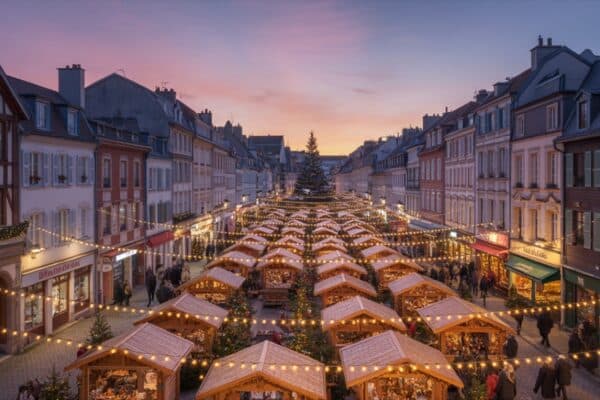
The Largest Christmas Market in France: Which One Really Wins?
Which is the largest Christmas market in France? Strasbourg, Colmar and Amiens compared by chalets and visitor numbers, with verified 2025 figures.
Read the article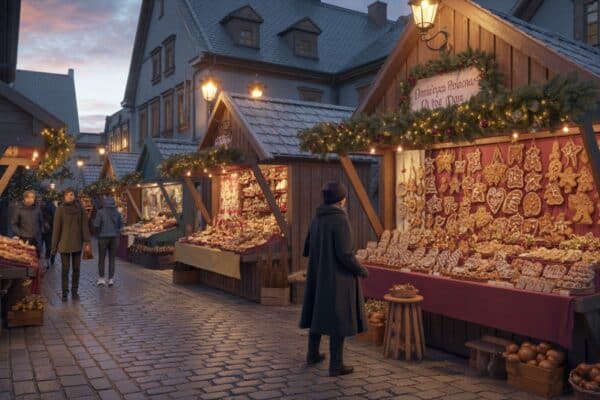
Where Do Christmas Markets Come From? Six Centuries of Tradition
The history of Christmas markets, from Dresden 1434 to Strasbourg 1570: medieval origins, the Reformation, the Advent wreath and the revival in France.
Read the article