
 Illustrative image
 The Most Beautiful Christmas Markets in France: Our Selection
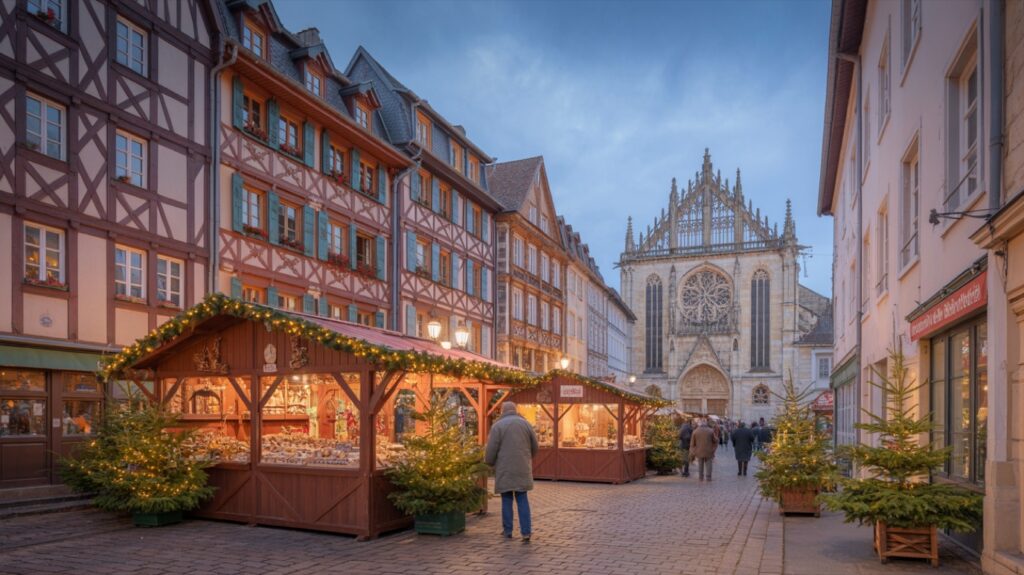
When you look for the most beautiful Christmas market in France, you are not talking about a fixed ranking. A beautiful market is first of all a matter of setting: a Gothic cathedral in the background, half-timbered houses huddled around a square, a warm light that catches the stone and sometimes the snow. It is also a matter of tradition, of serious craftsmanship, of the scent of mulled wine and gingerbread. We have gathered here a selection of towns where these ingredients come together, with a concrete reason to go for each of them. The common thread stays the same: heritage, well-designed lighting, and exhibitors who do real work. Nothing official about it, this is a reasoned selection, and you can pick from it according to your region and your mood. We deliberately mixed the big Alsatian names with a few markets from the north and from Franche-Comté, to show that the beauty of a market does not belong to a single region.
What makes a Christmas market truly beautiful
Before naming towns, it is worth setting out the criteria. Three things come up when a market stands out. The architectural setting first: a grand square, a striking façade, a coherent historic centre that gives the chalets a frame. The quality of the exhibitors next, because a market of factory-made trinkets does not have the same charm as a market of craftspeople who blow glass or turn wood. And finally the lighting, when the illuminations dress the streets without turning them into a theme park.
Size matters less than you might think. A village like Ribeauvillé, open for just two weekends, leaves as strong an impression as a regional capital crammed with chalets. What makes the difference is the coherence between the place and what is sold there. And food is part of the picture: mulled wine remains the common thread of most of these markets, and you will find its variations (and where to get the recipe) over at our mulled wine guide if you want to make it at home.
Strasbourg, the elder of the French markets
Hard to start anywhere else. The Strasbourg Christmas market, the Christkindelsmärik, has been held since 1570, which makes it the oldest Christmas market in France and one of the oldest in Europe. The city council settled the matter on 4 December 1570 by authorising traders to set up their market a few days before Saint Nicholas' Day. Since 1871, the heart of the market has beaten on Place Broglie, and the tradition has never been interrupted.
Today the city styles itself the Capital of Christmas and draws around two million visitors a season, with a great fir tree on Place Kléber and chalets spreading across the whole centre, from the cathedral quarter to the Petite France. It is dense, very lively, and the scale of the whole operation remains impressive. The downside is the crowds: aim for a weekday or a late evening if you want room to breathe. If you were only ever to see one in your life, this one has the weight of history on its side.
Colmar and the Little Venice
A few dozen kilometres away, Colmar plays a different tune. The Colmar Christmas market spreads across six sites in a well-preserved historic centre, each with its own flavour: crafts, local produce, food market, children's market. The most photographed spot remains the Little Venice, with its canals lined with illuminated half-timbered houses and an atmosphere that turns into a fairy tale at nightfall. The children's market adds rides, small animals and Father Christmas's letterbox.
Entry to the markets is free, and they run from late November to late December (the exact 2026 dates and opening hours are on the town's page). Packing so many settings into a town of this size is what built its reputation. You walk from one square to the next without ever leaving the old town, and the evening light on the canals justifies the trip on its own.
The Alsace wine villages: Ribeauvillé, Riquewihr, Kaysersberg
Around Colmar, the Wine Route brings together villages that are worth the journey in themselves. The Ribeauvillé Christmas market is medieval: traders in costume, raw materials, crafts and music, over two weekends in December (the 2026 dates are on the town's page). That rarity is part of its charm, and the atmosphere is more theatrical than at the other markets in the region. People come for the immersion as much as for the shopping.
Right next door, the Riquewihr Christmas market enjoys one of the prettiest villages in Alsace, ringed by ramparts and vines, a setting that looks lifted from a picture book. The Kaysersberg Christmas market, for its part, runs over the four Advent weekends with hand-picked craftspeople and produce. These three form a short, coherent circuit, linked by Christmas shuttle buses from Colmar. In a single day you can take in all three without wearing yourself out, keeping time to sit down over a tarte flambée between two villages.
Mulhouse and its Christmas fabric
Mulhouse has a signature all its own: every year a Christmas fabric is created and dresses the whole town, from textiles to chalets, posters and decorations. It recalls the city's industrial and textile past, when it was one of the great centres of fabric printing. The Mulhouse Christmas market banks on this textile craft, on blown glass and wooden toys, in a more urban mood than the wine villages.
It is a good gateway if you arrive from the south of Alsace, and an interesting contrast with the village spirit of the Wine Route. The town takes care over its décor without tipping into the garish, and the fabric renewed each season gives you a reason to come back year after year. The chosen pattern turns up just about everywhere, right down to the mulled wine cups, which creates a visual consistency rare for a market of this size.
Reims, Metz and Nancy: the Grand Est beyond Alsace
Alsace has no monopoly. In Reims, the Reims Christmas market sets up at the foot of the cathedral, with a canopy of lights above the aisles and a show that brings the Gothic façade to life. Around 150 chalets and more than one and a half million visitors a year: it is the largest market in the Grand Est outside Alsace, and the backdrop of the coronation cathedral does a great deal for the emotion. You will find decorations, regional produce and, of course, champagne.
In Metz, the Metz Christmas market spreads its chalets across several squares in the centre, between the golden Jaumont stone and a big wheel towering over the old town. Further south, the Nancy Christmas market makes the most of the UNESCO-listed Place Stanislas, lit up in December, with its Saint Nicholas villages and the parades at the start of the month. Three cities, three strong heritage settings, with no need to cross the Rhine. Nancy even extends the mood into early January, which gives you welcome leeway if you cannot get away in December.
Montbéliard, Amiens, Lille: beyond the Grand Est
Further west and north, other markets hold their own. Montbéliard, in Franche-Comté, stages its Lumières de Noël, a market with a strong Franche-Comté and Protestant identity, very polished in its staging and street decoration. The Montbéliard Christmas market ranks among the most renowned in eastern France outside Alsace, with its dressed façades and its small-town Comtois atmosphere.
In the Hauts-de-France, the Amiens Christmas market is one of the largest in the north of the country, lined along the streets of the centre at the foot of the largest Gothic cathedral in France. And the Lille Christmas market, on Place Rihour, adds a big wheel and a warm Flemish atmosphere. Two stops that prove a beautiful market is not confined to the east of the country.
The treats that set the mood
A beautiful market is also judged by the plate and the cup. Mulled wine remains the signature drink, served spiced with cinnamon, orange and clove, sometimes in a white-wine version in the Alsace vineyards. All around, the stalls smell of cinnamon and hot sugar. In Strasbourg and Colmar you will come across bredele, the little Christmas biscuits made in dozens of shapes, and the gingerbread Alsace has turned into a seasonal speciality.
On the savoury side, tarte flambée, sauerkraut and charcuterie specialities lead the way in the east. In Mulhouse and in the wine villages you will also find christstollen, the brioche-like cake with candied fruit dusted with icing sugar. These treats are not mere decoration: they tell the story of the region, and they make up a good share of the pleasure of the visit. Budget generously for tasting, that is often where the bill climbs without you noticing.
Compare at a glance
| Town | What sets it apart | Setting |
|---|---|---|
| Strasbourg | The oldest in France (1570) | Place Broglie, Place Kléber |
| Colmar | Six sites, children's market | Little Venice, medieval centre |
| Ribeauvillé | Medieval market, two weekends | Fortified wine village |
| Mulhouse | Annual Christmas fabric | Textile town centre |
| Reims | 150 chalets, cathedral mapping | Cathedral forecourt |
| Nancy | Illuminations, Saint Nicholas | Place Stanislas (UNESCO) |
This table is only a starting point: the right way to choose is to begin with your region or a setting that appeals to you, then read each town's detailed page for the dates and practical information.
How to plan your visit
A simple piece of advice: do not try to do everything at once. Two or three well-chosen markets over a weekend beat a dash from one town to the next. In Alsace, the Strasbourg-Colmar-wine-villages loop works well over two days, by train for the big cities and by car or shuttle bus for the villages. Outside Alsace, Reims, Metz and Nancy connect easily by train, which spares you the stress of parking at peak times.
On timing, most markets open in late November and close around 29 December, with a few exceptions such as Ribeauvillé, limited to two weekends. Always check the exact dates on the town's page before booking your accommodation, because the slots change from one year to the next. And keep an evening free to wander with no particular aim, mulled wine in hand: that is often when the setting makes the most sense.
One last point: the weekend remains peak time everywhere. If your schedule allows, a Tuesday or Wednesday in December changes everything, with clearer aisles and a real chance to talk to the craftspeople. Remember too to book your hotel early in flagship cities such as Strasbourg and Colmar, where rooms go quickly from late November. The rest comes down to the weather and your curiosity: keep an eye out for the concerts, nativity scenes and street illuminations, which are as much part of the show as the chalets.
Where to stay near the markets mentioned
Availability with our partners, town by town.
Reviewed and approved by the editorial team
A question, a mistake or a problem on this page? Write to us
Also worth reading
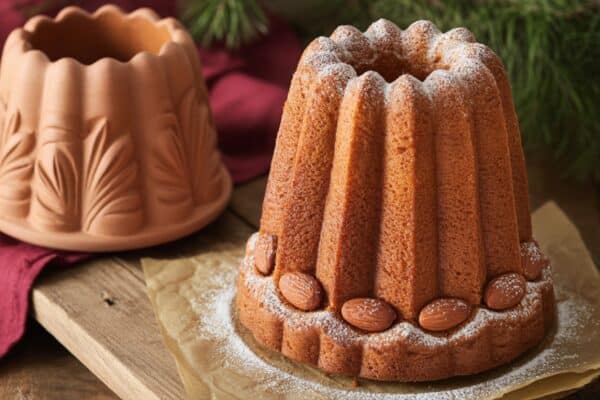
Kougelhopf, the Golden Crown That Tells the Story of Alsace
Kougelhopf, the ring-shaped Alsatian brioche: the Ribeauvillé legend, the Soufflenheim mould, sweet and savoury versions, and where to taste it at the markets.
Read the article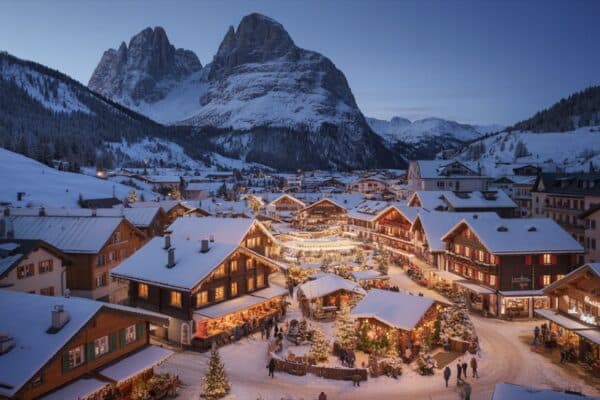
The Most Beautiful Mountain Christmas Markets
Our pick of mountain Christmas markets: Chamonix, Megève, Gérardmer, Thonon, Chambéry and the finest events in the Alps and the Vosges.
Read the article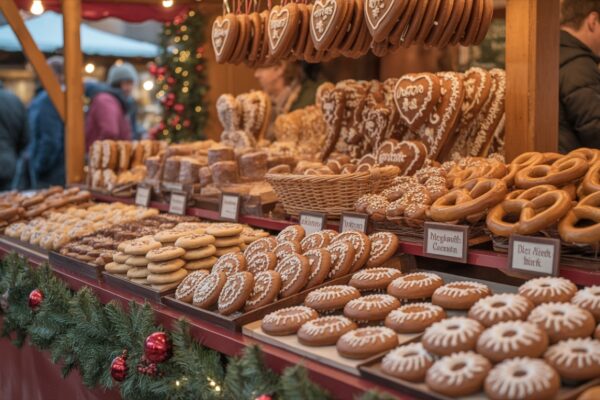
Alsatian Christmas Specialities: a Guide to the Treats of the Market
Bredele, gingerbread, manala, pretzel, tarte flambée: the guide to Alsatian Christmas specialities and the markets where you can taste them.
Read the article