
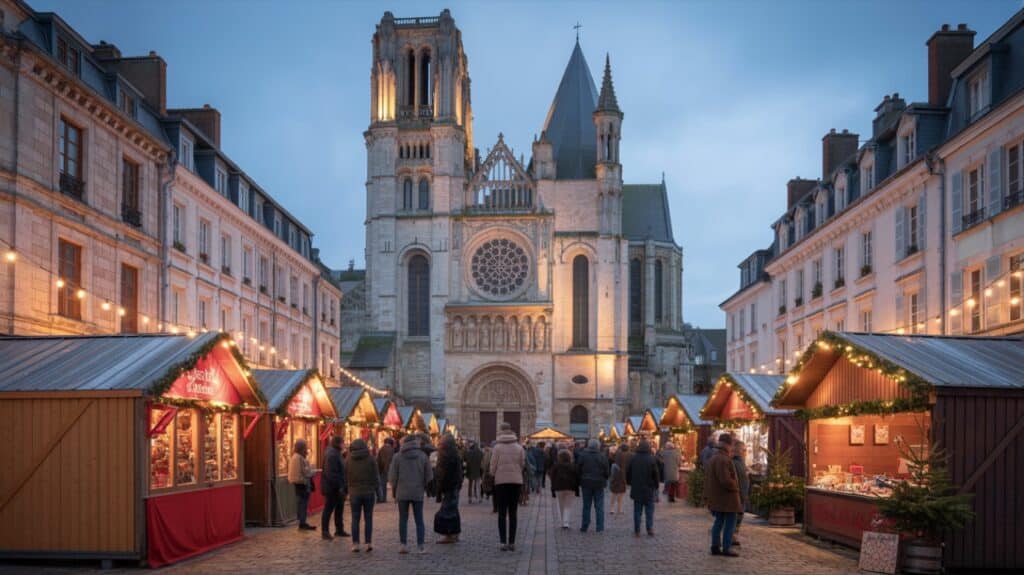
Where to find Laon Christmas Market
Highlights of Laon Christmas Market
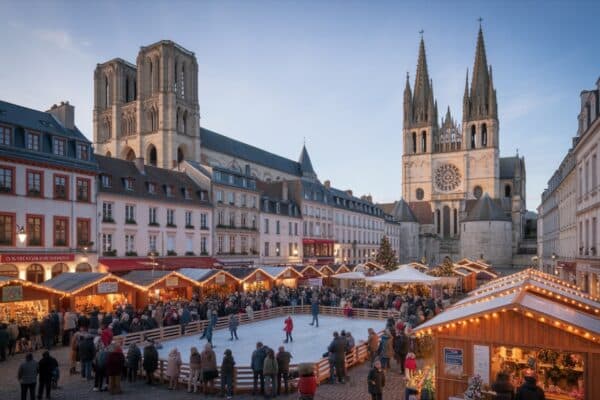
- The market set up in front of the Gothic cathedral and in its adjoining hall
- The real-ice rink and its sledging slope in the lower town
- Nativity scenes from around the world displayed in the nave of Notre-Dame
- The panorama from the seven kilometres of medieval ramparts of the crowned mountain
- Aisne specialities: PGI Soissons beans, tarte au sucre and Maroilles
Where to stay near Laon Christmas Market
Hotels, flats and rooms around the market, for the dates of your stay.
Check availability with our partners
Specialities to try
The flavours that make this market what it is
-
PGI Soissons beans Soissons bean
-
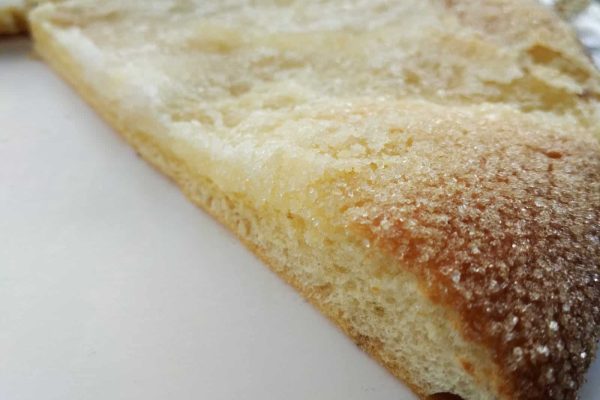
Sugar tart
-
Gâteau battu
-
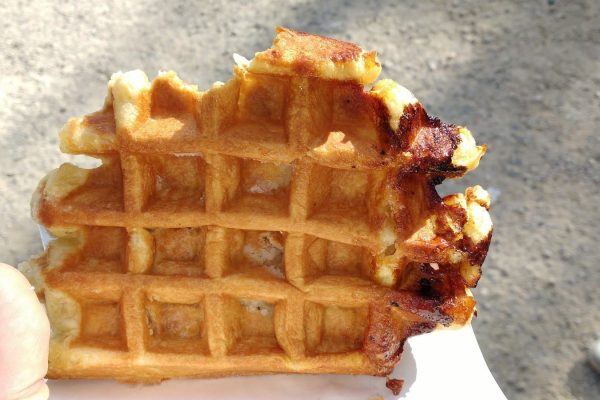
Waffle
-
Flamiche with Maroilles
-
Laon large green artichoke
-
 Champagne from the south of the Aisne Champagne
Perched on its hill in the middle of the Aisne plains, Laon has a nickname that suits it well: the crowned mountain. It is up there, right at the top, on the square in front of the cathedral, that Laon Christmas market takes place. The upper town is home to the medieval ramparts, the cobbled lanes and above all Notre-Dame, whose towers rise above the chalets. You climb up for the view of the towers and come back down with a cup of mulled wine in hand.
A Christmas market in front of the cathedral
The heart of the event sits on the Esplanade Notre-Dame, facing the Gothic façade. Wooden chalets huddle at the foot of the five towers, one of the finest settings imaginable for a hot chocolate. Craftspeople, local producers and designers offer handmade items, treats and gift ideas, from artisan soap to jewellery, jams and local honey. Some of the exhibitors set up in the adjoining Gothic hall, which keeps visitors sheltered when the wind sweeps across the plateau and lets you carry on browsing even in the rain. Inside the cathedral, an exhibition of nativity scenes from around the world lets you continue your visit in the warm, an event the town brings back every winter.
Laon has spread its festivities across several sites in the upper and lower town. The market stays in front of the cathedral, but the carousel turns under the Halles, a big Christmas tree lights up on Place de l'Hôtel-de-Ville, and a little train runs between the different spots. The Vaux and Gare districts also get their share of decorations and events, spreading the celebrations across the whole town rather than a single place. For families, the last edition offered face painting, a photo studio with Father Christmas, an elves' workshop, concerts, brass bands and a Christmas parade ending with fireworks. That parade, followed by Father Christmas coming down from the cathedral, was the highlight of the programme, on a Sunday in mid-December in the late afternoon.
Ice rink, carousel and children's entertainment
For skating, the ice rink (real ice) sets up in the lower town, near the station and Place du Général-Leclerc, with a sledging slope on certain dates. The rink is in the lower town because of the lie of the land, as the upper town is perched and cramped. Children therefore go from the cathedral square and its chalets to their skates by walking down the hill, which makes for an outing on two levels, quite literally.
The ice rink's opening hours change with weekends and school holidays, with longer sessions during the Christmas break and closures around 25 December and 1 January. It is best to check the town's calendar before you go, as not everything opens every day. The mix of the market up top and the rink below makes for a full day on a modest budget, since entry to the market is free.
- The market in front of the cathedral and in the Gothic hall, with craftspeople and treats
- The ice rink in the lower town, near the station, with a sledging slope on some days
- The nativity scenes from around the world displayed in the nave of Notre-Dame
- The carousel under the Halles, the big Christmas tree and the little train linking the activities
- Concerts, brass bands, a Christmas parade and fireworks on the main day of the programme
Specialities and treats from the Aisne
The department plays its own tune on the stalls. You will come across Soissons beans, large white beans grown nearby, among the biggest beans in France, with Protected Geographical Indication status since 2023. They are served in a local cassoulet, in a creamy soup or with roast pork, and are a real source of regional pride on the producers' stalls. Their reputation goes back a long way: they are said to have been prized on Parisian tables as early as the 19th century, which earns them a place of honour between two chalets. Tarte au sucre, soft and golden, is the star on the sweet side, alongside Picardy gâteau battu, a tall, airy brioche that is handy for sharing, and sugar waffles that some associations sell for charity. Maroilles, the pungent cheese from the neighbouring Thiérache, goes into a hot flamiche that is comforting in cold weather, unless it simply ends up on a slice of toast. There is a nod too to the Gros Vert de Laon artichoke, an heirloom vegetable tied to the town, and to the craquelin from Saint-Quentin that sometimes turns up on nearby stalls. Still on the savoury side, Thiérache charcuterie and country pâtés hold their own in gift hampers. And to the south of the Aisne, towards the Marne valley, you enter Champagne country, a chance to raise a glass of something other than mulled wine. For a home-made version of the steaming cup, start with our overview of mulled wine variations, which also tells you where to find the recipe.
Heritage, the cathedral and the oxen on the towers
Notre-Dame de Laon ranks among the great cathedrals of early Gothic art, built from the 1150s onwards, at roughly the same time as Notre-Dame de Paris, in a building project spread over nearly half a century. The façade is framed by two towers that rise to 56 metres, and the building has five in all, completed around 1240 and known for their lightness since they are almost hollow. If you look up, you will spot sixteen stone oxen perched about 56 metres high. Legend has it that they pay tribute to the animals that hauled the limestone blocks from the quarries to the top of the hill, notably those at Chermizy more than fifteen kilometres away, a climb the teams made for years.
Around the cathedral, the medieval ramparts run for about seven kilometres and offer a wide panorama over the Laon plateau. The upper town has more than eighty listed or registered houses and monuments: fortified gates, the Templars' chapel, private mansions and cobbled alleys. Visiting the market here also means exploring one of the best-preserved fortified towns in northern France, with the view opening up all at once as you reach the edge of the plateau. The Christmas decorations sit on this backdrop of old stone without hiding it, which gives the market its particular charm.
The hill holds other surprises if you have a little time. Beneath the upper town runs a network of galleries and cellars dug into the limestone, left by centuries of quarrying and storage, which has earned Laon the nickname of the underground city. Above ground, the Templars' chapel, a small 12th-century octagonal building tucked away in a garden, ends the walk on a more intimate note. Between two cups, a detour along the ramparts takes you past fortified gates and old façades, and the festive lighting warms the grey stone better than daylight does.
Practical information, getting there and visiting tips
Laon is reached by train from Paris Gare du Nord in just over an hour and a half, with several TER regional services a day. The station is in the lower town, about 2 kilometres from the upper town, and city bus lines climb up to the cathedral square and the historic centre. By car, the A26 serves the town, with parking around the hill, although spaces fill up quickly on busy days. The Poma 2000 cable car that once linked the station to the upper town has closed, so the climb is by bus, on foot through the alleys, or by car. Allow one to two hours to go round the market without rushing, a bit more if you add the ice rink and a stroll along the ramparts.
The dates of the 2026 edition have yet to be confirmed by the town; the last edition ran from early December into the first days of January, with the market open mainly at weekends in December and a shorter window in the week before Christmas. Bring good shoes for the cobbles and a warm scarf, as the wind is stronger at the top of the hill than in the lower town. To make a longer trip of it, Reims Christmas market with its Champagne touch, the one in Compiègne and Soissons Christmas market round off a weekend in the Hauts-de-France nicely.
Our tip
Park in the lower town and go up by bus or on foot through the alleys: arriving on the illuminated cathedral square is well worth the short climb. Wear walking shoes for the cobbles and a warm scarf, as the wind is stronger at the top of the hill.
Reviewed and approved by the editorial team
Checked on against 8 official sources. Detailed sources available on request.
A question, a mistake or a problem on this page? Write to us
Markets nearby
Activities nearby
Parks and sites running a Christmas programme less than an hour's drive away. They aren't Christmas markets, and admission is charged.
 Opens on 19 December
Park
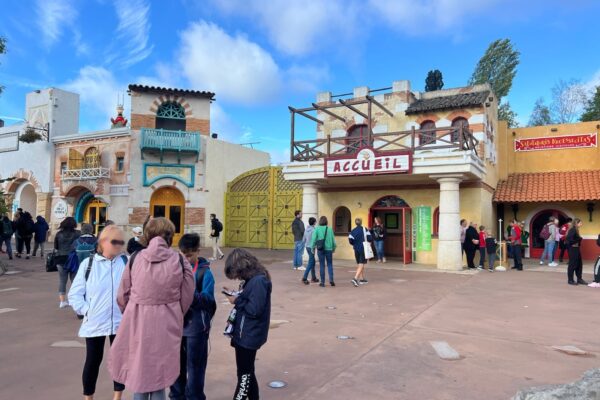
Parc Astérix at Christmas: Noël Gaulois
Plailly
From 19 December to 3 January 2027
Worth the weekend · Park
 Opens on 7 November
Park
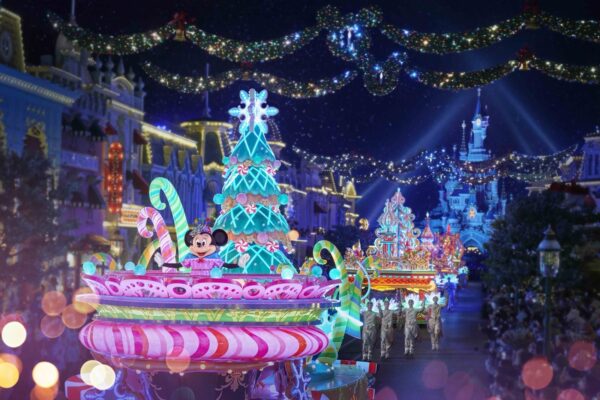
Disneyland Paris at Christmas: Disney Enchanted Christmas
Chessy
From 7 November to 6 January 2027
Worth the trip · Park
 Dates to be confirmed
Park
Pairi Daiza at Christmas: Christmas Time
Brugelette
Worth the weekend · Park