
Christmas in the Southern Hemisphere: a Christmas Eve in midsummer
Christmas in the Southern Hemisphere falls four days after the 21 December solstice, which is the longest day of the year down there. 25 December therefore arrives in the middle of summer and, for Australian or Argentine schoolchildren, in the middle of the long summer holidays. The calendar is the same as in Europe, and so are the images, but the thermometer changes the holiday: the table shifts to cold dishes and the barbecue, concerts move out into the parks, and the fir tree gives way to a flowering tree. We followed what summer does to Christmas, from Melbourne to Nouméa via Buenos Aires and Réunion.
Christmas in Australia: summer holidays, carols and Boxing Day
In Australia, Christmas falls during the school summer holidays. The big moment of the holiday is lunch on 25 December, often informal, and part of the day is spent outdoors.
An Australian Christmas lunch: prawns, ham and pavlova
On the menu, Christmas ham, seafood and Christmas pudding sit alongside trifle and pavlova. Prawns are a classic of the table, to the point that queues form from early morning at the fish markets. Seasonal fruit follows: mangoes, cherries, peaches and other stone fruit. Each family adds its own dishes, a Malaysian laksa here, a panettone there, and the host often asks everyone to bring their own. Many families then spend the afternoon at the beach, in the garden or in a park.
Carols by Candlelight, Sydney-Hobart and the Boxing Day Test
On the evening of 24 December, Melbourne listens to Christmas carols by candlelight. Carols by Candlelight is a concert founded by Norman Banks, a presenter on radio station 3KZ. The most repeated story, without certainty, has it that he got the idea on Christmas Eve 1937 when he saw an old woman listening alone to carols on the radio, by candlelight. The first edition took place in 1938 at the Alexandra Gardens, in front of around 10,000 people. The concert has occupied the Sidney Myer Music Bowl since 1959, it is broadcast on television, and since 1965 all its proceeds go to blind or vision-impaired children.
The next day, two sporting fixtures occupy the country. The Sydney-Hobart yacht race leaves Sydney Harbour on 26 December, as it has since 1945, bound for Tasmania. Nine yachts were at the start the first year, and the race has only been cancelled once, in 2020. In Melbourne, on the same day, the Boxing Day Test brings cricket fans to the Melbourne Cricket Ground, an annual fixture since 1980, which many watch on television around a barbecue.
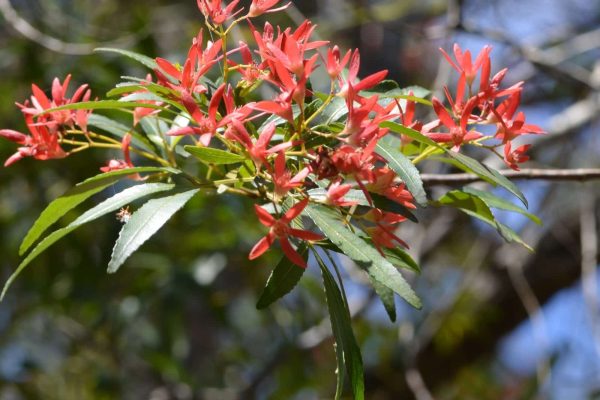
A plant also bears the name of the holiday. In New South Wales, the Christmas bush is a shrub whose sepals turn pinkish red around Christmas. Other plants bear the same name in other states, with no relation between them.
Australia also gives itself a second Christmas, in July, in the middle of the southern winter. In the Blue Mountains, west of Sydney, Yulefest offers traditional Christmas dinners in the middle of July. The origin of this Christmas in July remains disputed: the most widespread story speaks of Irish visitors who, at Katoomba, supposedly saw snow fall in July and asked for a real Christmas meal.
Traditions
Christmas in Australia: 25 December 2026 in the middle of summer
Christmas in Australia falls on Friday 25 December 2026 in midsummer: outdoor lunch, Carols by Candlelight in Melbourne and the Sydney Hobart race.
Read the articleChristmas in New Zealand: the pōhutukawa, a Christmas tree in flower
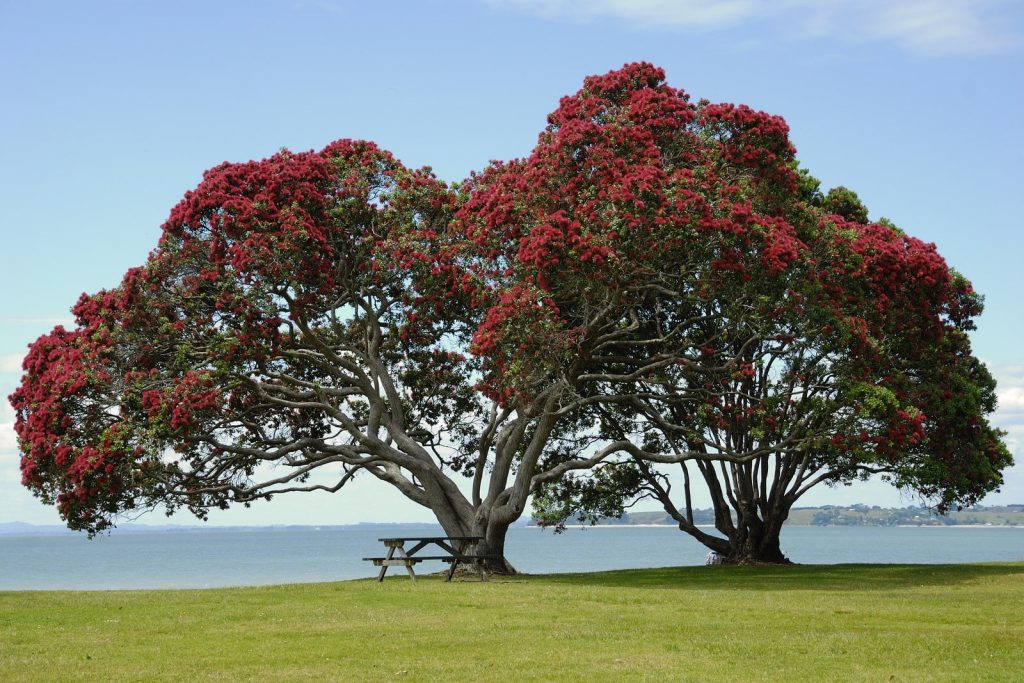
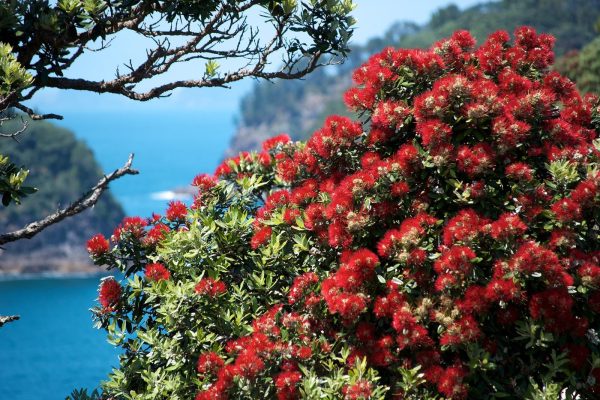
On the New Zealand coast, the pōhutukawa covers itself around December with bright red to crimson flowers. This coastal tree has been called the New Zealand Christmas tree since the 1850s, and in the 19th century its branches decorated homes, churches and meeting places. The European-style fir, popularised in Britain in the 1840s, was seen mainly in schools and churches, and in wealthy homes. The history of the Christmas tree thus has, at the other end of the world, a sequel without a fir.
In Auckland, the Santa Parade has been parading since 1934. The Farmers department store launched it in Queen Street and Karangahape Road, and a foundation organises it today, in late November or early December. Father Christmas is said to have been parachuted onto the Auckland Domain in 1937, an anecdote often repeated but never established.
For dessert, the pavlova, a meringue named after the dancer Anna Pavlova, accompanies Christmas and the summer holidays. Australia and New Zealand dispute it, and the question is not settled: one New Zealand researcher leans towards her country, others towards a European origin.
Traditions
Christmas in New Zealand 2026: barbecues, pavlova and red pōhutukawa in summer
Christmas in New Zealand falls in midsummer: outdoor lunches, pavlova, red pōhutukawa trees and Santa parades on 29 November and 6 December 2026.
Read the articleChristmas in South Africa: braai, gammon and the Day of Goodwill
In South Africa, many families give up the seated meal for a braai, the local barbecue, outdoors. Gammon, a glazed ham, is served hot on the 25th and cold on the 26th. For dessert, malva pudding, a moist apricot cake served hot with custard, takes precedence over a more symbolic Christmas pudding. Its origin remains disputed. On the coast, seafood goes on the braai, and some families spend the holidays by the sea.
26 December, a public holiday, has been called the Day of Goodwill since 1980. It replaced Boxing Day, and the 1994 Public Holidays Act confirmed it.
Traditions
Christmas in South Africa: Christmas Day in the southern summer
Christmas in South Africa falls in midsummer: braai in the sun, glazed gammon, malva pudding, 26°C in Cape Town and Christmas markets in Johannesburg.
Read the articleChristmas in Brazil, Argentina and Chile: the midnight feast
In Brazil as in Argentina, the main moment is the evening of 24 December, and everyone waits for midnight.
Brazil: the ceia de Natal and Natal Luz in Gramado
In Brazil, the meal is called the ceia de Natal. It takes place on the evening of 24 December and lasts until midnight. On the table: turkey, farofa, salpicão, a cold salad, rabanada, a Portuguese-style French toast, and panetone brought by Italian immigrants. Summer imposes its adaptations, with salads and iced desserts.
In Gramado, in the Serra Gaúcha, Natal Luz lasts 88 days. The 41st edition runs from 22 October 2026 to 17 January 2027, with shows such as the Nativitaten performed on a lake, the Grande Desfile de Natal and a daily illumination. Its Christmas market, the Vila de Natal, opens every day on Praça das Etnias, with the house of Papai Noel. The event was born in 1986 to attract visitors in summer, the off-season for this mountain town.
Argentina: the tree of 8 December and midnight fireworks
In Argentina, the Christmas tree goes up on 8 December, the feast of the Immaculate Conception and a national holiday, and stays until 6 January. Nochebuena, the evening of the 24th, counts more than lunch on the 25th. The meal is often taken outdoors, in the garden, on the terrace or on the balcony, often in temperatures above 30°C in Buenos Aires. The asado sits alongside cold dishes inherited from Italian and Spanish cuisines, such as vitel toné, vinaigrette tongue and salads, then pan dulce arrives for dessert.
At midnight, families toast with Mendoza sparkling wine or cider, open the presents, and fireworks burst. A parent sometimes dresses up as Papá Noel. In the shopping centres of Buenos Aires, the decorations remain snowy despite the heat.
Chile: the Viejito Pascuero, pan de pascua and cola de mono
In Chile, Father Christmas is called the Viejito Pascuero, the “little old man of Easter”, because Christmas was called Pascua, a usage that came from Spain. The name is said to have taken hold around 1905, when the window display of the Bazar Alemán Krauss, on the Plaza de Armas in Santiago, had the character played by an actor in the middle of summer, a story often told and never established. Before him, the Three Kings brought the presents. The other names of Father Christmas around the world have their own article. On the table: pan de pascua, a fruit and spice cake, cousin of the German Stollen, and cola de mono, a cold drink of aguardiente, milk, coffee and spices, whose name has several legends and no certain version.
Traditions
Christmas in Brazil: the midnight ceia and Papai Noel in high summer
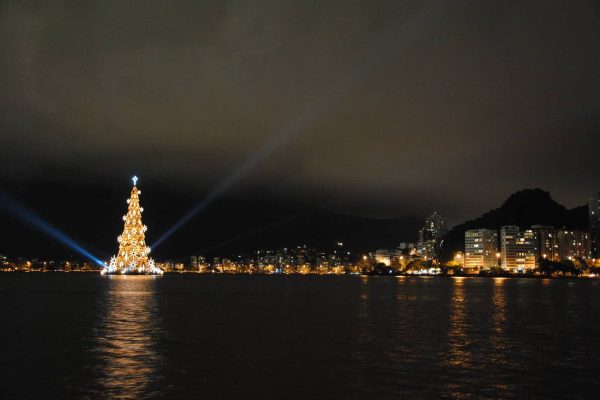
Christmas in Brazil falls in midsummer: ceia at midnight on 24 December, Papai Noel, the floating tree in Rio and Natal Luz in Gramado 2026.
Read the article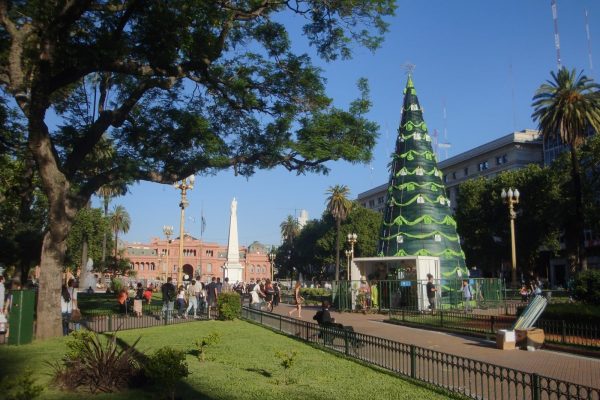
Traditions
Christmas in Argentina: Nochebuena on 24 December in the southern summer
Christmas in Argentina falls in the southern summer: Nochebuena on 24 December outdoors, vitel toné and pan dulce on the table, tree up on 8 December.
Read the article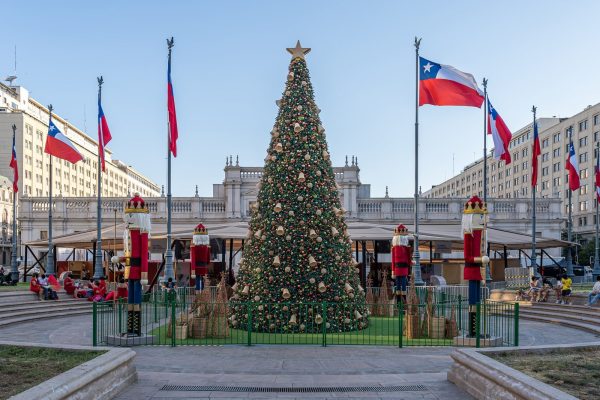
Traditions
Christmas in Chile: Nochebuena dinner in the southern summer
Christmas in Chile falls in the southern summer: Nochebuena on 24 December, midnight gifts from the Viejito Pascuero, pan de pascua and cola de mono.
Read the articleChristmas in Réunion and New Caledonia: cari and lychees
In Réunion, the réveillon brings the family together after midnight Mass. The aperitif is taken with rhum arrangé, with bonbons piments (chilli fritters) and samoussas. The “lontan” menu combines rice, cari and rougail, with pulses, Cilaos lentils or pois du Cap. The caris are turkey, bichique or fish, and the rooster civet has its place. For dessert, lychees, mangoes and bûche. The pâté créole, for its part, waits for New Year’s Eve.
In New Caledonia, December is one of the hottest months of the year. Lacking a fir, families often decorate a columnar pine, the island’s emblematic tree. In Nouméa, the city organises Nouméa Féerie every December: the illuminations light up from mid-November in the streets, on the bays and at place des Cocotiers, where a Fête de la Lumière takes place every evening. At place de la Marne: a big fir tree, Father Christmas’s mailbox and an artisanal Christmas market run by Caledonian artisans. On the evening of 24 December, Father Christmas arrives at place des Cocotiers and the mayor hands him the keys to the city for his round.
Why a summer Christmas still keeps its winter imagery
The snowy decorations of the Buenos Aires shopping centres, the Christmas pudding served for form’s sake in South Africa, the July Christmas of the Blue Mountains, the fir tree that came from Europe to 19th-century New Zealand schools: the imagery of Christmas remains that of the European winter, and each country makes do with its summer. The ham remains but is eaten cold the next day, the concert keeps its candles but moves into a park, and in New Zealand a flowering tree takes the role of the fir. If you ever spend Christmas in summer, you will find the same carols, the same garlands and the same calendar, with an outdoor lunch on top.
| Country | On the table | The summer detail |
|---|---|---|
| Australia | Christmas ham, prawns, pavlova, mangoes and cherries | Candlelight carols on the 24th, yacht race and cricket on the 26th |
| New Zealand | Pavlova | The pōhutukawa in flower |
| South Africa | Gammon, malva pudding | Outdoor braai |
| Brazil | Turkey, farofa, rabanada, panetone | 88 days of Christmas in Gramado |
| Argentina | Asado, vitel toné, pan dulce | Fireworks at midnight |
| Chile | Pan de pascua, cola de mono | The Viejito Pascuero |
| Réunion | Cari, rougail, lychees | Réveillon after midnight Mass |
Whoever celebrates Christmas in the south therefore has two Christmas seasons, that of the images and that of the thermometer. Both fall on the same day.
Reviewed and approved by the editorial team
A question, a mistake or a problem on this page? Write to us
Also worth reading
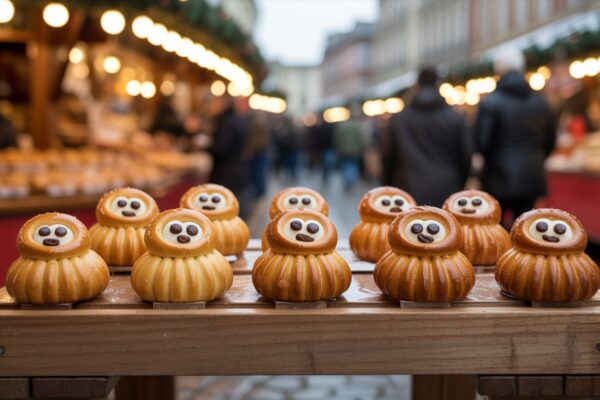
Manala: the little brioche man of Saint Nicholas’ Day
The manala (a little brioche man) is the figure in enriched dough that Alsace brings out every year as December settles in. A plump body,…
Read the article
Christmas in South Africa: Christmas Day in the southern summer
Christmas in South Africa falls in midsummer: braai in the sun, glazed gammon, malva pudding, 26°C in Cape Town and Christmas markets in Johannesburg.
Read the article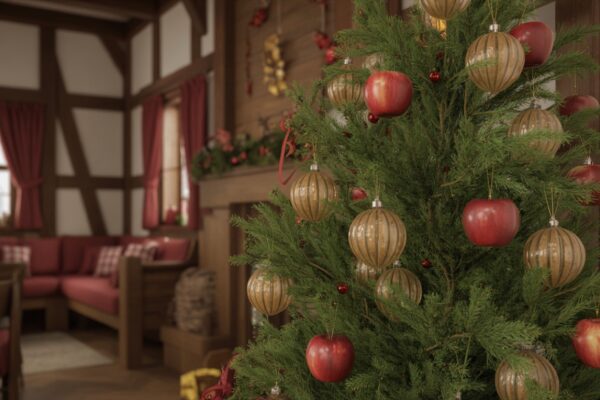
The Christmas tree, a story born in Alsace
The history of the Christmas tree, from the medieval tree of paradise to Sélestat in 1521, then the glass baubles and its spread across France.
Read the article