
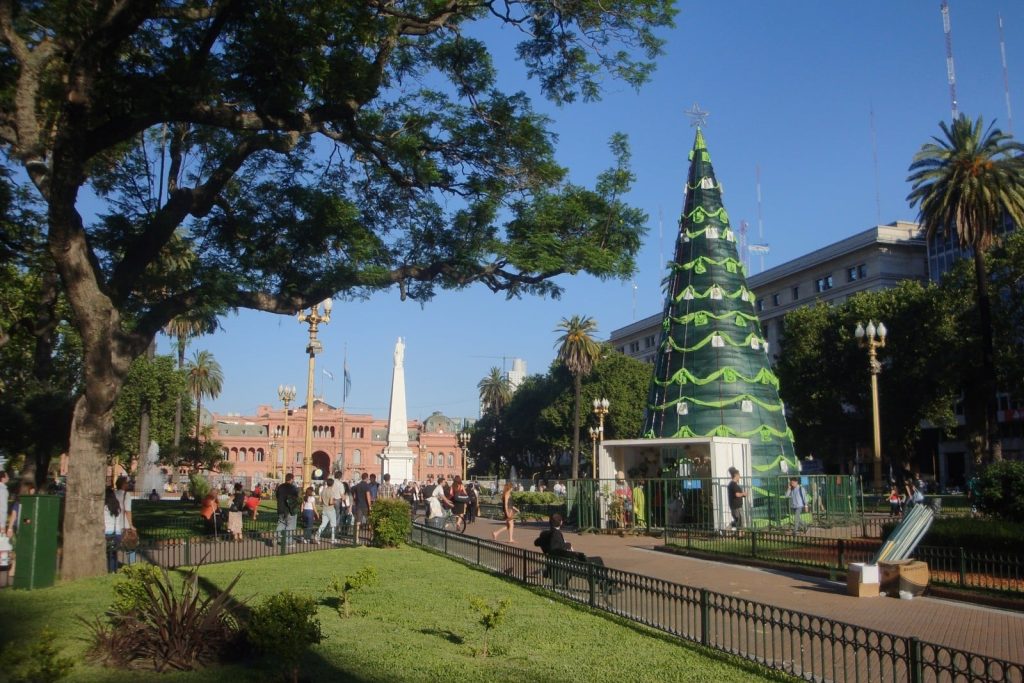
Christmas in Argentina: Nochebuena on 24 December in the southern summer
Christmas in Argentina takes place in the southern summer, four days after the December solstice, the longest day of the year in the Southern Hemisphere. The calendar is the same as in Europe, but the heat changes the celebration: the Christmas Eve dinner is often held outdoors, the table shifts to cold dishes and the tree stands in summer temperatures. 25 December falls at the very start of the summer school holidays, as we explain in our article on Christmas in the Southern Hemisphere.
An Argentinian Christmas starts on the night of 24 December, outdoors
In Argentina, the Nochebuena (Christmas Eve) on the evening of 24 December counts more than the lunch on 25 December. The dinner lasts well past midnight, often outdoors in a garden, on a terrace or a balcony, in Buenos Aires as elsewhere. At midnight, guests toast, open the presents placed under the tree, and the sweet table arrives afterwards and lasts until late.
Fireworks go off at midnight in many cities, but Buenos Aires City declared its entire territory a “quiet zone free of pyrotechnics” in December 2025: the use of any firework with a sound effect is banned there, with immediate seizure. Río Negro province and the city of Bariloche also ban sound pyrotechnics, and since 2026 Bariloche has banned all fireworks, including silent ones that only give off light.
The Nochebuena table: asado, vitel toné and pan dulce
Because of the heat, the Argentine Christmas table mixes asado with cold dishes inherited from Italian and Spanish cuisines. The asado brings together meat grilled over fire (entraña, vacío, bife de chorizo) and offal (chorizo, morcilla, mollejas), sometimes a roast suckling pig (lechón).
Among the cold dishes, vitel toné holds a central place: slices of peceto (veal or beef) cooked and served cold under a sauce of tuna, anchovies, mayonnaise and capers. Born in Piedmont as vitello tonnato, it arrived with Italian immigrants. The table also offers lengua a la vinagreta (marinated beef tongue), ensalada rusa (potatoes, carrots and peas with mayonnaise) and matambre arrollado, a thin cut of beef rolled around vegetables and hard-boiled eggs, served cold.
For dessert, pan dulce dominates: a tall brioche with candied fruit, raisins and nuts, flavoured with lemon, vanilla and orange blossom, sometimes with a sugar glaze. It descends from the panettone brought by Italian immigrants. The sweet table ends with turrón (a bar of sugar and honey with almonds, of Spanish origin), garrapiñadas (peanuts or almonds in a crunchy sugar crust) and budín (a fruit cake).
To drink, sidra (sweet cider) lets children and grandparents alike toast. At midnight, people toast with a sparkling wine from Mendoza. Some families also prepare ananá fizz, a mix of sidra and pineapple juice served very cold.
Christmas traditions in Argentina start with the tree on 8 December
Families put up the tree on 8 December, the feast of the Immaculate Conception, a national holiday. This date opens the Christmas preparation period. The tree itself has a long history, which we trace in our article on the history of the Christmas tree. Many families also set up the pesebre (nativity scene) next to the tree, with the Magi placed aside. The tree is usually kept until 6 January, Epiphany.
In the shopping centres of Buenos Aires, snow-covered trees and decorations from Europe contrast with the outside heat.
Papá Noel and the Reyes Magos on 6 January
In Argentina, people say Papá Noel. In some families, a family member dresses up as Papá Noel to give presents to the children around midnight. Papá Noel appears among the names of Santa Claus around the world.
The Reyes Magos (Three Kings) ritual may have lost ground to Papá Noel, but it remains alive. On the night of 5 January, children place their shoes near the door, a window or under the tree, often with a letter to the Kings, and leave cut grass and water for the camels. The presents appear on the morning of 6 January, which is not a holiday in Argentina: in 2027, it falls on a Wednesday, in the middle of the summer holidays.
The Misa de Gallo, the mass on the night of 24 December, used to be held at midnight. It is reportedly now often moved to 8pm or 9pm, so families can share dinner afterwards.
December 2026: a four-day long weekend and 29 °C in Buenos Aires
In 2026, 8 December falls on a Tuesday and 25 December on a Friday, both fixed national public holidays. Monday 7 December 2026 is declared día no laborable con fines turísticos: it is not a holiday, but many take the Monday to form a four-day weekend from Saturday 5 to Tuesday 8 December. 24 December falls on a Thursday.
School ends on Friday 18 December 2026 in Buenos Aires city, Córdoba and Santa Fe, and on Tuesday 22 December in Buenos Aires province and Mendoza. Summer holidays start the next day and last until the end of summer.
For the weather, December is a hot summer month in Buenos Aires, where average highs reach 29 °C and lows 18.5 °C, and in Córdoba (31 °C). In Ushuaia, in the far south, average highs reach 12.5 °C, but the sun stays in the sky for over seventeen hours around Christmas.
Christmas in Buenos Aires at the Obelisco and fairs across Argentina
In recent years, the City of Buenos Aires has launched the festivities on 8 December in front of the Obelisco: lighting up, countdown, Christmas carols and mapping projected on the monument. The illuminations stay until 7 January. In 2025, a Christmas trail was also set up in Palermo the week before Christmas: a light garden, a Christmas market of entrepreneurs, a tree, a nativity scene and concerts.
In Córdoba, a light tree made of LED strips lights up each 8 December on the Faro del Bicentenario, a hundred-metre tower in Parque Sarmiento. Bariloche organises “Navidad en Bariloche” from 8 December to 6 January, with an opening at the Centro Cívico, the lighting of a giant pine and a Santa’s house. In 2025, an artisans’ fair was also held at Puerto San Carlos until 24 December.
In Salta, the living nativity of Villa Las Rosas has been performed at the foot of Cerro Capitán since the mid-1960s, with over 200 participants in handmade costumes, from the evening of Christmas Day to Epiphany. In Misiones province, on Route 12 between Posadas and the Iguazú Falls, the small town of Capioví, which has fewer than 10,000 inhabitants, decorates itself each year with giant decorations made of recycled materials. The Christmas market closest to the Central European spirit takes place in Villa General Belgrano (Córdoba), on the site opposite Plaza José Hernández: craft stalls open every evening at 7pm and free shows almost every evening, from mid-December to early January.
Reviewed and approved by the editorial team
A question, a mistake or a problem on this page? Write to us
Also worth reading
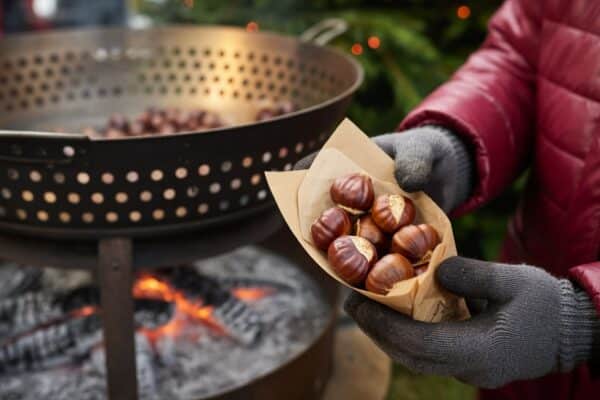
Marrons Chauds: the Paper Cone of Roasted Chestnuts That Warms Every Christmas Market
Roasted chestnuts at Christmas markets: marron versus châtaigne, the perforated pan, the AOP growing regions and tips for choosing and peeling them well.
Read the article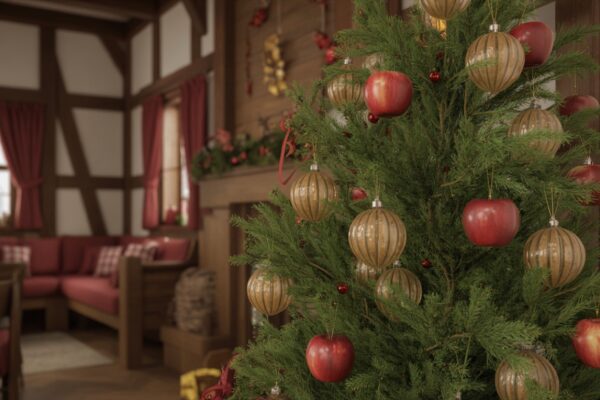
The Christmas tree, a story born in Alsace
The history of the Christmas tree, from the medieval tree of paradise to Sélestat in 1521, then the glass baubles and its spread across France.
Read the article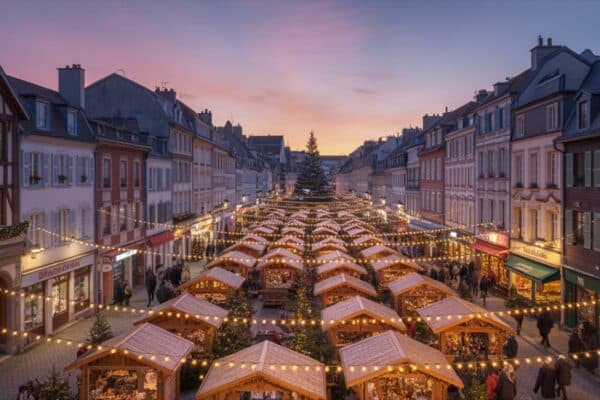
The Largest Christmas Market in France: Which One Really Wins?
Which is the largest Christmas market in France? Strasbourg, Colmar and Amiens compared by chalets and visitor numbers, with verified 2025 figures.
Read the article