
Where to find Forbach Christmas Market
Highlights of Forbach Christmas Market
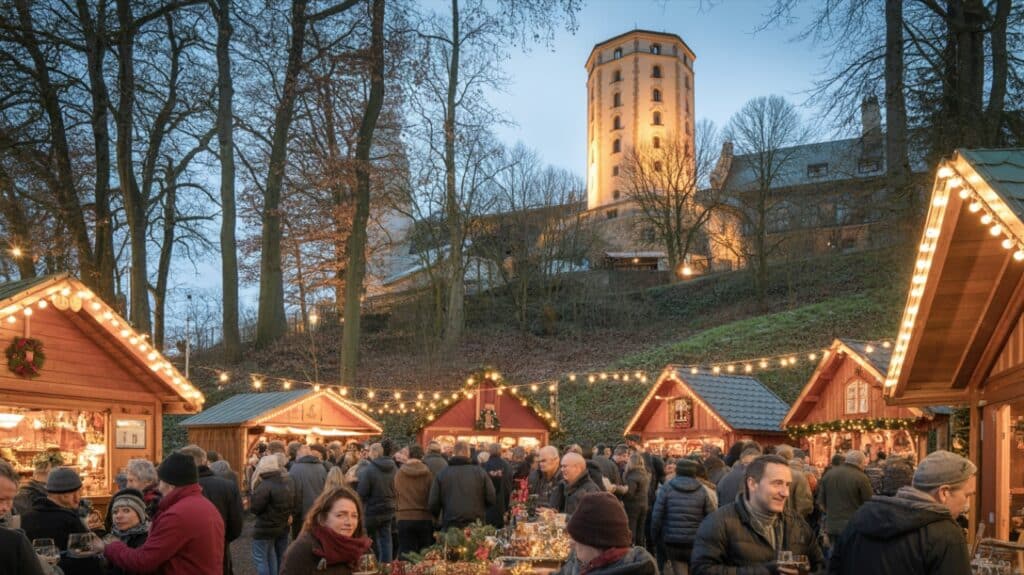
- Schlossberg park setting, overlooked by its illuminated octagonal tower
- Lantern trail in the rose garden
- Cross-border specialities: Forbach beer, currywurst, pretzels, bredele
- Ice rink on Place Aristide Briand open until January
- Free little train linking the town centre and the Schlossberg
Where to stay near Forbach Christmas Market
Hotels, flats and rooms around the market, for the dates of your stay.
Check availability with our partners
Specialities to try
The flavours that make this market what it is
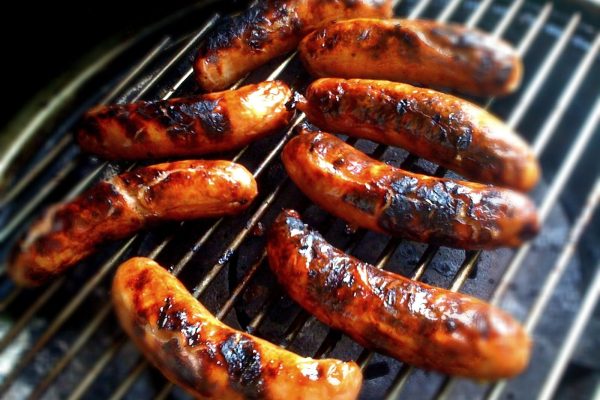
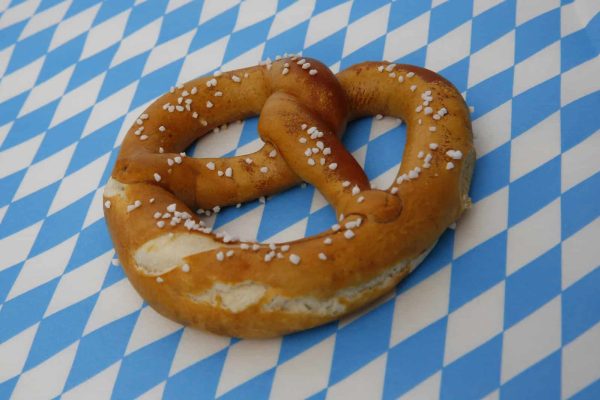
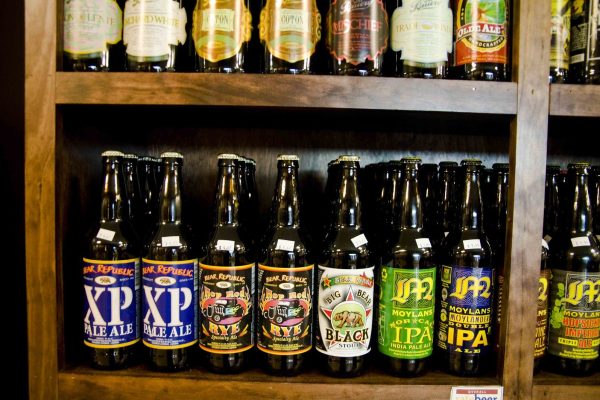
Set in eastern Moselle, a few kilometres from the German border and Saarland, Forbach has a French-German identity that shows right down to its festive season. Forbach Christmas market takes root in Schlossberg park, the wooded hillside crowned by the castle's octagonal tower. Under the illuminated trees, the wooden chalets blend traditions from both sides of the border: mulled wine, bredele, grilled sausages and currywurst sit happily side by side. The atmosphere is warm and more Germanic than you might expect on the French side, fitting for a town that long lived to the rhythm of coal and now looks towards neighbouring Saarland.
Schlossberg park, the heart of Forbach Christmas market
The choice of setting is no accident. Schlossberg park climbs the hill that bears the remains of the medieval castle, first mentioned in 1257. The present tower, 28 metres high, was rebuilt in 1891 by the architect Paul Tornow, the same man who was then in charge of work on Metz Cathedral. It does not stand on the site of the old keep but on that of a corner tower, the red tower, which once watched over the Saar, hence its nickname, the Saareck tower. Neo-Gothic in style, with its spiral staircase, it has become the symbol of the town. When lit up, it acts as a beacon above the chalets. Around the rose garden, a lantern trail brings together light installations that turn the paths into a night-time walk. Children love to linger there, and so do their parents. The rest of the festivities are split between Place Aristide Briand and Place Fischart in the town centre, which gives the event a scattered layout that a free little train links up with ease.
This two-site layout changes the way you experience the market. At the Schlossberg, it feels like a walk in the woods: chalets nestle between the trees, lights run from trunk to trunk and the smell of woodsmoke mingles with that of mulled wine. Down on the town-centre squares, you find urban bustle, open shops and the ice rink. The two moods complement each other, and many visitors go back and forth over the evening. In recent editions the park chalets closed around 23 December, while the town-centre attractions often stay until early January. Worth bearing in mind if you plan to come between Christmas and New Year.
Cross-border specialities and treats to try
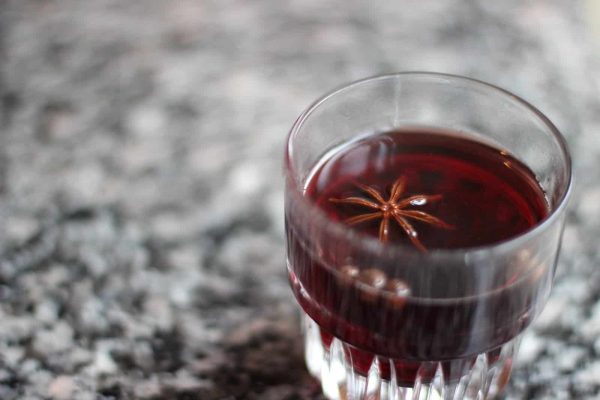
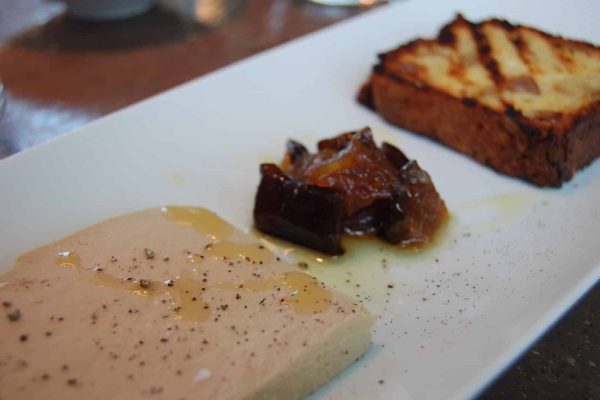
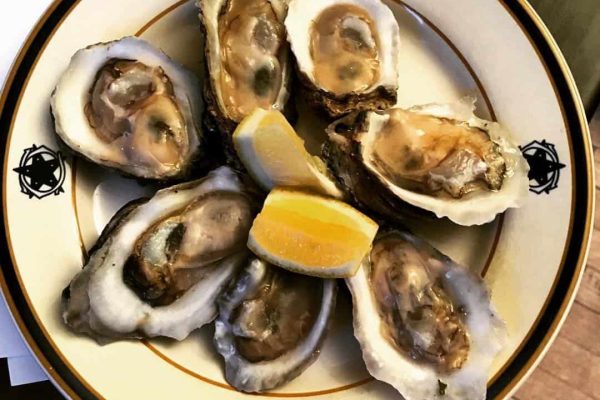
This may be where Forbach stands out most from its neighbours. The market's food draws on two cultures. On the French and Lorraine side, you will find foie gras, oysters, snails, crêpes and gingerbread. On the German side, currywurst, pretzels and grilled sausages are a reminder that Saarland is next door. Locally brewed beer, the well-known Forbach beer, goes with the savoury stalls, while mulled wine holds its usual place near the braziers. If you want to keep tasting at home, a few good home-made mulled wine recipes are enough to recreate the atmosphere. Bredele, the little Christmas biscuits shared with Alsace and Germany, complete the sweet side.
This mixed cuisine tells the town's story. Forbach long lived to the rhythm of the coal mines of the Lorraine coalfield, which produced nearly 800 million tonnes before the last pit, at La Houve, closed on 23 April 2004. The pits drew workers from everywhere: Polish and Italian families before the war, Saarlanders attracted by the strong franc, workers from North Africa who arrived in the 1950s. Nearby, the Behren-lès-Forbach housing estate, founded in 1962 by the Houillères mining company, was once home to as many as twenty-three nationalities. The Christmas table still carries that heritage: people eat what is also eaten across the border, in Saarland's markets. Foie gras from the Lorraine festive meal sits alongside grilled sausage in a bread roll with no pecking order, and local beer has as much of a place as mulled wine. If you like to taste before you buy, there is plenty to explore, as long as you arrive hungry.
Entertainment and Christmas spirit
The town puts real care into its programme. An ice rink sets up on Place Aristide Briand and stays open well after 25 December, keeping the atmosphere going until early January. The little train, open to all and free, shuttles every half-hour between the town centre, the Ville-Haute and Schlossberg park: handy when you come with family or want to spare your legs. Recent editions have also seen a light-up drone show and an Advent tower, proof that the town is not afraid to update its recipe. The detailed programme for the 2026 edition has not yet been published, so check dates and times on the town hall website before you go.
The pace of events follows the school holidays. Early in the season the mood is calm, better suited to a quiet visit as a couple or with friends. As 25 December approaches, weekends draw families and the crowds grow, especially when a show is on. Saint Nicholas and visits from Father Christmas mark the month for the youngest, a strong tradition throughout eastern France as in neighbouring Germany, where 6 December still really matters. The saint arrives escorted by his donkey and hands out mandarins and gingerbread, while Père Fouettard keeps a watchful eye on the naughtier children, a double act inherited from the Germanic countries. Here, Advent is also counted on a giant calendar on the front of a building, with one window opened each evening until Christmas, a custom that came from the Rhineland towns. As for the ice rink, the ice holds up outdoors under an open-sided marquee, and the evening sessions are the most popular as soon as a choir or concert starts on the square. If you come with children, choose a weekday afternoon to enjoy the chalets and the rink without too much waiting.
What to see around Forbach
The market goes well with a heritage walk. The Chapelle Sainte-Croix, the town's oldest monument, was built in the 13th century on the hill of the same name, east of Forbach. It is mentioned as early as 1338 in a letter from the Bishop of Metz as capella sancta crucis juxta Forbachum, before being altered in the 14th and 15th centuries and then damaged during the Thirty Years' War. A listed historic monument since 1937, it keeps a carved 13th-century tympanum showing Christ on the cross, and stands on the Way of St James that comes from Saarland and heads on to Metz. From its terrace, the view sweeps across the whole Warndt basin and the border. The Schlossberg tower, once you have climbed its steps, offers the same kind of panorama over the region. Forbach also makes a good base for exploring: German Saarland is within easy driving distance, and several Moselle towns hold their own end-of-year events. Sarreguemines Christmas market, very close by, also plays the cross-border card, while Metz Christmas market and Thionville Christmas market offer more urban atmospheres less than an hour's drive away. The Chapelle Sainte-Croix is best visited in daytime: climbing the hill before the market lights up, then coming back down to enjoy the chalets at dusk, makes a good afternoon plan. If you want to go further, cross the border and compare with the Saarland markets in Saarbrücken or Völklingen, where the Christmas spirit takes on a similar but quite distinct flavour.
Practical information and tips
Forbach is easy to reach by train, with the station served from Metz and Saarbrücken, and by the A4 motorway linking Metz to the border. Parking at the Ville-Haute and the Schlossberg can fill up fast: that is exactly what the little train and park-and-ride car parks are for. Here are the key points to keep in mind:
- By train: Forbach station, regular services from Metz and from Saarbrücken on the German side.
- By car: A4 motorway, Forbach exit, then follow signs to the centre and the park.
- On site: free little train every 30 minutes between the town centre and the Schlossberg.
- Budget: free entry to the market, bring enough for a snack and a glass of mulled wine.
- Tip: combine your visit with a trip to neighbouring Saarland to compare the traditions of the two countries.
With its hillside setting, its cuisine straddling two borders and its entertainment stretching into January, Forbach Christmas market offers a festive break with a character all its own in eastern Moselle.
Our tip
Leave the car at the park-and-ride and hop on the free little train: it shuttles every 30 minutes between the centre and Schlossberg park.
Reviewed and approved by the editorial team
Information checked against 6 official sources. Detailed sources available on request.
A question, a mistake or a problem on this page? Write to us
Markets nearby
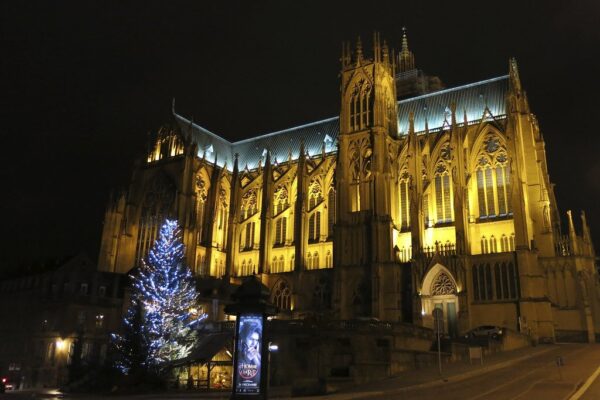 Opens on 20 November
Metz Christmas Market
Metz
From 20 November to 30 December 2026
Worth the trip
 Opens on 23 November
Saarbrücken Christmas Market
Saarbrücken
From 23 November to 30 December 2026
Day out
 Dates to be confirmed
Sarreguemines Christmas Market
Sarreguemines
Local favourite
Activities nearby
Parks and sites running a Christmas programme less than an hour's drive away. They aren't Christmas markets, and admission is charged.
 Opens on 20 November
Park
Parc de Sainte-Croix at Christmas: Lumières d’Hiver
Rhodes
Worth the weekend · Park
 Opens on 28 November
Event
Haut-Koenigsbourg Castle at Christmas
Orschwiller
From 28 November to 31 December 2026
Day out · Event
 Opens on 28 November
Park
Europa-Park at Christmas: Winterzauber
Rust
From 28 November to 9 January 2027
Worth the trip · Park