
Where to find Sarreguemines Christmas Market
Highlights of Sarreguemines Christmas Market
- A faience Christmas market that puts clay and enamel in the spotlight
- Some thirty illuminated chalets around Place du Marché
- The Saint Nicholas parade in early December, with procession and brass band
- Moselle specialities: quiche, pâté lorrain, pretzels, mirabelle plums
- A pedestrian town centre within walking distance of the station
Where to stay near Sarreguemines Christmas Market
Hotels, flats and rooms around the market, for the dates of your stay.
Check availability with our partners
Specialities to try
The flavours that make this market what it is
Artisan faience and pottery
quiche lorraine
pâté lorrain
pretzels
Saint Nicholas mannala
mirabelle plums and spiced mulled wine
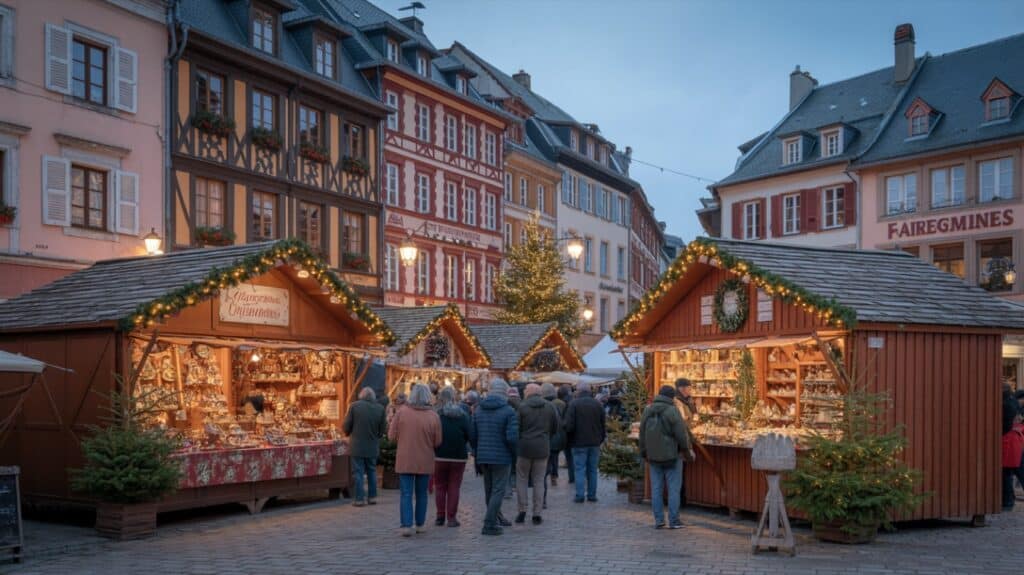
On the banks of the Saar, a stone’s throw from the German border, Sarreguemines carries its faience history right into its end-of-year celebrations. Sarreguemines Christmas market, known as the faience Christmas market, fills the historic centre with some thirty illuminated wooden chalets, between Place du Marché and the neighbouring pedestrian streets. You’ll find local crafts here, and the earthenware and enamel that made the town famous, in a down-to-earth Moselle atmosphere where a Germanic accent mingles with the scent of mulled wine.
The faience Christmas market around Place du Marché
The setting centres on Place du Marché, the beating heart of the town, where the chalets line up at the foot of old façades. Faience is the common thread: several stalls show enamelled pieces, pottery and creations that recall the golden age of the Manufacture. You wander from one aisle to the next, a cup of mulled wine in hand, chatting with artisans who are happy to explain how they work with clay and fire. Children get their own surprises, and the lights transform the shop windows as soon as evening falls.
The stroll is short and pleasant, which suits families as well as visitors stopping for half a day. Shopkeepers in the centre join in with decorations, so Sarreguemines Christmas market spills out beyond the chalets into the surrounding streets. You move from a stall of handmade jewellery to a honey stand, stop in front of glass or wooden creations, then head back towards the square, drawn by the smell of waffles or gingerbread. You can cover all the aisles in half an hour, which leaves time to linger with the potter who explains how enamel works.
The town is laid out for an easy walk. From the square, a few minutes on foot take you to the Paul de Geiger winter garden or the Faience Museum, two landmarks that extend the visit on the heritage side. The Saar flows close by, and a stroll along the quays after dark gives another view of the festive lights reflected in the water.
Moselle and Alsatian treats to enjoy
The festive table in Sarreguemines draws as much on the Moselle as on the nearby Alsatian tradition. You’ll find golden quiche lorraine, pâté lorrain baked in pastry, salted pretzels and the mannala, the little Saint Nicholas brioche man eaten warm. The mirabelle plum, the emblematic fruit of the area, finds its way into jams, liqueurs and a few sweets to take away. To warm up, nothing beats a cup of spiced mulled wine, and you can make the mulled wine recipe at home once you’re back.
This double influence, Lorraine and Alsace, comes down to geography. Sarreguemines looks towards Germany as much as towards Metz and Nancy, and its festive cooking tells the story of that crossroads. The mannala comes from the Rhineland tradition of Saint Nicholas, while pâté lorrain and mirabelle plums set the Moselle scene. On the sweet stalls, you’ll come across bredele, the little Christmas biscuits made with cinnamon, aniseed or almonds, which people happily take home by the bagful. Local producers also sell mirabelle jam, honey from the nearby hills and a few bottles of fruit brandy that smell of the orchard.
- Faience and pottery: enamelled pieces and artisans’ creations, echoing the town’s history.
- Quiche and pâté lorrain: the savoury Moselle classics, hot and generous.
- Pretzels and mannala: the Saint Nicholas brioche treats, to eat on the spot.
- Mirabelle plums: jams, liqueurs and sweets made from Lorraine’s favourite fruit.
- Spiced mulled wine: the drink that warms your hands between two chalets.
Saint Nicholas parade and highlights
The big event of Sarreguemines Christmas market is the Saint Nicholas parade in early December. The patron saint of schoolchildren crosses the town centre with his elves and a brass band, in a procession that sets off from Place du Marché towards Avenue de la Gare. The opening, in the late afternoon, often comes with a colourful light parade, costumed troupes and fantastical creatures. Over the following weeks, street shows, concerts and entertainment fill the evenings until 24 December.
The dates of the 2026 edition have not yet been announced and are to be confirmed with the town. In 2025, the market was open from 21 November to 24 December, which gives an idea of the usual calendar.
Around this highlight, the programme changes every year. Opening concerts, fire and juggling shows, choirs and musical walkabouts take turns on the square and in the pedestrian streets. The town likes carefully designed lighting, with costumed troupes that give the historic centre a fairy-tale look. For the youngest, workshops and meetings with Father Christmas often complete the picture, but it’s best to check the final programme with the tourist office before you come.
Faience heritage and a walk around the market
It’s hard to talk about Sarreguemines Christmas market without mentioning faience, which made the town’s fortune and reputation in the 19th century. The Faience Museum, housed in the former home of a director of the Manufacture, contains the famous Paul de Geiger winter garden, a room entirely covered in ceramics, mosaics and fountains. It’s well worth a visit if you want to understand where the market’s common thread comes from. The Faience trail, marked out through the centre, lets you follow the traces of this industry as you walk the streets.
The Blies mill and its Jardin des Faïenciers garden, a little out of the way, are also worth a look if you’re curious about industrial history. And since the border is only a few kilometres away, nothing stops you going on to Saarbrücken, on the German side, to compare the Christmas atmosphere on either side of the Saar. The tram-train takes you there without getting back in the car.
Getting there, opening hours and practical information for Sarreguemines Christmas market
Sarreguemines is easy to reach by train: the station is served by TER Grand Est regional trains from Metz and Strasbourg, and the Saarbahn tram-train links the town to Saarbrücken every half hour at peak times. A transport hub (car parks, bus station, bike parking) surrounds the station, a few minutes’ walk from the centre. By car, the town can be reached from the A4 and the roads linking Metz and the German Saarland, with car parks in the town centre. The market is free, and the flat route around Place du Marché is easy with a pushchair or in a wheelchair.
As for opening hours, entry is free and the chalets generally follow the festive season’s rhythm, with lively evenings and longer opening at busy weekends. The exact times for the 2026 edition are still to be confirmed, so a look at the town’s website before setting off avoids any unpleasant surprises. For parking, it’s best to head for the station car parks or those on the edge of the centre on Saturdays, when Place du Marché and the nearby streets draw the biggest crowds.
Well connected and free, Sarreguemines Christmas market makes an easy half-day outing with no complicated logistics. Allow one to two hours to go round the chalets without hurrying, more if you combine it with the Faience Museum. To round off a weekend in Alsace and the Moselle, Metz Christmas market is less than an hour away, and Nancy Christmas market followed by the big Strasbourg Christmas market complete a proper tour of the markets of eastern France.
Our tip
Combine your visit with the Faience Museum and the Paul de Geiger winter garden, a short walk from Place du Marché, to understand the town’s faience history.
Reviewed and approved by the editorial team
Information checked against 4 official sources. Detailed sources available on request.
A question, a mistake or a problem on this page? Write to us
Markets nearby
 Opens in 42 days
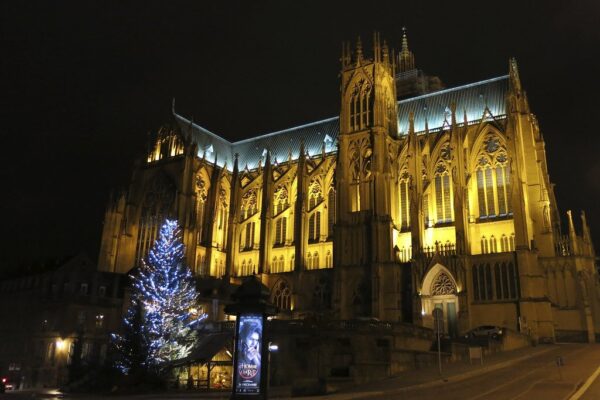
Metz Christmas Market
Metz
From 20 November to 30 December 2026
Worth the trip
 Opens in 42 days
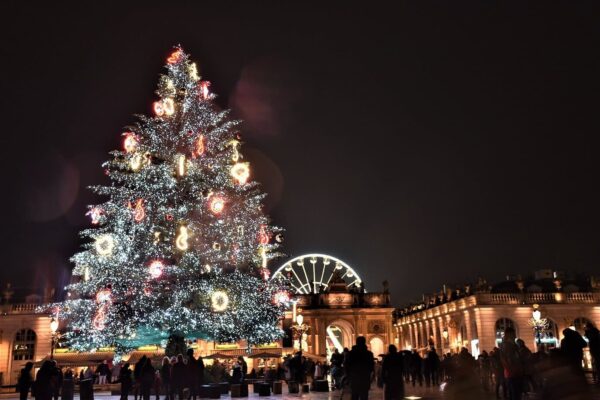
Nancy Christmas Market
Nancy
From 20 November to 3 January 2027
Worth the weekend
 Dates to be confirmed
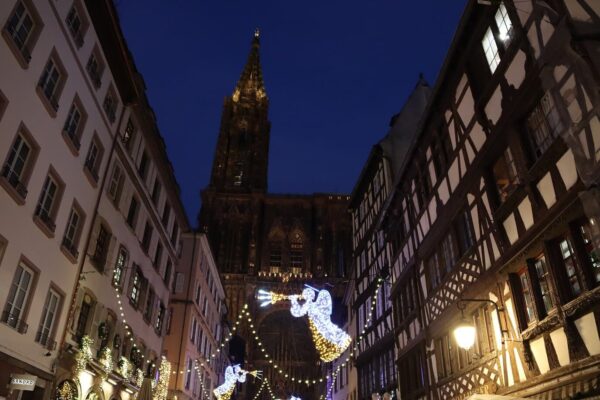
Strasbourg Christmas Market
Strasbourg
Worth the trip
Activities nearby
Parks and sites running a Christmas programme less than an hour's drive away. They aren't Christmas markets, and admission is charged.
 Dates to be confirmed
Park
Dates to be confirmed
Park
Parc de Sainte-Croix at Christmas: Lumières d’Hiver
Rhodes
Worth the weekend · Park
 Opens in 50 days
Event
Opens in 50 days
Event
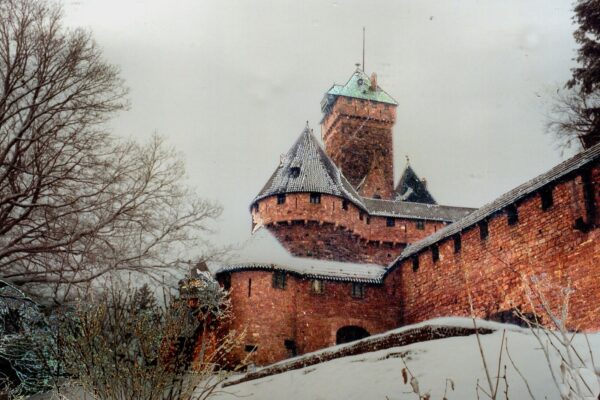
Haut-Koenigsbourg Castle at Christmas
Orschwiller
From 28 November to 31 December 2026
Day out · Event
 Opens in 50 days
Park
Opens in 50 days
Park
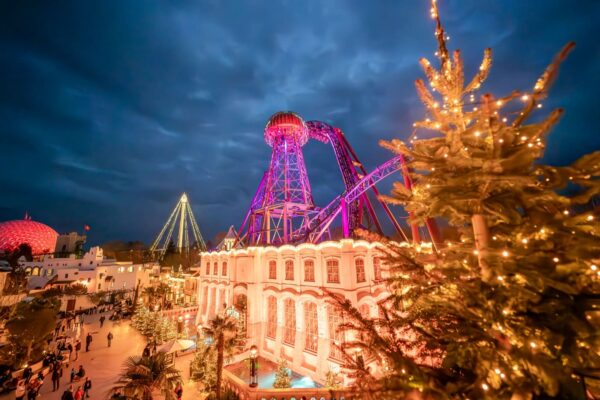
Europa-Park at Christmas: Winterzauber
Rust
From 28 November to 9 January 2027
Worth the trip · Park