
A Christmas market is judged on the plate too. Gingerbread, foie gras, mulled wine, bredele biscuits, raclette in a cone, roasted chestnuts: France has a Christmas menu that changes from one region to the next. Our pick of ten markets where people come as much to eat as to see the chalets.
EDIT of 21 September 2026: Pérouges has been removed from this ranking, as the organiser has announced there will be no 2026 edition. Dijon takes its place at number 9.
Our top 10 Christmas markets for food lovers
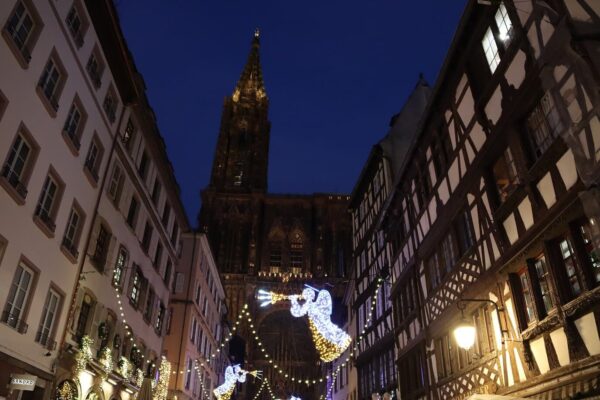
1. Strasbourg, the Alsatian temple
The Strasbourg market lines up more than 80 food stalls across its twelve sites. Bredele in every recipe going (cinnamon stars, almond crescents, butterbredele), gingerbread from Mireille Oster (an institution since 1976), Alsatian foie gras, cinnamon-spiced mulled wine, brioche mannele. You need two days to taste everything.
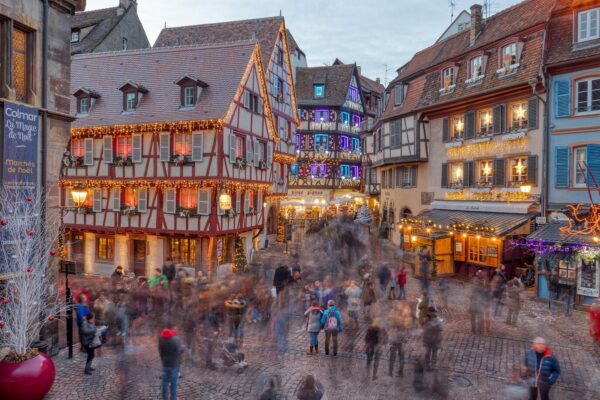
2. Colmar, Alsatian cooking on a plate
In Colmar, the market on Place de l'Ancienne Douane centres on local producers. Sauerkraut served in a cone, baeckeoffe, flammekueche baked in a wood-fired oven, savoury kougelhopf. Place Jeanne d'Arc is given over to sweet things: confectionery, chocolates and gingerbread.
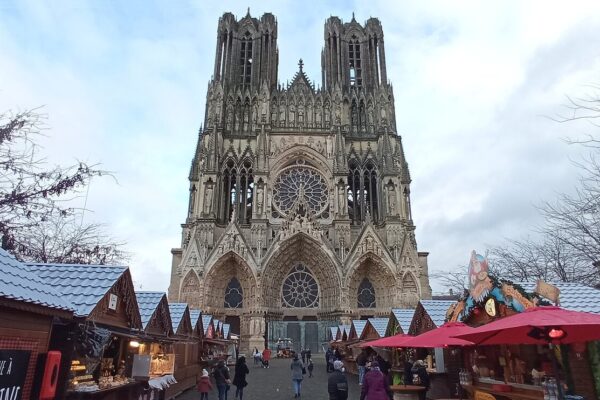
3. Reims, the taste of Champagne
The Reims market is one of the few to serve champagne by the glass, in around ten dedicated chalets. Pink Reims biscuits, Reims ham, mustard, Champagne foie gras and, of course, the bubbles. Expect to pay €8 to €12 a glass depending on the house. A delicious introduction in the heart of the Champagne capital.
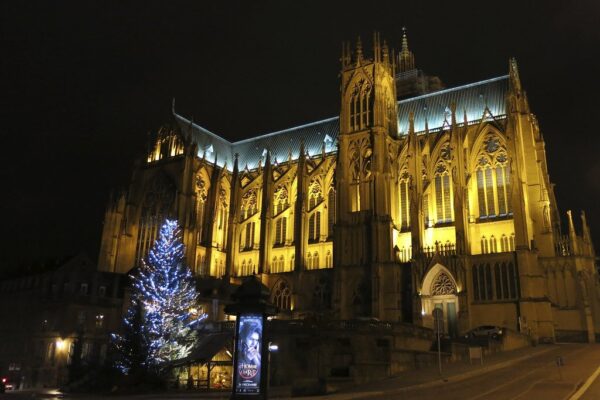
4. Metz, home of the pâté lorrain
The Metz market showcases the cooking of Lorraine: quiche lorraine, pâté lorrain, mirabelle plums in every form (eau-de-vie, jam, syrup), Nancy bergamot sweets. Place Saint-Louis is devoted entirely to food. Around ten producers come straight from the Moselle and Meuse countryside.
5. Mulhouse, the mixed bag
In Mulhouse you will find classic Alsatian cooking but also specialities from the Sundgau, such as fried carp, and Swiss touches (the border is 30 km away). Tartiflette in a cone, plain raclette, fondue to take away. More rustic in feel than Strasbourg, and often gentler on the wallet.
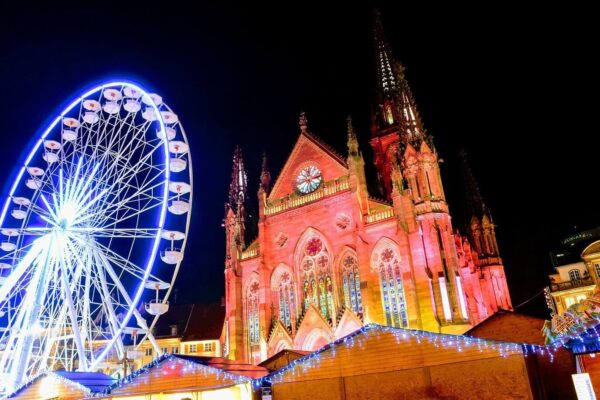
6. Lyon, the food capital in winter
The Christmas market on Place Carnot in Lyon draws on the city's culinary know-how. Miniature bouchons serve saucisson brioché, quenelles to go and cervelle de canut cheese spread. The Croix-Rousse market, more down to earth, is where the locals go. Mulled wine made with Côtes-du-Rhône, bugnes fritters for pudding.
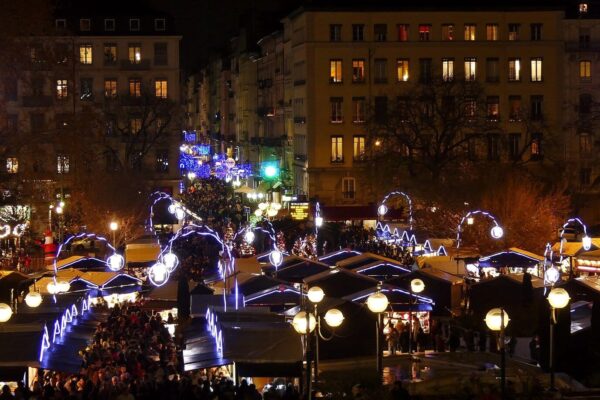
7. Bordeaux, wine and oysters
The market on the Allées de Tourny in Bordeaux goes for elegant indulgence: Arcachon Bay oysters shucked on the spot, mulled wine made with Bordeaux, canelés, Lemoine dunes blanches pastries and Cadiot-Badie chocolates. Perfect for an upgraded open-air aperitif with a view of the columns of the Grand Théâtre.
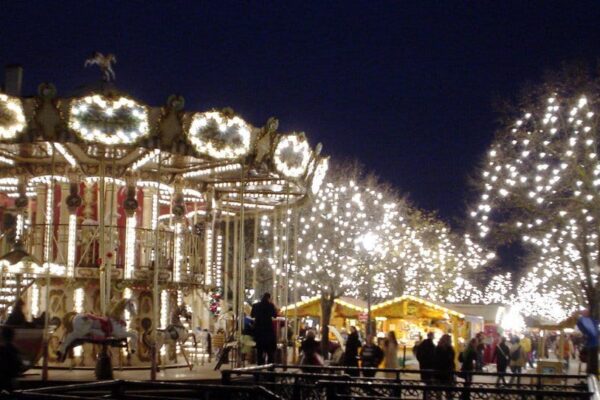
8. Annecy, Savoie in festive mode
The Annecy market puts Savoyard food in every form centre stage: aged reblochon, beaufort, tomme de Savoie, diot sausages in white wine, croziflette and, naturally, raclette scraped straight off the wheel into a cone. Chartreuse and génépi liqueurs make very good gifts to bring home.
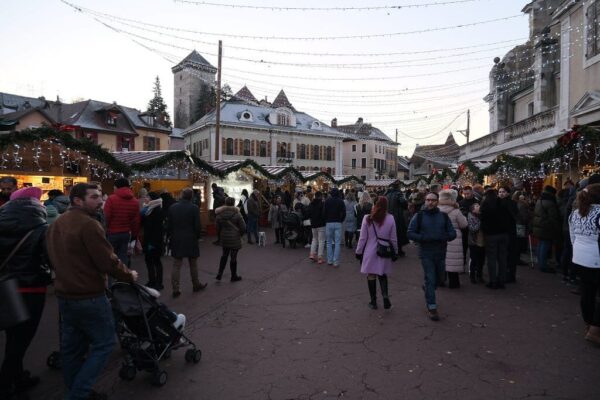
9. Dijon, Burgundy on a plate
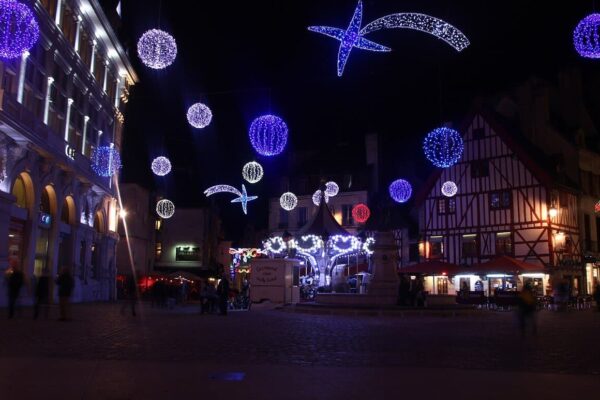
On Place de la Libération, in front of the Palais des Ducs, the 65 chalets of the Dijon market give pride of place to Burgundian produce: gingerbread from Mulot et Petitjean, a house founded in 1796 and still faithful to its original recipe, honey nonnettes, Dijon mustard, époisses, soumaintrain and cîteaux cheeses. Beef bourguignon comes in jars, and blackcurrant appears as crème de cassis, liqueur or kir royal.
10. Sarlat, foie gras and truffles
The Sarlat Christmas market is one of the most eagerly awaited food events in the South-West. Fresh or jarred foie gras, duck breast, confit, black Périgord truffle in season (mid-December to late January), Bergerac wine and plum eau-de-vie. The covered medieval market hall shelters the producers.
Specialities to try, region by region
| Region | Not to be missed |
|---|---|
| Alsace | Bredele, gingerbread, mulled wine, mannele, flammekueche, kougelhopf |
| Champagne | Champagne by the glass, pink Reims biscuits, Reims ham |
| Lorraine | Mirabelle plums, bergamot sweets, pâté lorrain, quiche |
| Lyon / Auvergne-Rhône-Alpes | Bugnes, saucisson brioché, mulled wine made with Côtes-du-Rhône |
| Savoie | Raclette, reblochon, diot sausages, génépi |
| South-West | Foie gras, duck breast, black truffle, canelés, mulled wine made with Bordeaux |
| Provence | The thirteen desserts, calissons, navettes, oreillettes, mulled rosé |
Mulled wine tip: how to spot a good stall
Not all mulled wine is created equal. A good one is served at 65 to 70 °C (hot but not scalding), with spices you can see in the pot (whole cinnamon sticks, star anise, cloves), and the base should be a decent table wine, not the dregs of a vat. Be wary of stalls advertising “premium mulled wine” at €6 a glass: it is often just marketing. Proper home-made mulled wine costs between €3 and €5.
Where to go next
Our magazine piece on mulled wine and its variations goes through the regional versions and tells you where to find the recipe. To combine good food with an intimate atmosphere, have a look at our romantic markets selection too.