
Christmas markets in Grand Est
Beyond Alsace, the Grand Est takes in Lorraine and Champagne, two lands of Christmas markets with a strong identity. Metz and its illuminated cathedral, Reims and its champagne, Nancy and its Place Stanislas: the region offers monumental settings and rich food.
Markets in the region (16)
 Opens in 42 days
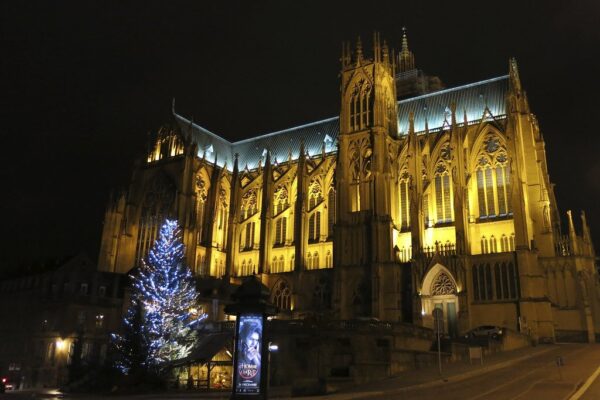
Metz Christmas Market
Metz
From 20 November to 30 December 2026
Worth the trip
 Dates to be confirmed
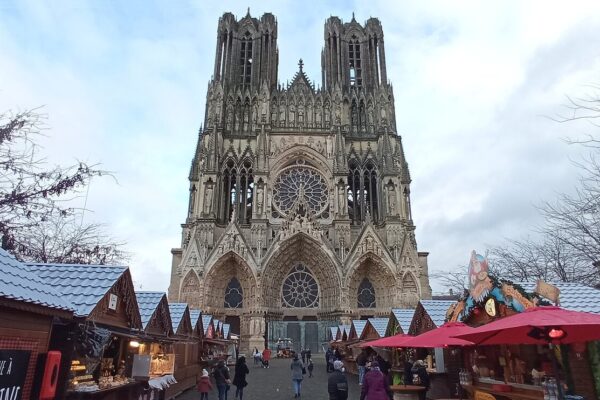
Reims Christmas Market
Reims
Worth the trip
 Opens in 42 days
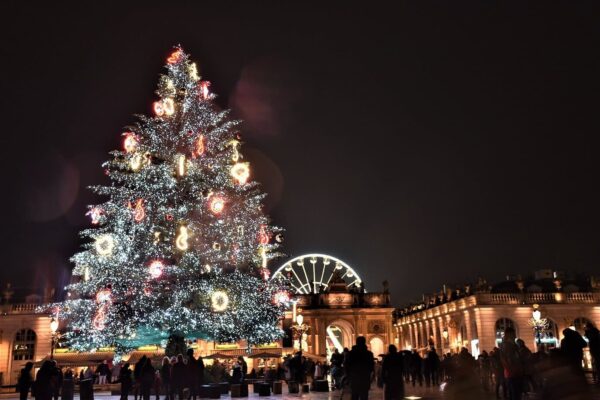
Nancy Christmas Market
Nancy
From 20 November to 3 January 2027
Worth the weekend
 Dates to be confirmed
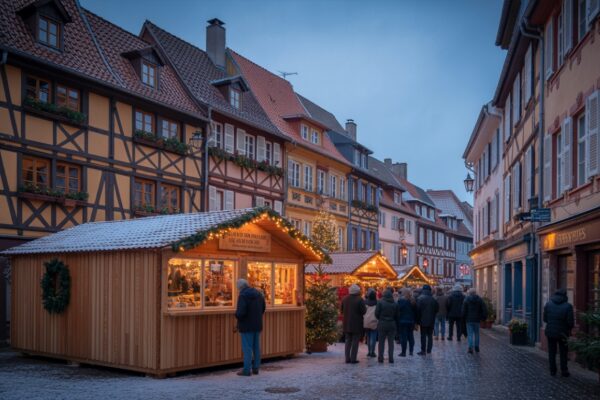
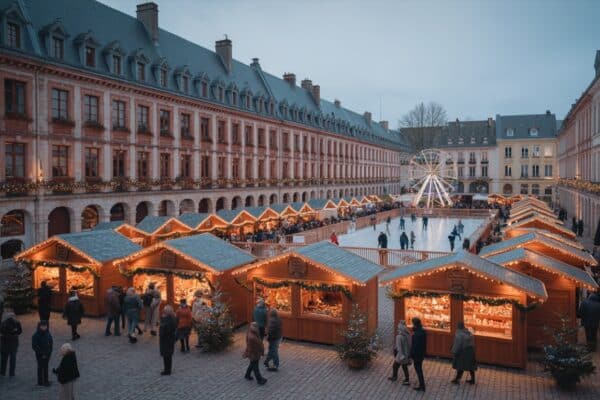
Troyes Christmas Market
Troyes
Day out
 Dates to be confirmed
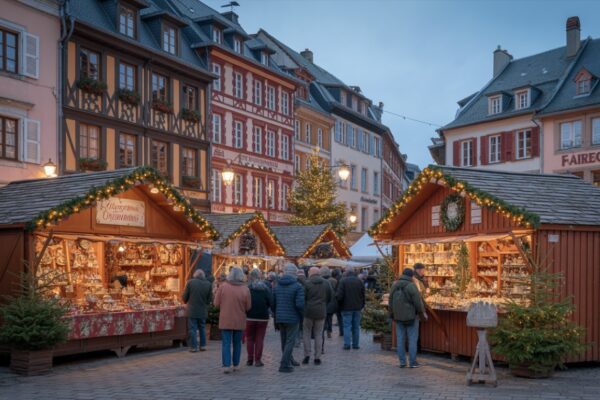
Charleville-Mézières Christmas Market
Charleville-Mézières
Local favourite
 Dates to be confirmed
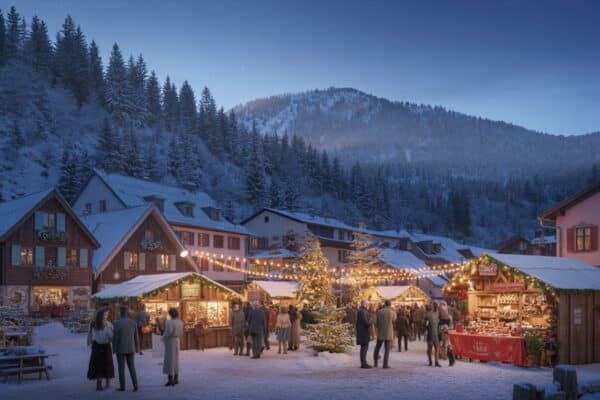
Sarreguemines Christmas Market
Sarreguemines
Local favourite
 Dates to be confirmed
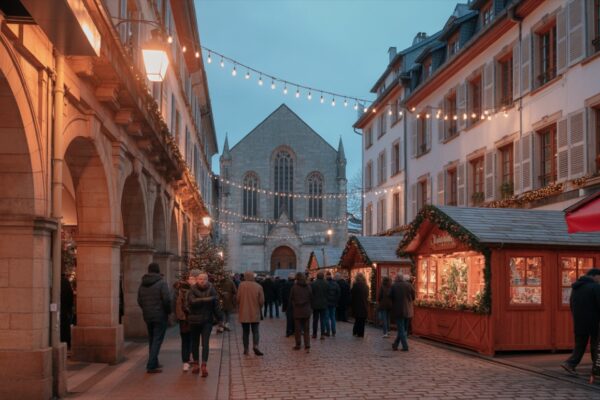
La Bresse Christmas Market
La Bresse
Day out
 Opens in 56 days
Remiremont Christmas Market
Remiremont
From 4 to 27 December 2026
Day out
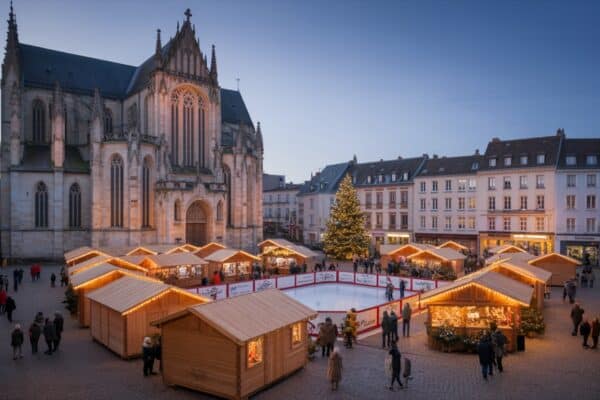 Dates to be confirmed
Épinal Christmas Market
Épinal
Local favourite
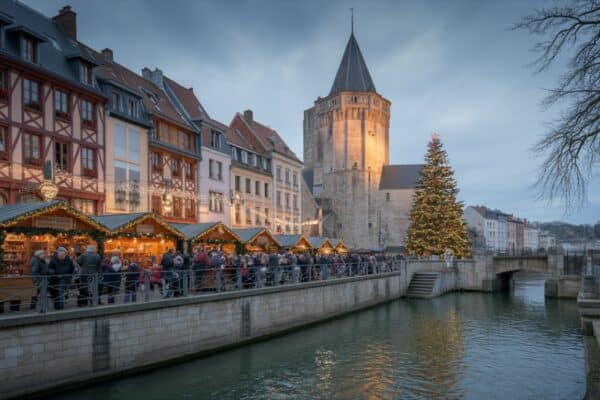 Dates to be confirmed
Verdun Christmas Market
Verdun
Local favourite
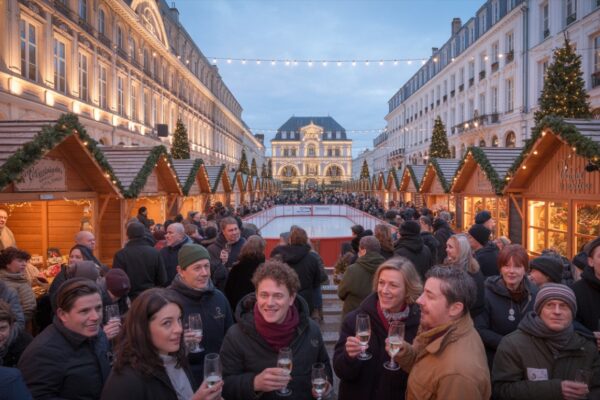 Dates to be confirmed
Épernay Christmas Market
Épernay
Local favourite
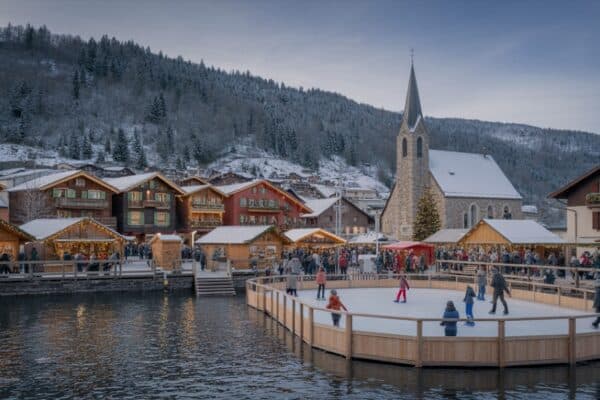 Dates to be confirmed
Gérardmer Christmas Market
Gérardmer
Local favourite
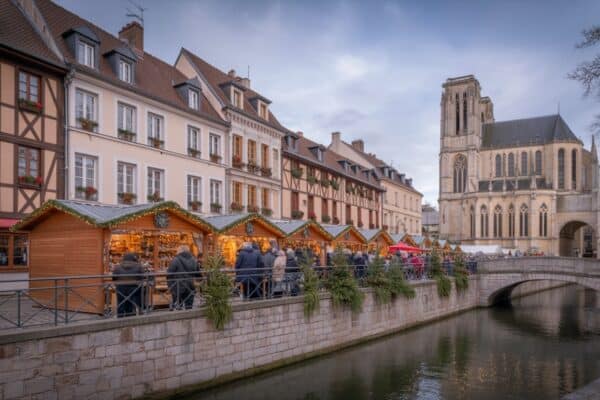 Dates to be confirmed
Châlons-en-Champagne Christmas Market
Châlons-en-Champagne
Local favourite
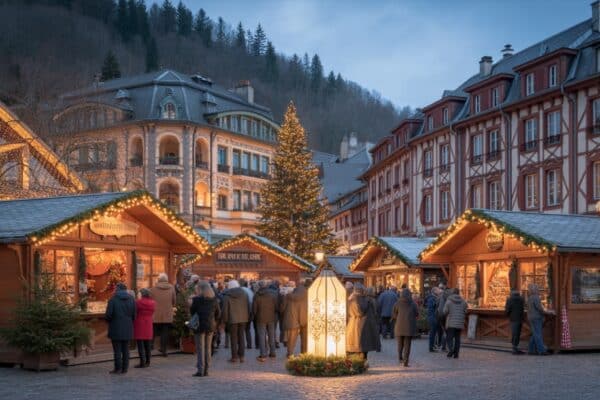 Dates to be confirmed
Plombières-les-Bains Christmas Market
Plombières-les-Bains
Day out
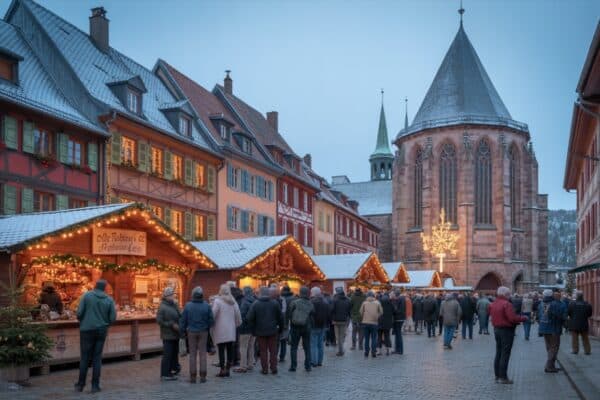 Dates to be confirmed
Saint-Dié-des-Vosges Christmas Market
Saint-Dié-des-Vosges
Local favourite
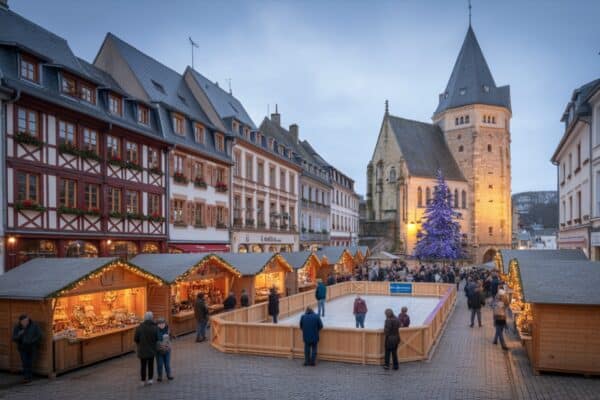 Dates to be confirmed
Thionville Christmas Market
Thionville
Day out
Christmas parks and activities (1)
Paid admission, shows and lights: Christmas outings that aren't markets. The full selection
Regional specialities
Champagne and pink biscuits (Reims), mirabelle plums and Boulay macarons (Metz), Commercy madeleines, Nancy bergamot sweets, quiche lorraine, rum baba.
Christmas traditions
In Lorraine, Saint Nicholas' Day (6 December) is a major celebration with parades, floats and sweets handed out to children. Père Fouettard walks alongside Saint Nicholas to scare the unruly ones. Nancy stages a big parade of illuminated floats.
Lorraine and Champagne: two terroirs, one passion for Christmas
There is more to the Grand Est than Alsace. Lorraine and Champagne have Christmas traditions of their own, carried by cities with remarkable architecture. Metz and its Gothic cathedral, Reims and its champagne cellars, Montbéliard and its Lumières just across the regional boundary: each brings its own personality to the season.
Here, Saint Nicholas' Day (6 December) matters as much as Christmas itself, if not more. In Lorraine the feast brings float parades, sweets thrown to the crowd and street shows that take over the city centres for the whole of the first weekend in December.
Metz, the cathedral in lights
Metz Christmas market sets up on Place Saint-Louis and Place de la République, at the foot of Saint-Étienne cathedral. Nicknamed “God's Lantern” for its 6,500 m² of stained glass, the cathedral takes on another dimension under the Christmas lights. The projections on its façade are among the highlights of the season.
The Metz market is known for its Christmas pyramid, a rotating wooden structure inspired by the Christmas pyramids of the Erzgebirge, in Saxony. The chalets sell a mix of Lorraine produce (mirabelle plums, Boulay macarons, Nancy bergamot sweets) and crafts from all over Europe. The big wheel on Place de la République gives a panoramic view over the city.
Saint Nicholas in Metz
On the first weekend in December, Metz celebrates Saint Nicholas with a parade through the city centre. Lorraine's patron saint, accompanied by Père Fouettard (his punishing sidekick), hands out sweets to the children. Illuminated floats, brass bands and fireworks draw tens of thousands of spectators.
Reims, Christmas in champagne country
Reims pairs its Christmas market with what made it famous worldwide: champagne. The chalets on Place Drouet-d'Erlon and in front of the cathedral offer tastings of local cuvées, pink Reims biscuits (made for dunking in a flute) and produce from the Champagne region.
Notre-Dame de Reims cathedral, where the kings of France were crowned, hosts a light show projected onto its façade throughout Advent. The “Reims en fête” trail links the various illuminated sites across the city, from the Boulingrin covered market to the historic quarter.
What to eat in Reims
The pink Reims biscuit, crisp on the outside and soft in the middle, is eaten on its own or dipped in champagne. Champagne-style rillettes, Rethel white pudding, chocolates from Maison Fossier and sweets flavoured with marc de champagne complete a spread firmly rooted in the local terroir.
Montbéliard, the Lumières de Noël
Montbéliard's market, outside the Grand Est (in Bourgogne-Franche-Comté) but on the doorstep of Alsace, is a case apart on the French scene. Les Lumières de Noël, the event's official name, turn the whole town into a stage of light. More than 600,000 visitors come each year for the installations, the street shows and the market's 160 chalets.
The town owes its identity to its Württemberg heritage (it belonged to the Duchy of Württemberg until 1793). That German influence shows in the Christmas traditions, the recipes and the colourful architecture of the historic centre. The market runs from Place Denfert-Rochereau to the Saint-Martin temple, along the illuminated pedestrian streets.
Montbéliard sausage, queen of the market
Smoked over softwood in a tuyé (the tall traditional chimney of the Franche-Comté farmhouse), Montbéliard sausage is the market's signature food. Grilled on the spot and served with warm cancoillotte cheese and potatoes, it alone justifies the trip. Cheesemakers sell comté at different stages of maturing, and the bakers offer Christmas cakes made with walnuts and honey.
Regional specialities to remember
The Grand Est's strength is its gastronomic variety. Each sub-region has its star products:
- Lorraine: mirabelle plums (in tarts, eau-de-vie and jam), Boulay and Nancy macarons, Commercy madeleines, Nancy bergamot sweets, quiche lorraine
- Champagne: champagne (naturally), pink biscuits, Champagne-style rillettes, Rethel white pudding, croquignoles
- Franche-Comté: Montbéliard sausage, comté, cancoillotte, Jura wine (hot macvin), gâteau de ménage
Practical tips
The TGV serves Metz (1h25 from Paris) and Reims (45 min from Paris Gare de l'Est). Montbéliard is reached via Belfort-Montbéliard TGV (2h15 from Paris), then a 15-minute shuttle.
The Metz and Reims markets usually open on the third weekend of November and close on 29 or 30 December. Montbéliard concentrates its Lumières de Noël on four weekends from late November to late December. Check the exact dates on the official websites, as they change every year.
Food budget at a market: allow €10 to €15 for a full meal (hot dish, drink and dessert). Accommodation is cheaper than in Alsace, with good options among guesthouses and city-centre hotels.
Where to stay in Grand Est
Check availability with our partners