
Where to find Nuremberg Christmas Market
Highlights of Nuremberg Christmas Market
- 168 chalets with red and white roofs on the historic Hauptmarkt
- The Christkind’s prologue from the balcony of the Frauenkirche
- Lebkuchen and Rostbratwurst, the city’s two signature foods
- Kinderweihnacht, the children’s market, right next to the main market
- Markt der Partnerstädte, Nuremberg’s twin towns market
Where to stay near Nuremberg Christmas Market
Hotels, flats and rooms around the market, for the dates of your stay.
Check availability with our partners
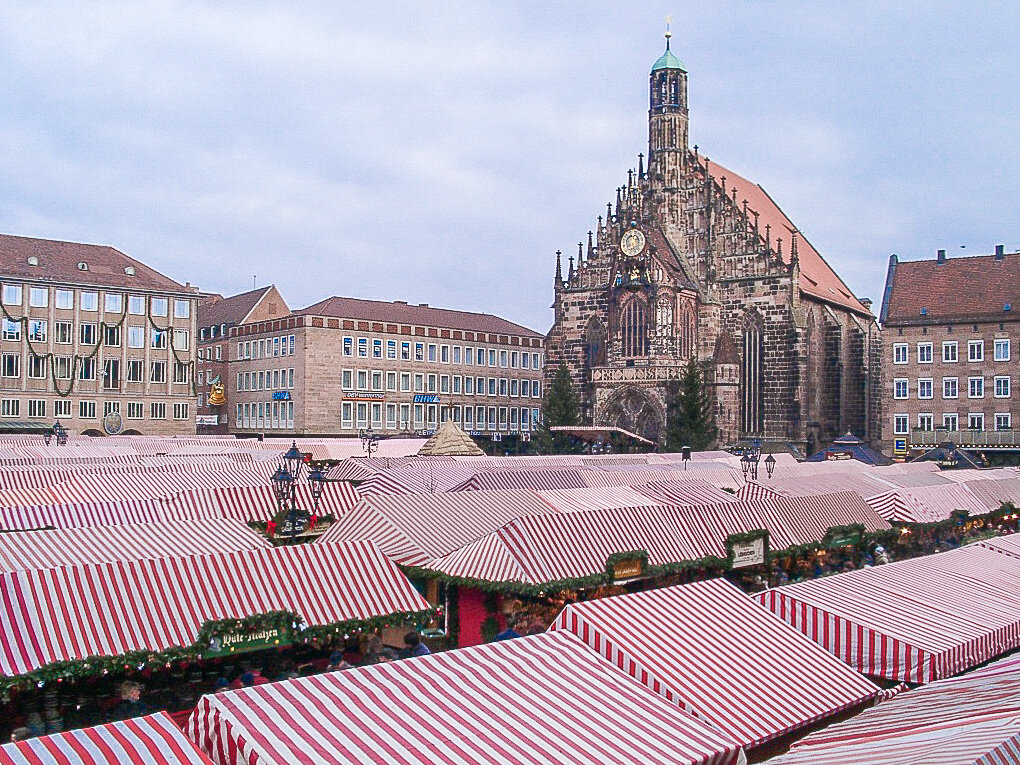
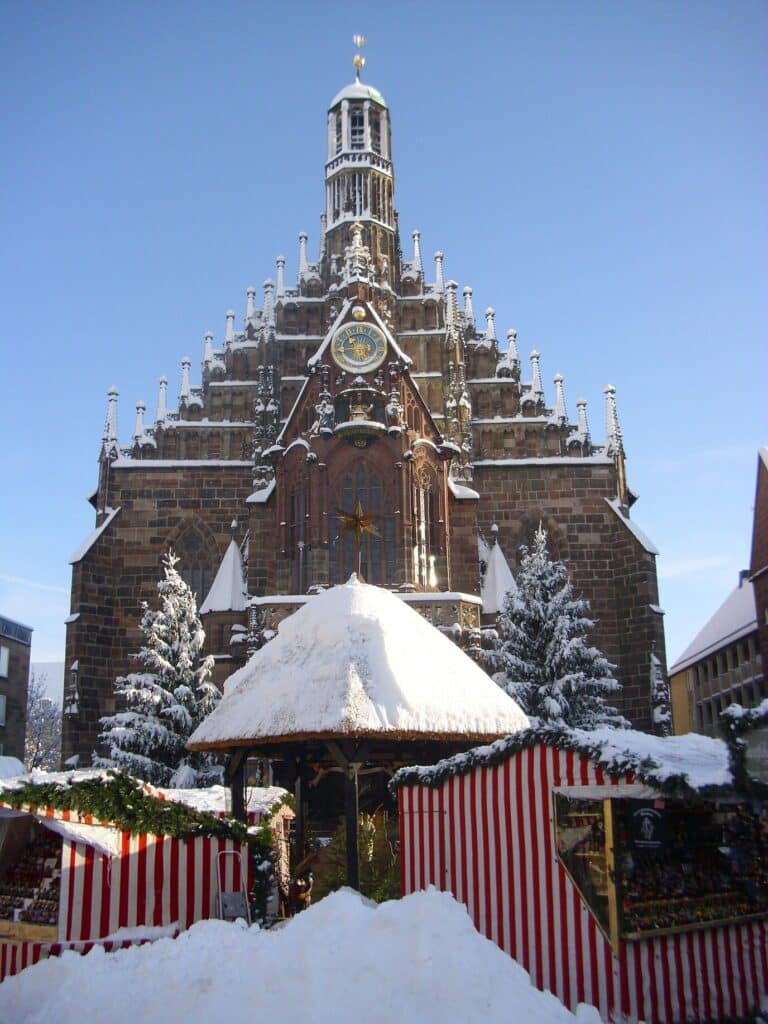
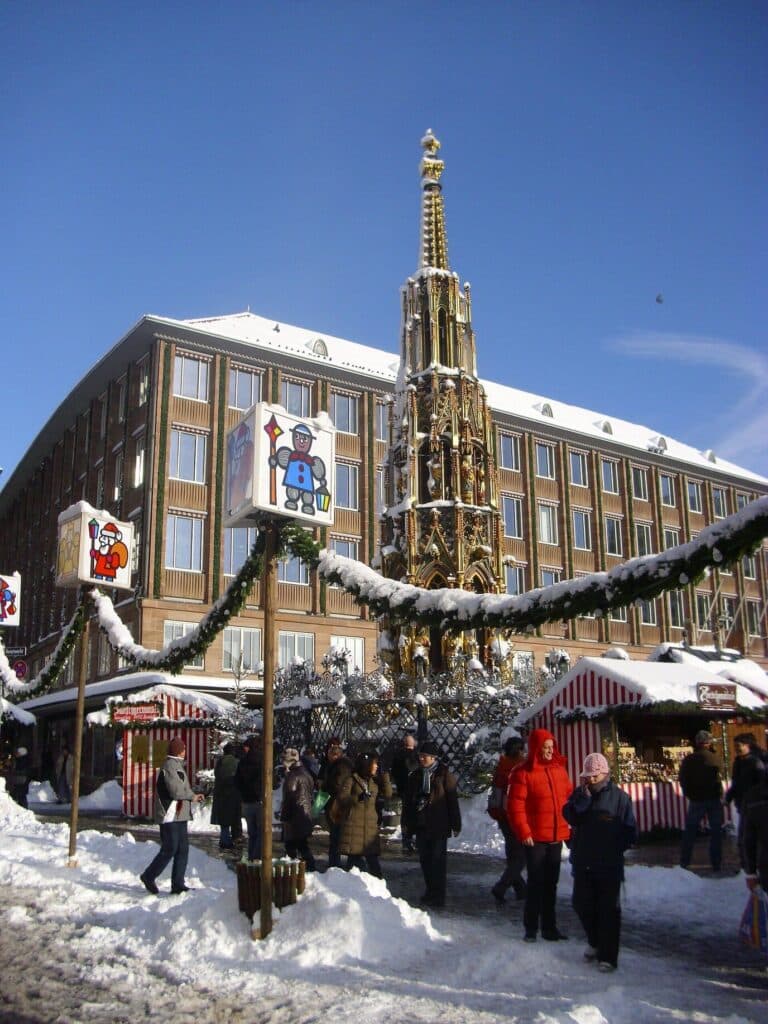
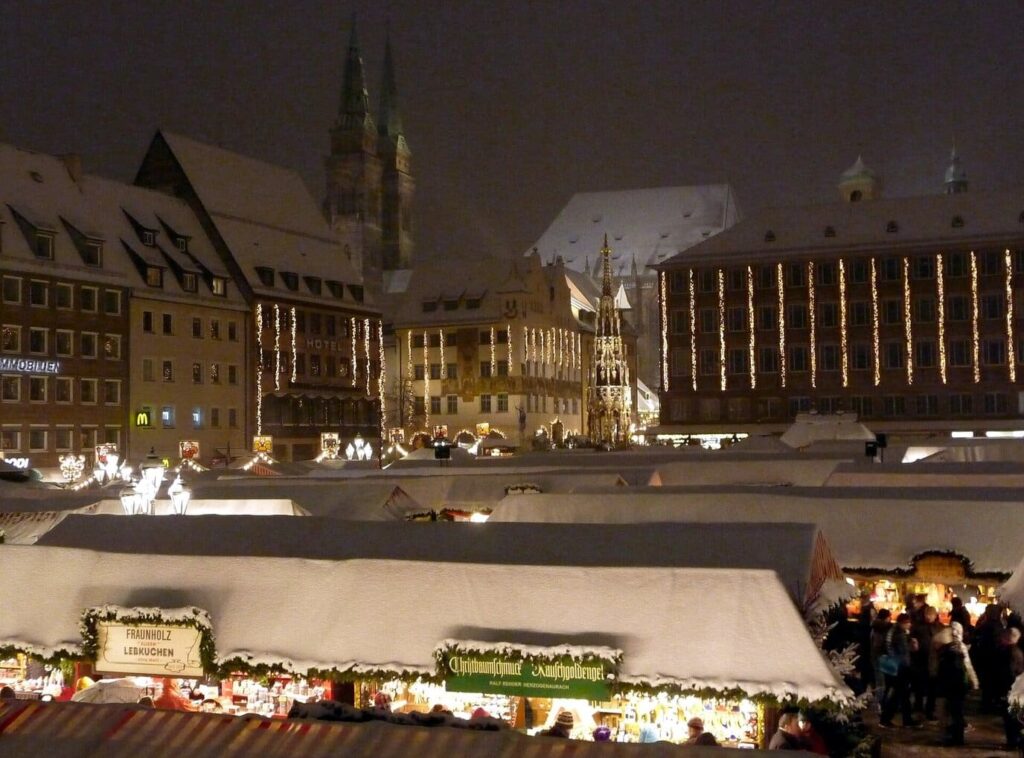
Nuremberg Christmas Market in pictures
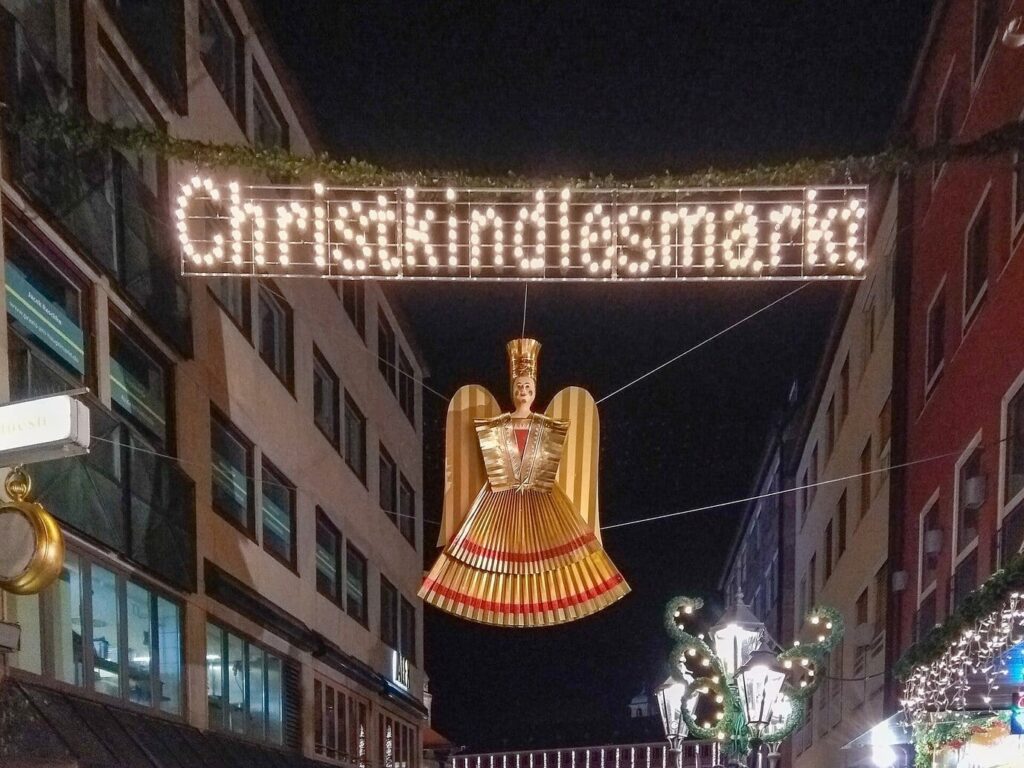
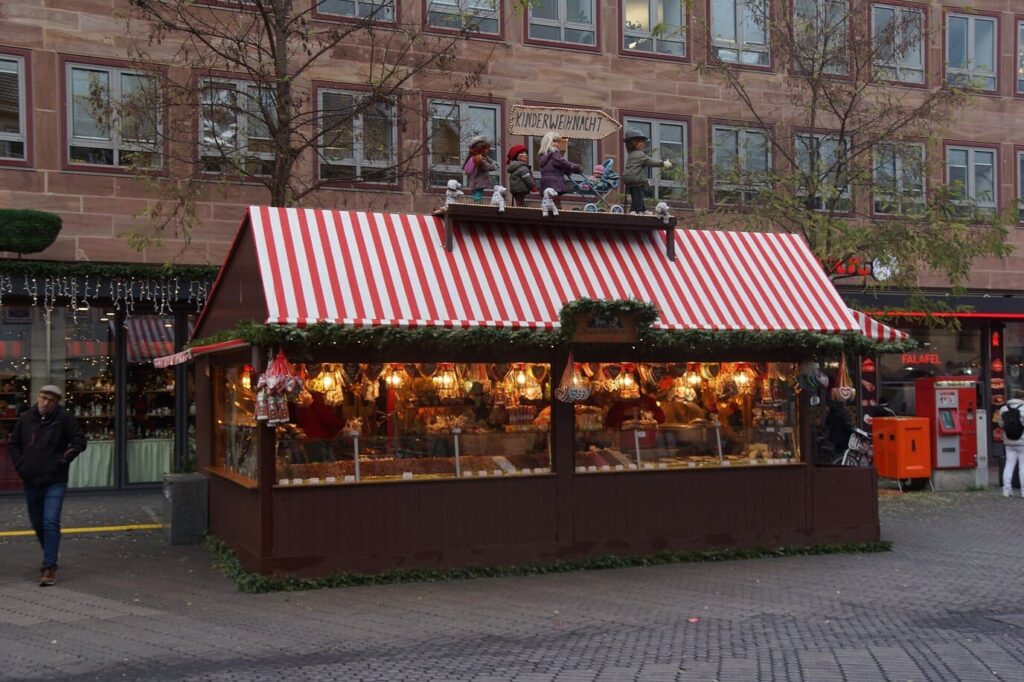
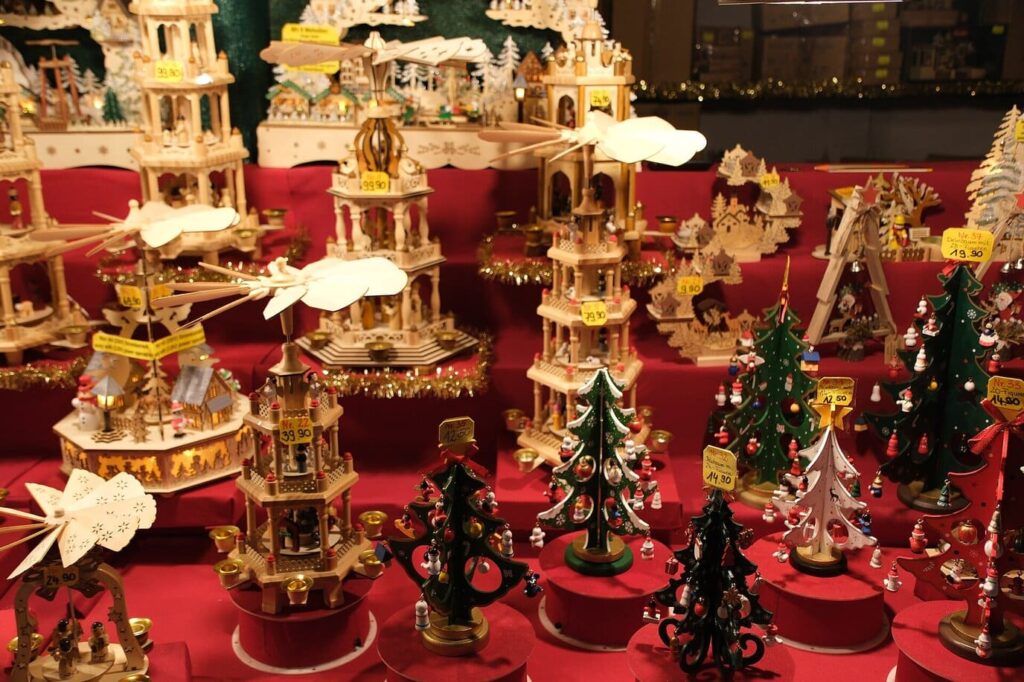
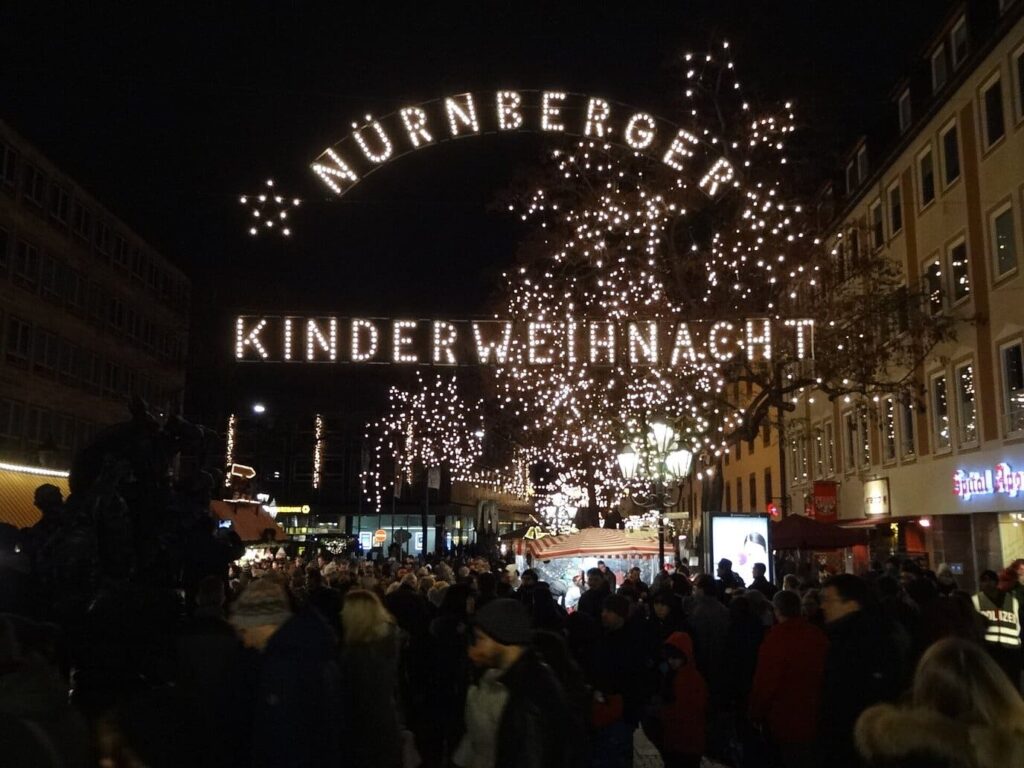
Specialities to try
The flavours that make this market what it is
Lebkuchen
Nürnberger Rostbratwurst
mulled wine and Zwetschgenmännle figures are the market’s food and craft specialities
Nuremberg Christmas market takes over the Hauptmarkt and the surrounding lanes, in the heart of the Bavarian old town, from 27 November to 24 December 2026. One hundred and sixty-eight wooden chalets, topped with red and white canvas roofs, are spread across the square and as far as the neighbouring Rathausplatz, just behind the town hall. The official website presents it as one of the oldest Christmas markets in Germany, and one of the best known beyond Bavaria. The opening is marked by the prologue of the Christkind, the golden figure who embodies the spirit of Christmas in Nuremberg and delivers the opening speech from the balcony of the Church of Our Lady. Gingerbread, mulled wine and grilled sausages scent the air while fairy lights dress the half-timbered façades lining the square. All around, the fortified old town, with its towers and the Imperial Castle (Kaiserburg) above, forms the backdrop for the whole market.
The Christkindlesmarkt on the Hauptmarkt
The Hauptmarkt is Nuremberg’s historic heart, between the Gothic Frauenkirche and the golden Schöner Brunnen fountain, a carved stone spire that has risen in the middle of the square since the Middle Ages. The chalets are arranged in tight rows, all dressed in the same red and white striped fabric, a visual identity that sets this market apart from those in other big German cities. The market then spills over onto the Rathausplatz, just behind the town hall, and into a few adjoining streets of the historic centre, where smaller stalls complete the whole. Some of the Hauptmarkt cobbles date from the Middle Ages: the ground is uneven in places, so wear sturdy shoes for your visit, especially in wet weather or after snowfall. The square changes character every evening, when electric garlands take over from daylight on the half-timbered façades. Around the Hauptmarkt, the medieval ramparts that still encircle much of the city centre recall that Nuremberg was, during the Renaissance, one of the richest cities of the Holy Roman Empire, a status that explains the wealth of monuments preserved in this small area.
On the façade of the Frauenkirche, an automaton clock, the Männleinlaufen, brings to life a small scene of golden figures circling the emperor every day at noon, a ritual many market regulars take time to watch once per stay. The Schöner Brunnen fountain, protected by a wrought-iron railing, bears two golden rings that visitors try to turn: local tradition says that doing so brings good luck. The Kaiserburg, the Imperial Castle perched on a rocky spur, offers from its ramparts a sweeping view of the old town’s red roofs and the illuminated market chalets below.
Lebkuchen, bratwurst and mulled wine: the specialities of Nuremberg Christmas market
Nuremberg Lebkuchen, a soft gingerbread made with almonds, hazelnuts and spices, is sold as discs glazed with sugar or coated in chocolate, often presented in large tins illustrated with market scenes. Many visitors leave with a tin as an edible souvenir of the market. Nürnberger Rostbratwurst, a small sausage grilled over charcoal, is traditionally eaten in a round bread roll, with mustard or sauerkraut depending on the stall. The mulled wine (Glühwein) stalls warm your hands between two chalets, with a spice blend that varies slightly from one producer to another; some stalls also offer a white version, made with white wine and gentler spices.
Another local speciality found at several chalets is the Zwetschgenmännle: small figures made from dried prunes and figs, dressed in scraps of fabric, representing trades of the city such as the chimney sweep or the musician. These figures are sold as souvenirs, alongside Advent wreaths, blown-glass decorations and woven straw stars found at many craft chalets. Hot chestnuts, stollen with candied fruit and toffee apples round out the food offer, alongside a few stalls of Bavarian cheese and charcuterie for visitors looking for something other than sweets.
The Christkind, the Kinderweihnacht and the twin towns market
The Christkind, a young messenger dressed in gold and wearing a crown, has embodied the spirit of Christmas in Nuremberg since 1933, with a prologue rewritten in 1948. She opens the market with a prologue in verse, delivered from the balcony of the Frauenkirche, then appears several times on the square and at various places around the city during the weeks of Advent. The person who plays her changes from one edition to the next, but the role stays the same: delivering the opening words and representing the city throughout the Christmas period.
Close to the Hauptmarkt, the Kinderweihnacht brings together a carousel, a few fairground attractions and workshops designed for children, in a quieter area than the main market. You will also find crêpe and hot chocolate stalls, aimed at families taking a break between visits. The Markt der Partnerstädte, Nuremberg’s twin towns market, gathers chalets run by partner cities from Europe and beyond, with craft and food products specific to each region represented. This twin towns market changes every year with the invited cities and offers a glimpse of Christmas traditions from other countries, a few metres from the Bavarian heart of the Christkindlesmarkt and its scents of gingerbread and mulled wine.
Dates, opening hours and prices for 2026
The 2026 edition of Nuremberg Christmas market opens on 27 November and closes on 24 December. Access to the square is free, with no ticket or booking, as at the vast majority of German Christmas markets.
| Period | Opening hours |
|---|---|
| 27 November to 23 December 2026 | 10am-9pm, daily |
| 24 December 2026 (Christmas Eve) | 10am-2pm |
Allow two to three hours to explore the Hauptmarkt, the Kinderweihnacht and the twin towns market without rushing. A simple meal of bratwurst, gingerbread and mulled wine generally costs €15-30 per person. The Hauptmarkt is pedestrianised, making it easier to get around in a wheelchair or with a pushchair, although the December weekend crowds can slow you down at the busiest times. On weekdays, especially in the morning, the aisles between the chalets are clearer, giving you time to stop at every stall without being jostled. As for the weather, Bavarian winter temperatures turn chilly as soon as night falls: several layers and good shoes make all the difference over a whole evening.
Getting to Nuremberg from France
From Paris, the train journey goes via Frankfurt or Stuttgart, with one change, for a total time of about 5hr 30 to 6hr. From Strasbourg, the route via Karlsruhe brings the journey down to about 4 hours, a comfortable option for a weekend. By car, allow about 3hr 30 from Strasbourg on the German motorways, with several paid car parks around Nuremberg’s old town, whose historic centre is largely pedestrianised. Several airlines also link Paris to Nuremberg Airport, about fifteen minutes from the city centre by metro (line U2); some visitors prefer to land in Frankfurt or Munich and continue by train, depending on availability and fares at the time. From the central station (Hauptbahnhof), the Hauptmarkt is about a quarter of an hour on foot, or one tram stop away. Prices are paid in euros, as everywhere in Germany. Once there, the tram and bus network serves the main sights of the historic centre well, so a car is of little use once you have arrived.
- Strasbourg Christmas market is a natural stop for anyone coming from Alsace or Baden-Württemberg, a few hours’ drive from the Hauptmarkt.
- Munich Christmas market, less than two hours’ drive away, fits nicely into a tour of southern Bavaria.
- Stuttgart Christmas market, also reachable in just over two hours, offers another possible stop in southern Germany.
- The Hauptmarkt mulled wine is recognisable by its particular spice blend; our guide to mulled wine and its variations helps you place it and points you to the recipe to recreate it at home.
Our tip
Come on a weekday, before noon, to enjoy the Hauptmarkt and the Kinderweihnacht at your own pace.
Reviewed and approved by the editorial team
Checked on against 2 official sources. Detailed sources available on request.
A question, a mistake or a problem on this page? Write to us
Markets nearby
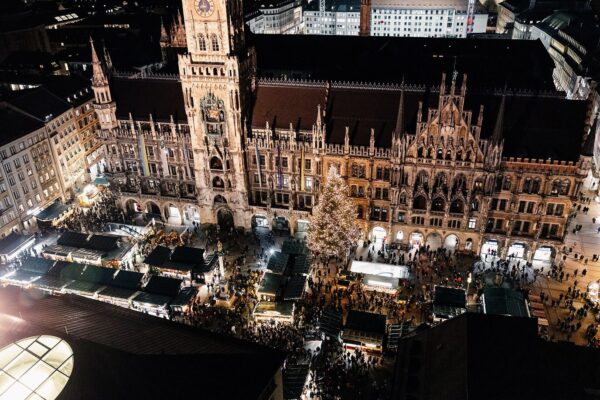 Opens in 42 days
Munich Christmas Market
Munich
From 20 November to 24 December 2026
Worth the weekend
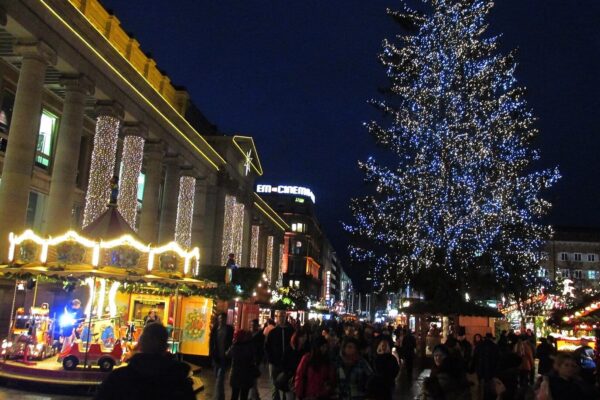 Opens in 47 days
Stuttgart Christmas Market
Stuttgart
From 25 November to 23 December 2026
Worth the weekend
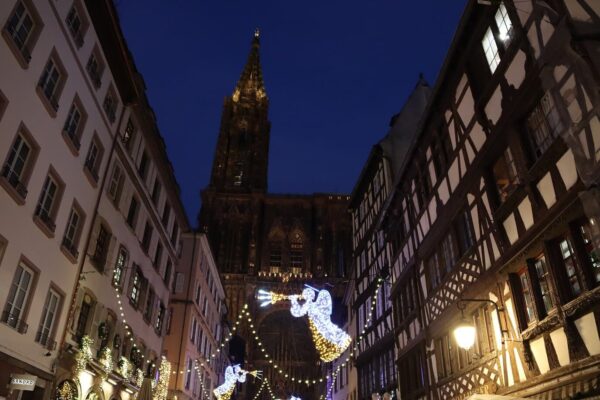 Dates to be confirmed
Strasbourg Christmas Market
Strasbourg
Worth the trip
Activities nearby
Parks and sites running a Christmas programme less than an hour's drive away. They aren't Christmas markets, and admission is charged.
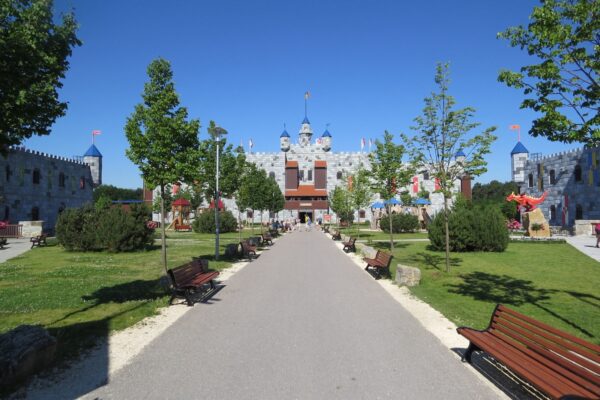 Opens in 50 days
Park
Opens in 50 days
Park
LEGOLAND Deutschland at Christmas
Günzburg
From 28 November to 10 January 2027
Day out · Park
 Dates to be confirmed
Park
Dates to be confirmed
Park
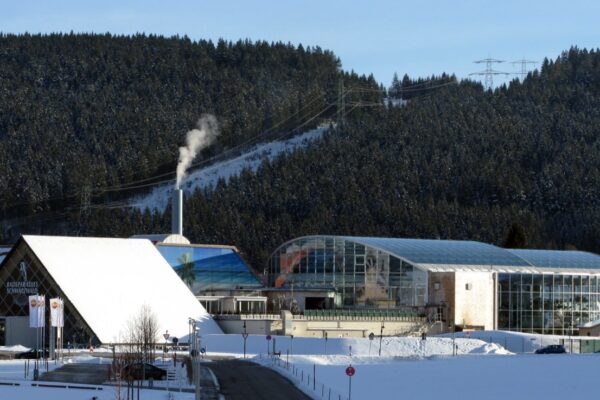
Badeparadies Schwarzwald at Christmas: relaxing in the Black Forest
Titisee-Neustadt
Day out · Park
 Opens in 50 days
Park
Opens in 50 days
Park
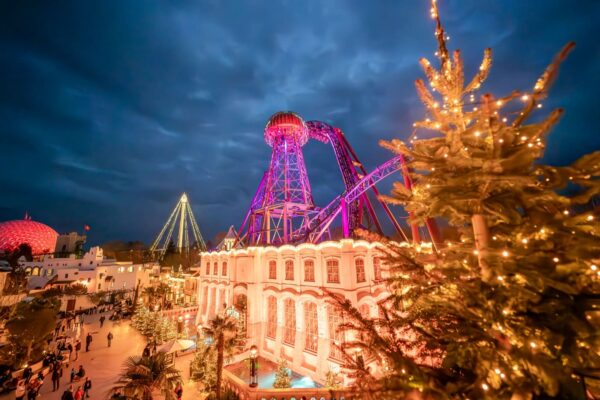
Europa-Park at Christmas: Winterzauber
Rust
From 28 November to 9 January 2027
Worth the trip · Park