
Where to find Bern Christmas Market
Highlights of Bern Christmas Market
- Old town listed by UNESCO since 1983, with arcades and figure fountains
- The Zytglogge, a 13th-century tower with its astronomical clock, along the route
- Swiss crafts: candles, ceramics and wooden toys on the stalls
- Local specialities: raclette, fondue and hot chestnuts
- Pedestrian old town, about ten minutes’ walk from the station
Where to stay near Bern Christmas Market
Hotels, flats and rooms around the market, for the dates of your stay.
Check availability with our partners
Bern Christmas Market in pictures
Specialities to try
The flavours that make this market what it is
-
Raclette
-
Cheese fondue
-
Roasted chestnuts
-
Mulled wine with kirsch

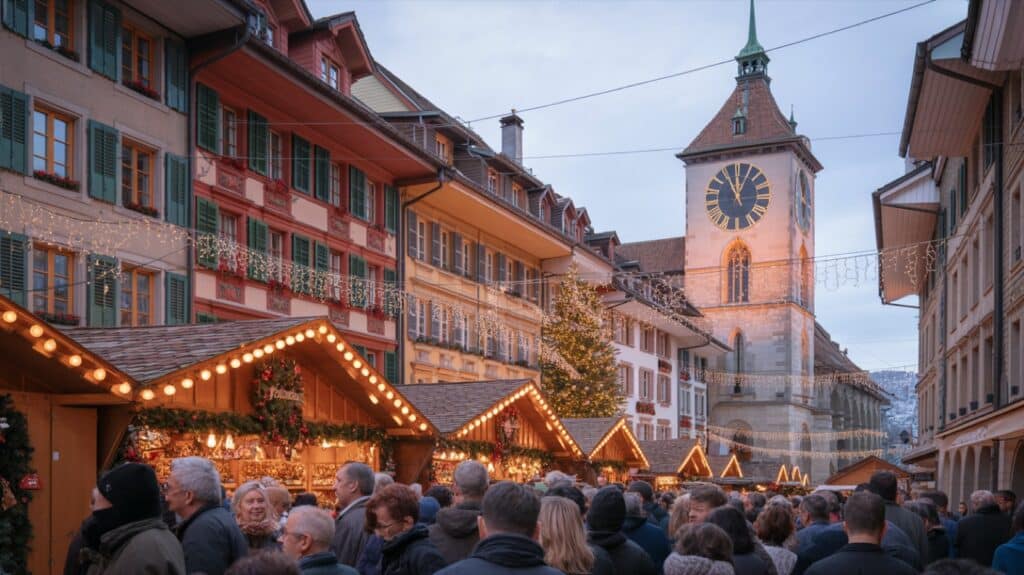
Bern Christmas market brings the old town to life from the first days of December, between the sandstone façades of the Swiss capital and the shadow of the cathedral. The chalets huddle around the Zytglogge and along the arcaded lanes, in a setting listed as a UNESCO World Heritage Site since 1983. The atmosphere is that of a city going about its daily life: shops and cafés open, garlands strung from one archway to the next, the smell of cinnamon rising from the stalls.
A UNESCO old town as a backdrop
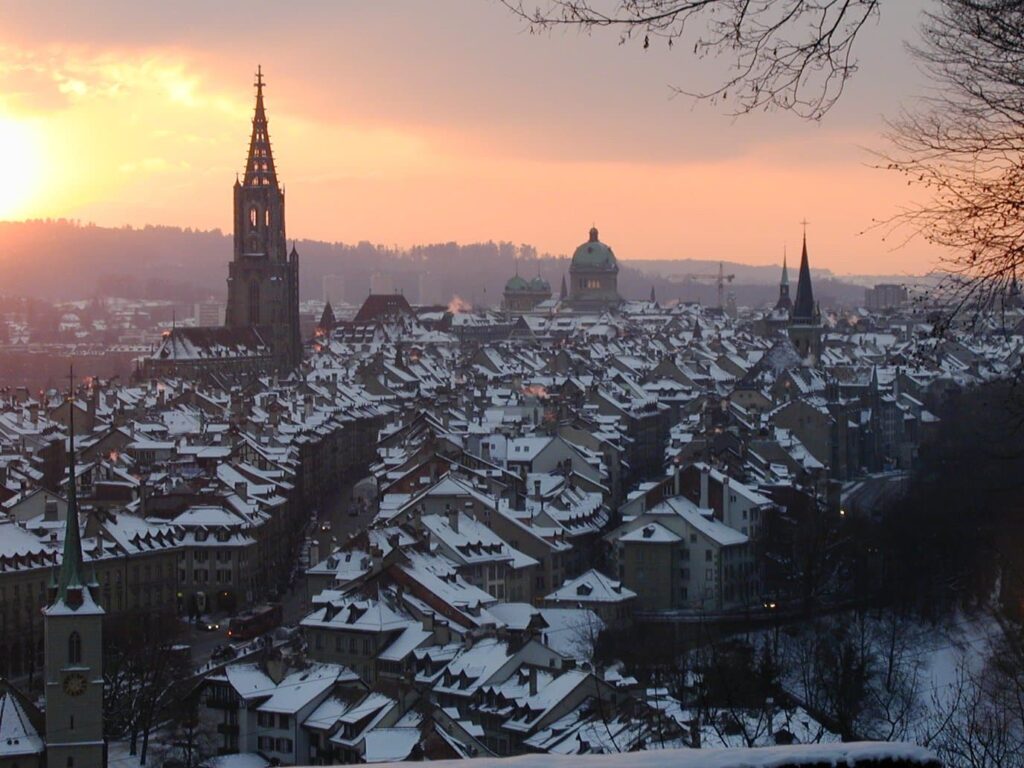
Bern’s old town was founded in 1191 by Duke Berthold V of Zähringen, on a promontory ringed by the meanders of the Aare. A fire devastated the city in 1405; it was then rebuilt in local sandstone, which gives the façades their characteristic ochre colour and the city its nickname of sandstone city. UNESCO listed the whole ensemble as a World Heritage Site in 1983, recognising its 15th-century shopping arcades, its 16th-century fountains with allegorical figures and the Zytglogge, the clock tower from the 13th century restored in 1771, whose astronomical clock draws the eye near the market.
The Minster of St Vincent, built between 1421 and the end of the 16th century, closes the view to the east with its late Gothic silhouette. Kramgasse and Gerechtigkeitsgasse, arcaded shopping streets, run through the old town from end to end and hold a good share of the market stalls. Under the vaults, the windows of the regular shops sit alongside the seasonal stands, without one outshining the other.
The city occupies a peninsula shaped by a wide loop of the Aare, crossed by several bridges linking the historic centre to the newer districts on the other bank. This promontory site, chosen in the Middle Ages for its defensive position, explains the tight layout of the streets and the slope down to the river from the cathedral. The bear park (Bärengraben), on the banks of the Aare, is open all year round, with no booking needed, and keeps a direct link with the city’s emblem.
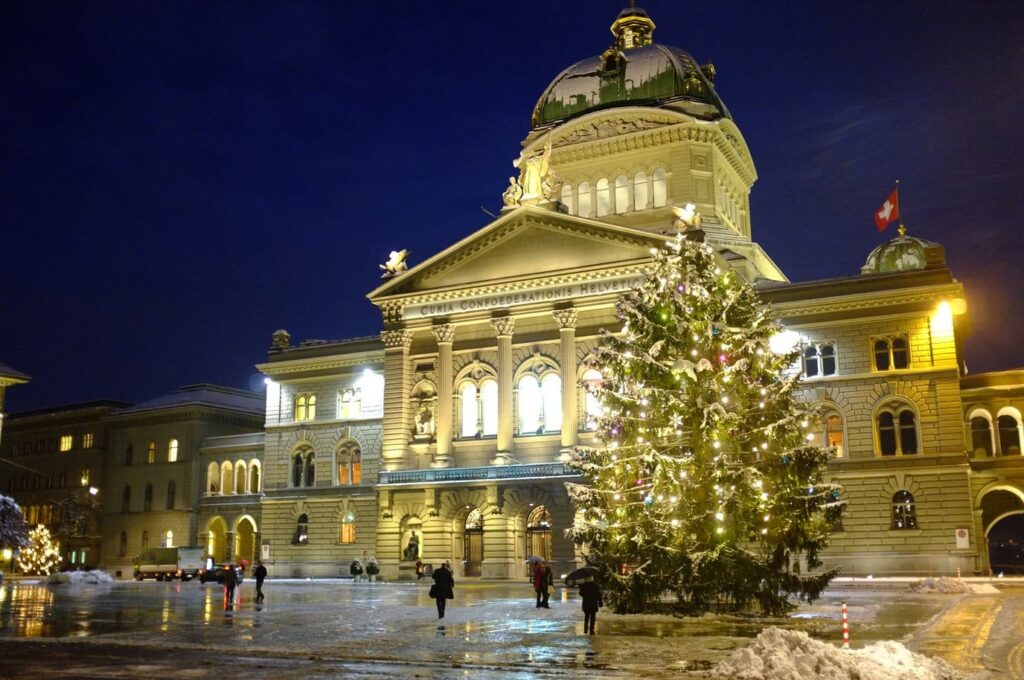
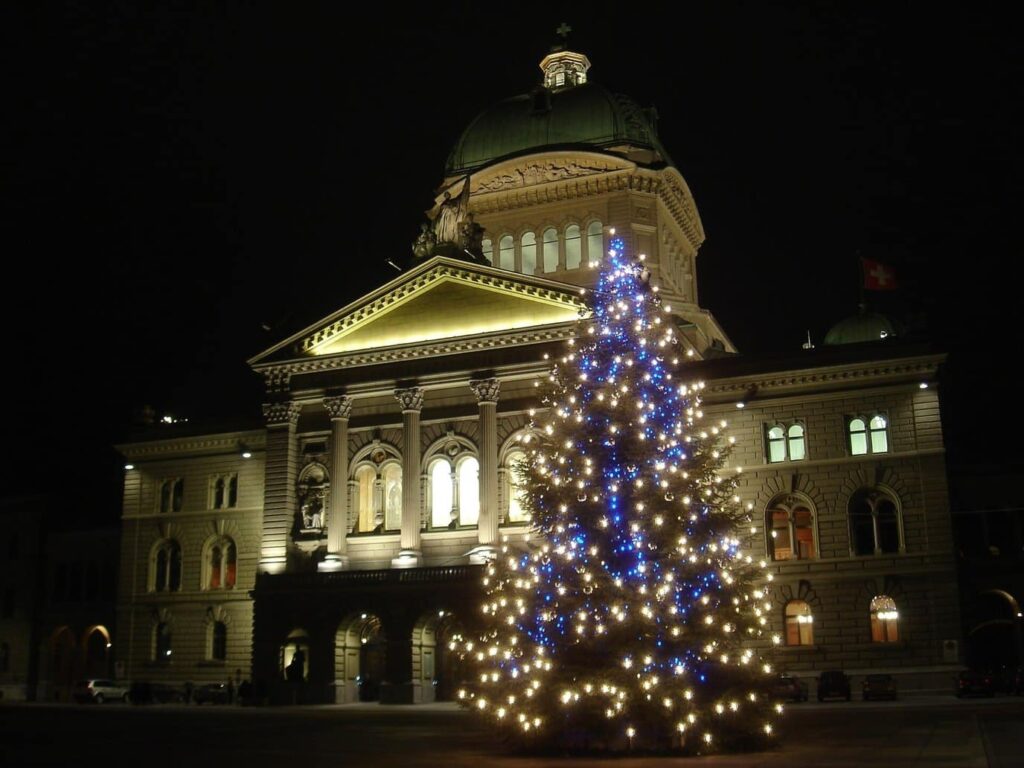
Bern has a special role in Switzerland: the city is home to the Federal Palace (Bundeshaus), seat of Parliament and the Federal Council, on Federal Square (Bundesplatz), a few hundred metres from the first chalets. Local legend says the city is named after the bear, the first animal hunted by Berthold V when the city was founded; the animal is still Bern’s heraldic emblem, seen on fountains, flags and even the railings of the bear pit. This double identity, political capital and preserved medieval city, can be felt at the Christmas market: Federal Palace staff do their Christmas shopping between sessions, and the stalls sit next to the windows of shops that keep the neighbourhood going all year.
Bern Christmas market, between crafts and treats
The chalets are traditionally spread over several squares in the old town, including Münsterplatz, at the foot of the cathedral, and Waisenhausplatz, a little further up towards the station. The Münsterplatz market has announced its 2026 edition from Saturday 28 November to Thursday 24 December, with three additional weekends of craft market on the Münsterplattform (29 November, 5 and 6 December, 19 and 20 December); the number of stallholders is not published.
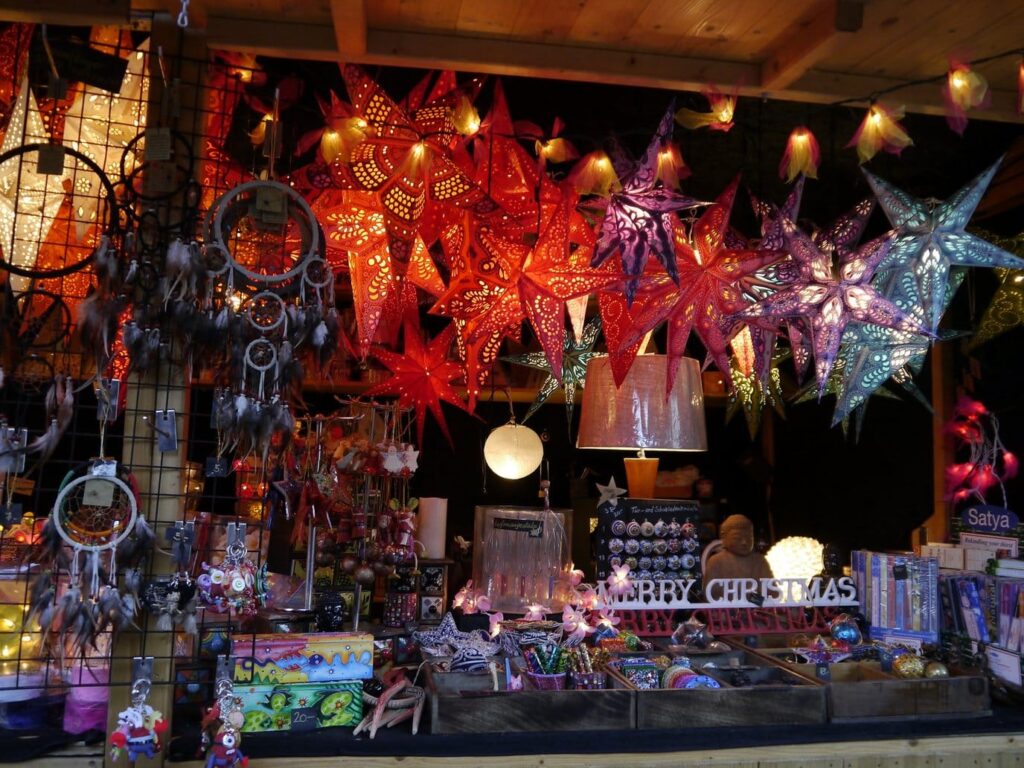
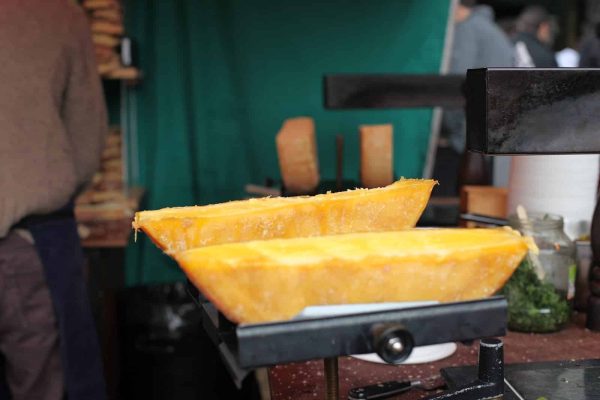
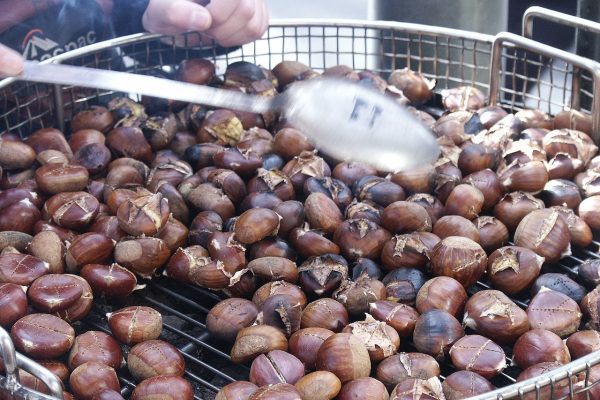
Swiss artisans run most of the stalls: candles, ceramics, textiles, wooden toys and handmade tree decorations. On the food side, raclette and cheese fondue share top billing with hot chestnuts, guetzli (small Christmas biscuits) and gingerbread. Mulled wine goes with it all, spiced the Swiss way with a hint of cinnamon and sometimes kirsch. To find these flavours again once you’re home, a mulled wine recipe lets you recreate that spicy warmth without waiting for next winter.
The stalls lend themselves to gift hunting rather than bulk buying: a turned wooden object, a hand-painted card, a jar of honey from local hives. The pace is that of a life-size Advent calendar, where each visit leaves time to compare two or three stalls before choosing.
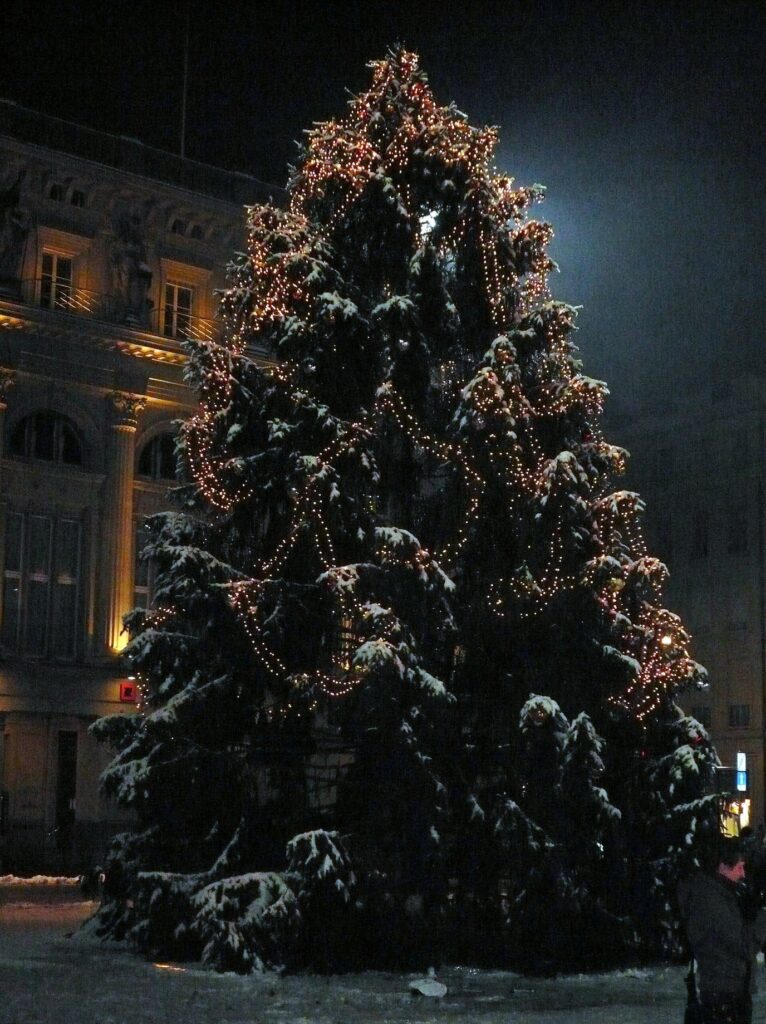
In the evening, garlands hung from the arcades light up the shopping streets from end to end. Locals stop by on their way home from work, shopping bag in hand: the market is part of the city’s daily rhythm, between lit shop windows and cafés that stay packed all December.
Getting to Bern Christmas market from France
From Paris, the TGV Lyria runs to Basel, where a cross-platform connection takes you on to Bern, for a journey of about four and a half hours. The train arrives at the main station (Bahnhof Bern), about ten minutes’ walk from the old town and the first chalets.
Travellers leaving from Geneva or Lausanne reach the Swiss capital by SBB train, in one hour forty and about one hour respectively. For people living in Haute-Savoie (Annecy, Thonon-les-Bains, Évian-les-Bains, Chamonix), the most direct route goes via Geneva before continuing to Bern on the Swiss A12 motorway.
By car, the nearest French-Swiss border crossing is around Vallorbe, in the Vaud Jura, or further north around Basel. Then allow one to one and a half hours’ drive depending on the crossing you choose. The old town is largely pedestrianised over the festive season: it’s best to park on the outskirts and walk to the chalets.
An Interrail pass or a Swiss Travel Pass covers the journey if you’re combining several Swiss cities on the same trip. Car-sharing is another option for reaching Bern from eastern France, via Besançon then Basel, with a journey time similar to the train and often a lighter budget when there are several of you.
Practical information for visiting the market
Access to the chalets is free, as at most Swiss Christmas markets. Allow a budget of 15 to 30 Swiss francs per person for a snack and a hot drink, or about 16 to 31 euros at the current exchange rate.
The chalets are open Monday to Thursday from 11am to 6:30pm, Friday until 8pm, and at weekends from 10am to 6pm; on 24 December, the market closes at 4pm. The city’s other markets, including the one on Waisenhausplatz, publish their own opening hours. Allow one to two hours to see all the stalls, a little longer if you add a visit to the cathedral or the Zytglogge.
The cobbled streets and slopes of the old town make some stretches tricky for wheelchairs and pushchairs. No official accessibility information is available yet from the market organisers. As for the weather, December temperatures in German-speaking Switzerland often drop below zero in the evening: warm clothing and closed shoes are no luxury, especially as wet cobbles make some stretches slippery after rain or snow.
The bear park and the Zentrum Paul Klee, a museum devoted to the painter on the east side of the city, round off a family outing on days when the market closes early or only opens in the late afternoon. Both sites can be reached by bus from the centre, without going through the old town.
Extending your stay around Bern
Bern’s central position in the country makes it easy to go on to other Swiss Christmas markets or to extend the stay towards the Bernese Alps. Several towns lend themselves to an extra outing, by train or car, without upsetting a weekend plan, with frequent connections from the main station.
- Fribourg Christmas market can be visited in half a day from Bern, about thirty minutes by train, in another sandstone old town perched above a loop of river.
- Montreux Christmas market runs along the shores of Lake Geneva, just over an hour’s drive away, for an atmosphere turned towards the lake and the surrounding mountains.
- Geneva Christmas market completes a Swiss weekend between lake and old town, about an hour and forty minutes by train from Bern.
- Bern station also serves Thun and the gateway to the Bernese Oberland, if you want to head on to the first Alpine peaks after the market.
- The Zentrum Paul Klee, on the east side of the city, can be visited in half a day to get to know Bern beyond the chalets.
Our tip
Time your visit for the late afternoon, when the old town façades light up under the garlands and the low sun shows off the arcades.
Reviewed and approved by the editorial team
Checked on against 4 official sources. Detailed sources available on request.
A question, a mistake or a problem on this page? Write to us
Markets nearby
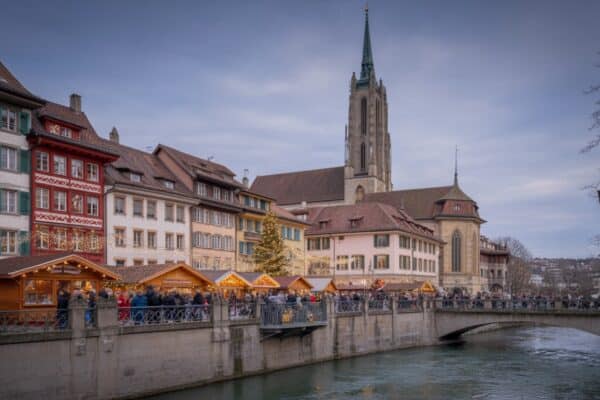 Opens on 4 December
Saint-Nicolas in Fribourg
Fribourg
From 4 to 6 December 2026
Day out
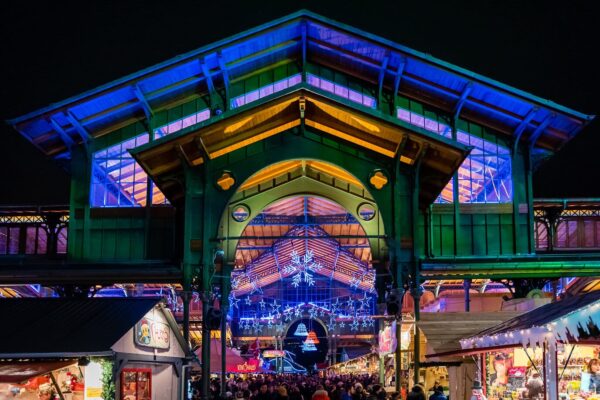 Opens on 20 November
Montreux Christmas Market
Montreux
From 20 November to 24 December 2026
Worth the trip
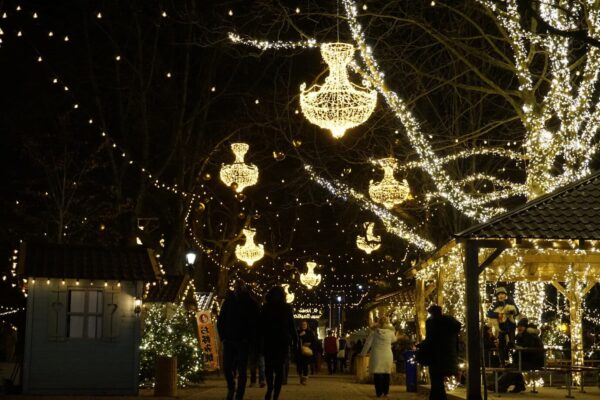 Opens on 19 November
Geneva Christmas Market
Geneva
From 19 November to 24 December 2026
Worth the weekend
Activities nearby
Parks and sites running a Christmas programme less than an hour's drive away. They aren't Christmas markets, and admission is charged.
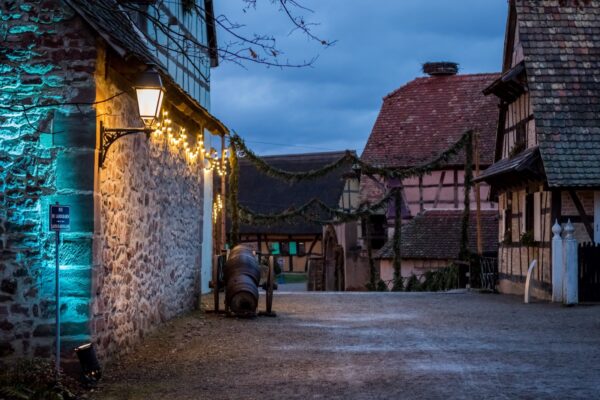 Opens on 4 December
Park
Écomusée d'Alsace at Christmas: the village in festive dress
Ungersheim
From 4 December to 3 January 2027
Worth the weekend · Park
 Dates to be confirmed
Park
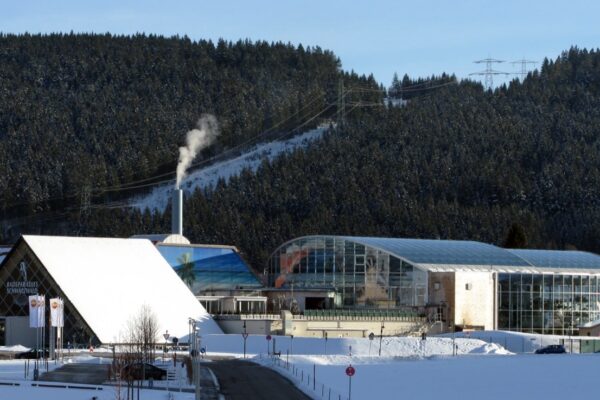
Badeparadies Schwarzwald at Christmas: relaxing in the Black Forest
Titisee-Neustadt
Day out · Park
 Opens on 28 November
Event
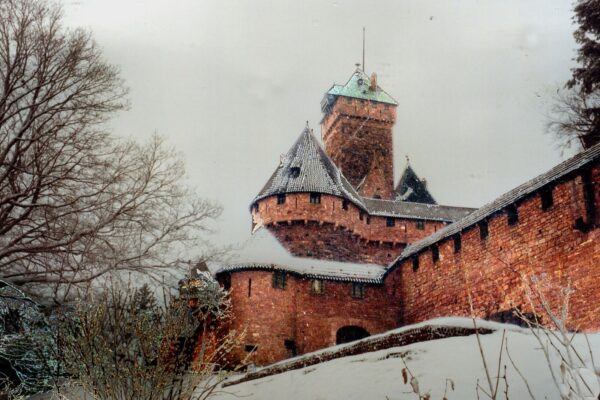
Haut-Koenigsbourg Castle at Christmas
Orschwiller
From 28 November to 31 December 2026
Day out · Event