
Where to find Innsbruck Christmas Market
Highlights of Innsbruck Christmas Market
- Medieval old town around the Golden Roof
- Views of the Alps from Maria-Theresien-Strasse and the Bergisel
- Tyrolean crafts: carved wood, felt, blown glass
- Austrian Punsch and mulled wine served in collectable mugs
- Direct train access from Munich and Zurich
Where to stay near Innsbruck Christmas Market
Hotels, flats and rooms around the market, for the dates of your stay.
Check availability with our partners
Innsbruck Christmas Market in pictures
Specialities to try
The flavours that make this market what it is
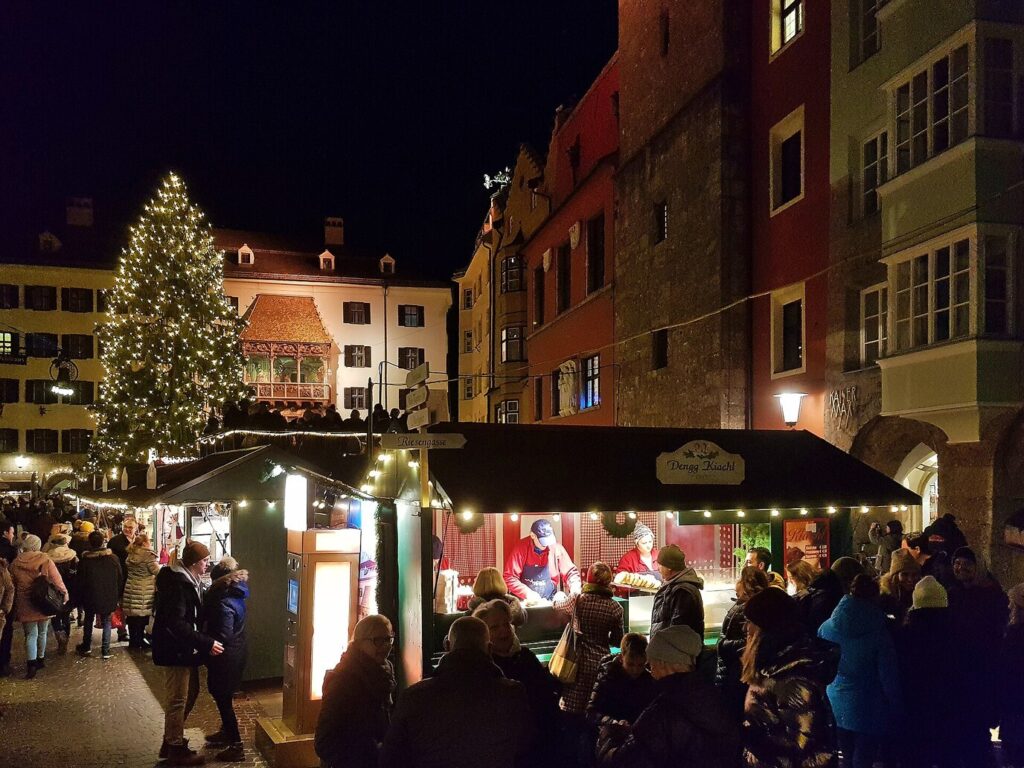
Tyrolean Kiachl
Fritters, savoury with sauerkraut or sweet with jam
Glühwein and Punsch
Zillertaler Krapfen
Tyrolean Speck
Kletzenbrot with dried fruit
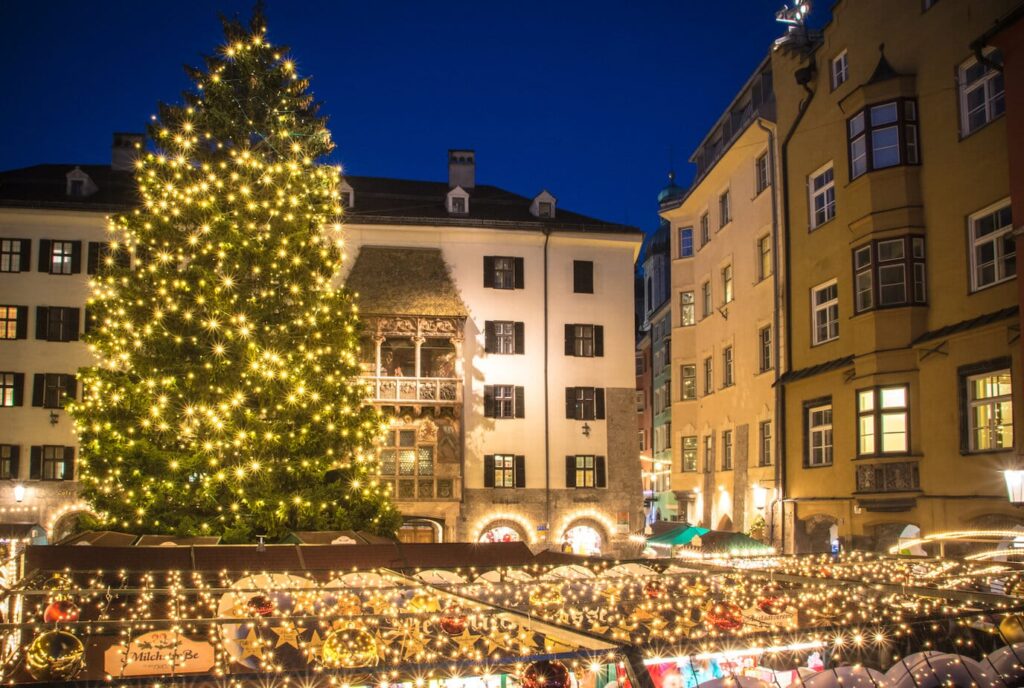
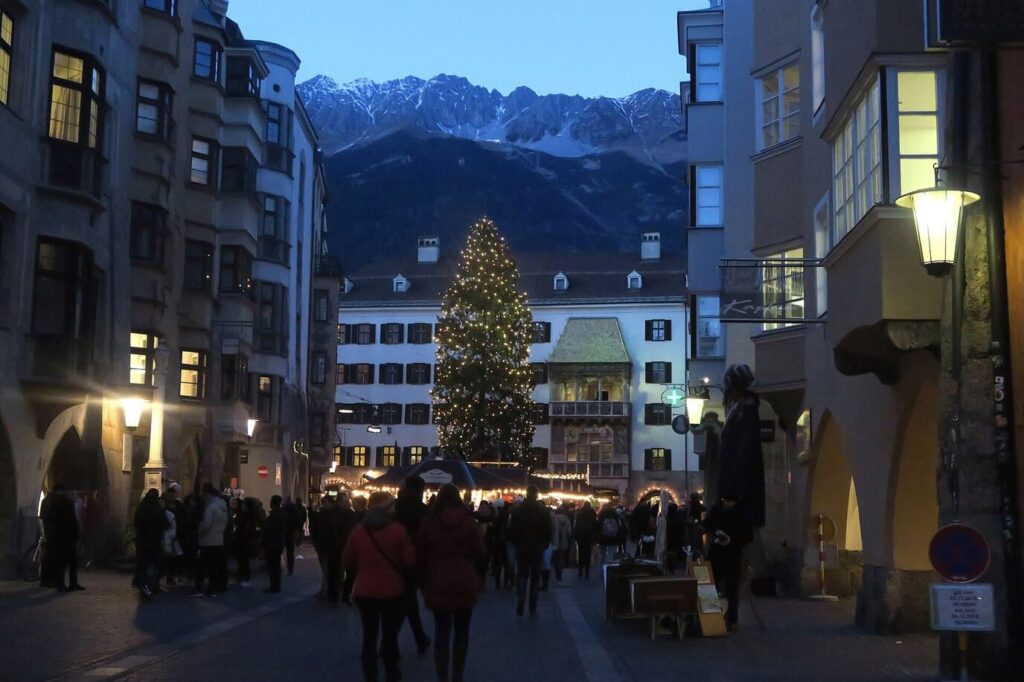
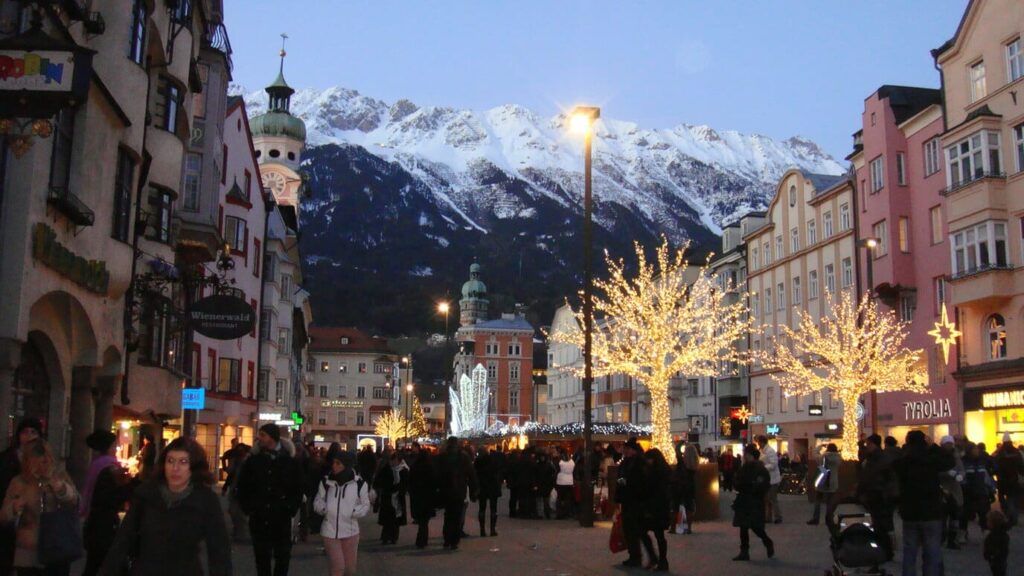
At the foot of the Tyrolean Alps, Innsbruck sets up its Christmas market in an old town of Baroque facades clustered around the Golden Roof. Between the medieval Altstadt, the neighbouring Marktplatz and Maria-Theresien-Strasse, several separate markets make up Innsbruck Christmas market, each with its own atmosphere, from craft chalets to stalls looking out towards the peaks. The mountains are visible from almost every lane, and this closeness between Baroque town and high summits gives this Austrian stop a special character. A former Habsburg residence, the city has kept a compact centre from that history, easy to cover in a day: the Hofburg palace and its church, the Hofkirche, are both a few minutes' walk from the first chalets.
The old town and Marktplatz, heart of Innsbruck Christmas market
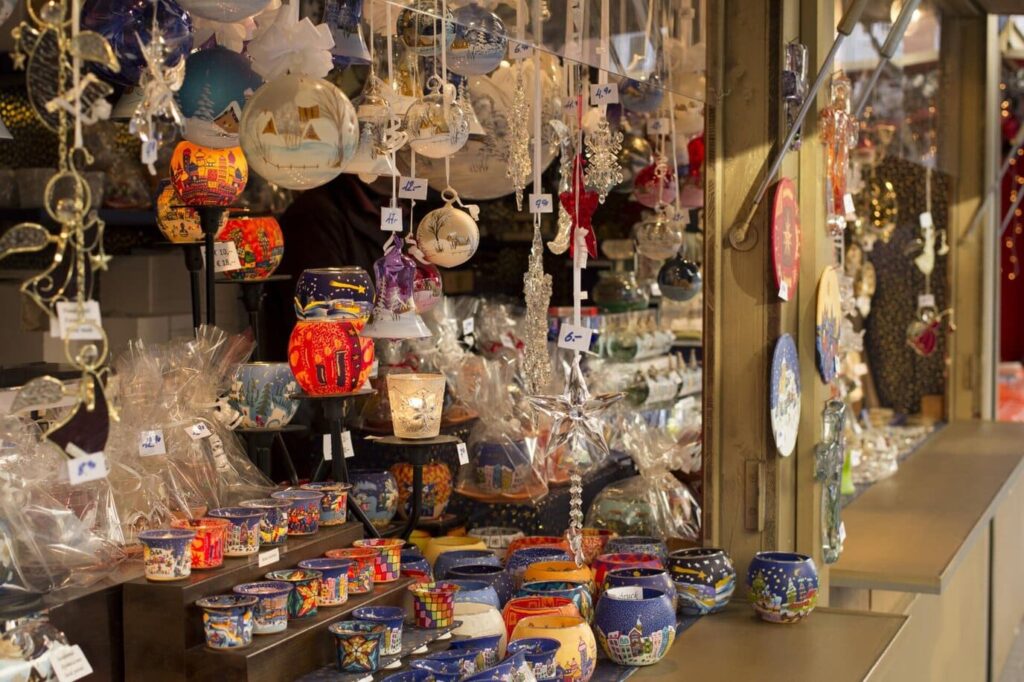
The historic core is ideal for a first visit. Around the Golden Roof, the gilded balcony that gives the square its name, beneath Gothic arcades and painted facades, the cobbled lanes of the Altstadt are lined with wooden chalets devoted to local crafts: candles, blown-glass decorations, and objects in turned wood or pewter. Right next door, Marktplatz carries on the atmosphere with a family-oriented market, with a carousel and small activities for children. Brass bands sometimes play from the surrounding balconies, and the aromas of mulled wine and roasted chestnuts mingle with the smells of fresh-cut wood and gingerbread.
The density of the medieval streets packs the chalets into a small area, which makes the visit pleasant even in cold weather: you go from one stall to the next without much walking, always with the bell tower of St James's Cathedral or the colourful gable of a Baroque house in the background. In the evening, the warm glow of the garlands contrasts with the grey stone of the facades, and the crowds, depending on the day, are dense without being overwhelming. Innsbruck locals come here to meet friends after work, just as visitors passing through get their first bearings in the city.
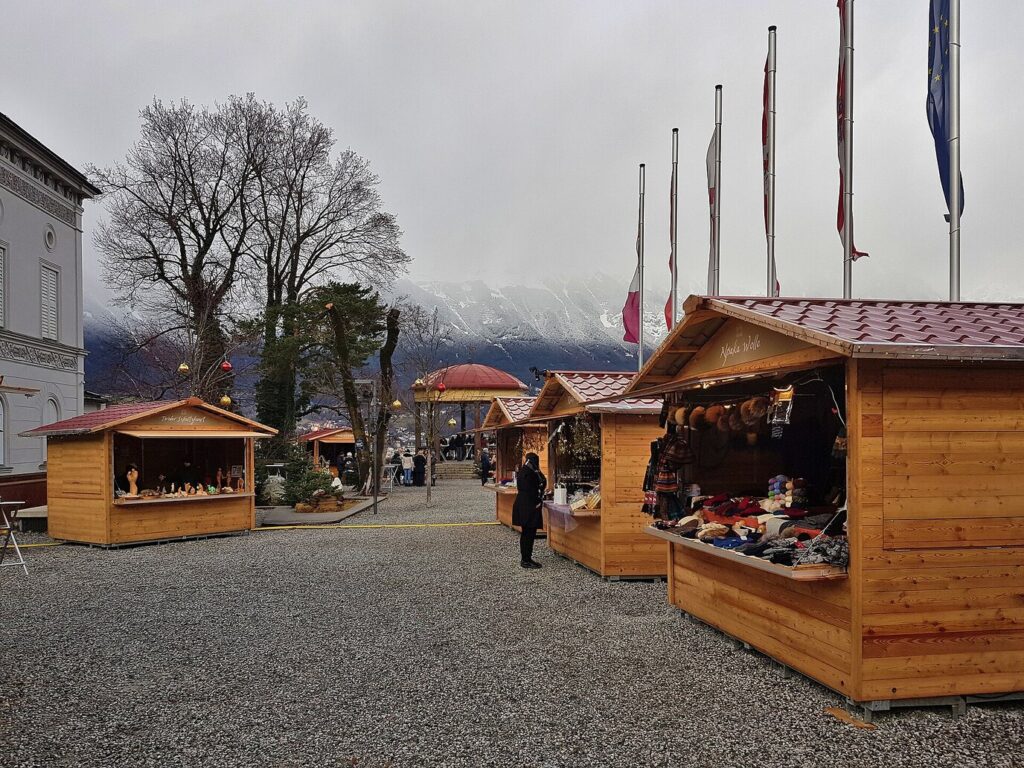
From the Altstadt, the Hungerburgbahn, the funicular with a white silhouette designed by Zaha Hadid, climbs in a few minutes to the Hungerburg district, where a second, quieter market opens with a panoramic view over the valley. The ride feels like an interlude above the rooftops, useful for catching your breath between chalet visits and seeing the city from a different angle, with the peaks of the Karwendel in the background.
Maria-Theresien-Strasse and the Kaiserweihnacht am Bergisel
Maria-Theresien-Strasse, lined with elegant buildings and shops, hosts a more contemporary market, with the Triumphal Arch at one end and the Nordkette range closing off the view at the other. This is where Christmas meets town-centre shopping, in a slightly more urban atmosphere than the Altstadt, with stalls focused on design and regional food rather than traditional crafts.
Below the Bergisel ski jump, designed by the architect Zaha Hadid, and near the Tirol Panorama, the Kaiserweihnacht am Bergisel rounds things off with a market up on the heights, open for six weekends, with craftspeople from the region, music and singing, different from the others for its view over the city and the Inn valley. You can combine a visit to the market with the ski jump's panoramic platform, if you like to gain a bit of altitude between chalets. The ski jump recalls the city's Olympic past as a two-time host of the Winter Games in the 20th century. You reach the ski jump by tram from the centre, and the view over the snow-covered rooftops of the old town is worth the detour even on days when the market is closed.
Further north, the Nordkettenbahn cable car takes this high-altitude theme further, climbing to the ridges above the city, a series of cabins that takes you from the historic centre to more than two thousand metres in under half an hour. It isn't one of the official Christmas market sites, but many visitors combine a ride up during the day with a visit to the chalets in the late afternoon, when the low sun catches the peaks.
Mulled wine, Punsch and Tyrolean crafts
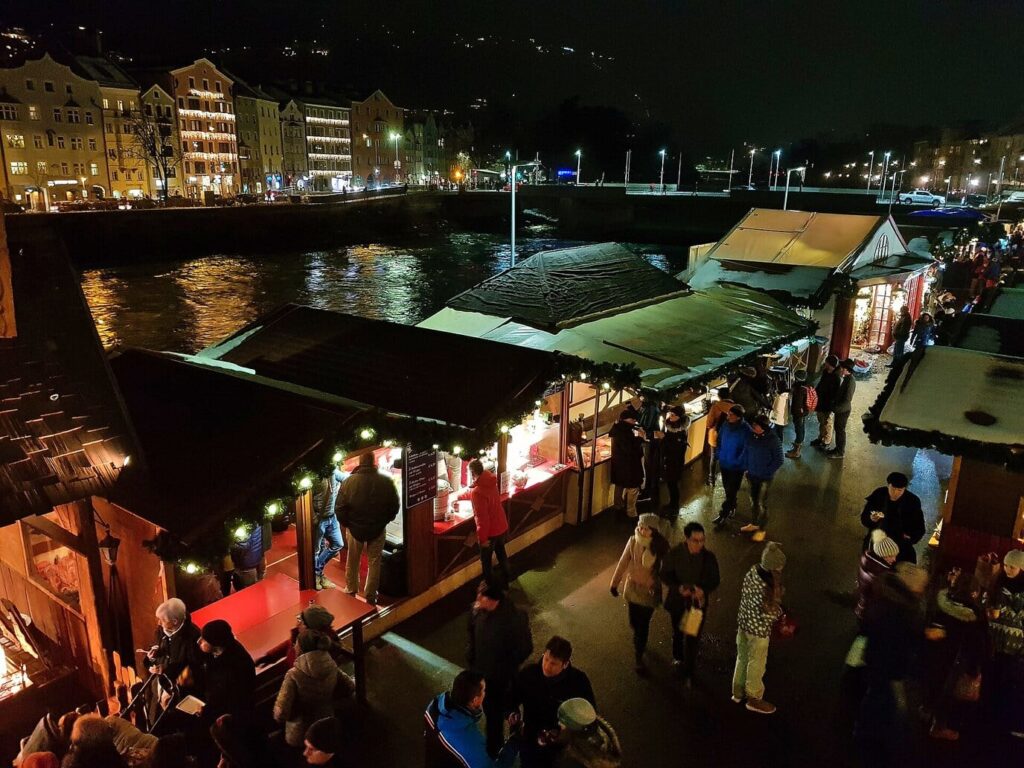
Classic Glühwein sits alongside Austrian Punsch, often served with rum or fruit, in decorated ceramic mugs to collect from one year to the next. Some stalls offer local variations, with stronger spices or a dash of Tyrolean fruit brandy, to be enjoyed in moderation. To look into quantities and spices before you leave, the spiced mulled wine recipe on our mulled wine guide details the variations.
For crafts, carved wood, Tyrolean felt and pewter objects take up a good part of the stalls in the old town, with more contemporary design on Maria-Theresien-Strasse. The food follows the same split: gingerbread, chocolate-covered candied fruit and mountain cheeses in the Altstadt, more elaborate pastries on the avenue. Children can often find something to decorate a tree with or make a small candle on the spot, depending on the workshops offered each year. Melted mountain cheese, served on rye bread, makes a good break in the middle of the visit, especially after a trip up to the Bergisel.
The city has other, lower-key markets too, in Wilten for its focus on local artists, or near St Nikolaus church for a more contemplative, less commercial atmosphere. These spots are secondary compared with the Altstadt and Maria-Theresien-Strasse, but they round off a visit spread over several days nicely.
Krampus, an early December tradition
Around 5 and 6 December, Krampus parades pass through some districts of Innsbruck and the surrounding valleys: horned figures in fur costumes who traditionally accompany Saint Nicholas rather than embody him. The tradition, long established in the Alpine valleys of Tyrol, is mostly experienced as a costumed street show, with drums, bells and masks hand-carved by local associations. It draws curious passers-by as much as local families, keeping a reasonable distance for younger children who prefer to watch from the pavement rather than join the parade. In the Tyrolean valleys, this Alpine folklore long predates today's Christmas tourism, and costumes are often handed down within the same village association, from one generation to the next.
2026 dates, opening hours and getting there from France
The organiser of the seven Christkindlmärkte gives the 2026 season as running from 13 November to 6 January (checked on 16/09/2026), with dates specific to each site. The old town and Marktplatz are open from 13 November to 23 December, daily from 11am to 9pm; Maria-Theresien-Strasse from 25 November to 6 January, and the Hungerburg from 20 November to 6 January. The Kaiserweihnacht am Bergisel opens for only six weekends, from 13 November to 20 December, on Fridays from 2pm to 8pm, Saturdays and Sundays from 11am to 8pm, plus Monday 7 and Tuesday 8 December. Entry to the market itself is free; you only pay for food, drink and what you buy at the chalets.
From France, the most direct option is a TGV or ICE to Munich, then the Austrian Railjet to Innsbruck, a journey of about an hour and forty-five minutes from the Bavarian station. From Switzerland, the Zurich-Innsbruck line takes about three and a half hours and works well for a weekend combined with Swiss markets. Direct flights from Paris to Innsbruck airport also exist, especially at the height of the winter season, if you'd rather keep travel time down. Once there, the historic centre can be explored entirely on foot, and a tram links the station to Maria-Theresien-Strasse in a few minutes.
For a day trip, allow one to two hours for the old town alone, and a full half-day if you add Maria-Theresien-Strasse and a return trip to the Bergisel or the Hungerburgbahn. As for budget, a mug of mulled wine costs a few euros, deposit included, and a simple meal on site (rye bread, melted cheese, grilled sausage) is enough to keep hunger at bay for an evening without blowing the trip's budget.
- The old town can be explored on foot in one to two hours, between chalets and cobbled lanes: allow a little longer if you add Marktplatz and Maria-Theresien-Strasse.
- Munich Christmas market combines well with Innsbruck for a full weekend, along the same rail route.
- On the Swiss side, Zurich Christmas market is a handy gateway for reaching Tyrol by train.
- For a Bavarian detour further north, Nuremberg Christmas market shares Innsbruck's love of wooden crafts.
- The Altstadt cobbles get slippery once frozen: shoes with non-slip soles will save you a lot of trouble in the evening.
Our tip
The old town cobbles are slippery once frozen: shoes with non-slip soles are best for late December evenings.
Reviewed and approved by the editorial team
Checked on against 3 official sources. Detailed sources available on request.
A question, a mistake or a problem on this page? Write to us
Markets nearby
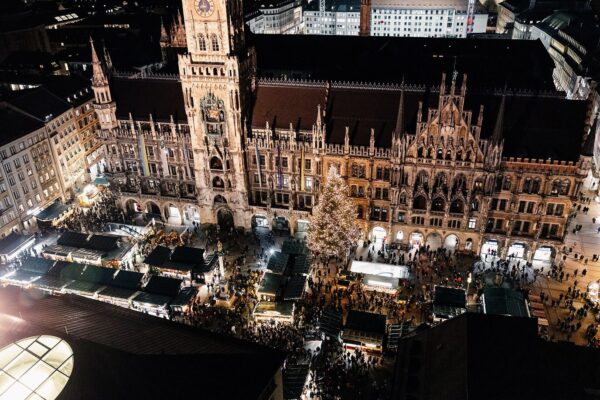 Opens in 42 days
Munich Christmas Market
Munich
From 20 November to 24 December 2026
Worth the weekend
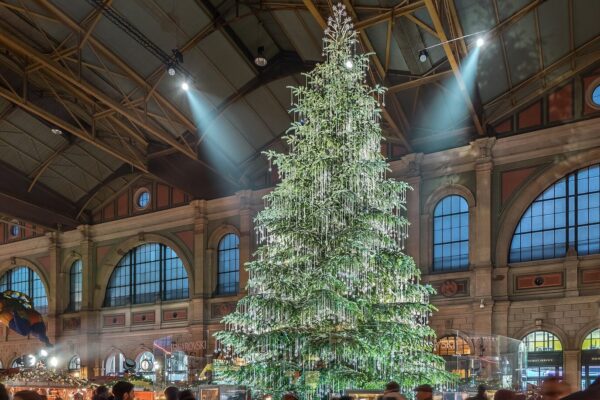 Opens in 41 days
Zurich Christmas Market
Zurich
From 19 November to 24 December 2026
Worth the weekend
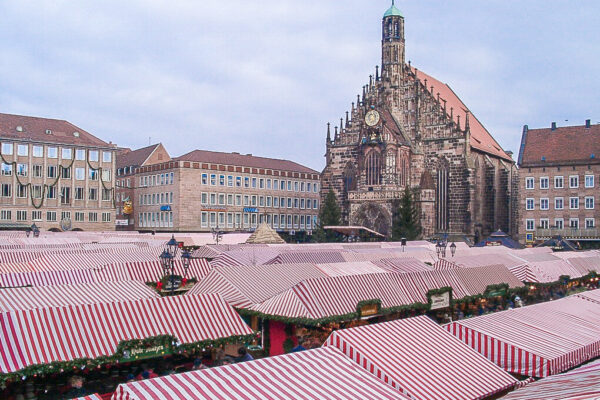 Opens in 49 days
Nuremberg Christmas Market
Nuremberg
From 27 November to 24 December 2026
Worth the trip
Activities nearby
Parks and sites running a Christmas programme less than an hour's drive away. They aren't Christmas markets, and admission is charged.
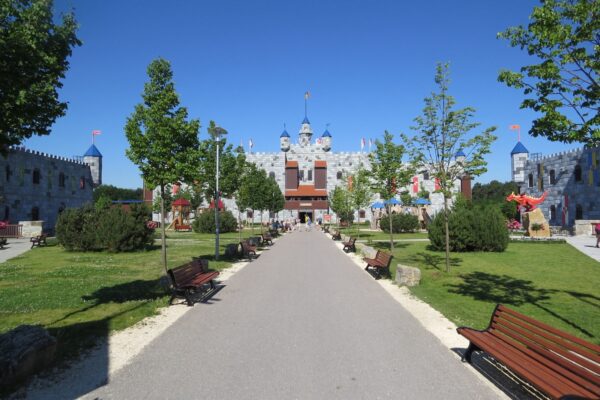 Opens in 50 days
Park
Opens in 50 days
Park
LEGOLAND Deutschland at Christmas
Günzburg
From 28 November to 10 January 2027
Day out · Park
 Dates to be confirmed
Park
Dates to be confirmed
Park
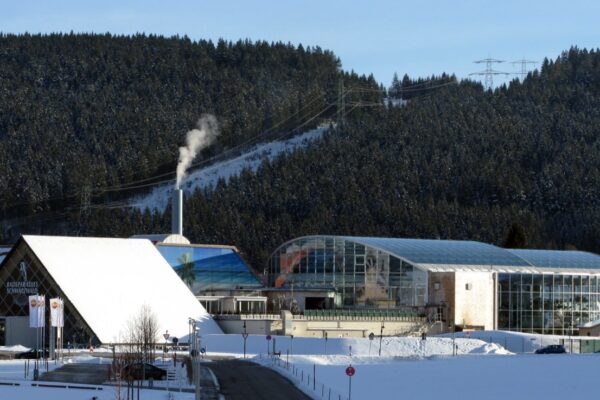
Badeparadies Schwarzwald at Christmas: relaxing in the Black Forest
Titisee-Neustadt
Day out · Park
 Opens in 50 days
Park
Opens in 50 days
Park
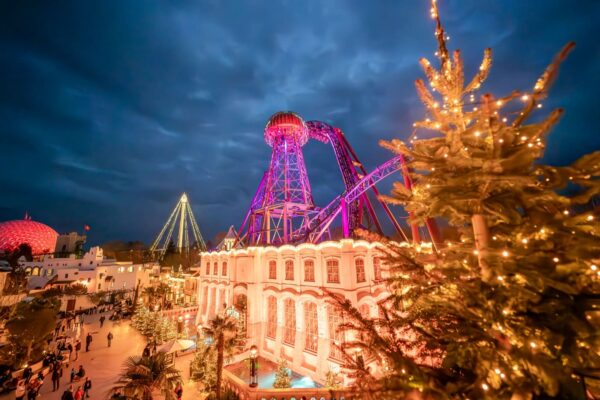
Europa-Park at Christmas: Winterzauber
Rust
From 28 November to 9 January 2027
Worth the trip · Park