
Where to find Munich Christmas Market
Highlights of Munich Christmas Market
- Neo-Gothic Neues Rathaus setting, lit up every evening
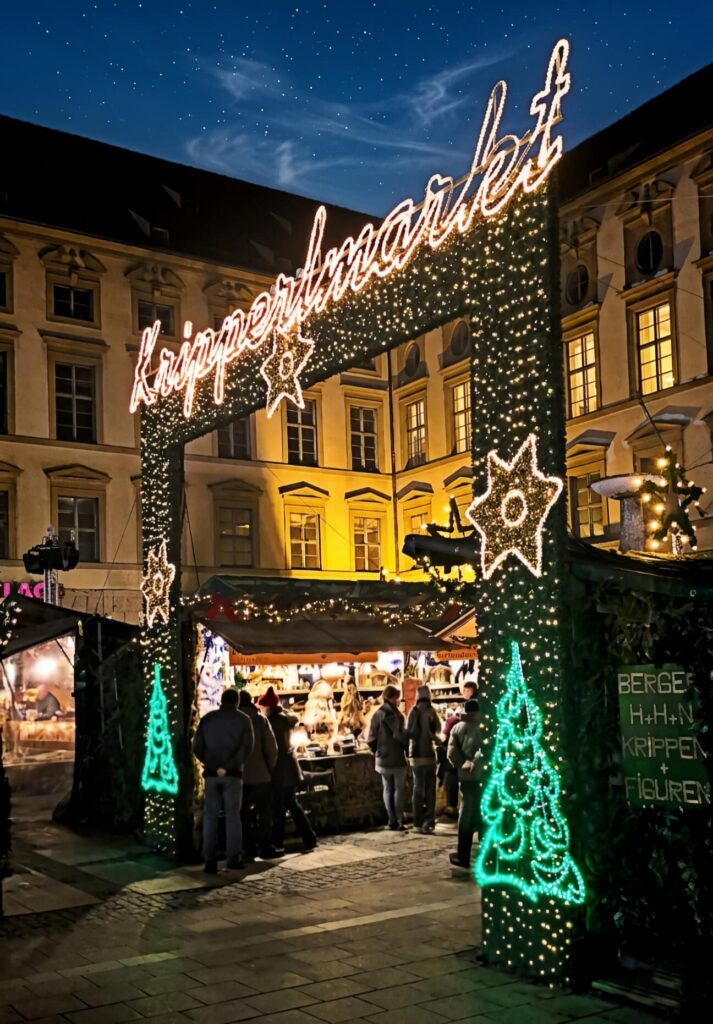
- The neighbouring Kripperlmarkt, a nativity scene market with a Christmas tree about 30 metres tall
- Traditional brass carols from the town hall balcony
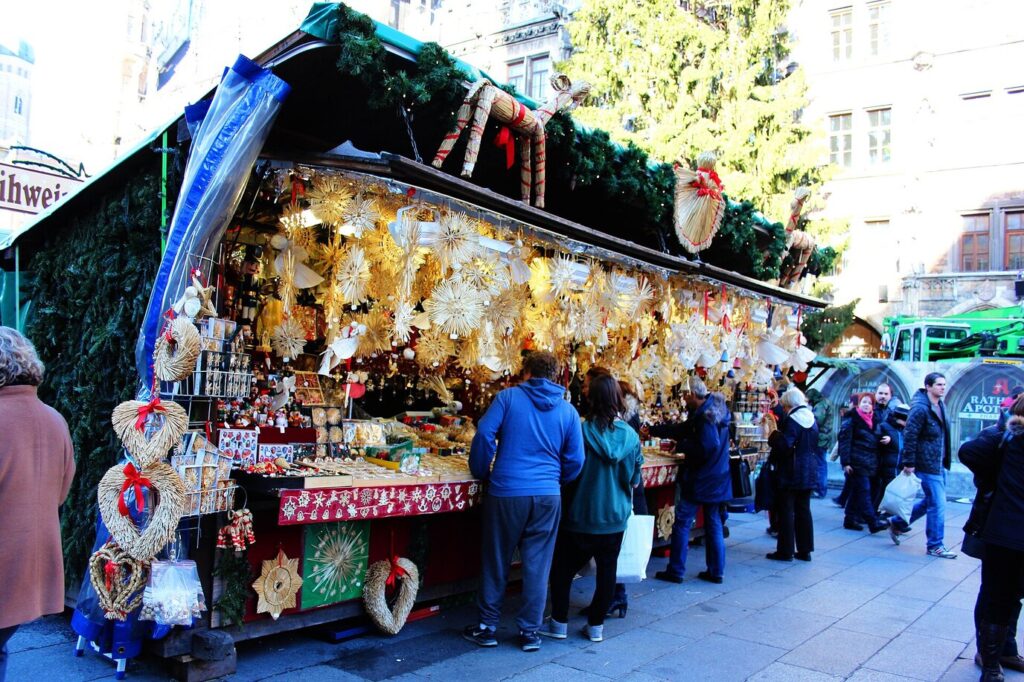
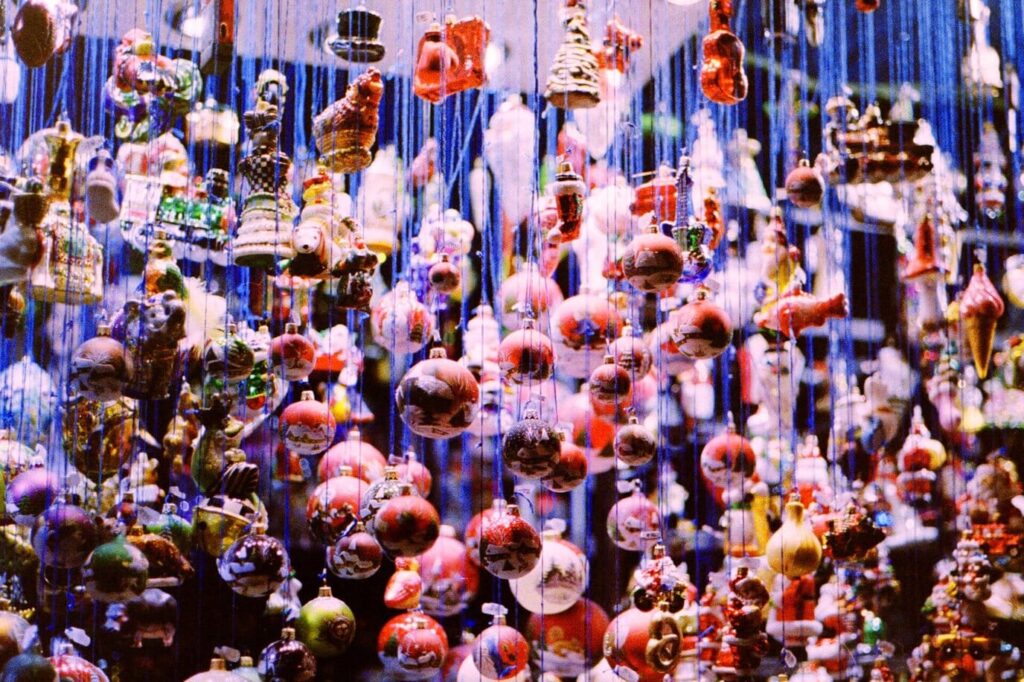
- Bavarian crafts: blown glass, turned wood, woven straw
- Four other markets in the city: Tollwood, Chinesischer Turm, Wittelsbacherplatz, Pink Christmas
Where to stay near Munich Christmas Market
Hotels, flats and rooms around the market, for the dates of your stay.
Check availability with our partners
Munich Christmas Market in pictures
Specialities to try
The flavours that make this market what it is
Mulled wine
Glühwein) served in collectable mugs
gingerbread
Lebkuchen
Flammlachs and Reiberdatschi are among the market’s specialities
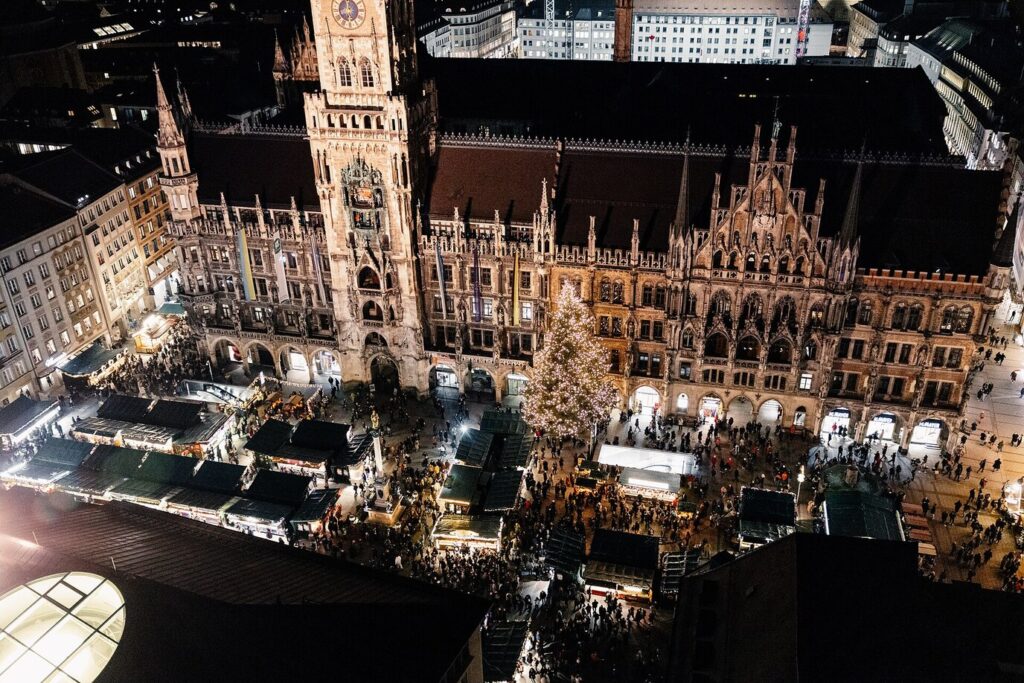
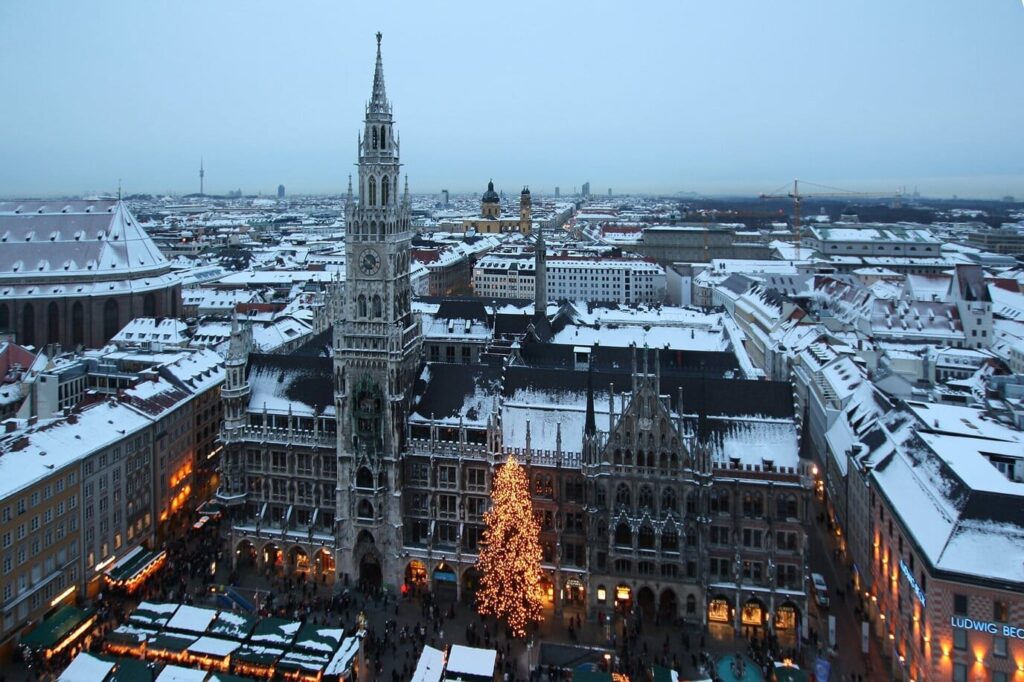
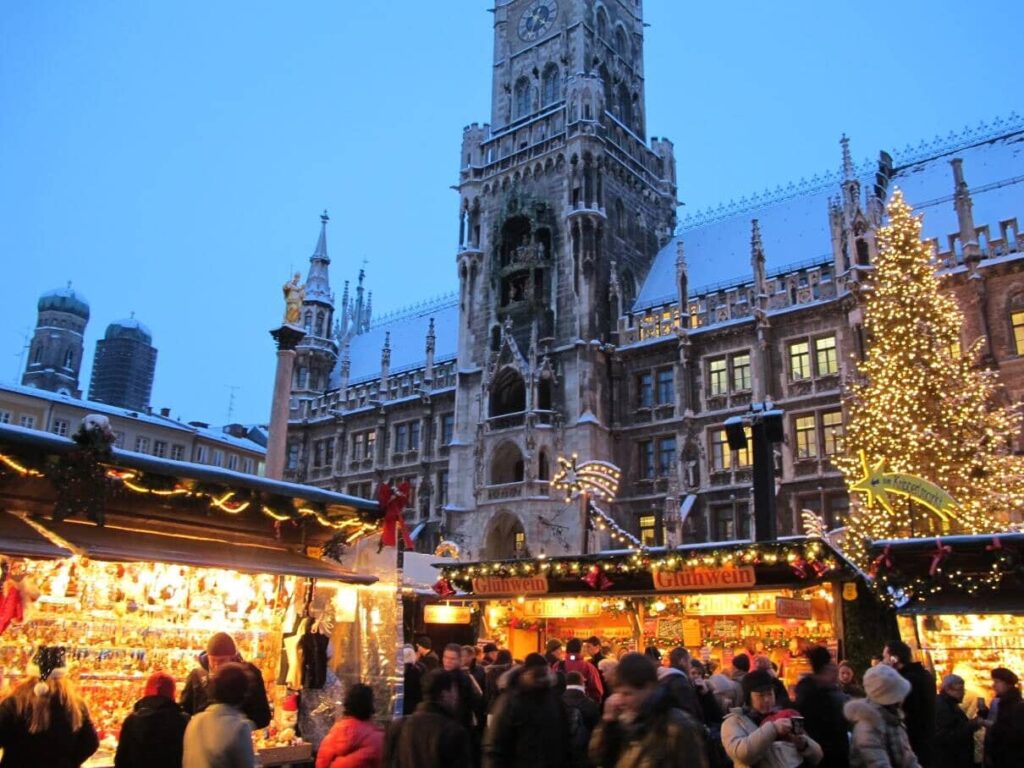
Munich Christmas market opens every year on Marienplatz, between the turrets of the Neues Rathaus and the façades of the historic centre. Under its German name, the Christkindlmarkt am Marienplatz brings together dozens of wooden chalets around a Christmas tree dressed in garlands, in an atmosphere that mixes brass carols, the smell of gingerbread and mulled wine served in collectable mugs. A few streets away, the Rindermarkt nativity scene market, the alternative festival on the Theresienwiese and three other more local events complete the picture, each with its own identity and its own crowd.
The Christkindlmarkt, heart of Munich Christmas market
The market fills Marienplatz and spills over into Kaufingerstraße and the neighbouring Rindermarkt. In 2026, it opens on Friday 20 November and closes on 24 December, with a break on 22 November for Totensonntag, a Sunday of remembrance observed across Bavaria. Opening hours are 10am-9pm Monday to Saturday, until 8pm on Sundays, and 10am-2pm on Christmas Eve.
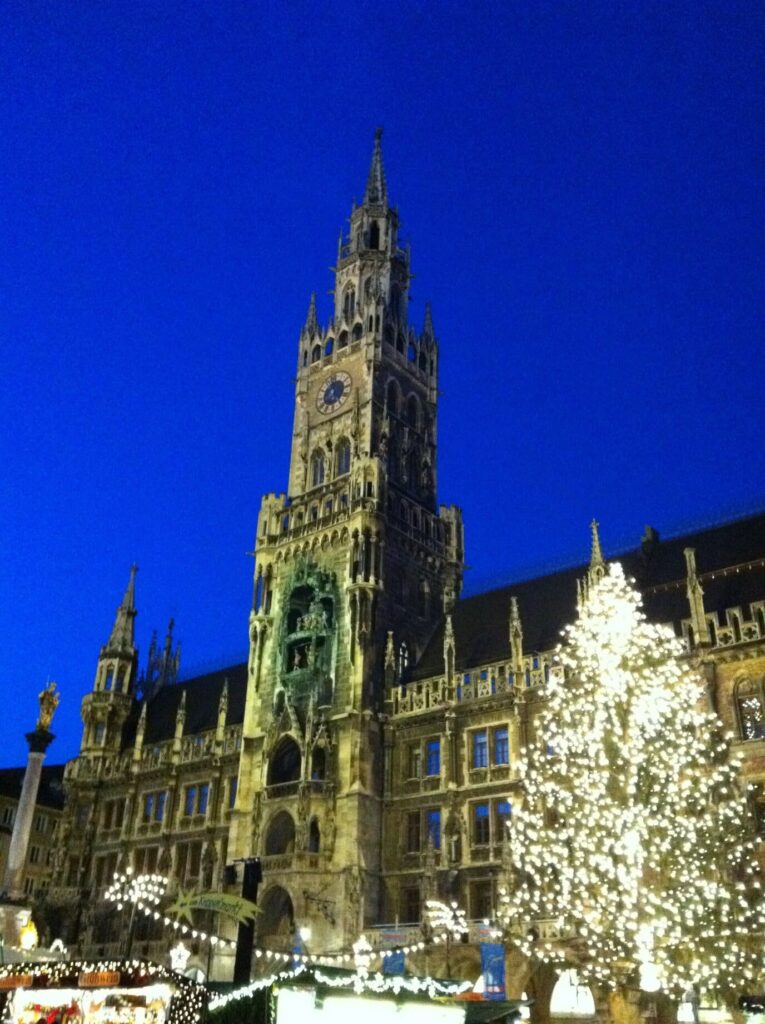
The setting revolves around the Neues Rathaus, whose 19th-century neo-Gothic turrets tower over the rows of chalets. Every evening during the season, a brass ensemble plays traditional carols from a balcony of the town hall, a tradition kept up every year. The stalls sell Bavarian crafts: blown glass, turned wooden toys, woven straw decorations, alongside the usual mulled wine and gingerbread stands.
The Neues Rathaus is also home to the Glockenspiel, an animated carillon whose figures re-enact scenes from Munich’s history at set times: a 16th-century princely wedding and a coopers’ dance. This mechanism, independent of the market, draws its own crowd of onlookers to the square, often at the same time as Christkindlmarkt visitors taking a break in front of the nearby chalets.
For food, the stalls serve Bavarian specialities beyond mulled wine: Flammlachs (salmon grilled on a plank over a wood fire), Reiberdatschi (grated potato pancakes), candied nuts and Kartoffelpuffer share the space with the usual grilled sausage stands. The gingerbread, often brought in from Nuremberg, comes in many shapes and sizes, from decorated hearts to figures meant to be hung on the tree.
The market’s history goes back a long way. The first written mention of a Saint Nicholas market in Munich dates from 1310, before it took the name Christkindlmarkt in 1806, under the influence of Enlightenment ideas that shifted the central figure from Saint Nicholas to the Christ Child. Its current location around Marienplatz is more recent: it dates from 1972. This continuity, documented by the city itself, gives the market several centuries of history, from Promenadeplatz, where it was held in the early 19th century, to its current site.
The Kripperlmarkt, the nativity scene market
A few metres away, around Alter Peter (St Peter’s Church) and the Rindermarkt, the Kripperlmarkt runs on the same dates as the Christkindlmarkt, from 20 November to 24 December 2026. This part of the market is devoted to nativity scenes and their figures: carved wood, painted terracotta, jointed figures, in sizes ranging from miniature to collector’s piece. A Christmas tree about thirty metres tall, covered in fairy lights, marks the centre of this part of the market and serves as a landmark for moving between the two sets of chalets.
The nativity scene tradition holds a special place in Bavaria, where carving religious figures in wood or terracotta has been handed down from workshop to workshop for generations. The Kripperlmarkt offers a concentrated glimpse of it: some exhibitors carve their figures by hand, while others offer more affordable ranges for families who add to their nativity scene year after year.
Tollwood Winter Festival, another side of Christmas in Munich
On the Theresienwiese, the vast open ground that also hosts Oktoberfest, the Tollwood Winter Festival takes a different turn. From 24 November to 23 December 2026, the festival combines a market of ideas devoted to ethical crafts, largely organic food and a cultural programme (theatre, music, circus under a big top) that is mostly free. The atmosphere is more contemporary than on Marienplatz, driven by visitors who come as much for the shows as for the stalls. The festival extends its season to New Year’s Eve on 31 December, with an evening separate from the Christmas period itself.
The Markt der Ideen, the festival’s shopping area, brings together artisans from several countries, with a clear focus on where materials come from and how things are made. You will find jewellery, textiles, leather goods and decorative objects, in a different spirit from the more traditional stalls of Marienplatz.
Chinesischer Turm, the Wittelsbacherplatz medieval market and Pink Christmas
The English Garden (Englischer Garten) hosts its own market around the Chinesischer Turm pagoda. Open every year from mid-November to Christmas Eve, it stands out for its wooded setting, outdoor tables around braziers and a neighbourhood feel. The exact dates of the 2026 edition are still to be confirmed by the organiser: best to check the dedicated website before you go.
On Wittelsbacherplatz, the medieval market (Mittelalterlicher Weihnachtsmarkt, also called Adventsspektakel) recreates a historical atmosphere: jesters and artisans in costume, hot mead served in stoneware cups, and light from torches and wood fires. It runs from 20 November to 23 December 2026, closed on 22 November like the Christkindlmarkt, 11am-9pm.
The medieval market’s programme also includes demonstrations of old crafts (blacksmithing, pottery, weaving) and early music concerts, played on instruments reconstructed from historical models. Access to the chalet aisles is free, as at the city’s other markets.
Finally, Pink Christmas livens up Stephansplatz, in the Glockenbach district, from 20 November to 20 December 2026. Run by Munich’s LGBTIQ+ community, this market has existed since 2005 and offers cabaret and drag shows every evening, as well as mulled wine and craft stalls. The hours are later than at the other markets: 4pm-10pm on weekdays, 2pm-10pm at weekends.
Getting to Munich from France
A direct TGV inOui links Paris-Est to München Hbf in just under six hours, with one daily departure in the late afternoon. Connections via Stuttgart, Karlsruhe or Mannheim, by TGV then ICE, open up other times during the day, for a total journey of around six to six and a half hours. From Strasbourg, a direct TGV or ICE takes about three hours fifty minutes, which puts Munich Christmas market within weekend reach for travellers from Alsace.
By air, several airlines fly to Munich Airport (MUC) from Paris, Lyon or Marseille. The S-Bahn (lines S1 and S8) then links the airport to the city centre and Marienplatz in about forty minutes, with no change. Once there, the market is best explored on foot: Marienplatz, Rindermarkt, Kaufingerstraße and Neuhauser Straße form a pedestrian area where everything is connected without a car.
Munich’s historic centre, home to Marienplatz and the Kripperlmarkt, is almost entirely pedestrianised: you do not need a car once there, and the underground car parks around Sendlinger Tor or Odeonsplatz let you leave your vehicle a few minutes’ walk away if you are driving from Alsace or Baden-Württemberg. December in Munich is cold and sometimes damp: a warm coat, gloves and waterproof shoes make the visit more comfortable, whichever market you choose.
A visit costs little: entry is free at all the markets, and €10-25 is enough for a mulled wine, a snack and a few souvenirs. The Glühwein served here stands out for its mugs, with a different design every year, which many visitors keep as souvenirs rather than returning them for the deposit. Its base, cinnamon and cloves in spiced red wine, can be found in a mulled wine recipe if you want to recreate it at home.
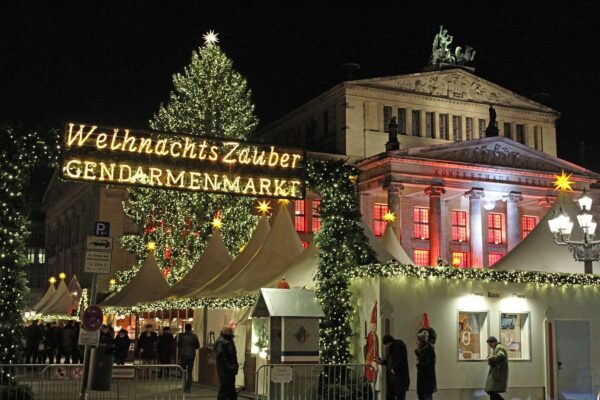
- Berlin Christmas market shares Munich’s national reputation and long history, but in a capital whose markets are scattered across the whole city rather than concentrated in one centre.
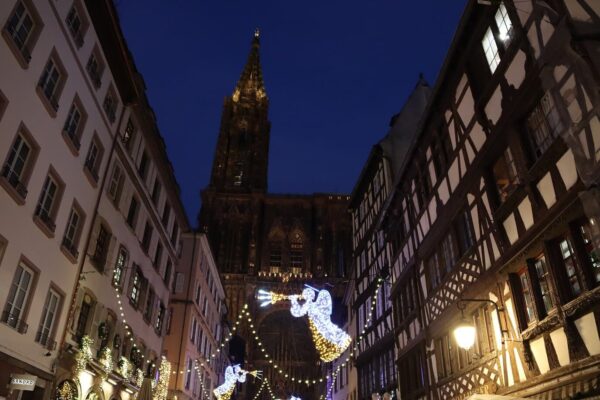
- From Alsace, Strasbourg Christmas market is the closest by rail, less than four hours by train from Munich.
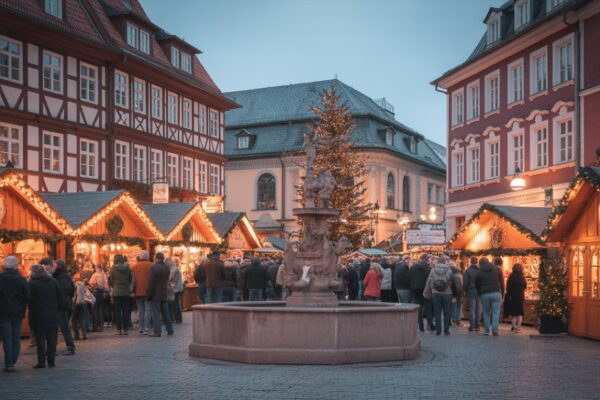
- Saarbrücken Christmas market, closer to the French border, is a useful point of comparison to measure the scale of Munich’s Christkindlmarkt.
- Bring a warm coat and closed shoes: Bavarian squares are cobbled and often damp in December.
- Cards are accepted almost everywhere at the big markets, but a few small stalls at the Kripperlmarkt still only take cash.
Our tip
Aim to arrive in the late afternoon to enjoy the daylight on the façades, then the lights of the chalets in the evening.
Reviewed and approved by the editorial team
Checked on against 9 official sources. Detailed sources available on request.
A question, a mistake or a problem on this page? Write to us
Markets nearby
 Opens in 45 days
Berlin Christmas Market
Berlin
From 23 November to 31 December 2026
Worth the weekend
 Dates to be confirmed
Strasbourg Christmas Market
Strasbourg
Worth the trip
 Opens in 45 days
Saarbrücken Christmas Market
Saarbrücken
From 23 November to 30 December 2026
Day out
Activities nearby
Parks and sites running a Christmas programme less than an hour's drive away. They aren't Christmas markets, and admission is charged.
 Opens in 50 days
Park
Opens in 50 days
Park
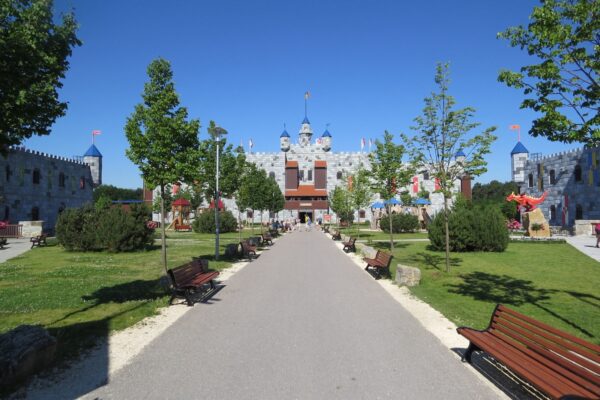
LEGOLAND Deutschland at Christmas
Günzburg
From 28 November to 10 January 2027
Day out · Park
 Dates to be confirmed
Park
Dates to be confirmed
Park
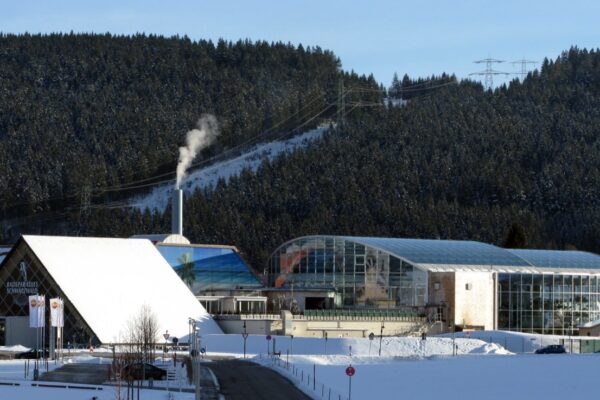
Badeparadies Schwarzwald at Christmas: relaxing in the Black Forest
Titisee-Neustadt
Day out · Park
 Opens in 50 days
Park
Opens in 50 days
Park
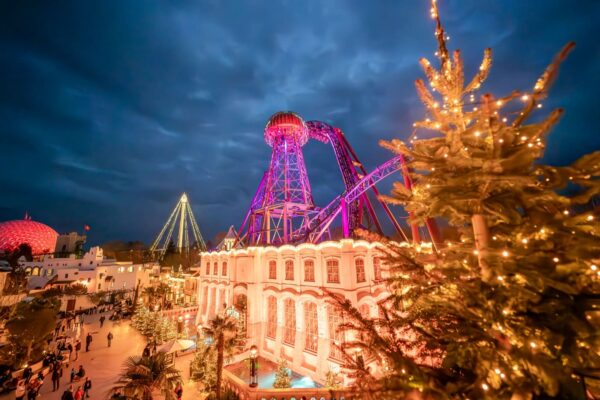
Europa-Park at Christmas: Winterzauber
Rust
From 28 November to 9 January 2027
Worth the trip · Park