
Where to find Aubagne Christmas Market
Highlights of Aubagne Christmas Market
- Santon and ceramics market on Cours Foch, in the Provençal capital of the santon
- Around forty santon makers, nativity-scene builders and ceramicists, including Galerie Argilla artisans
- Two panoramic nativity scenes and the Petit Monde de Marcel Pagnol, with its 200 santons
- Provençal specialities: thirteen desserts, nougat, calissons, olive oil, local wines
- Huveaune clay and Pagnol’s legacy, between old Aubagne and the Garlaban hills
Where to stay near Aubagne Christmas Market
Hotels, flats and rooms around the market, for the dates of your stay.
Check availability with our partners
Specialities to try
The flavours that make this market what it is
Hand-painted clay santons
miniature cribs
local pottery and ceramics
thirteen Provençal desserts
Nougat, calissons, dried fruit, pompe à huile
Coteaux d’Aubagne olive oil and wines
spiced mulled wine
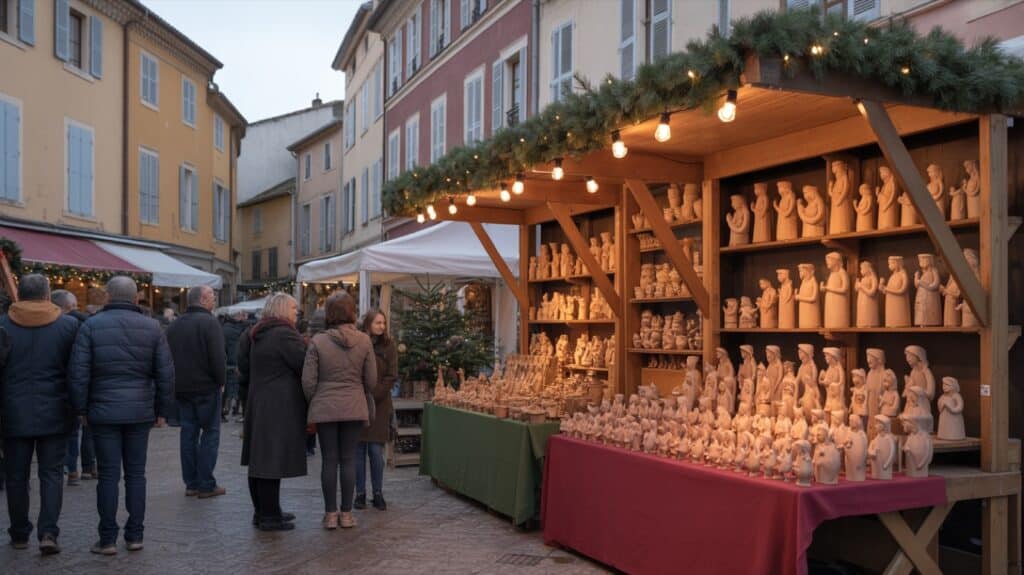
Aubagne has been making santons for generations, and its Christmas market draws directly on this heritage of clay and terracotta. Every winter, Cours Foch fills with stalls where local santon makers, nativity-scene builders and ceramicists display their clay figurines, from crib characters to santons dressed in fabric. This is Marcel Pagnol’s home town, the acknowledged capital of the Provençal santon, and the Aubagne Christmas market is above all a gathering of craftspeople who work with fire and earth. The clay of the Huveaune, shaped in the area’s workshops since Antiquity, passes through the hands of the makers exhibiting here, a few streets from the Garlaban hills so dear to Pagnol. The river that runs through the town fed centuries of tile works, brickworks and faience factories; the nativity santon, which appeared at the end of the 18th century, is their best-known offshoot. Coming here in December means seeing this craft at work rather than behind glass.
Cours Foch, heart of the santon and ceramics market
The market is centred on Cours Foch, spilling over onto Cours Barthélemy, Esplanade de Gaulle and the Espace Lucien Grimaud, right in the town centre. For the 2025 edition, forty-three santon makers, nativity-scene builders and ceramicists from the area set up shop under the marquees, twenty-three of them from the Galerie Argilla, the showcase for local clay crafts. You move from a stall of hand-painted santons to a display of thrown pottery, glazed earthenware dishes and miniature cribs: a whole panorama of Provençal crafts, from traditional to contemporary.
Two large panoramic nativity scenes recreate 19th-century Provençal village life, one displayed on Cours Foch, the other at the Petit Monde de Marcel Pagnol. This museum, set in Thérèse Neveu’s former workshop at 19 Cours Barthélemy, brings together two hundred santons signed by the great masters of the Aubagne area, recreating in clay the characters and settings of the writer’s work. An obvious stop if you have come for the santons: the market’s crib and the museum’s echo each other, between festive folklore and Pagnol’s world of hills and farmers. The opening, every mid-November, takes place to the sound of folk groups in costume launching the season.
Thérèse Neveu, whose workshop now houses the museum, was one of the great figures of the Aubagne santon in the early 20th century, the first to fire her clay santons and give them their bright colours. It is this thread, from lump of clay to painted figure, that the market carries on every winter. The aisles fill up mostly at weekends, when families come to complete their nativity scene and hunt for the missing santon: the ravi with his arms raised, or the fisherman they did not yet have. Children watch the ceramicists demonstrating throwing on the spot, in between rides at the funfair set up nearby.
Santons, ceramics and Provençal treats at the Aubagne Christmas market
The strength of the event lies first of all in the quality of the workshops taking part. Aubagne has lived from the earth for a long time: in the 17th century, a quarter of its inhabitants already worked in faience, and today the town hosts two biennials devoted to clay arts, Argilla and l’Art Santonnier. You leave with a dressed santon, an unfired clay shepherd, a glazed jar or a ceramic dinner set, rather than factory-made objects. The ceramicists show off their skills throughout the day, and the nativity-scene builders are happy to explain how to set up a crib around the Holy Family and the village figures. The Aubagne santon comes in several sizes, from the small two- or three-centimetre format to the larger fabric santon, sewn and dressed by hand. Trade figures people Provençal nativity scenes: the miller, the washerwoman, the knife grinder, the boumian with his mule, the tambourinaire. Each craftsperson has their own style of faces, colours and folds, and that is what makes the market worth exploring stall by stall.
At the table, you are right in the Provençal end-of-year tradition. The thirteen Christmas desserts take over the food stalls: black and white nougat, calissons, dried fruit, quince paste, dates and pompe à huile flavoured with orange blossom, the full gros souper line-up. Local olive oil, nougat and Coteaux d’Aubagne wines go with the shopping, and spiced mulled wine warms up the December afternoons. To recreate the atmosphere at home once you are back, a good mulled wine recipe with cinnamon and orange is all it takes to make the evening last.
- Hand-painted clay santons, from the shepherd to fabric-dressed santons, and miniature cribs by local nativity-scene builders.
- Ceramics and thrown pottery: jars, glazed earthenware dishes and tableware signed by the Galerie Argilla workshops.
- The thirteen Provençal desserts: nougat, calissons, dried fruit, pompe à huile and quince paste, the gros souper table.
- Olive oil and Coteaux d’Aubagne wines to take home for festive meals.
- Spiced mulled wine, served piping hot along the aisles, between two santon makers’ stalls.
Opening hours, access and entertainment: practical information
Entry is free: you only pay for your purchases and whatever you snack on. The 2025 edition ran from 15 November to 28 December, open daily from 10am to 7pm, with early closing at 4:30pm on 24 December and no opening on Christmas Day. For winter 2026, the dates are still to be confirmed by the town and the Pays d’Aubagne tourist office, which publish the programme in the autumn. Throughout the season, Father Christmas’s house, a parade, Christmas concerts and a funfair with rides liven up the centre for families. Weekends bring the highlights, with street entertainment and visits from Father Christmas to keep children happy between santon stalls.
By train, Aubagne station is a short distance from Cours Foch and has direct links to Marseille in about twenty minutes, which makes a car-free visit easy from the city. The tram and the Pays d’Aubagne bus network also serve the centre. By car, several car parks ring the town centre, but spaces are scarce on December Saturdays: aim for the morning or late afternoon to avoid circling. The market is laid out on the flat along the cours, so it is manageable with a pushchair or wheelchair. Allow one to two hours to go round the stalls, a little longer if you add the Petit Monde de Marcel Pagnol, two minutes from the cours.
What to see around the Aubagne market
Aubagne is worth staying beyond the chalets. Old Aubagne, with its sloping lanes and potters’ workshops, tells the story of terracotta, with the Petit Monde de Marcel Pagnol trail as a common thread. The town is also home to the headquarters of the French Foreign Legion and its museum, a slice of military history that comes as a surprise, in the Quartier Viénot on the edge of town. Pagnol fans climb towards the Garlaban massif, the garrigue-covered hills that served as the backdrop for the writer’s childhood memories and his films, from My Father’s Glory to My Mother’s Castle. Pagnol’s birthplace and the old Aubagne trails can be visited on foot from the cours, so you can spread the day out; the Legion museum, out on the edge of town, needs a short trip.
Aubagne’s position, between Marseille and the Sainte-Baume massif, makes it a good base for exploring festive Provence. The Marseille Christmas market is about twenty minutes away by train, between the Canebière and the Vieux-Port. Inland, the Aix-en-Provence Christmas market lines Cours Mirabeau with santon makers, and the Toulon Christmas market runs down to the seafront: enough for a festive weekend of santons, calissons and mulled wine. To the east, the Sainte-Baume massif and its forests offer a nature break less than an hour away, a breath of fresh air between market days. Aubagne thus bridges the Provence of the hills and the coast, with santons as the common thread of its festive season.
Our tip
Combine the Cours Foch market with the Petit Monde de Marcel Pagnol, at 19 Cours Barthélemy, to see the panoramic nativity scene and the 200 santons signed by the Aubagne masters.
Reviewed and approved by the editorial team
Information checked against 4 official sources. Detailed sources available on request.
A question, a mistake or a problem on this page? Write to us
Markets nearby
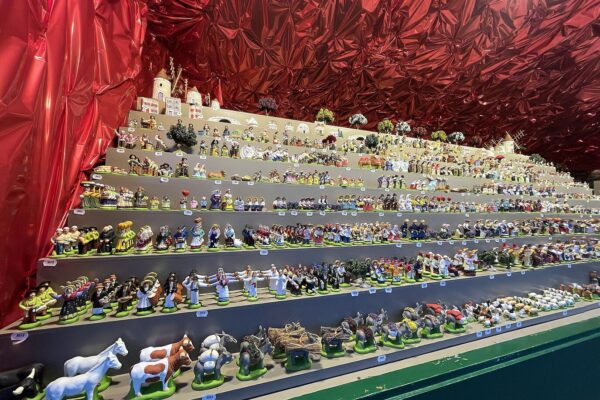 Opens in 36 days
Marseille Christmas Market
Marseille
From 14 November to 3 January 2027
Worth the weekend
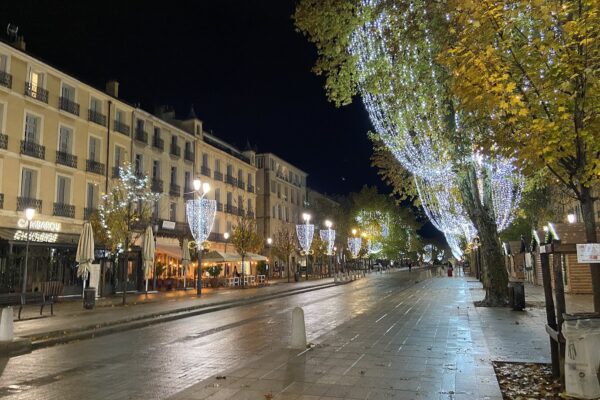 Opens in 35 days
Aix-en-Provence Christmas Market
Aix-en-Provence
From 13 November to 31 December 2026
Worth the weekend
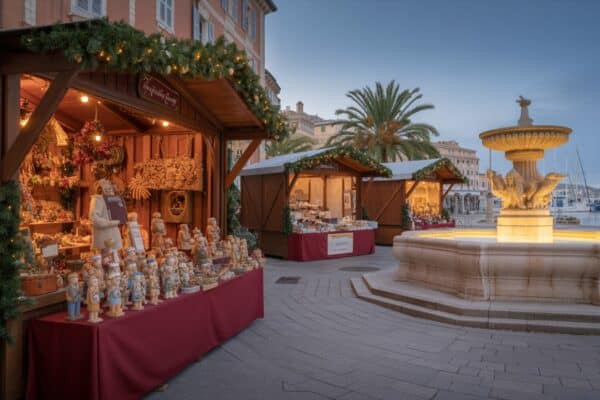 Dates to be confirmed
Toulon Christmas Market
Toulon
Worth the weekend
Activities nearby
Parks and sites running a Christmas programme less than an hour's drive away. They aren't Christmas markets, and admission is charged.
 Opens in 71 days
Park
Opens in 71 days
Park
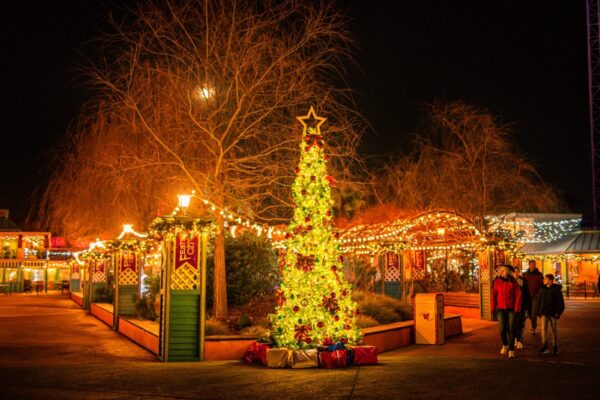
Walibi Rhône-Alpes at Christmas: Merry ChristWAAAs
Les Avenières Veyrins-Thuellin
From 19 December to 3 January 2027
Day out · Park
 Opens in 57 days
Event
Opens in 57 days
Event
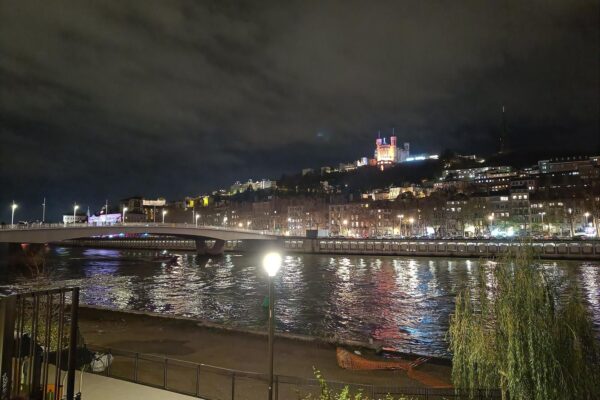
Fête des Lumières in Lyon
Lyon
From 5 to 8 December 2026
Worth the trip · Event
 Opens in 56 days
Park
Opens in 56 days
Park
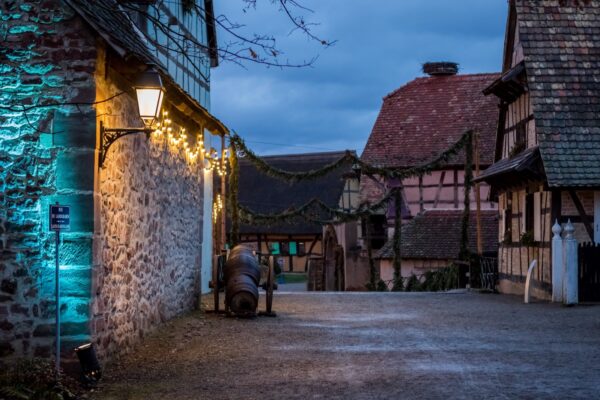
Écomusée d'Alsace at Christmas: the village in festive dress
Ungersheim
From 4 December to 3 January 2027
Worth the weekend · Park