
Southern Europe: Christmas on the Mediterranean
Christmas markets in Southern Europe: Bolzano, Merano, Verona, Rome and the nativity scenes of Naples in Italy, the Fira de Santa Llúcia in Barcelona, the Plaza Mayor in Madrid and the Feria del Belén in Seville in Spain, the Rossio in Lisbon, Óbidos Vila Natal and the Mercadinho in Funchal in Portugal, the Mill of the Elves in Trikala and Aristotelous Square in Thessaloniki in Greece, Fairyland in Valletta for Malta. Five countries, from 6 November 2026 to 10 January 2027, entry most often free, prices in euros.
Christmas markets by country
Markets in the region (3)
Christmas parks and activities (3)
Paid admission, shows and lights: Christmas outings that aren't markets. The full selection
 Opens on 4 December
Park
Fairyland, Valletta’s Christmas park
Valletta
From 4 December to 3 January 2027
Worth the weekend · Park
 Opens on 27 November
Park
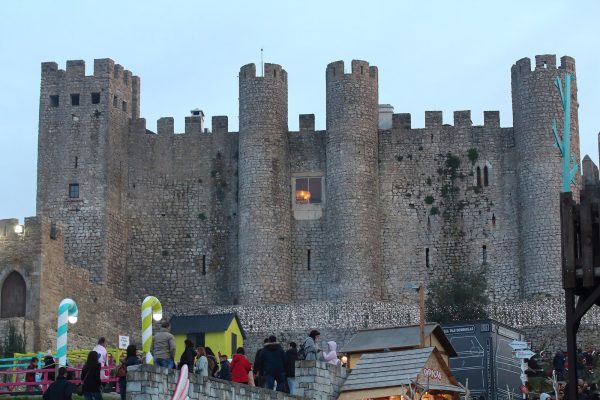
Óbidos Vila Natal, the Christmas village of the medieval town of Óbidos
Óbidos
From 27 November to 3 January 2027
Worth the weekend · Park
 Open · until 6 Jan
Park
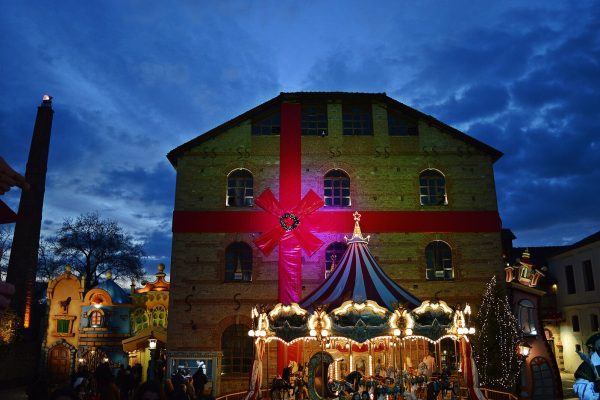
The Mill of the Elves, Trikala’s Christmas park
Trikala
From 20 November to 6 January 2027
Worth the weekend · Park
Regional specialities
Speck, strudel, canederli and zelten with vin brulé in Trentino-South Tyrol, panettone from Milan, pandoro from Verona, gianduiotti and bicerin in Turin, panforte and ricciarelli from Siena, torrone from Cremona, struffoli and roccocò in Naples, roasted chestnuts. Churros, buñuelos and chestnuts at the neighbourhood markets of Seville, churros and mulled wine at La Navideña in Madrid. Fruit, plants, Madeira wine and sugar cane honey at the Mercadinho in Funchal (75% island products in 2025), traditional sweets at the Rossio in Lisbon. Chocolate factory, food market and street food at the Mill of the Elves in Trikala. For gifts: nativity scenes, figurines and structures in Seville, 90 stalls of nativity scenes in Barcelona in 2025, terracotta shepherds from Via San Gregorio Armeno in Naples, caganer and tiós in Barcelona, zambombas and joke-shop novelties in Madrid, wooden toys on Piazza Navona in Rome, crafts in wool, felt and wood in South Tyrol, craft stalls in Óbidos and Fairyland.
Christmas traditions
Nativity scenes everywhere: workshops of Via San Gregorio Armeno in Naples, nativity scene in a real stable in Bolzano, Presepi dal Mondo in Verona, living nativity of Greccio, belén at the centre of the markets in Barcelona, Madrid and Seville (trail of some fifteen nativity scenes). Immacolata on 8 December in Italy (tree, nativity scene, lights), Sant’Ambrogio fair at the Castello Sforzesco in Milan on 7 December, zampognari for the novenas. Tió fed from 8 December and beaten on Christmas night in Catalonia, Feria de Santo Tomás on 21 December and Olentzero on 24 December in San Sebastián. Missas do Parto at dawn and Noite do Mercado on 23 December in Funchal, New Year fireworks. Cabalgata de Reyes on 5 January in Barcelona, Madrid (6pm) and Seville, roscón de Reyes on Puerta del Sol on the morning of 5 January, Befana on Piazza Navona on the night of 5 to 6 January, season until 6 January at most Italian markets, in Trikala and San Sebastián, until the 7th in Pamplona, the 10th in Funchal.
Christmas markets in Southern Europe cover five countries: Italy, Spain, Portugal, Greece and Malta. The first markets open as early as 6 November, in Bologna and the season runs until Epiphany, 6 January, sometimes beyond: Funchal closes on 10 January 2027. The wooden chalets of South Tyrol recall the Germanic markets, but the nativity scene takes first place in Naples, Barcelona or Seville, and several events are Christmas parks, in Trikala, Óbidos or Valletta. Lisbon and Madeira add the Atlantic to this Mediterranean Christmas. Entry is most often free and you pay in euros in all five countries.
Christmas markets in Italy: from South Tyrol to the nativity scenes of Naples
The Bolzano Christmas Market, the oldest of the Italian markets, born in 1991 on Piazza Walther, brings together around seventy artisans from 27 November 2026 to 6 January 2027, after the lighting of the big Christmas tree on 26 November at 5pm, with more than 130 concerts in six weeks. Merano opens on 26 November, Brunico, Vipiteno and San Candido on the 27th, all until 6 January: South Tyrol concentrates the markets of wooden chalets and crafts in wool, felt and wood, where the vin brulé is called Glühwein.
Further south, Verona sets up around sixty chalets twinned with Nuremberg’s Christkindlmarkt on Piazza Bra, at the foot of the Arena and the Stella cometa, a 70-metre steel star that has stood there since 1984, from 20 November to 27 December 2026. In Rome, Piazza Navona fills with wooden toys, nativity scenes and sweets from Lazio from early December to the Befana on 6 January. In Naples, the Christmas market is Via San Gregorio Armeno, the street of the nativity scene makers, and its Fiera dei Presepi, in its 154th edition in 2025, from mid-November to Epiphany. The market at Milan’s Duomo opens from 1 December 2026 to 6 January 2027. Rome, Naples, Turin and Venice have not yet announced their 2026 dates as of mid-November.
Christmas markets in Spain: nativity scenes in Barcelona, chalets in Madrid
The Barcelona Christmas Market, the Fira de Santa Llúcia, has been documented since 1786 in front of the cathedral. In 2025, 215 stalls of nativity scenes, figurines, Christmas trees and tiós opened from 28 November to 23 December, with free access. The 2026 dates are not yet known. Madrid lines up 104 chalets in a U around the statue of Philip III, on the Plaza Mayor, from late November to 31 December 2026, until 10pm on Fridays, Saturdays and the eves of public holidays, with nativity figurines, zambombas and joke-shop novelties. Seville holds its Feria del Belén, a nativity scene fair, between the cathedral and the Archivo de Indias, 2026 dates to be confirmed.
In the Basque Country, San Sebastián sets up its chalets from 1 December 2026 to 6 January 2027 on the Paseo del Urumea, with free access, and Pamplona opens from 12 December to 7 January 2027. Girona runs from 27 November to 5 January 2027. In Vigo, the lights count for more than the stalls: a 45-metre tree of lights at the Porta do Sol, 460 streets and squares lit up and four Christmas markets in 2025. Bilbao, Granada, Malaga, Palma, Zaragoza and Valencia complete the Spanish selection.
Christmas in Portugal: Lisbon, Óbidos and Madeira
The Lisbon Christmas Market takes place at the Rossio, on Praça Dom Pedro IV, from 15 November to 21 December 2026: dozens of little wooden houses with free entry, open Sunday to Thursday from 10am to 10pm. In 2025, they stayed open until 11pm on Fridays, Saturdays and the eves of public holidays, with a free little train through the Baixa and a daily parade. In Parque Eduardo VII, Wonderland Lisboa adds a Ferris wheel, an ice rink and a craft market, with free entry and paid attractions, on 2026 dates not yet known.
Óbidos Vila Natal turns the walled medieval town of Óbidos into a Christmas village from 27 November 2026 to 3 January 2027, on the theme of Pinocchio and the world of puppets: Santa’s house, an ice rink, shows, workshops and stalls in the narrow streets. Entry costs €12 from the age of 12, €8 for ages 3 to 11, by time slots, and the village is closed on 25 December and 1 January. It is a classic day trip from Lisbon, by the A8, exit 15.
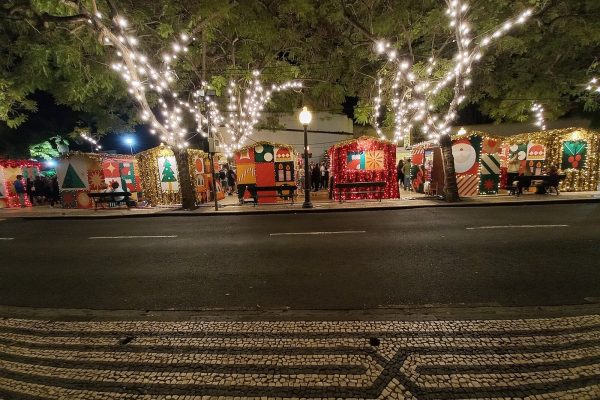
In Madeira, out in the Atlantic, the Mercadinho de Natal takes over Avenida Arriaga, in the centre of Funchal, from 1 December 2026 to 10 January 2027. In 2025, its 25 wooden houses sold produce, 75% of it from the island: fruit, plants, Madeira wine, sugar cane honey. The Noite do Mercado on 23 December, at the Mercado dos Lavradores, and the New Year fireworks are the high points of the Festas de Natal e Fim do Ano.
Christmas in Greece: the Mill of the Elves in Trikala and Aristotelous Square
The Mill of the Elves turns the Matsopoulos Mill, a former industrial site on the banks of the Lithaios, in the middle of Trikala, into a free Christmas park. The fifteenth edition opens on 20 November 2026 at 5pm and lasts 48 days, until 6 January 2027, on the theme of The Wizard of Oz: decorations, shows, Santa’s house, an ice rink, a chocolate factory, a Christmas market and street food. The park is then open every day from 10am to 10pm. Launched in 2011, it drew 1.2 million visitors in 2024, for its thirteenth edition.
In Thessaloniki, Greece’s second city, a village of wooden chalets usually sets up at the foot of the big Christmas tree on Aristotelous Square, facing the sea. The 2026 dates are not yet known: the 2024-2025 edition ran from 6 December to 5 January, the 2025-2026 edition from 22 December to 7 January.
Christmas in Malta: Fairyland, Valletta’s Santa’s City
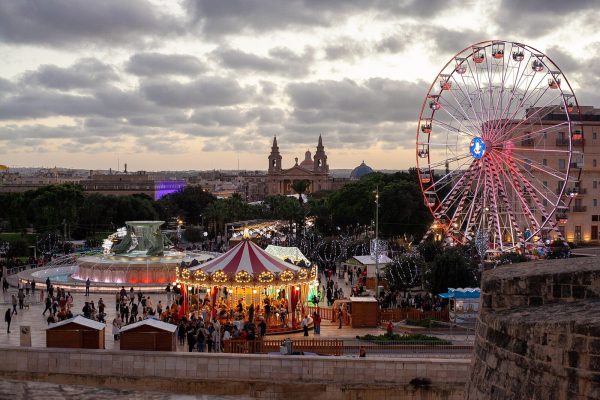
Fairyland, the “Santa’s City” organised by the national tourist board, the Malta Tourism Authority, returns from 4 December 2026 to 3 January 2027, from the Triton Fountain, in front of Valletta’s City Gate, to the Floriana Granaries, in the neighbouring town. Rides, a Ferris wheel, an ice rink, Santa Claus, food stalls and an artisan market make it a Christmas funfair more than a market of chalets. Entry is free, and you pay for the attractions with tickets sold online or at the booths. The park is open Sunday to Thursday from 10am to 10pm, Friday and Saturday from 11am to 11:30pm, on 24 December from 10am to 11pm and on 25 December from 4pm to 11pm. Valletta makes a good weekend trip.
Panettone, churros and Madeira wine: what to eat and what to bring home
In Italy, the stalls of Trentino-South Tyrol serve speck, strudel, canederli and zelten with vin brulé, Milan its panettone and Verona its pandoro, Turin its gianduiotti and its bicerin, Siena panforte and ricciarelli, Cremona its torrone, Naples struffoli and roccocò, and roasted chestnuts everywhere. In Spain, churros are found at the neighbourhood markets of Seville, along with buñuelos and chestnuts, and at Madrid’s La Navideña with mulled wine. In Portugal, the Mercadinho in Funchal sells fruit, plants, Madeira wine and sugar cane honey, the Rossio in Lisbon traditional sweets. In Greece, the Mill of the Elves has its chocolate factory, its food market and its Christmas street food.
For gifts, the nativity scene dominates: figurines and structures in Seville, often made by the stallholders themselves, 90 stalls of nativity scenes and figurines in Barcelona in 2025, terracotta shepherds and caricatures of the year’s celebrities on Via San Gregorio Armeno in Naples. Barcelona adds the caganer and the tiós, Madrid the zambombas and joke-shop novelties, Rome wooden toys, South Tyrol crafts in wool, felt and wood. Óbidos, Fairyland and the Mercadinho in Funchal have their craft or regional product stalls.
Nativity scenes, the Befana and the Three Kings: Christmas traditions on the Mediterranean
The nativity scene is the tradition shared by all the countries on this page. In Italy, tree, nativity scene and lights go up around the Immacolata, the public holiday of 8 December, the workshops of Via San Gregorio Armeno work all year round, Bolzano houses a nativity scene in a real stable, Verona displays nativity scenes from every continent in its Presepi dal Mondo exhibition and Greccio stages a living nativity. In Spain, the belén is at the centre of the markets in Barcelona, Madrid and Seville, which lays out a trail of some fifteen nativity scenes, including those of the brotherhoods.
The season ends with the Three Kings. In Spain, the Cabalgata de Reyes parades on 5 January in Barcelona, in Madrid (on 5 January 2027 at 6pm) and in Seville, and the roscón de Reyes is shared that same morning on Puerta del Sol. In Italy, the Befana comes down on Piazza Navona on the night of 5 to 6 January and most markets close that day. Trikala and San Sebastián also run until 6 January, Pamplona until the 7th, Funchal until the 10th.
Other events punctuate December: the Sant’Ambrogio fair at the Castello Sforzesco in Milan on 7 December, the tió fed from 8 December and beaten on Christmas night in Catalonia, the Feria de Santo Tomás on 21 December and Olentzero on 24 December in San Sebastián, the Noite do Mercado on 23 December in Funchal, preceded by the Missas do Parto at dawn, and the zampognari, bagpipers who come down from the mountains of central and southern Italy for the novenas of the Immacolata and of Christmas.
Getting to Southern Europe and travelling between the Christmas markets
Italy is reached by train: TGV and Frecciarossa Paris-Turin-Milan, around 7 hours to Milan, then Milan-Verona-Bolzano, with Bolzano station a two-minute walk from Piazza Walther. From the north, the Railjet Munich-Innsbruck serves South Tyrol via the Brenner, and by car you cross the Mont Blanc or Fréjus tunnel. Rome and Naples have their airports, Fiumicino and Capodichino, with flights from Paris and several other French cities, then a Frecciarossa links Rome to Naples in 1 hour 10 minutes.
No direct train links Paris to Madrid: the journey goes through Barcelona, with a direct AVE Lyon-Barcelona and a Marseille-Madrid, one a day in each direction, then around 2 hours 30 minutes by AVE from Madrid to Barcelona as from Madrid to Seville. From Hendaye, the Euskotren Topo drops you in the centre of San Sebastián. For Portugal, Greece and Malta, flights to Lisbon, Madeira, Athens, Thessaloniki or Malta are worth comparing between airlines. Óbidos is reached from Lisbon by the A8, exit 15, or by Rodoviária do Oeste bus, and Trikala from Athens or Thessaloniki, a visit to combine with Meteora.
When to go: the 2026 calendar of Christmas markets in Southern Europe
Bologna opens first, on 6 November, followed by Arco on the 13th, Florence, Govone, Empoli, Pergine Valsugana and Rango on the 14th and the Rossio in Lisbon on the 15th. Trikala, Trento and Verona open on 20 November, Aosta, Castione della Presolana, Levico Terme and Montepulciano on the 21st, Merano on the 26th, Bolzano, Brunico, Vipiteno, San Candido, Óbidos and Girona on the 27th. In December, San Sebastián, Funchal and Milan’s Duomo open on the 1st, Fairyland on the 4th and Pamplona on the 12th. Barcelona, Seville, Rome, Naples and Thessaloniki have not yet announced their dates as of mid-November, and Madrid has not yet announced its late-November opening day.
Closing dates are spread out: Florence, Govone and Castione della Presolana on 20 December, Lisbon on the 21st, Bologna and Verona on the 27th, Madrid, Pergine Valsugana and Rango on the 31st, Fairyland and Óbidos on 3 January 2027, Girona on the 5th, most Italian markets, including Milan, Trikala and San Sebastián on the 6th, Pamplona on the 7th, Funchal on the 10th. Between 12 and 20 December, Bolzano, Madrid, San Sebastián, Pamplona, Óbidos, Funchal, Trikala and Fairyland are all open at the same time. For a stay that takes in the end-of-year festivities, aim for Madeira, Óbidos, Valletta, Trikala or South Tyrol, bearing in mind that Óbidos closes on 25 December and 1 January.
Updated on
Where to stay in Southern Europe: Christmas on the Mediterranean
Check availability with our partners