
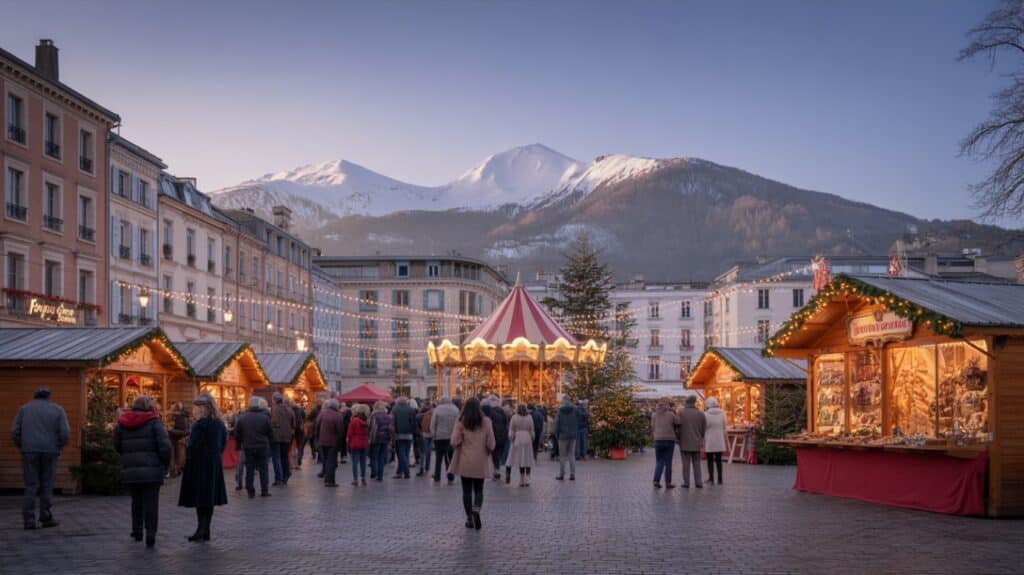
Where to find Tarbes Christmas Market
Highlights of Tarbes Christmas Market
- Chalets and vintage carousel on Place de Verdun, in the heart of Tarbes
- 550 m² ice rink on Place Jean Jaurès, with an area for 3 to 7-year-olds
- Free horse-drawn carriage rides and a Christmas parade for families
- Bigorre specialities: Tarbais beans, gâteau à la broche, Madiran wines
- Gateway to the Pyrenees, less than an hour from Lourdes and the Pic du Midi
Where to stay near Tarbes Christmas Market
Hotels, flats and rooms around the market, for the dates of your stay.
Check availability with our partners
Specialities to try
The flavours that make this market what it is
Label Rouge and PGI Tarbais beans
garbure
gâteau à la broche
oreilles de cochon
Barèges-Gavarnie mutton
sheep's cheeses
Madiran and Pacherenc wines
spiced mulled wine
Under the plane trees of Place de Verdun, Tarbes gathers its wooden chalets, vintage carousel and an ice rink set up a little further on, on Place Jean Jaurès, every winter. Tarbes Christmas market, known as “Tarbes en Décembre”, links the main squares of the centre with a thread of lights and illuminated decorations running from Place de Verdun to Place Marcadieu and its old market halls. This is Bigorre, at the gateway to the Pyrenees, with the Pic du Midi and Lourdes less than an hour away. The home of the Tarbais horse keeps a frank Gascon character, between the listed Massey park and the nearby National Stud, and its Christmas village goes for friendliness rather than sheer size.
The chalets, from the town centre to Place Marcadieu
The heart of it all is Place de Verdun, the true centre of Tarbes, where around fifteen wooden chalets and a period carousel are grouped together. The stalls are split between gift ideas (jewellery, accessories, home decor, local designers) and treats, in a compact layout that leaves time to chat with the makers without elbowing your way through. The trails of lights connect Place de Verdun to Place Marcadieu, whose 19th-century iron market hall and covered market are part of everyday life for the people of Tarbes. On Place Marcadieu, the Fountain of the Four Valleys and its statues recall the mountain streams of Bigorre, a landmark at the end of the illuminated route. The 3D decorations and garlands light up at nightfall, and moving from one square to the next paces the visit better than any map.
Part of what makes Tarbes special is what lies around it. The Massey garden, a listed park full of remarkable trees, spreads its eleven hectares of sequoias, Lebanon cedars and banana trees around a medieval cloister with forty arches rebuilt stone by stone, an orangery and the Moorish-style Massey museum, which houses a fine arts museum and the international hussars museum, covering four centuries of this light cavalry corps. The National Stud, re-established by Napoleon I in 1806, is still the cradle of the Anglo-Arab, a breed developed here from the Tarbais horse for the Empire's cavalry, and you can visit its stables and saddlery. This dual identity, garrison town and horse town, gives the centre a slightly military, well-to-do character, far from the mountain postcard you might expect from a gateway to the Pyrenees.
Treats at Tarbes Christmas market: Bigorre in your basket
When it comes to food, Bigorre has plenty to fill a basket. The Tarbais bean, sold dried on the stalls, is the local star: this climbing variety grown on the hillsides, protected by a Label Rouge and a PGI, is the base of garbure, the thick soup with cabbage, confit and ham hock that traditionally opens a Bigorre meal. You'll also come across gâteau à la broche, a spit cake baked in thin layers in front of the fire on a rotating conical mould, recognisable by its golden spikes, and oreilles de cochon (“pig's ears”), thin sugar-dusted fritters that have nothing to do with pork apart from the name. Winegrowers from nearby Madiran offer their wines, from full-bodied reds to the sweeter Pacherenc, to take home for the festive table. Barèges-Gavarnie mutton, a high-mountain PDO, and sheep's cheeses from the valleys complete the picture. If you want to keep the atmosphere going at home, a good spiced mulled wine recipe does half the work for your winter evenings.
- Label Rouge and PGI Tarbais beans, sold dried, essential for a proper Bigorre garbure.
- Gâteau à la broche, baked layer by layer in front of the embers, with its distinctive spikes.
- Oreilles de cochon, thin, crispy fritters rolled in sugar, to nibble between chalets.
- Madiran and Pacherenc du Vic-Bilh wines, to go with confit, duck breast and sheep's cheeses.
- Spiced mulled wine, served piping hot, the perfect companion for evening strolls under the lights.
Ice rink, carousel and entertainment for children
The programme is clearly aimed at families. On Place Jean Jaurès, a 550 m² ice rink welcomes skaters, with an area reserved for 3 to 7-year-olds and wheelchair-friendly access. The vintage carousel, free horse-drawn carriage rides from the post office, bauble fishing and “Fantasia World” rides on Place de Verdun keep younger children busy for a good part of the afternoon. Around them, events follow one after another: a Christmas parade, photos with Father Christmas, craft workshops, elf dances, the Chanteurs Pyrénéens and the Chœur du Sud, not forgetting the firefighters' sleigh. It's a proper entertainment programme that makes Tarbes Christmas market feel more like a town festival than a simple row of stalls.
The wheel of fortune, the kids' disco and giant bubble shows come back year after year, and town-centre shops open on December Sundays. The Chanteurs Pyrénéens and the Chœur du Sud provide a soundtrack that suits the region, from mountain polyphony to festive tunes. For toddlers, the period carousel and the ice rink area for 3 to 7-year-olds make for a stress-free first slide, while older children try bauble fishing or climb aboard the rides on Place de Verdun.
Opening hours, access and practical information
Entry to the village is free; you only pay for what you eat, drink or take home. The ice rink costs around €4 an hour and the carousel works with tickets. In recent years, the village was open daily from 10am to 8pm, with shorter hours on 24 and 31 December (10am-6pm) and afternoon opening on 25 December and 1 January. For winter 2026, the exact dates are still to be confirmed by the town, which usually publishes the programme in autumn on decembre.tarbes.fr.
By train, there's a real advantage: Tarbes station is a few minutes' walk from Place de Verdun, and the line serves Pau, Toulouse and Lourdes, so a car-free trip is very doable. By car, several car parks ring the centre, including the Place de Verdun car park, open around the clock, but spaces get scarce on December weekends: arrive early or aim for the end of the day, when the lights take over. The centre is flat and largely pedestrianised, accessible overall despite a few cobbles. Allow one to two hours to tour the chalets, longer with the ice rink and a snack break.
Tarbes makes a good base for exploring. Pau Christmas market is less than forty minutes away by train, Toulouse Christmas market extends the weekend in the “pink city”, and Bayonne Christmas market adds a Basque getaway to the west, all chocolate and lights. Plenty of ways to string together several South-West atmospheres in a single trip.
Once there, Tarbes has more to offer than its chalets. The Massey garden, open even in winter, lays out its avenues of rare trees around a medieval cloister and a bandstand, with the hussars museum near the orangery. The National Stud, re-established under the Empire, is open to visitors and tells the story of the Tarbais horse and the Anglo-Arab, a breed born in the region. On Place Marcadieu, the covered halls and the morning market give a taste of local produce before you even reach the chalets: this is where you'll find Tarbais beans, sheep's cheeses and country charcuterie to fill festive hampers. For some altitude, the Pic du Midi and its observatory are an hour's drive away via La Mongie, with a cable car ride up to 2,877 metres and a view that stretches along the whole range. Lourdes, with its sanctuary lit up during Advent and its torchlight procession, is twenty minutes away by train. Bagnères-de-Bigorre and its thermal baths round off a trip into the valleys when you fancy some warmth after a day among the chalets, and the ski areas around Payolle and the Tourmalet open their first slopes as soon as the snow settles.
Our tip
Round off your visit to the market with the Massey garden and its cloister, or the National Stud, cradle of the Tarbais horse, both a few streets from the chalets.
Reviewed and approved by the editorial team
Information checked against 4 official sources. Detailed sources available on request.
A question, a mistake or a problem on this page? Write to us
Markets nearby
 Opens in 48 days
Toulouse Christmas Market
Toulouse
From 26 November to 26 December 2026
Worth the weekend
 Opens in 49 days
Pau Christmas Market
Pau
From 27 November to 3 January 2027
Day out
 Opens in 57 days
Mont-de-Marsan Christmas Market
Mont-de-Marsan
From 5 to 24 December 2026
Local favourite
Activities nearby
Parks and sites running a Christmas programme less than an hour's drive away. They aren't Christmas markets, and admission is charged.
 Opens in 57 days
Park
Opens in 57 days
Park
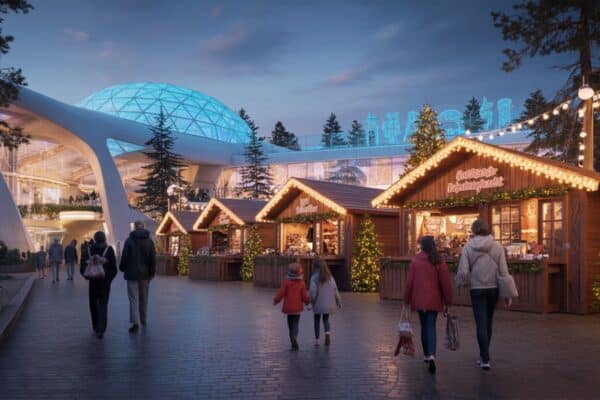
Futuroscope at Christmas: the festive season
Chasseneuil-du-Poitou
From 5 December to 3 January 2027
Day out · Park
 Opens in 57 days
Event
Opens in 57 days
Event
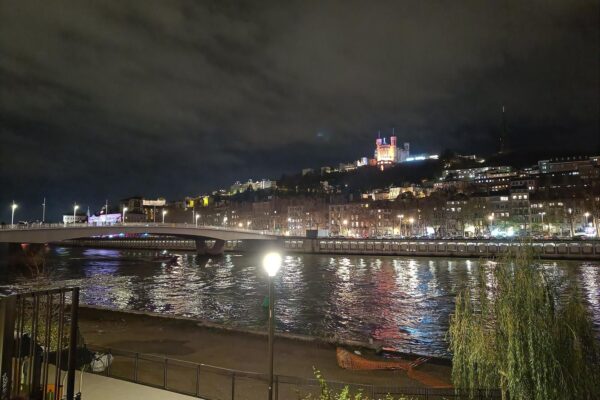
Fête des Lumières in Lyon
Lyon
From 5 to 8 December 2026
Worth the trip · Event
 Opens in 71 days
Park
Opens in 71 days
Park
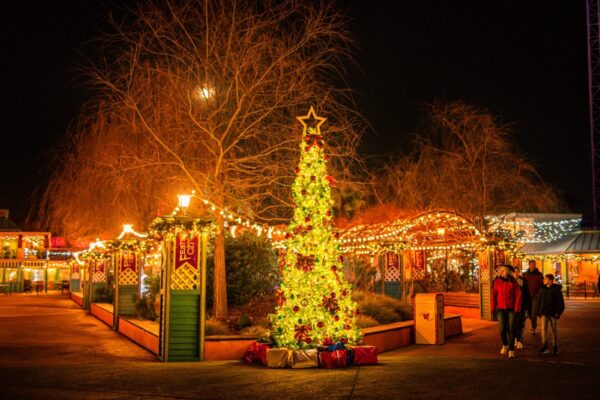
Walibi Rhône-Alpes at Christmas: Merry ChristWAAAs
Les Avenières Veyrins-Thuellin
From 19 December to 3 January 2027
Day out · Park