
Where to find Hallstatt Christmas Market
Highlights of Hallstatt Christmas Market
- A single day on the Marktplatz, on the shore of Lake Hallstatt
- Pastel houses with the Dachstein mountains as a backdrop
- Reached by ferry from Hallstatt station, on the opposite shore
- Punsch and regional crafts on wooden stalls
- A village on the UNESCO World Heritage list since 1997
Where to stay near Hallstatt Christmas Market
Hotels, flats and rooms around the market, for the dates of your stay.
Check availability with our partners
Specialities to try
The flavours that make this market what it is
Punsch with rum or red berries
green-patterned pottery inspired by Gmunden ceramics
and carved wooden objects sold on the Marktplatz stalls
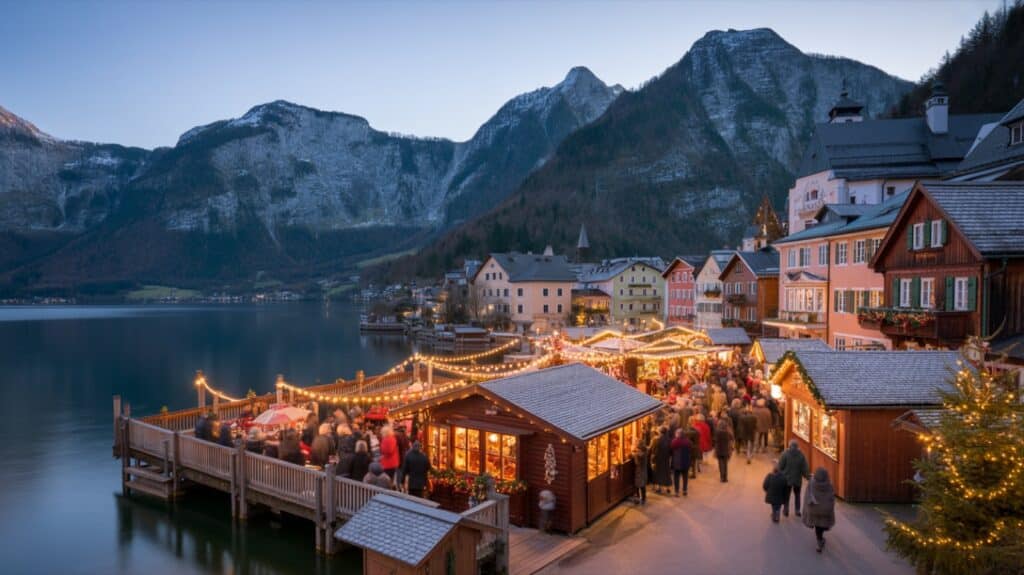
Hallstatt Christmas market lasts just one day, on the tiny Marktplatz of a village clinging to the shore of Lake Hallstatt, in the heart of Austria’s Salzkammergut. A handful of wooden stalls fill the cobbled square, surrounded by pastel façades, with the steep slopes of the Dachstein rising above the lake. Here, what matters is the setting, now familiar far beyond Austria thanks to social media, and the brevity of the event. The village has only a few hundred inhabitants, which explains the market’s modest size compared with the big squares of Vienna or Salzburg.
Hallstatt Christmas market, a one-day interlude
Hallstatt’s Marktplatz changes its face for a single day, usually at the very start of December. The 2025 edition was held on a Monday, from 10am to 6:30pm, according to the Salzkammergut tourist office: a short format, with no weeks of programming and no covered market. The Salzkammergut tourist office’s events calendar lists the 2026 edition on Tuesday 8 December, from 10am to 6:30pm. The square itself is small, lined by the church and the colourful houses overlooking the lake, and takes half an hour to walk around between the stalls. In the late afternoon, the strings of lights are reflected on the calm water of the Hallstättersee, a setting the tourist office highlights in its communications. The village has both a Catholic and a Lutheran church, both right next to the Marktplatz, a sign of a religious history shared between the two denominations.
There’s no Ferris wheel or ice rink on this tiny square: the set-up is limited to wooden chalets and a few benches where you can enjoy a Punsch in the warm. The exact number of stalls isn’t published by the tourist office, which takes nothing away from the charm of the place. The format is that of a village market, on the scale of the Marktplatz and its short opening hours, designed for the people of the Salzkammergut as much as for passing visitors.
Getting there from France: train, ferry and restricted traffic
Hallstatt has no station in the village: trains stop at Hallstatt Bahnhof, on the opposite shore of the lake, and a ferry takes you across to the Marktplatz. From France, several routes can be combined. The Paris-Vienna Nightjet sleeper train has not run since December 2025; if you still travel via Vienna, allow for a connection to Attnang-Puchheim then Hallstatt Bahnhof, for a total journey of about three hours from the Austrian capital. Another option goes through Germany: TGV or ICE to Munich, then a Railjet to Salzburg, in around an hour and a half, before a final regional leg to the lake. A regional bus also links Hallstatt to Bad Ischl if you’re coming by road from Salzburg. There’s no direct high-speed line between France and the Salzkammergut: these journeys are measured in days of travel rather than a few hours, and are best combined with a stay in Vienna, Munich or Salzburg rather than a one-off return trip.
By car, traffic in the village is restricted: since 2023 the municipality has strengthened its barriers and limited coach access to contain the flow of visitors around the Marktplatz. Drivers park outside the village before walking into the centre, as the Marktplatz itself is not designed for private cars. It’s a point to check before setting off, as the rules have changed several times in recent years.
Punsch, specialities and Salzkammergut crafts
The market focuses on regional products rather than large-scale street food. The Salzkammergut tourist office mentions handcrafted creations and local products sold on the wooden stalls of the Marktplatz, from pottery to carved wooden objects. The region is known for its green-patterned ceramics, in the tradition of Gmunden, the neighbouring town on Lake Traun.
For drinks, Punsch, often flavoured with rum or red berries, is served alongside the more classic Glühwein of German-speaking markets. Salt has a symbolic place in the region: according to archaeologists, the mines above the village are among the oldest in Europe, worked since the Neolithic. Krampus processions, an Alpine tradition on 5 and 6 December, also liven up several Salzkammergut villages at the same time of year, with their fur costumes and bells, before the festive season proper begins.
A few ideas to round off your trip:
- Salzburg Christmas market, on Domplatz, about an hour and a half’s drive away.
- Linz Christmas market, set up on the Hauptplatz and in the Volksgarten.
- Steyr Christmas market, known for the Christkindl Christmas post office.
- Rum Punsch is easy to make at home: a mulled wine recipe and its variations give you a starting point.
- The ferry crossing of Lake Hallstatt, to enjoy both ways for an open view of the village.
Dates, opening hours and practical information for 2026
The market lasts a single day, Tuesday 8 December 2026, according to the tourist office’s events calendar. Entry to the Marktplatz is free, as at most small village markets in the Salzkammergut. Allow one to two hours there, between the stalls and a walk along the lakeshore, with a budget of around 10 to 20 euros for drinks and small treats.
Accessibility is limited for people with reduced mobility: the ferry and the cobbled lanes of the Marktplatz are not set up for easy access. At this latitude and time of year, daylight fades from mid-afternoon: it’s better to plan your visit well before the stalls close rather than at the very end of the day. December in the Salzkammergut means cold weather and possible snow on higher ground: suitable shoes and clothing are the basics before taking the ferry across the lake.
A World Heritage village
Hallstatt is part of the UNESCO-listed site inscribed in 1997 as the cultural landscape of Hallstatt-Dachstein Salzkammergut, recognised for its pastel-fronted houses and mountain setting. The village gave its name to an entire period of the Iron Age, the Hallstatt culture, revealed by excavations in the nearby salt mines from the mid-nineteenth century. These excavations, begun in 1846, uncovered nearly a thousand graves dating from the seventh century BC, the origin of the name given to a whole archaeological culture studied far beyond Austria.
This heritage fame has its downside too: the construction of a replica of the village in China in 2012 helped boost group visits from Asia, to the point where the municipality had to regulate coach traffic around the Marktplatz. The Christmas market, for its part, keeps a modest format: one square, a few stalls, and the lake in the background as its only staging.
Our tip
The ferry stops running early in winter: plan your return before the last crossing rather than at the last minute.
Reviewed and approved by the editorial team
Information checked against 4 official sources. Detailed sources available on request.
A question, a mistake or a problem on this page? Write to us
Markets nearby
Activities nearby
Parks and sites running a Christmas programme less than an hour's drive away. They aren't Christmas markets, and admission is charged.
 Opens in 50 days
Park
Opens in 50 days
Park
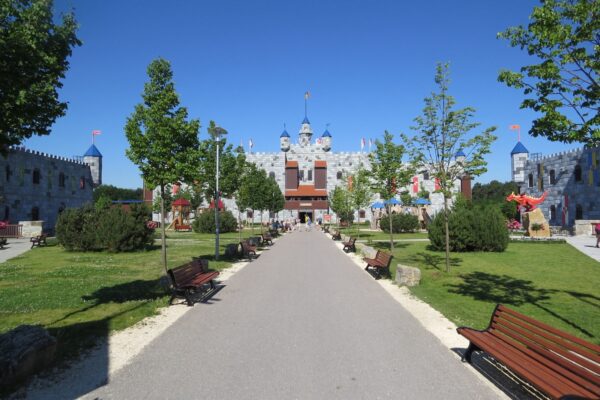
LEGOLAND Deutschland at Christmas
Günzburg
From 28 November to 10 January 2027
Day out · Park
 Dates to be confirmed
Park
Dates to be confirmed
Park
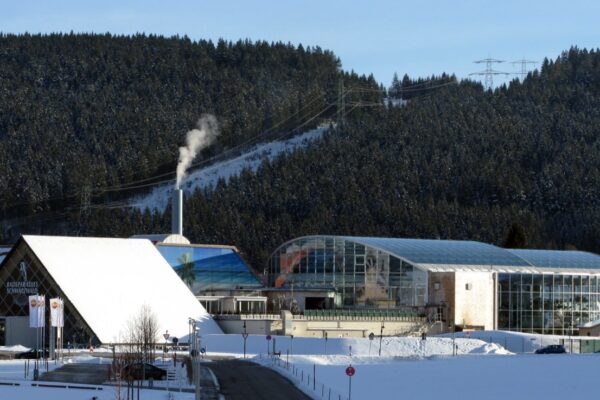
Badeparadies Schwarzwald at Christmas: relaxing in the Black Forest
Titisee-Neustadt
Day out · Park
 Opens in 50 days
Park
Opens in 50 days
Park
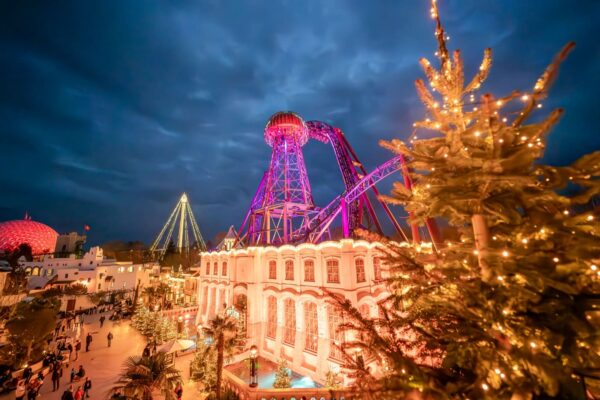
Europa-Park at Christmas: Winterzauber
Rust
From 28 November to 9 January 2027
Worth the trip · Park