
Where to find Wissembourg Christmas Market
Highlights of Wissembourg Christmas Market
- The night-time Hans Trapp and Christkindel procession, northern Alsatian folklore
- An intact medieval setting: Gothic abbey church, half-timbered houses, the Lauter
- Quality crafts: crochet, blown glass, turned wood, Advent wreaths
- Bredele and gingerbread sold by weight, local Advent specialities
- A town-centre station with direct TER trains to Strasbourg
Where to stay near Wissembourg Christmas Market
Hotels, flats and rooms around the market, for the dates of your stay.
Check availability with our partners
Specialities to try
The flavours that make this market what it is
Bredele
Alsatian Christmas biscuits) with almonds and kirsch
Lebkuchen
German honey spice biscuits) and Franco-Alsatian gingerbread
warm bretzel
Salted pretzel
mulled wine and hot apple juice
glass and wood crafts
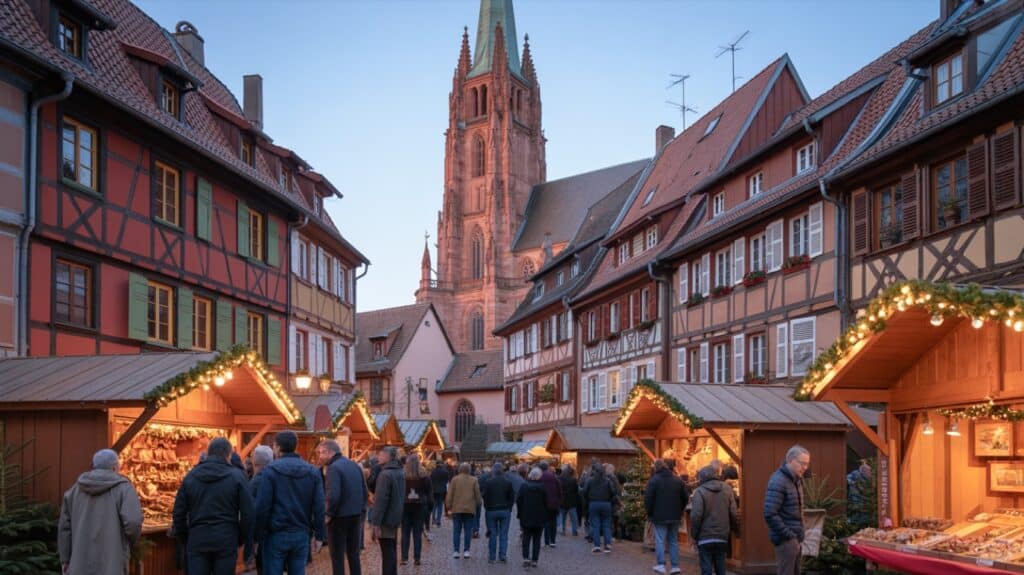
At the very northern tip of Alsace, a stone's throw from the German border, Wissembourg Christmas market spreads its chalets around the abbey church of Saints Peter and Paul, whose tall pink sandstone spire rises above the old town. The wooden chalets slot in between the half-timbered houses and cobbled lanes of the Abbatiale quarter, a few steps from the Lauter, the river that runs through the town. People come for the crafts, the warm gingerbread and a tradition that goes back centuries: Hans Trapp, the sinister figure every Alsatian child knows well.
In Wissembourg, you nibble two or three bredele as you walk, look up at the lit façades and follow the steam of mulled wine from one bag of biscuits to the next. The town has kept its medieval character remarkably intact, which gives the market the look of an old engraving, all grey stone and timber framing.
A medieval old town in festive dress
Wissembourg has held on to its historic heart, and that makes all the difference as Christmas approaches. The stalls go up on Rue du Saumon and Avenue de la Sous-Préfecture, in the shadow of the Gothic abbey church, the second largest church in Alsace after Strasbourg Cathedral. You explore on foot, past illuminated timber frames, shop windows that go all out on decorations and Advent wreaths hanging on front doors.
The setting doesn't stop at the chalets. Walk a little further and you come to the Bruch quarter, with its old fishermen's houses reflected in the Lauter, the Maison du Sel with its huge three-tiered roof, and the ramparts that recall the town's past as a border stronghold. Under snow or in the fog of a winter afternoon, the whole scene looks like an old engraving. This is a market you enjoy as much for the stroll as for the stalls.
A few dozen chalets make up the route. You can walk through it in under an hour, but it's easy to linger when a choir sets up at the foot of the abbey church or a craftsman explains how he blows his baubles. The stallholders put the emphasis on quality: crochet, blown glass and turned wood, handmade jewellery, fabric decorations, and garlands and wreaths woven on the spot.
The mood shifts with the hours. By day it feels like a family outing, with children drifting from one bredele stall to the next while parents compare gift ideas. As night falls, the fairy lights take over, the steam from the mulled wine rises between the rooftops and the market warms up. Regulars recommend late afternoon, when the low winter sun still catches the abbey spire before the illuminations come on.
Bredele, gingerbread and mulled wine: food at Wissembourg Christmas market
When it comes to food, this is border country, somewhere between Alsatian traditions and German treats. Bredele, the little Christmas biscuits made to a good ten or so recipes, are sold by weight in paper cones. Almond, lemon, vanilla or with a hint of kirsch, you eat them as you stroll or take them home for the festive table. Many Alsatian families bake kilos of them every December, and the market keeps the habit alive from one generation to the next. Some stalls play up the Franco-German mix with thick Lebkuchen and cinnamon stars from across the Rhine.
Gingerbread is the other big treat. You'll find it in thick slabs fragrant with honey and spices, or as small iced figures that children beg for to hang on the tree. Add a warm salted pretzel, perfect for snacking between stalls, and you have the basic trio of a good Advent evening.
To warm your hands, a glass of spiced mulled wine is the ritual at every Alsatian market. Cinnamon, orange, cloves: the recipe changes from one chalet to the next, and children get their own version made with hot apple juice. It's often around these drinks stalls that conversations start, steaming cup in hand.
- Bredele: Alsatian Christmas biscuits, sold by weight, made with almonds or lemon or scented with kirsch.
- Lebkuchen and gingerbread: the Alsatian honey slab sits alongside its thicker German cousin, a legacy of the border just down the road.
- Pretzel: warm and salted, to nibble as you walk between the stalls.
- Mulled wine and hot apple juice: served spiced, to keep out the cold on border-town evenings.
- Edible Hans Trapp: biscuits and small iced figures in the likeness of the local character, a fun souvenir to take home.
Hans Trapp and the Christkindel: local folklore on parade
This is Wissembourg's signature. Hans Trapp, a grim-faced forerunner of Father Christmas, haunts the town's illuminated streets every winter. The legend draws on a knight from the area known for his cruelty, who over the centuries turned into an Advent bogeyman sent to frighten unruly children. The contrast with the gentle Christkindel, the Christ Child dressed in white who hands out presents and sweets, sums up the whole tradition of northern Alsace.
The two figures appear in a big night-time procession that brings the townspeople together and usually closes the market, on a Sunday late in Advent at around 5pm. Drums, torches, costumed characters: the procession winds through the streets of the old centre in a mood halfway between a party and a fireside tale. It's the most eagerly awaited moment of the season, and reason enough to plan your weekend around the right date.
Around this highlight, weekends come alive with street performances, choirs and Advent concerts under the vaults of the abbey church. Past editions have included historical re-enactments, Advent wreath workshops and activities designed for families. The detailed 2026 programme will be published by the town in the autumn, so check the procession date in the tourist office's calendar before you book.
Opening times, getting there and practical info for Wissembourg Christmas market
The market opens on Advent weekends, usually from Friday evening to Sunday. To give you an idea, 2025 opening times were roughly 5pm-9pm on Friday and 11.30am-7.30pm on Saturday and Sunday, but the 2026 dates and times are still to be confirmed by the town. Entry is free, which makes it an easy outing to improvise on a winter's day.
By train, Wissembourg station is in the town centre, a few minutes' walk from the abbey church. The TER regional line runs direct from Strasbourg in about an hour, via Haguenau, so you can come without a car and head back after the procession. By car, the town is reached on the D263 from Haguenau and the D264 from the German border; there are car parks near the station and on the edge of the old centre, which you then explore on foot.
A word on accessibility: the Abbatiale quarter has kept its cobbles and narrow lanes, and some stretches call for a little care with pushchairs or for people with reduced mobility. Wear shoes suited to cold and damp, as the Lauter is never far away.
If you want to make a day of it, the abbey church of Saints Peter and Paul is free to visit and worth a stop for its Gothic architecture and cloister. The cafés and winstubs in the centre serve flammekueche, choucroute and local beer, just the thing for warming up between rounds of the chalets. Wissembourg is still the gateway to Alsace from the German side, and many visitors cross the nearby border to round off their Advent tour.
Exploring more of northern Alsace
Wissembourg fits neatly into a tour of the Bas-Rhin. If you're following the market trail north or south, Haguenau Christmas market is half an hour's drive away, with its great shared forest, the Forêt Indivise, and its carefully designed illuminations. A little further south, Obernai Christmas market and the atmosphere of its Place du Marché are well worth the trip, as is the big Strasbourg Christmas market, the natural end of the TER line. Three towns, three moods: plenty for a lovely, unhurried weekend in Alsace.
Our tip
Time your visit for the Hans Trapp and Christkindel procession, often on a Sunday late in Advent at around 5pm: check the date in the tourist office's calendar.
Reviewed and approved by the editorial team
Information checked against 4 official sources. Detailed sources available on request.
A question, a mistake or a problem on this page? Write to us
Markets nearby
 Dates to be confirmed
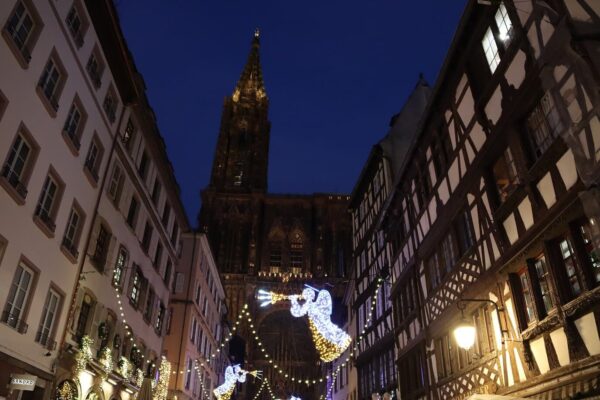
Strasbourg Christmas Market
Strasbourg
Worth the trip
 Opens in 42 days
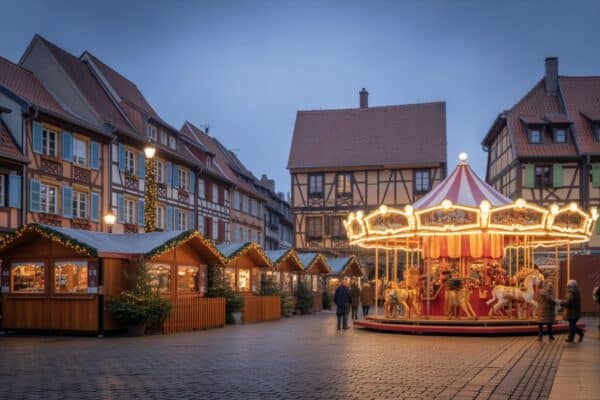
Haguenau Christmas Market
Haguenau
From 20 November to 30 December 2026
Day out
 Opens in 45 days
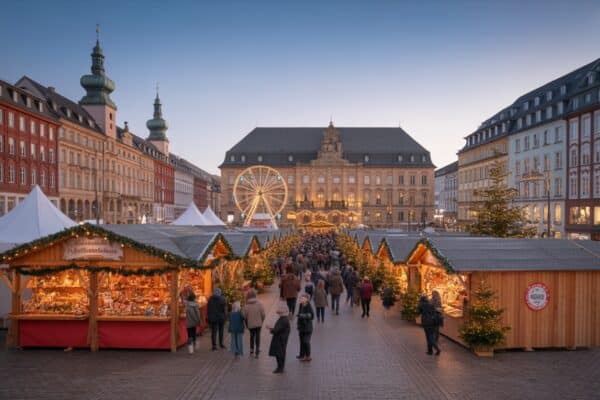
Karlsruhe Christmas Market
Karlsruhe
From 23 November to 23 December 2026
Day out
Activities nearby
Parks and sites running a Christmas programme less than an hour's drive away. They aren't Christmas markets, and admission is charged.
 Dates to be confirmed
Park
Dates to be confirmed
Park
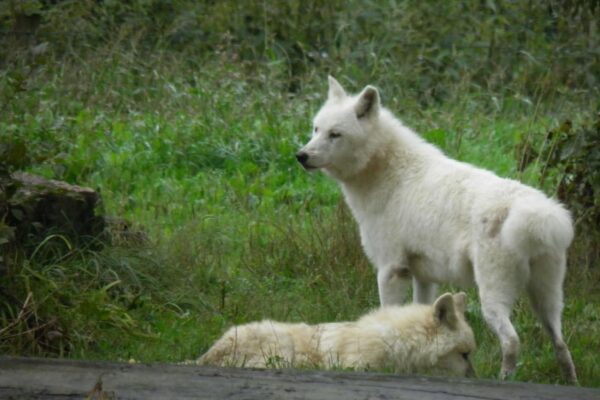
Parc de Sainte-Croix at Christmas: Lumières d’Hiver
Rhodes
Worth the weekend · Park
 Opens in 50 days
Park
Opens in 50 days
Park
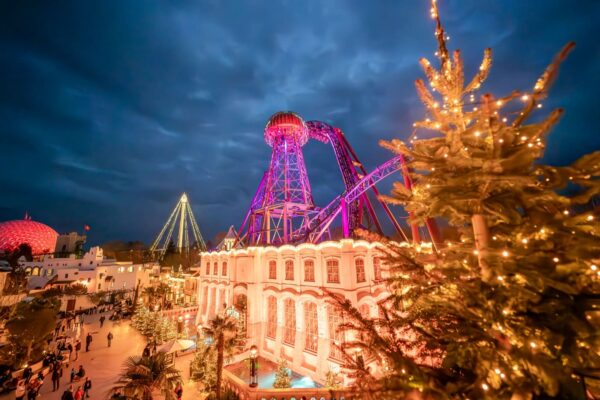
Europa-Park at Christmas: Winterzauber
Rust
From 28 November to 9 January 2027
Worth the trip · Park
 Opens in 50 days
Event
Opens in 50 days
Event
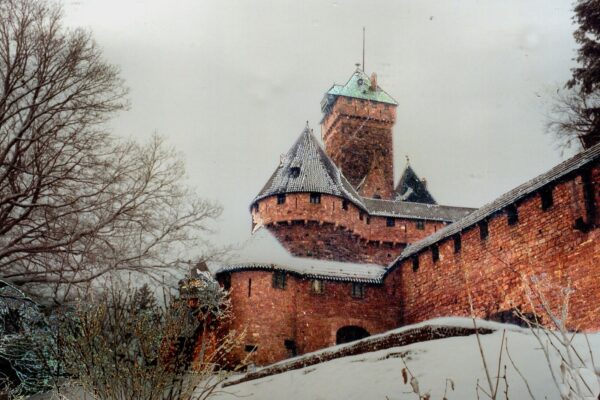
Haut-Koenigsbourg Castle at Christmas
Orschwiller
From 28 November to 31 December 2026
Day out · Event