
Where to find Hanover Christmas Market
Highlights of Hanover Christmas Market
- The Finnisches Weihnachtsdorf on Ballhofplatz: salmon cooked over a beech-wood fire and Glögi under a Lapland tent
- A 45-stall historical market on the banks of the Leine, around the Historisches Museum
- The Wunschbrunnenwald on the Holzmarkt and its golden ring to turn while making a wish
- Free entry, 11am-9pm every day, central station ten minutes away on foot
- The Roncalli Weihnachtsdorf in front of the station, open until 30 December with its historic Ferris wheel
Where to stay near Hanover Christmas Market
Hotels, flats and rooms around the market, for the dates of your stay.
Check availability with our partners
Hanover Christmas Market in pictures
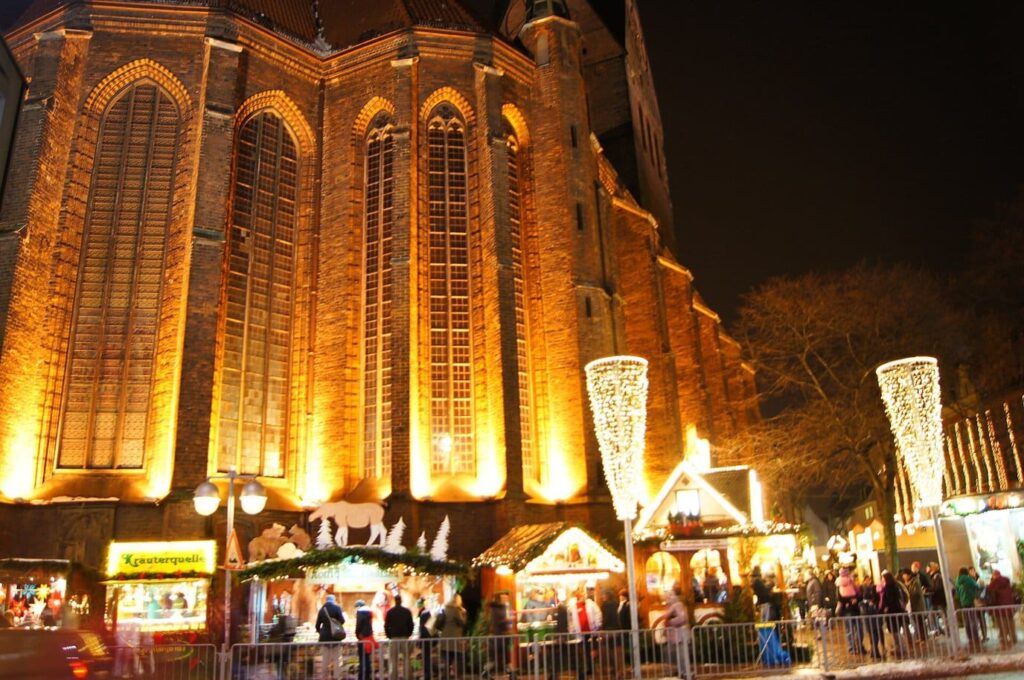
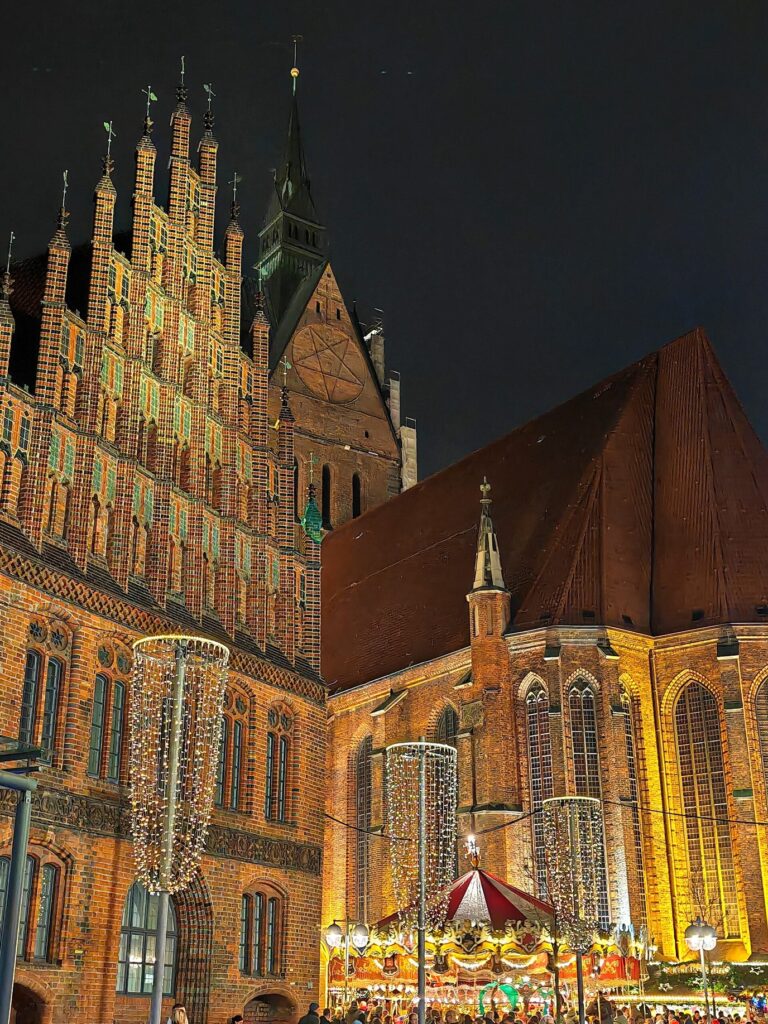
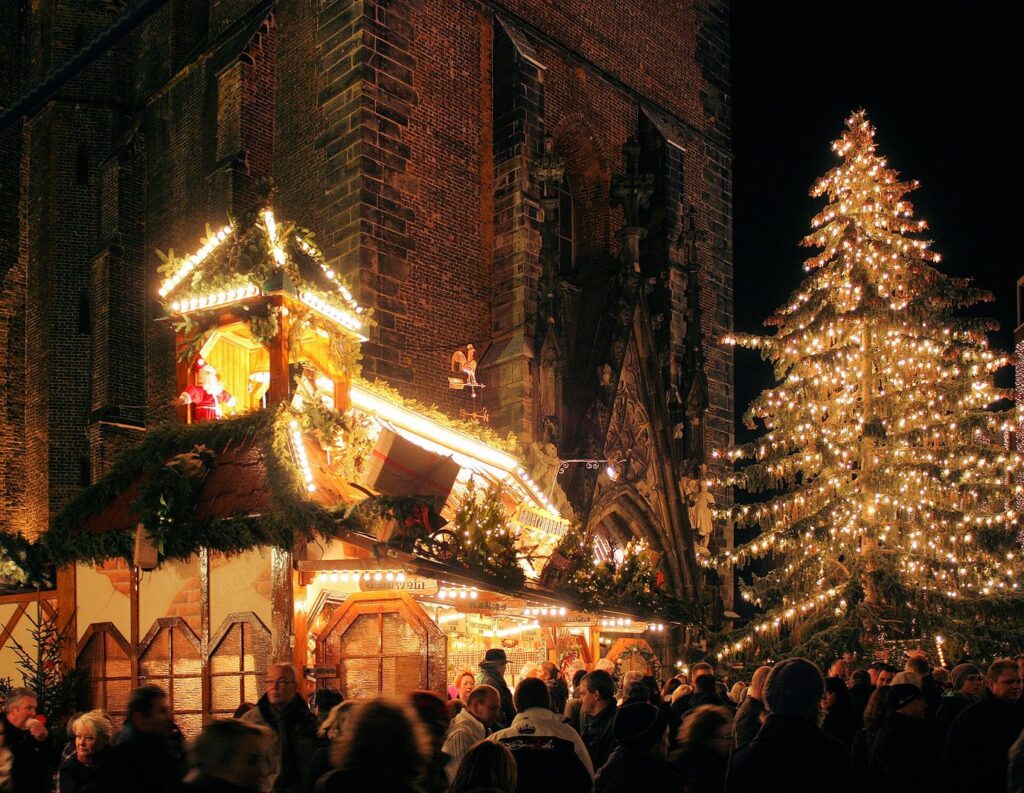
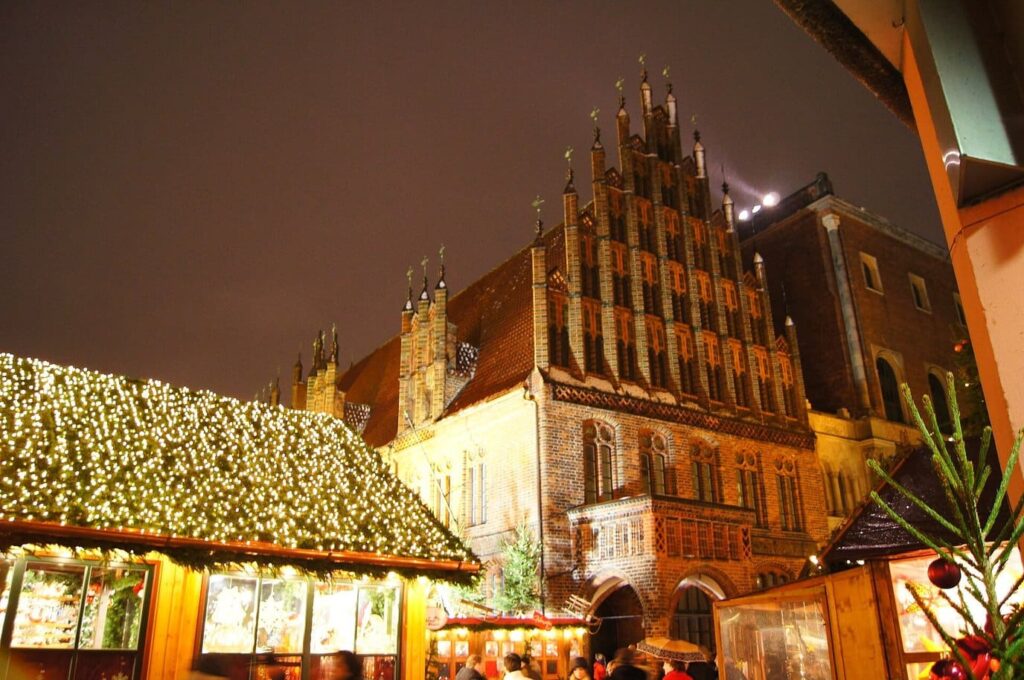
Specialities to try
The flavours that make this market what it is
Flame-cooked salmon over a beech-wood fire and Glögi from the Finnish village
blueberry cake
Bratwurst and roasted almonds
Glühwein
biscuits decorated at the children's Christmas bakery
Between the red-brick Marktkirche and the banks of the Leine, Hanover Christmas market takes over the whole heart of the old town from 23 November to 22 December 2026, every day from 11am to 9pm, with no entry ticket. The capital of Lower Saxony gathers close to 180 stalls here in three worlds: the traditional market around the church, a Finnish village under Lapland tents on Ballhofplatz and a historical market by the river, near the Historisches Museum. The station is ten minutes away on foot. For visitors coming from France, Hanover remains a less obvious Advent destination than Cologne or Hamburg, with a written history going back to 1813 and a very readable layout: a single area, three moods, no ticket.
Three markets in one around the Marktkirche
The area starts at Platz der Weltausstellung, runs up Grupenstraße, skirts the Marktkirche and the old town hall, then drops down towards the Leine and Ballhofplatz. Along this route, the city of Hanover counts 125 stalls in the traditional section for 2026, 45 at the historical market, 6 in the Finnish village and 2 in the Wunschbrunnenwald, plus three rides. The local press rounds this up to “more than 180 huts”, which matches the total once the rides are included.
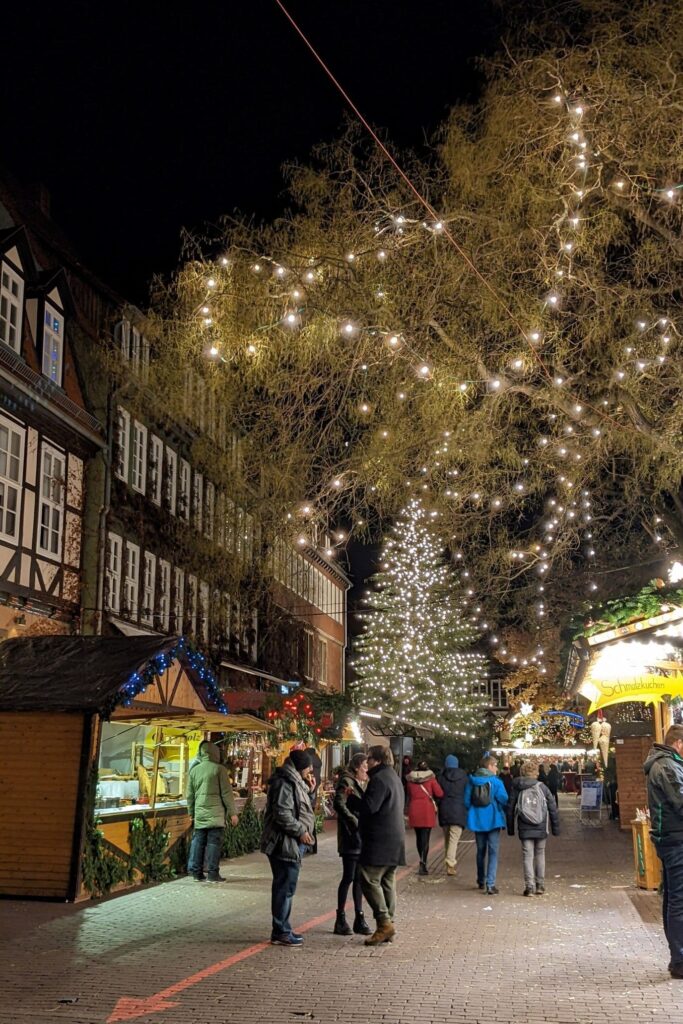
The traditional market is the one you see first: wooden chalets packed along the half-timbered facades, garlands strung between the roofs, Bratwurst, roasted almonds and Glühwein at every corner. The big tree, 19 metres tall with around 3,000 bulbs according to the city, stands in front of the Marktkirche, the Gothic brick church whose tower serves as a landmark from any street in the centre.
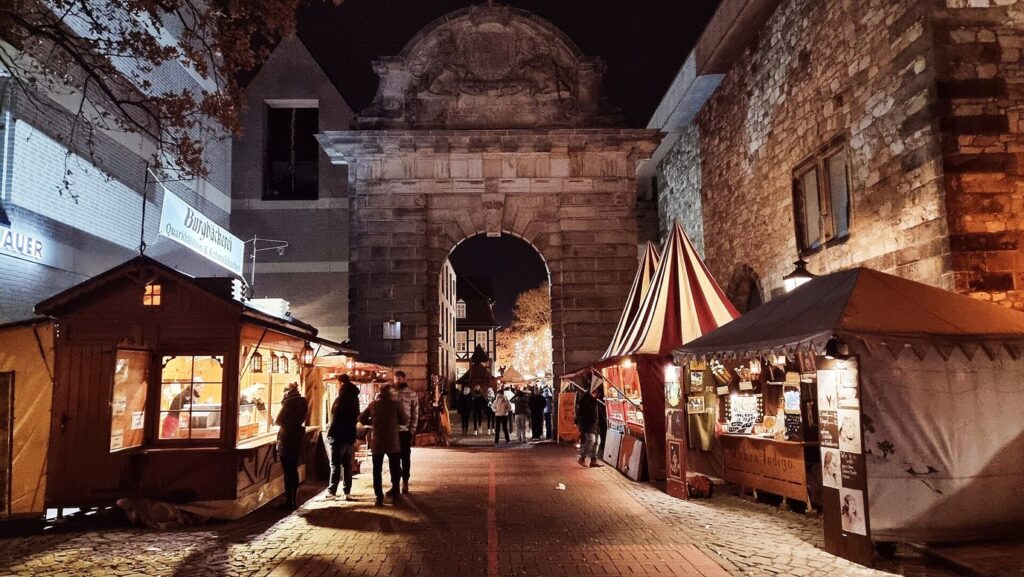
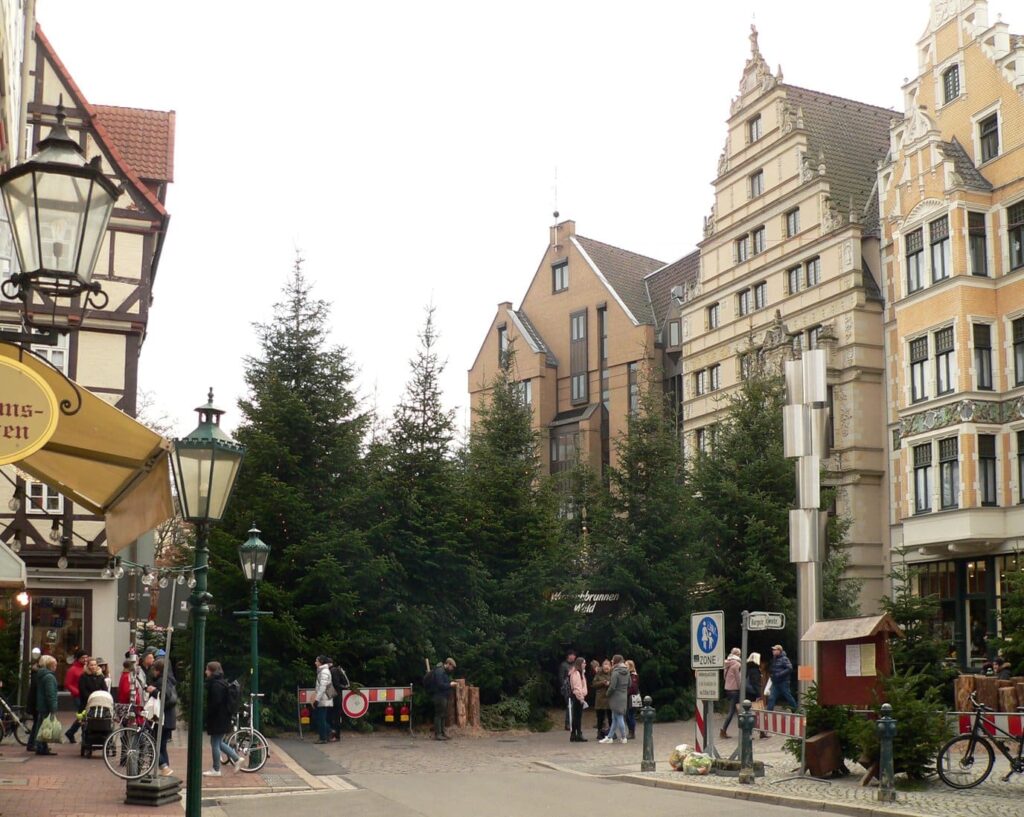
On the banks of the Leine, around the Historisches Museum, the historical market changes century. Its 45 stalls take on the look of a medieval village: craftsmen at work, rough wooden stands, torches and cooking over embers. Between the two, on the Holzmarkt, the Oskar-Winter fountain has housed the Wunschbrunnenwald since 2009, the “wishing-well forest”: a small wood of fir trees around the basin, where custom has it that you look for the golden ring fixed to the fountain's railing and turn it while making a wish. Children love it, adults pretend not to believe in it and turn the ring anyway.
The setting matters as much as the stalls. The Marktkirche, completed in the 14th century, and the Altes Rathaus facing it form, with the Ballhof and the houses of Kramerstraße, the core of Gothic brick that Hanover rebuilt after 1945. Under the garlands, this northern architecture, darker and heavier than the half-timbering of southern Germany, gives the market a Hanseatic character: the warm light of the chalets against dark red walls, and the water of the Leine a few metres away. It is a contrast you will find again in Hamburg or Lübeck, a long way from the postcard image of Bavarian markets.
The Finnish village on Ballhofplatz
The Finnisches Weihnachtsdorf is Hanover's signature. On Ballhofplatz, a quiet square behind the Marktkirche, six stalls and a large Lapland tent form a Nordic camp. Staff in traditional Finnish dress serve flame-cooked salmon, cooked upright on boards facing a beech-wood fire, with rye bread, as well as blueberry cake and Glögi, the Finnish mulled wine made with berries and spices. You drink it inside the tent, sitting on reindeer skins around the central fire, which makes it the ideal refuge when the North Sea rain joins in.
Glögi differs from German Glühwein in its berry-juice base, often topped up with raisins and almonds at the bottom of the cup. If you want to compare the two schools, and those of the neighbours, our article on mulled wine and its variations reviews them all, from Rhineland Glühwein to Austrian Punsch.
Hanover Christmas market 2026: dates, opening hours and programme
The city published its dates early this year: the old town market opens on Monday 23 November 2026 and closes on Tuesday 22 December, thirty days in all, from 11am to 9pm every day, Sundays included. Entry is free at every market in the centre. The daily children's programme, as listed on hannover.de, revolves around the Marktkirche: puppet theatre at 4pm, 5pm and 6pm, a storyteller at 3.30pm and 4.30pm, Father Christmas passing through at 5.30pm, and a Christmas bakery where the little ones decorate their own biscuits for €3.
Allow two to four hours to cover the three areas without rushing, more if you linger in the Finnish tent or at the children's shows. The market is flat and compact, manageable with a pushchair outside the Saturday rush. Hanover also has two other markets in the centre that extend the visit:
- The Weihnachtsdorf Hannover, on Ernst-August-Platz in front of the station, is run by Roncalli Event, the company behind the circus-theatre of the same name. It runs from 23 November to 30 December 2026, every day from 11am to 9pm, closed on 25 December and until 2pm on the 24th. Its chalets copy the half-timbered architecture of Lower Saxony, a historic Ferris wheel turns in the middle, and the station facade hosts a projection show at 5pm, 6.30pm and 7pm.
- The Lister Meile market, in the List district north of the station, has run since 1989 along the shopping street, from Lister Platz to Wedekindstraße. It is held every year from late November to 22 December, 11am to 9pm, with rides and neighbourhood crafts; its 2026 dates are still to be confirmed by the organising association.
- On 22 December, closing day for the old town market, the Weihnachtsdorf at the station carries on for a further week: useful if you come between Christmas and New Year.
- Totensonntag, Germany's Sunday of the Dead, falls on 22 November 2026, the day before the opening: the question of closing that day, common in northern Germany, therefore does not arise this year.
Getting there from France, getting around, where to stay
Hanover sits at the crossroads of Germany's north-south and east-west ICE lines. By train, allow about 6hr30 from Paris with at least one change, most often at Cologne or Frankfurt. Early-morning departures get you there by mid-afternoon, before the lights come on. By air, Hanover-Langenhagen airport is linked to the central station by S-Bahn. By car, the route runs through Belgium and then the Ruhr on the A2; city-centre car parks charge.
Once there, everything is done on foot. From the central station, Bahnhofstraße leads to the Marktkirche in about ten minutes, and trams 3, 7 and 9 serve the area if you are staying further out. The most logical pairing with Hanover is Hamburg Christmas market, on the same ICE line to the north, or Berlin Christmas market to the east. Those arriving via the Rhine valley can stop off at Cologne Christmas market before carrying on north.
For somewhere to sleep, the station district and the area around the Markthalle put every market within walking distance. The Markthalle itself, a covered market hall next to Platz der Weltausstellung, is a good bet for a sit-down lunch before tackling the chalets.
Two centuries of Christmarkt
The first written mention of the market dates from 1813, under the name Christmarkt. Back then it lasted only three days before Christmas. The city extended it to a week in 1906, two weeks in 1939, then three weeks in 1974, the format that held until today's late-November opening. The Lister Meile got its market in 1989, Ernst-August-Platz its own in 2000, renamed Weihnachtsdorf Hannover in 2023 when Roncalli took over its operation. The Wunschbrunnenwald is the most recent addition, in 2009.
This long history explains the restraint of the place: the chalets have kept the scale of a neighbourhood market, the specialities remain those of the region and the entertainment is aimed first at the city's families. That is what gives Hanover its character as a city market, where you meet more locals than tourist coaches, and it is also why people come back.
Our tip
Arrive around 3.30pm via Platz der Weltausstellung, cross the traditional market in daylight and finish at the Finnish village as the Marktkirche lights up above the rooftops: a Glögi under the Lapland tent, sitting on reindeer skins, rounds off the visit in the warm.
Reviewed and approved by the editorial team
Information checked against 7 official sources. Detailed sources available on request.
A question, a mistake or a problem on this page? Write to us
Markets nearby
 Opens in 45 days
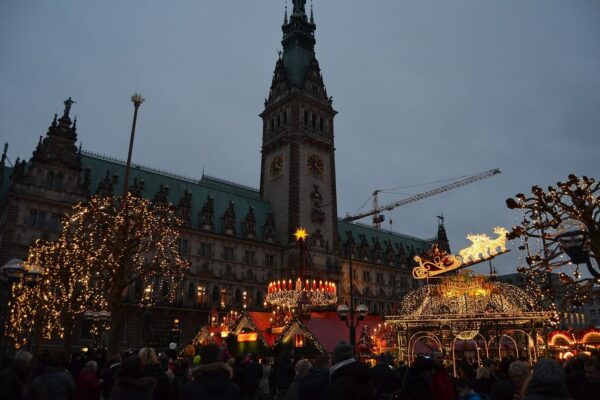
Hamburg Christmas Market
Hamburg
From 23 November to 23 December 2026
Worth the weekend
 Opens in 45 days
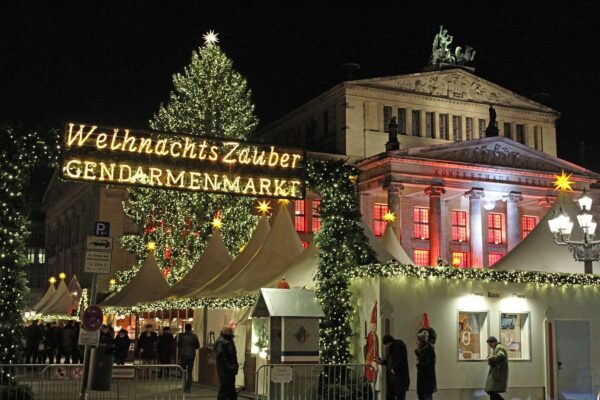
Berlin Christmas Market
Berlin
From 23 November to 31 December 2026
Worth the weekend
 Opens in 38 days
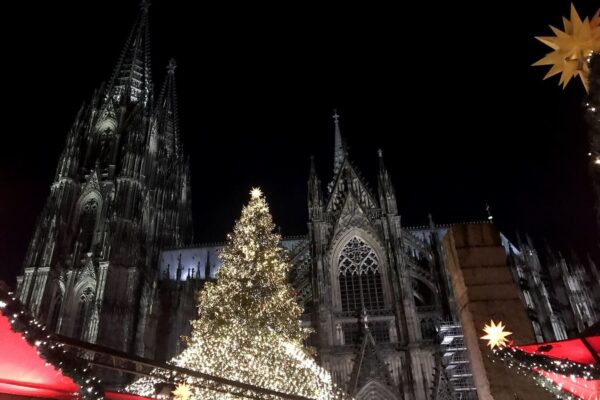
Cologne Christmas Market
Cologne
From 16 November to 23 December 2026
Worth the trip
Activities nearby
Parks and sites running a Christmas programme less than an hour's drive away. They aren't Christmas markets, and admission is charged.
 Opens in 49 days
Park
Opens in 49 days
Park
Movie Park Germany at Christmas: Hollywood Christmas
Bottrop
From 27 November to 5 January 2027
Day out · Park
 Opens in 64 days
Event
Opens in 64 days
Event
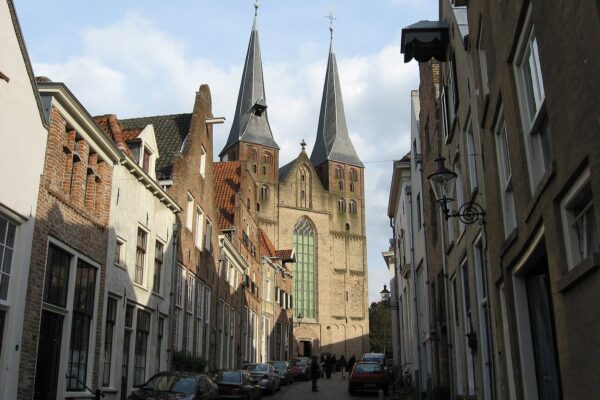
Christmas in Deventer: the Dickens Festival
Deventer
From 12 to 13 December 2026
Worth the weekend · Event
 Opens in 36 days
Park
Opens in 36 days
Park
Phantasialand at Christmas: Wintertraum
Brühl
From 14 November to 24 January 2027
Worth the trip · Park