
Where to find Hamburg Christmas Market
Highlights of Hamburg Christmas Market
- The Rathausmarkt, the historic market in front of the city hall, with a tight selection of artisans
- Jungfernstieg and its reflections on the Alster, in a more elegant setting
- Santa Pauli, an adults-only night market on the Reeperbahn
- The UNESCO-listed Speicherstadt, to visit as well
- A direct flight from Paris in just under two hours
Where to stay near Hamburg Christmas Market
Hotels, flats and rooms around the market, for the dates of your stay.
Check availability with our partners
Hamburg Christmas Market in pictures
Specialities to try
The flavours that make this market what it is
Fischbrötchen with marinated fish
grilled bratwurst
candied almonds and white or red berry mulled wine
with a few touches of marzipan from nearby Lübeck
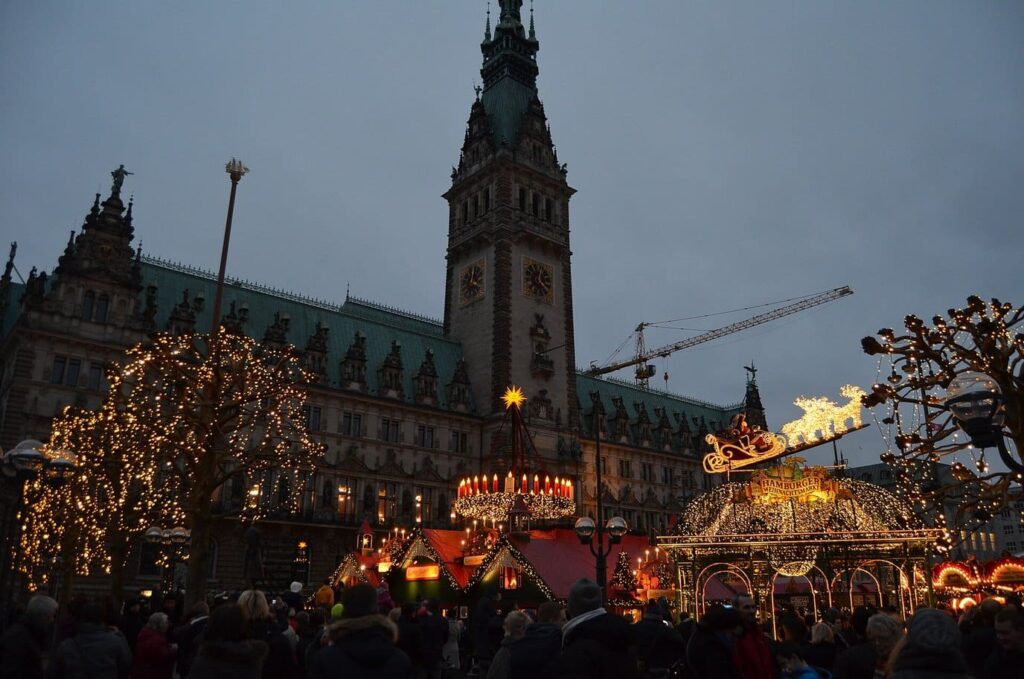
Hamburg Christmas market livens up the Rathausmarkt, the big square in front of the city hall, from the end of November. Around the wooden chalets, the Hanseatic city mixes atmospheres: the icy waters of the Alster, the lanes of the UNESCO-listed Speicherstadt, the lively Reeperbahn district a little further on. Northern Germany gets less snow than the east of the country, but makes up for it with lights and the sheer number of events: around twenty markets are spread across the city throughout December, each with its own setting and crowd. The local oceanic climate makes snow rare in December, which does not stop the organisers betting on fairy lights rather than the weather.
Hamburg Christmas market on the Rathausmarkt
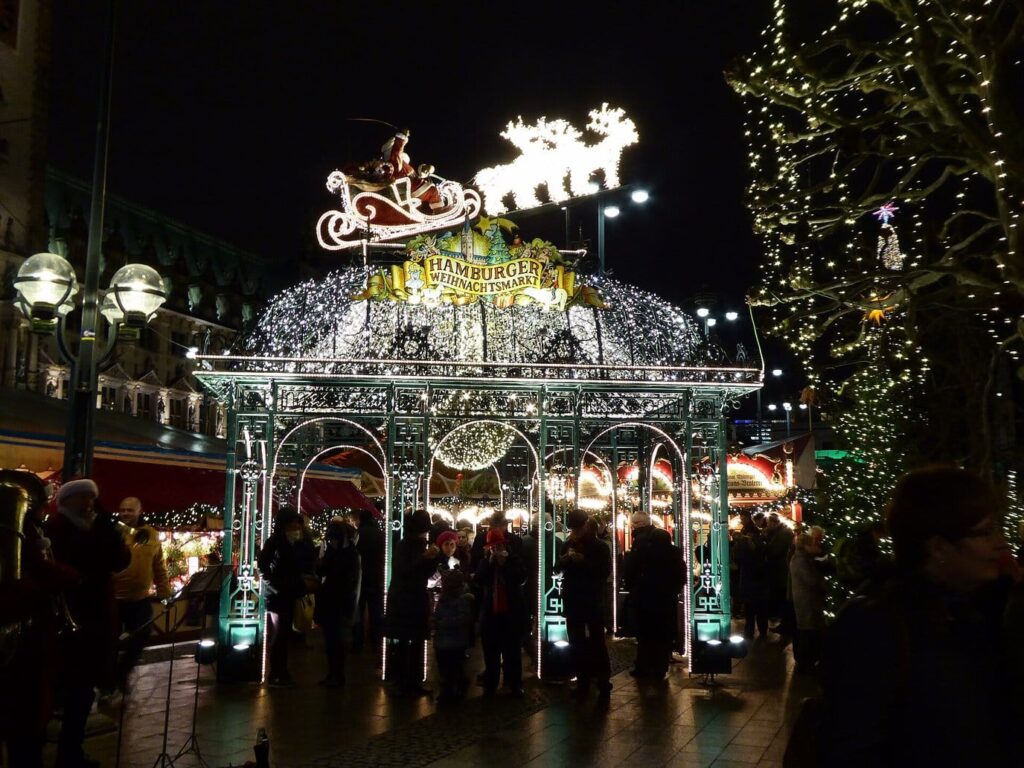
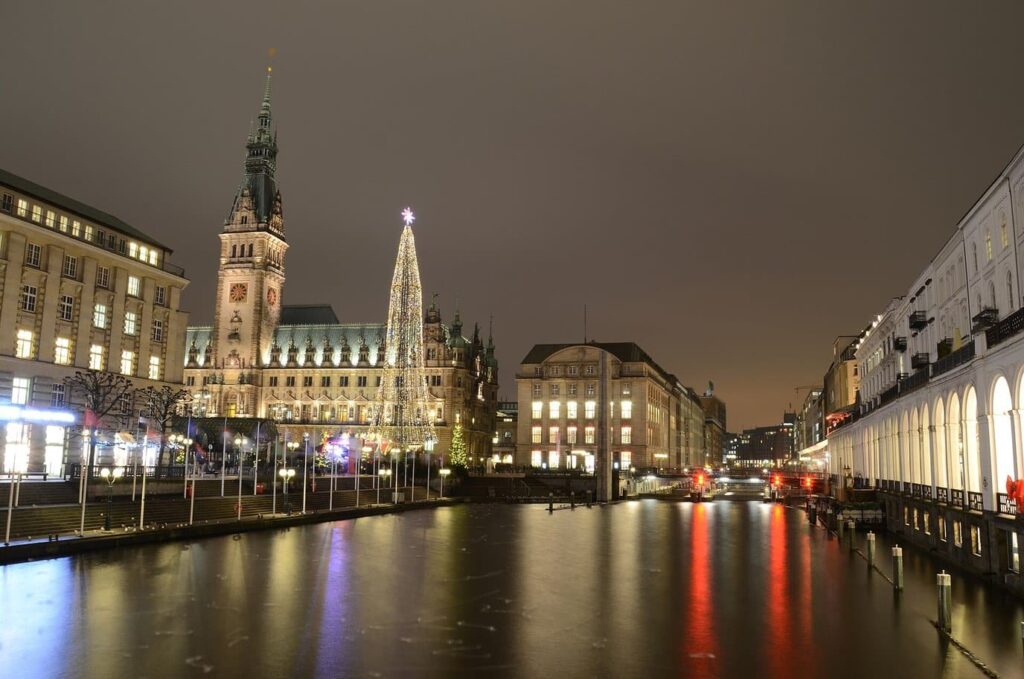
The heart of the market lies at the foot of the city hall (Rathaus), a building inaugurated in 1897 that remains the symbol of the city. The organisers have a clear editorial line: art rather than commerce, summed up by the German motto Kunst statt Kommerz. In practice, this means a tight selection of artisans rather than a pile-up of stalls you could find in any other city. The square, paved and lined with arcades, is great for evening photos, when the fairy lights take over from the neo-Renaissance façade of the city hall. This is where most of the atmosphere you expect from a German Christmas market is concentrated: the smell of cinnamon, seasonal songs, a big Christmas tree standing in the middle of the square. Its proximity to the central station and the shopping district makes it a natural stop, even for those only in Hamburg for the day.
Christmas markets have multiplied in Germany’s big cities since the Middle Ages, driven by the merchant guilds of Hanseatic cities such as Hamburg, Lübeck and Bremen. The city has never claimed to host the oldest of its kind, unlike some cities in the east of the country, but it has built its own identity around staging rather than size.
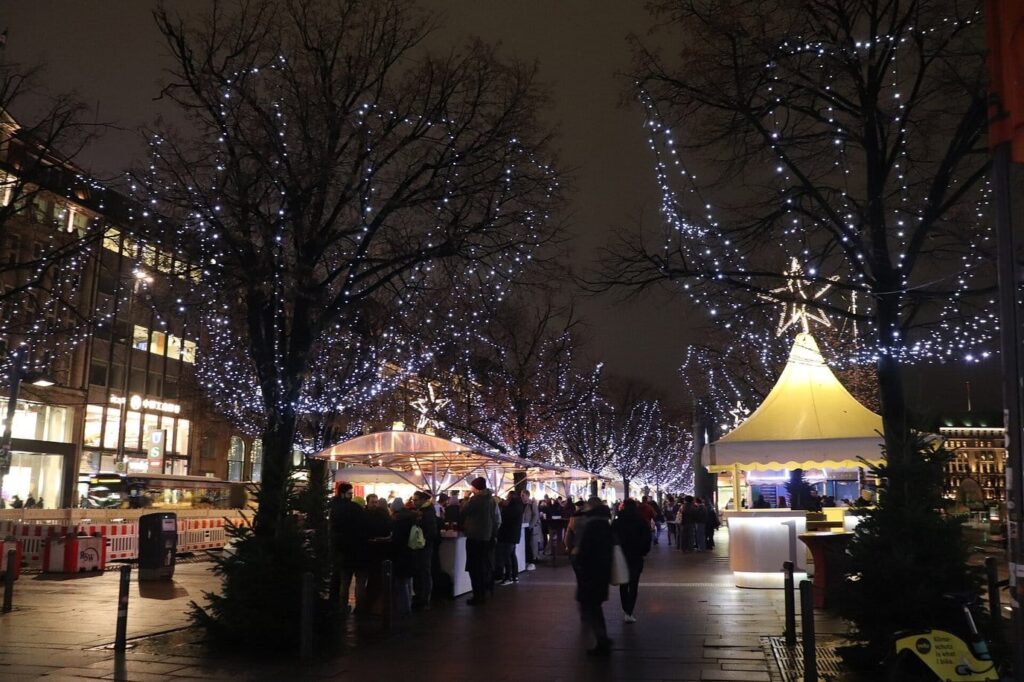
Around the Rathausmarkt, the Mönckebergstraße shopping street extends the atmosphere to the central station, decorated shop windows and department stores included. The model stays close to that of other German cities: wooden chalets, a square layout around a central point, warm rather than white lighting, and in Hamburg no Ferris wheel or oversized attraction, unlike other markets in the country.
Jungfernstieg and the Alster, the other winter setting
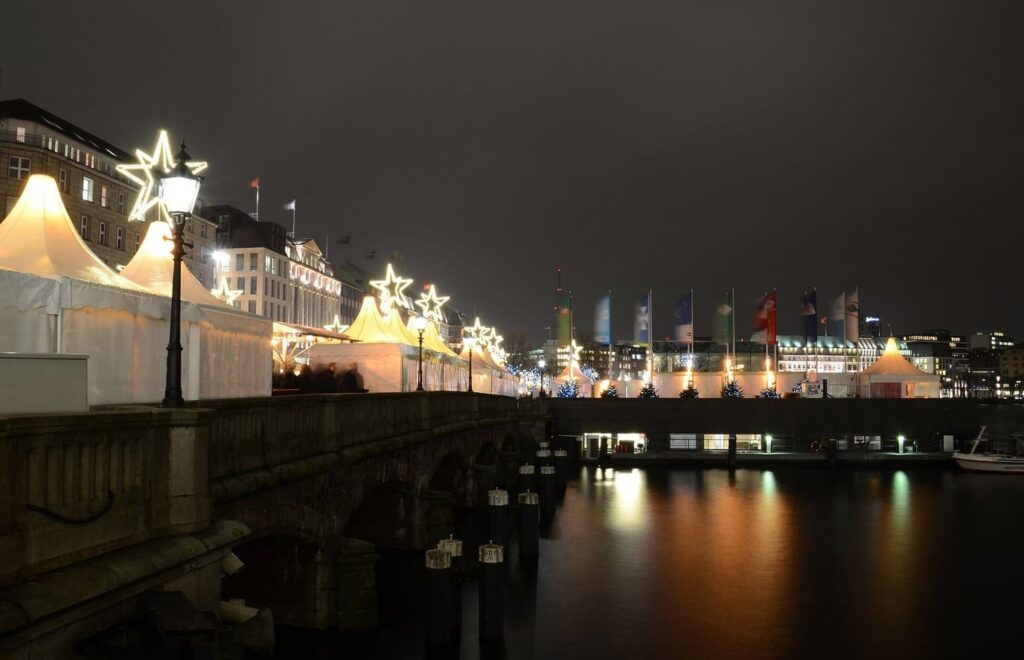
A few minutes’ walk away, the Jungfernstieg market occupies the promenade along the Binnenalster, the inner basin of the Alster. The organisers have named it Weißer Zauber an der Alster, white magic on the Alster: a name that describes the intended effect well, between reflections on the water and the illuminated façades of the nearby department stores. The atmosphere is calmer than at the Rathausmarkt, with visitors who come as much for last-minute shopping as for a hot chocolate on a terrace. On very cold days, the Alster sometimes freezes over, which adds to the picture, although you cannot count on it every winter.
The Alster also lends itself to other things in winter: walks along the quays, tour boat landing stages closed for the season, department store windows continuing on from the market. The area around Jungfernstieg is a shopping district all year round, which explains why visitors there are in more of a hurry than at the Rathausmarkt.
The boats that ply the Alster the rest of the year stay moored in winter, but the nineteenth-century façades lining the basin are still well worth seeing once lit up. The district also has several historic department stores, whose Christmas windows draw their own crowds, with no direct link to the market.
Santa Pauli, the night market on the Reeperbahn
On the Kiez, the district of the Reeperbahn and its cabarets, a third market completes the first two: Santa Pauli. Adults only, it borrows the codes of the neighbourhood with a more direct tone, between red décor and knowing winks at its surroundings. Families will head for the Rathausmarkt or Jungfernstieg instead; Santa Pauli is aimed at an evening crowd, with an atmosphere that deliberately contrasts with the rest of the city during Advent. It is a choice to make knowingly, rather than a default stop on your trip.
For families who prefer a calm atmosphere, the Rathausmarkt and Jungfernstieg cover all the essentials: attractive setting, child-friendly entertainment, daytime opening hours. Santa Pauli remains an extra option, best kept for visitors without young children.
Hanseatic specialities and treats
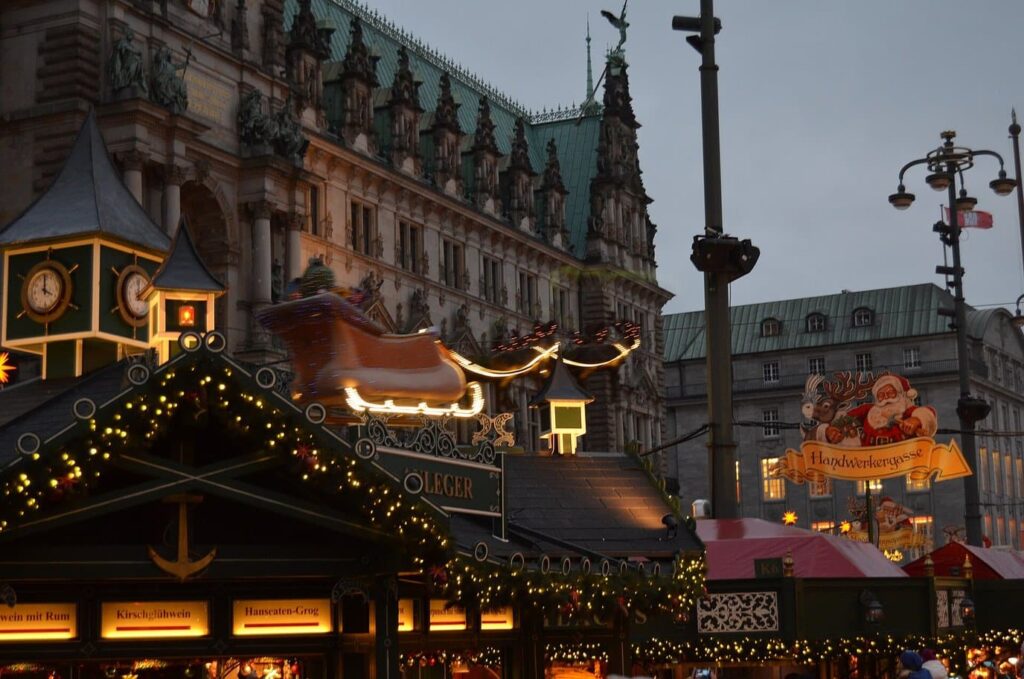
Hamburg is first and foremost a port, and the food at the Christmas market reflects it. The Fischbrötchen, a bread roll filled with marinated or breaded fish, is found at most stalls, even in the depths of winter, a local variation rarely seen at markets in southern Germany. Alongside it, the classics hold their own: grilled bratwurst, candied almonds, gingerbread. Mulled wine comes in white or red berry versions depending on the stall, often served in a collectable mug bearing the name of that year’s market. Some chalets also serve hot grog, a direct nod to the city’s maritime tradition.
Marzipan, the speciality associated with nearby Lübeck, just over an hour’s drive away, also turns up on Hamburg’s stalls as figurines or filled gingerbread. For those with a sweet tooth, candied almonds and hot waffles complete the offer, alongside grilled meats for more substantial meals.
Away from the market, winter cooking in northern Germany also relies on kale (Grünkohl), served with smoked sausage in traditional restaurants in the city centre. This dish is not found at the market stalls themselves, but it rounds off a Hamburg evening nicely outside the chalets’ opening hours.
Getting there from France, opening times and address
The Rathausmarkt is right in the centre of Hamburg (Rathausmarkt, 20095 Hamburg), a few minutes’ walk from the central station (Hauptbahnhof). From Paris, flying remains the most direct option: just under two hours to Hamburg Airport, then the S-Bahn to the city centre. By train, you need one change, usually in Cologne, for a journey of more than seven hours. By car, the route through Belgium and the Netherlands is close to a thousand kilometres, far too much for a day trip: plan the drive over two days or combine it with a stop in Cologne or Bremen.
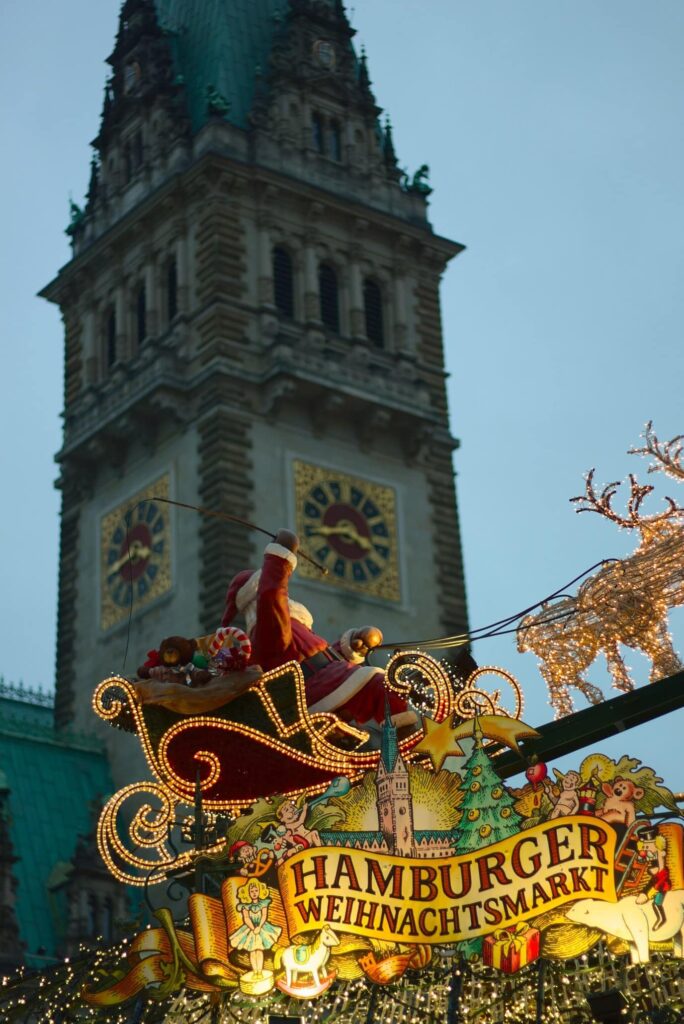
The historic market on the Rathausmarkt runs from 23 November to 23 December 2026, every day from 11am to 9pm, with no later closing at weekends. Santa’s flight over the market takes place every day at 4pm, 6pm and 8pm. To get from one market to another, Hamburg’s U-Bahn and S-Bahn network is the simplest option: Rathaus station leads straight to the Rathausmarkt, while Jungfernstieg station shares its name with the neighbouring market. As for clothing, bring warm layers and closed shoes: the wind coming up from the Elbe can be felt even on dry days.
Card payments are becoming the norm at big German markets, but some small stalls only accept cash: keeping a few euro notes on you is a sensible precaution. Displayed prices include VAT, so there are no surprises at the till. Once you are there, a car loses all its appeal: the city centre can be explored on foot between the three markets, with a few S-Bahn stops for longer journeys.
- Berlin Christmas market lets you extend the trip over several days, about two and a half hours by train from Hamburg.
- Heading towards western Germany, Cologne Christmas market offers another big market, at the foot of the cathedral.
- The Glühwein served at the stalls is close to the spiced mulled wine made in France; the two are compared in our guide to mulled wine variations.
- The Speicherstadt, a UNESCO-listed district of brick warehouses, is also lit up during Advent and makes a good addition to the market.
- The port of Hamburg, active since the Middle Ages, can be seen from the quays of the historic centre and rounds off an outing around the market nicely.
Our tip
Combine your visit with the Elbphilharmonie or Miniatur Wunderland to turn the stop into a full day, rather than limiting yourself to the market.
Reviewed and approved by the editorial team
Checked on against 3 official sources. Detailed sources available on request.
A question, a mistake or a problem on this page? Write to us
Markets nearby
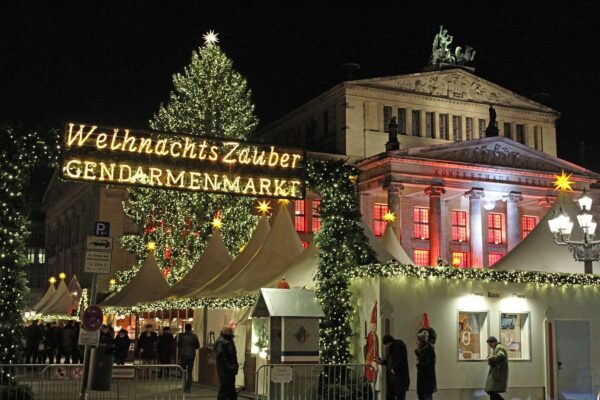 Opens in 45 days
Berlin Christmas Market
Berlin
From 23 November to 31 December 2026
Worth the weekend
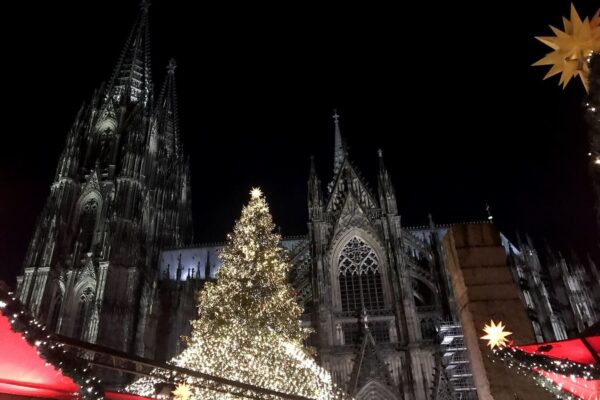 Opens in 38 days
Cologne Christmas Market
Cologne
From 16 November to 23 December 2026
Worth the trip
Hanover Christmas Market
Hanover
From 23 November to 22 December 2026
Worth the weekend
Activities nearby
Parks and sites running a Christmas programme less than an hour's drive away. They aren't Christmas markets, and admission is charged.
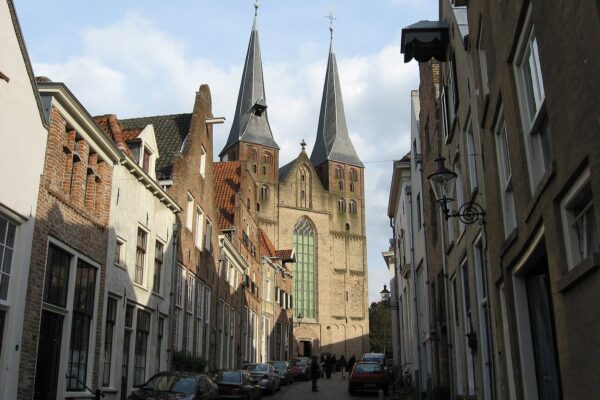 Opens in 64 days
Event
Opens in 64 days
Event
Christmas in Deventer: the Dickens Festival
Deventer
From 12 to 13 December 2026
Worth the weekend · Event
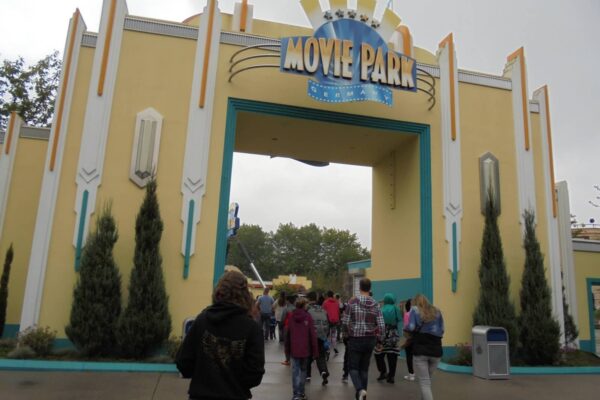 Opens in 49 days
Park
Opens in 49 days
Park
Movie Park Germany at Christmas: Hollywood Christmas
Bottrop
From 27 November to 5 January 2027
Day out · Park
 Opens in 50 days
Park
Opens in 50 days
Park
Toverland at Christmas: Winter Feelings
Sevenum
From 28 November to 17 January 2027
Day out · Park