
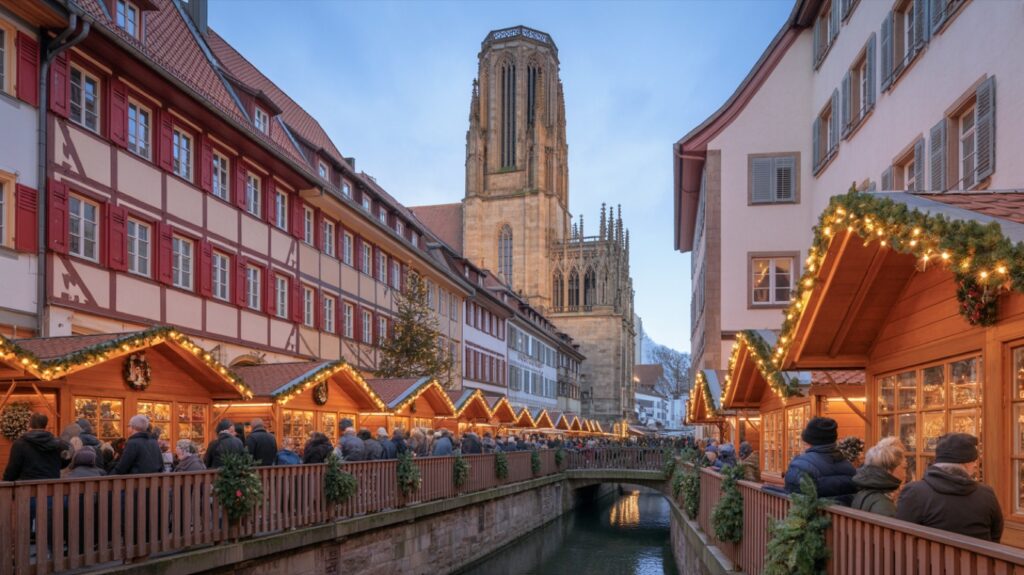
Where to find Freiburg im Breisgau Christmas Market
Highlights of Freiburg im Breisgau Christmas Market
- Market spread over eight squares in the old town, between Rathausplatz and Kartoffelmarkt
- Mulled wine from the Baden vineyards, with several versions depending on the chalet
- Nikolaus visit for children on 6 December
- Extra stalls on the Sundays of Advent, along Kaiser-Joseph-Straße
- Gothic minster and medieval Bächle to explore between two chalets
Where to stay near Freiburg im Breisgau Christmas Market
Hotels, flats and rooms around the market, for the dates of your stay.
Check availability with our partners
Specialities to try
The flavours that make this market what it is
Mulled wine from the Baden vineyards
Winzerglühwein
roasted almonds and raclette
with a few craftspeople from the neighbouring Black Forest
Freiburg Christmas market spreads across eight squares in the old town of this Baden city, from Rathausplatz to Kartoffelmarkt, between cobbled lanes and Bächle, the little channels that have run alongside the façades since the Middle Ages. The Gothic minster sets the tone with its open-work spire, visible from almost every corner of the historic centre. Freiburg im Breisgau, the fourth-largest city in Baden-Württemberg, is less than an hour’s drive from Colmar, on the other side of the Rhine: an easy day trip for anyone staying in Alsace, Lorraine or Franche-Comté. Founded in 1120 and a university town since 1457, it keeps a lively atmosphere even in the depths of winter, with cafés open late around the market squares.
A market spread over eight squares in the old town
Freiburg Christmas market is not confined to a single square: it takes over Rathausplatz, Kartoffelmarkt, Unterlindenplatz, Colombipark, Franziskanerstraße, Turmstraße, Predigertor and Rotteckring. Each spot keeps its own personality. Rathausplatz, in front of the town hall, has the busiest chalets and the big Christmas tree; the more compact Kartoffelmarkt focuses on crafts and turned-wood objects; Colombipark, set slightly back, leaves more room for pushchairs and benches to rest between purchases. Predigertor and Rotteckring, further out, complete the picture with wider aisles, handy with a pushchair.
On the four Sundays of Advent, thirteen extra stalls are added along Kaiser-Joseph-Straße, the shopping street linking the station to the historic centre: a good way to extend your stroll without leaving the main pedestrian route. On 6 December, the Nikolaus, the local version of Saint Nicholas, visits children on one of the squares, and a baking workshop is offered to them during the school holidays. St Martin’s Church, a few streets from the chalets, opens its doors every evening at 5.30pm from 1 December for a daily moment of reflection.
The decorations themselves follow a trend that has grown stronger over the past few years: raw wood, blown glass and sustainable textiles are gradually replacing plastic in several chalets, reflecting the city’s environmental awareness. In the evening, the chalets glow with warm bulbs and the old town façades take on golden reflections in the Bächle. Foot traffic stays heavy on Rathausplatz in the late afternoon and is calmer early in the morning.
Winemakers’ mulled wine and Black Forest treats
Here the mulled wine comes straight from the Baden vineyards: each chalet offers its own version of Winzerglühwein, from classic red to spiced white, with a rosé option at some stalls. Children have their alcohol-free Kinderpunsch, served piping hot in the same ceramic mugs that adults get back on a deposit. Roasted almonds (gebrannte Mandeln) fill the aisles with their aroma on every corner, alongside pretzels and regional gingerbread. Around Kartoffelmarkt, a few exhibitors also come from the neighbouring Black Forest, with carved wooden cuckoo clocks and hand-painted figurines. Large tartes flambées (Flammkuchen), served hot on waxed paper, round off the savoury options alongside raclette.
On the savoury side, raclette has pride of place at several chalets, a nod to the nearby Swiss border and the cheesemaking tradition of the Baden region. Freiburg’s Winzerglühwein changes from one chalet to the next: the balance of spices and sugar varies between stallholders, some favouring cinnamon, others candied citrus. To get close to that balance at home, start with our guide to mulled wine and its variations, which points you to the recipe.
Dates, opening hours and prices for the 2026 edition
The 2026 edition is announced from Thursday 19 November to Wednesday 23 December 2026 on the market’s official website, with a closure on Sunday 22 November, Totensonntag. Freiburg’s market traditionally opens during Advent, and some spots, such as the Kastaniengarten, keep the festive mood going until early February, long after the eight main squares have been taken down. Entry is free across the whole market; you only pay for drinks, food, crafts and decorations bought on site.
The chalets are open Monday to Saturday 10am-8.30pm and Sunday 11.30am-7.30pm; on opening day things start at 2pm, and on 23 December everything closes at 7.30pm. The official website of the Freiburg tourist office usually publishes the full programme during November, with square-by-square details, since each spot may close at a different time depending on the stallholders.
All eight market squares are cobbled, like the rest of the old town, with no specific facilities reported for people with reduced mobility: it is best to check with the tourist office before coming with a pushchair or wheelchair. As at most German Christmas markets, cash is still useful for small purchases, even though bank cards are now accepted at many chalets.
From France: Colmar, Mulhouse and Strasbourg
By car, Colmar is the closest reference point: allow about forty-five minutes via the Breisach bridge, which crosses the Rhine between Vogelgrun and the German bank. From Mulhouse, expect about fifty minutes, via the A36 on the French side and then the A5 on the German side. From Strasbourg, the drive is a little longer, a little over an hour depending on traffic near the border. Parking is in the underground car parks of the city centre, as the old town itself is pedestrianised around the chalets. The city tram network also serves the historic centre, with several stops close to the market squares, a practical option if you are staying on the outskirts or using a park-and-ride.
By train, the link from Colmar means a bus to Breisach station, where a regional train takes over to Freiburg: the Rhine rail bridge, destroyed in 1945, was never rebuilt. From Strasbourg or Basel, a German regional train (RE or IRE) reaches Freiburg Hauptbahnhof, about ten minutes’ walk from Rathausplatz. From Paris, you need to change in Strasbourg or Basel, as there is no direct service.
Freiburg Hauptbahnhof is on the edge of the old town, a few minutes’ walk from Kartoffelmarkt and Kaiser-Joseph-Straße, on the main railway line between Basel and Frankfurt. Two to three hours are enough to see the eight squares without rushing; visitors coming from further away sometimes combine the trip with a night in town, to enjoy the lights in the evening too.
The minster and the Bächle, the old town’s heritage
Freiburg Minster (Freiburger Münster) dominates the square of the same name with its open-work spire, completed around 1330 on a building begun around 1200 and finished in the early 16th century. The building came through the 1944 bombings without major damage, unlike much of the rest of the old town, which was rebuilt identically after the war, stone by stone for some façades.
The Bächle, the narrow channels that have run along the cobbled streets since the Middle Ages, were once used to water gardens and fight fires. Local tradition says that a visitor who accidentally steps into one will one day come back to Freiburg. Between two chalets of the Christmas market, they are a good excuse to slow down and take in the colourful façades of the old town, with their stepped gables and wrought-iron signs.
Freiburg also has a reputation as a green city in Germany, driven by the Vauban eco-district and a long tradition of cycle lanes. The Christmas market fits this identity, with sustainable decorations and an old town largely closed to cars.
If you are staying several days in the Baden and Alsace region, a few ideas round off a visit to Freiburg Christmas market.
- Colmar Christmas market pairs with Freiburg over the same weekend, on the other side of the Rhine.
- Mulhouse Christmas market completes the route if you are coming from southern Alsace, via the A35 then the A5.
- Gengenbach Christmas market, in the Black Forest, adds its giant Advent calendar on the town hall façade.
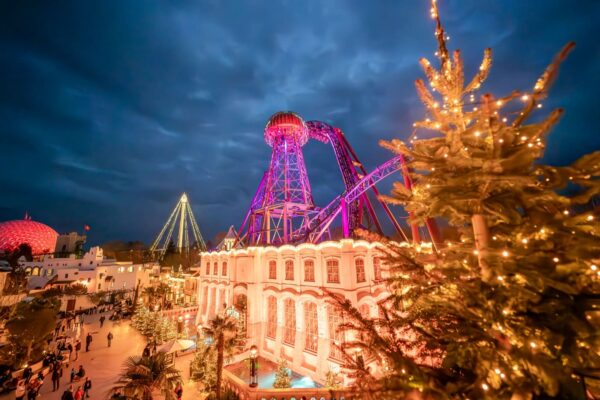
- Europa-Park, about thirty minutes to the north, offers its own Christmas atmosphere as a theme park, for families staying several days in the region.
- Fans of Baden winemakers’ mulled wine can compare the red, white and rosé versions from one square to the next before choosing their favourite chalet.
Our tip
Look up the map of the eight squares before you go: it saves you walking back and forth through the cobbled lanes of the old town.
Reviewed and approved by the editorial team
Checked on against 4 official sources. Detailed sources available on request.
A question, a mistake or a problem on this page? Write to us
Markets nearby
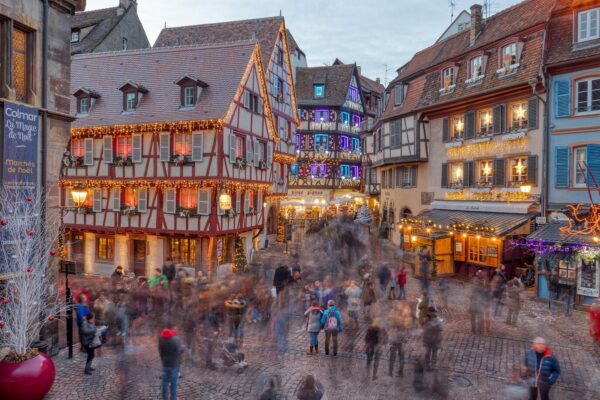 Opens in 45 days
Colmar Christmas Market
Colmar
From 23 November to 29 December 2026
Worth the trip
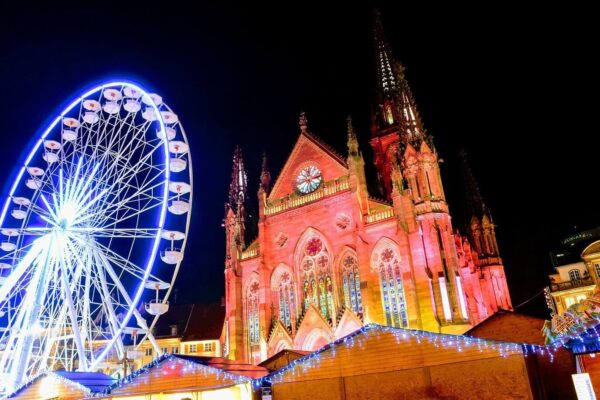 Opens in 42 days
Mulhouse Christmas Market
Mulhouse
From 20 November to 27 December 2026
Worth the weekend
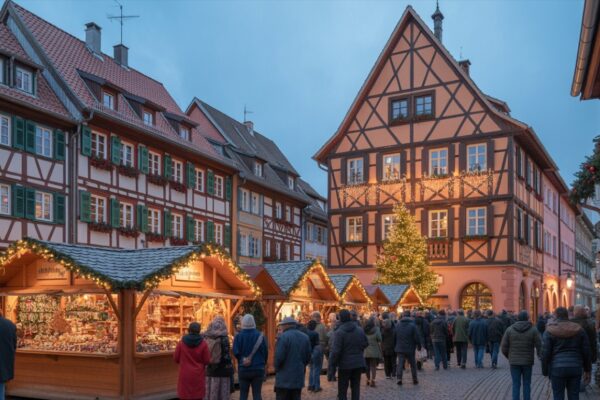 Opens in 49 days
Gengenbach Christmas Market
Gengenbach
From 27 November to 23 December 2026
Day out
Activities nearby
Parks and sites running a Christmas programme less than an hour's drive away. They aren't Christmas markets, and admission is charged.
 Dates to be confirmed
Park
Dates to be confirmed
Park
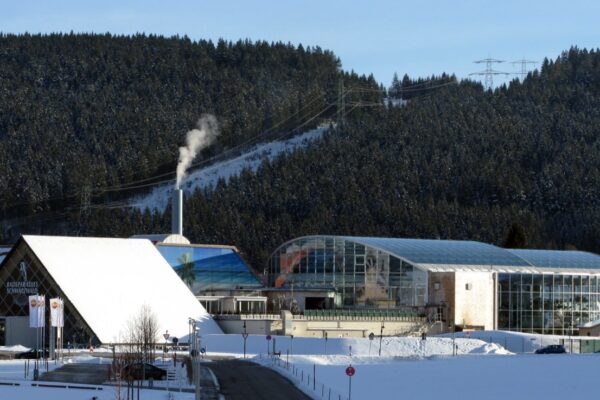
Badeparadies Schwarzwald at Christmas: relaxing in the Black Forest
Titisee-Neustadt
Day out · Park
 Opens in 50 days
Park
Opens in 50 days
Park
Europa-Park at Christmas: Winterzauber
Rust
From 28 November to 9 January 2027
Worth the trip · Park
 Opens in 56 days
Park
Opens in 56 days
Park
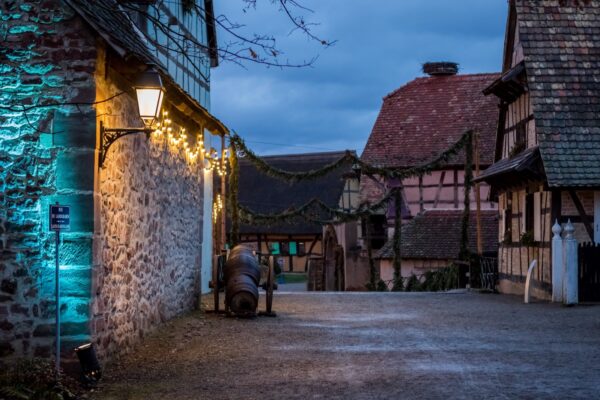
Écomusée d'Alsace at Christmas: the village in festive dress
Ungersheim
From 4 December to 3 January 2027
Worth the weekend · Park