
Where to find Sète Christmas Market
Highlights of Sète Christmas Market
- Lit-up village on Place Léon-Blum and the quays of the Canal Royal
- Night-time parades, street shows and illuminated processions
- Specialities from the Étang de Thau: Bouzigues oysters and mussels, tielle sétoise
- Mulled wine handed out by the town at the big moments
- The panorama from Mont Saint-Clair and the Brassens and Valéry heritage nearby
Where to stay near Sète Christmas Market
Hotels, flats and rooms around the market, for the dates of your stay.
Check availability with our partners
Specialities to try
The flavours that make this market what it is
Bouzigues oysters and mussels
octopus tielle sétoise
macaronade
cuttlefish rouille
zézette de Sète and Picpoul de Pinet wines
not forgetting spiced mulled wine
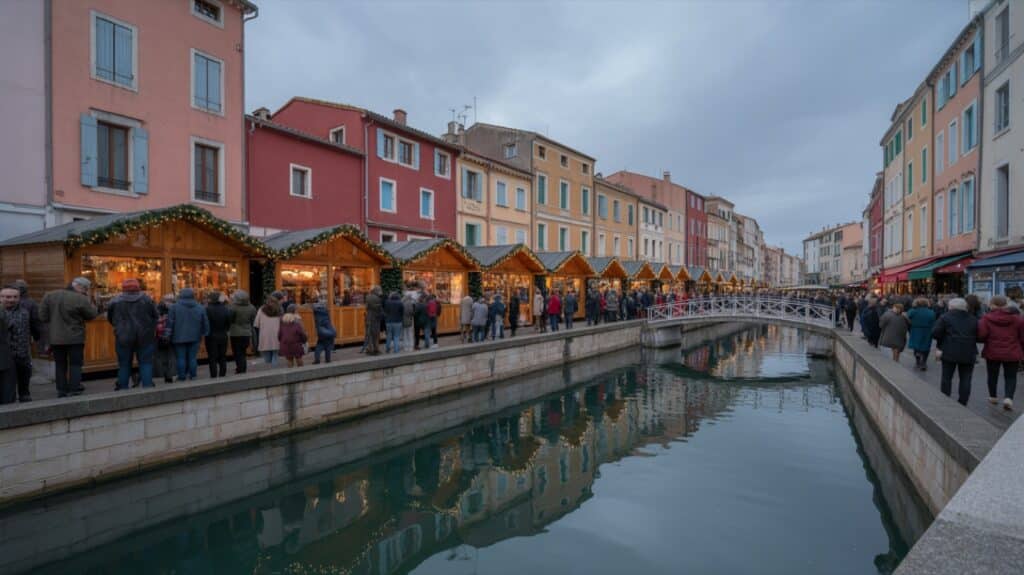
Sète spreads its Christmas festivities along the water, between the Canal Royal, the bridges that cross it and Place Léon-Blum, the beating heart of the town they call the Venice of Languedoc. Golden garlands above the pedestrian streets, light fittings hung along Rue de Strasbourg, the fountain lit up on Place Victor-Hugo: the setting owes as much to street theatre as to a conventional Christmas market. People come here for the night-time parades, the shows and the food chalets of the centre, a glass of mulled wine in hand, with the fishing port and the Étang de Thau right alongside. The Sète Christmas market is lived in that particular coastal light, the light of quays where you still come across the water jousters and the fishermen who made the town.
The lit-up village, from Place Léon-Blum to the quays
The town centre is decked out from mid-November to Christmas, with an official launch on Place Léon-Blum, the square locals nickname Place du Pouffre. That is where the action gathers: the main stage, the shows, the handing out of treats. The pedestrian streets around it, Rue Alsace-Lorraine, Rue de Strasbourg, Avenue Victor-Hugo, fill with stars and garlands, while the covered market carries the party on the food side. You move from craft stalls to food counters without ever straying from the Canal Royal, whose reflections double every light on the water. Chalets are added to the scene depending on the year, along the quays and in the centre, with the produce and specialities of the town and the region: decorations, soaps, jewellery, wooden pieces and local treats sit side by side. The covered market, a temple of good eating in Sète, stays open during the day and extends the market with its fishmongers’ counters, its cheesemongers and its spice merchants, the perfect place to put together a festive basket.
The setting plays on the town’s geography. Sète was built on water, wedged between the Mediterranean and the Étang de Thau, backed by Mont Saint-Clair, whose summit offers a panorama over the roofs, the port and the oyster beds. The Canal Royal splits the centre from end to end, lined with colourful houses and crossed by bridges that people in Sète know by name, hence the nickname Venice of Languedoc. In December the illuminated parades come up the quays after dark, with stilt walkers, jugglers and costumed characters, and one big parade marks one of the mid-December evenings. Children follow the processions, join the craft and baking workshops (some of which need booking with the town), meet Father Christmas and leave with their faces painted. It all stays free, open, with no ticketing: you move from one square to the next as the shows dictate.
Food at the Sète Christmas market: the Étang de Thau on a plate
On the flavour front, Sète lays out a menu that comes straight from the Étang de Thau. The oysters and the Bouzigues mussels arrive from the beds next door, to eat on the hoof or take away for Christmas Eve, often with a glass of Picpoul de Pinet, the dry local white that marries shellfish beautifully. The tielle sétoise, that round pie with tomato sauce and octopus, is sold hot on the stalls and tells on its own the story of the Italian fishermen who settled here in the 19th century. Alongside, macaronade and cuttlefish rouille keep up the tradition of family meals, and the zézette de Sète, a dry little biscuit with muscat and olive oil, slips readily into the sack. Grilled mussel brasucade and local tapenades fill out the range of food stalls. Spiced mulled wine goes round the squares, handed out by the town at the busiest moments. If you want to find those scents again at home, a good mulled wine recipe with cinnamon and orange already takes you halfway.
- Bouzigues oysters and mussels, straight out of the beds of the Étang de Thau, to taste on the spot or take home for the festive table.
- The tielle sétoise, an octopus pie in tomato sauce, served hot, the emblematic speciality of the port.
- Macaronade and cuttlefish rouille, two dishes of Sète tradition for big family tables.
- The zézette de Sète, a sweet dry biscuit, and Picpoul de Pinet, the local white to go with shellfish.
- Spiced mulled wine, handed out on the squares on entertainment evenings, the ally of walks beneath the garlands.
Opening times, getting there and entertainment: the practical details
The festivities stay free and open to all; you only pay for what you eat or take home. The previous edition ran from late November to 24 December, with a launch on Place Léon-Blum, parades and shows spread across the December weekends, and the decorations kept up until the first days of January. For winter 2026, exact dates are still to be confirmed by the town of Sète, which usually publishes the full programme in the autumn. The entertainment mostly falls in the late afternoon and the evening, when the lights come into their own beside the water. The programme mixes children’s shows, Christmas choir concerts, balloon sculpting and meetings with Father Christmas, plus baking and chocolate workshops for which booking with the town is sometimes required. The big illuminated parade, the highlight of mid-December, comes up the streets of the centre with floats, musicians and costumed characters.
By train, Sète station leaves you about fifteen minutes’ walk from the centre, on the line linking Montpellier and Béziers, which makes a car-free day very easy. By car, several car parks ring the centre and the port, but spaces fill up fast on December weekends: aiming for early afternoon or the end of the day helps you park without circling. The heart of town is flat and largely pedestrian, fine with a pushchair, though the edges of the quays call for a little care at night. Allow one to two hours to do the round of the lit squares and the covered market, more if you add a parade and a shellfish tasting. One good idea: pair the visit with a boat trip on the canals or a walk over to the fishing port, where the trawlers coming in and the fish auction give a glimpse of the town at work. The canal-side restaurants, specialists in seafood, are often fully booked at the weekend, so reserve if you want to sit down to a plate of oysters after the market.
What to see around the Sète Christmas market
Sète is well worth visiting beyond the lights. The climb up Mont Saint-Clair rewards the effort with a plunging view over the town, the lido and the oyster beds of the Étang de Thau, striking in winter light. Come back down towards the marine cemetery, the one Paul Valéry made famous with his poem and where he is buried, while Georges Brassens rests in the Le Py cemetery: two sons of the town it has not forgotten. The Paul Valéry museum, close by, shows paintings and mementoes of life in Sète, while the Espace Georges Brassens brings back the singer with the moustache and the pipe, born in the upper quarter. Those two figures, the poet and the troubadour, say a lot about the mix of gravity and cheek that clings to Sète. Along the Canal Royal, water jousting remains the great tradition here: in summer the tournaments pit jousters standing on the tintaine against each other, lance in hand, in a ballet inherited from Languedoc sailors. In December the boats and banners stay moored along the quays, and both the Musée de la Mer and the jousters’ house keep the memory for anyone who wants to understand the soul of the town. The Théâtre de la Mer, cut into the flank of Mont Saint-Clair facing the Mediterranean, completes this landscape of open-air stages even out of season.
The fishing port and the auction, still very much alive, give Sète its character as a real sea town, a long way from reconstructed scenery. If you extend your stay, Sète’s position makes it a good base for ranging along the coast and inland. Montpellier Christmas market is half an hour away by train, while Béziers Christmas market and Narbonne Christmas market round off a festive weekend in Occitanie, between food stalls, lights and mulled wine.
Our tip
Combine the lights of the centre with the climb up Mont Saint-Clair for the view over the Étang de Thau, then take a detour to the marine cemetery, where Valéry rests, and to the Le Py cemetery, where Brassens rests.
Reviewed and approved by the editorial team
Information checked against 4 official sources. Detailed sources available on request.
A question, a mistake or a problem on this page? Write to us
Markets nearby
 Opens in 49 days
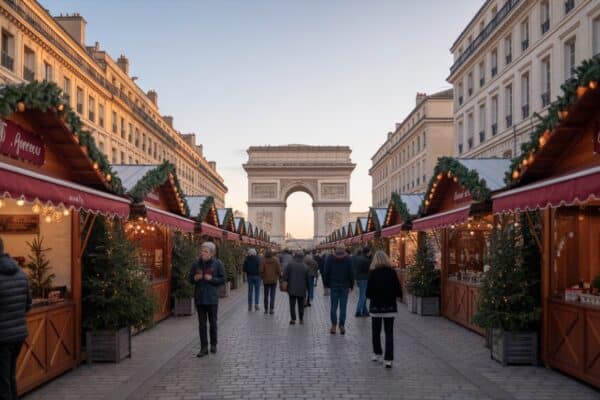
Montpellier Christmas Market: Les Hivernales
Montpellier
From 27 November to 30 December 2026
Worth the weekend
 Opens in 43 days
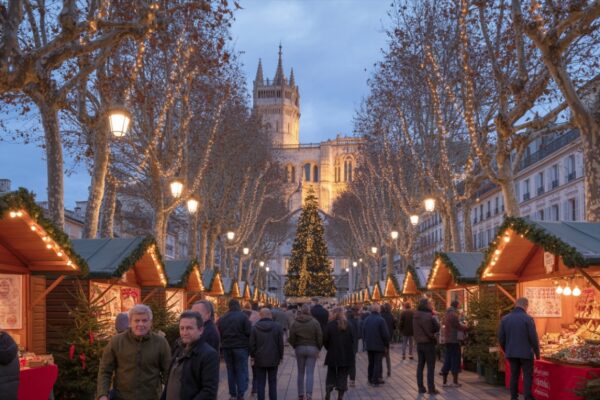
Béziers Christmas Market
Béziers
From 21 November to 3 January 2027
Local favourite
 Dates to be confirmed
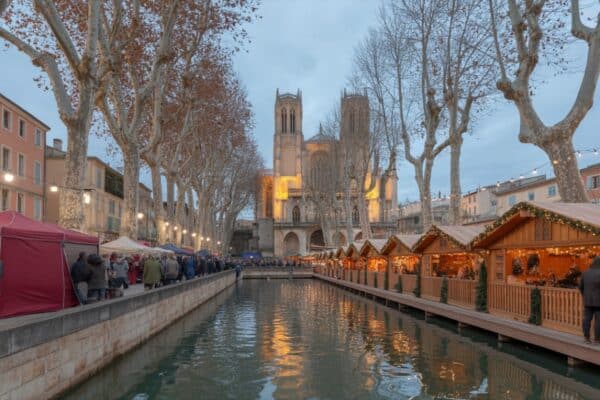
Narbonne Christmas Market
Narbonne
Day out
Activities nearby
Parks and sites running a Christmas programme less than an hour's drive away. They aren't Christmas markets, and admission is charged.
 Opens in 57 days
Event
Opens in 57 days
Event
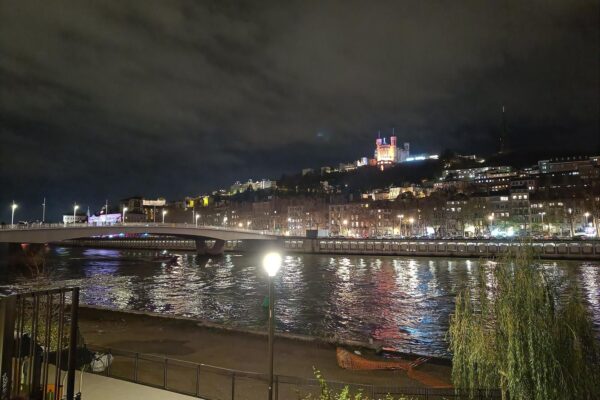
Fête des Lumières in Lyon
Lyon
From 5 to 8 December 2026
Worth the trip · Event
 Opens in 71 days
Park
Opens in 71 days
Park
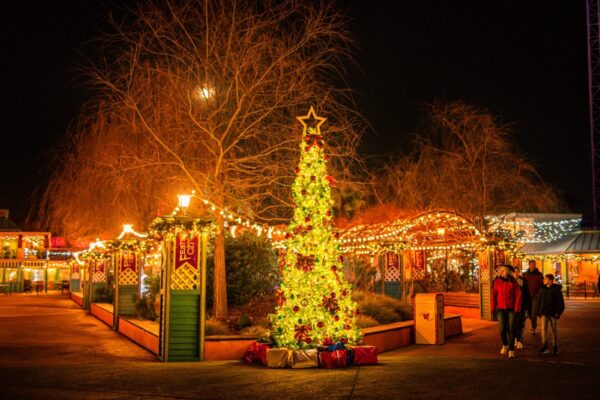
Walibi Rhône-Alpes at Christmas: Merry ChristWAAAs
Les Avenières Veyrins-Thuellin
From 19 December to 3 January 2027
Day out · Park
 Opens in 57 days
Park
Opens in 57 days
Park
Futuroscope at Christmas: the festive season
Chasseneuil-du-Poitou
From 5 December to 3 January 2027
Day out · Park