
Where to find Rome Christmas Market
Highlights of Rome Christmas Market
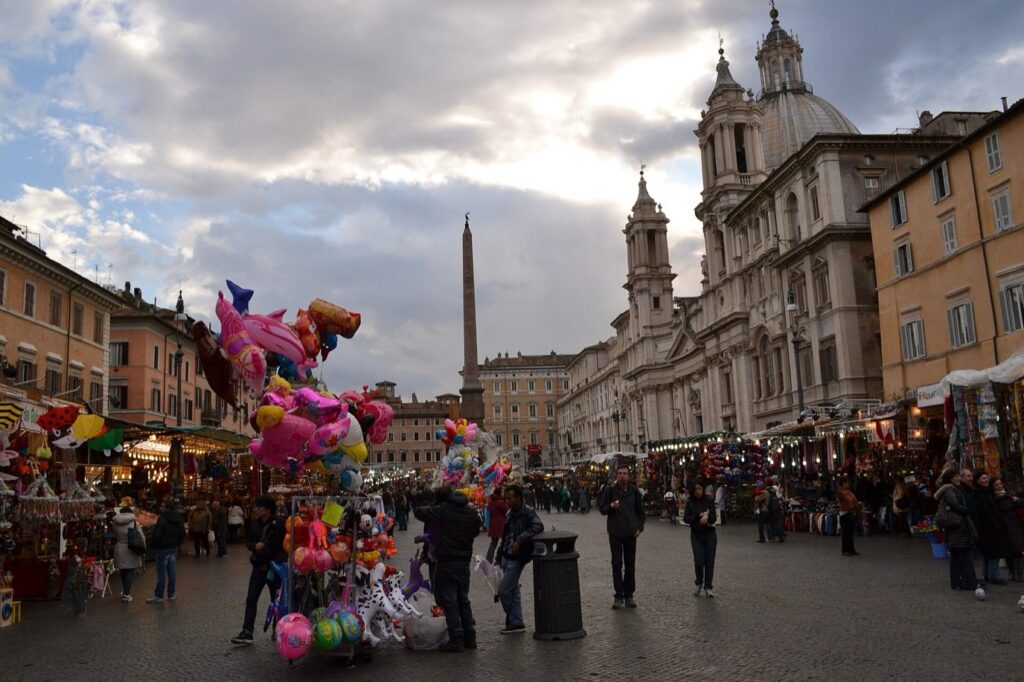
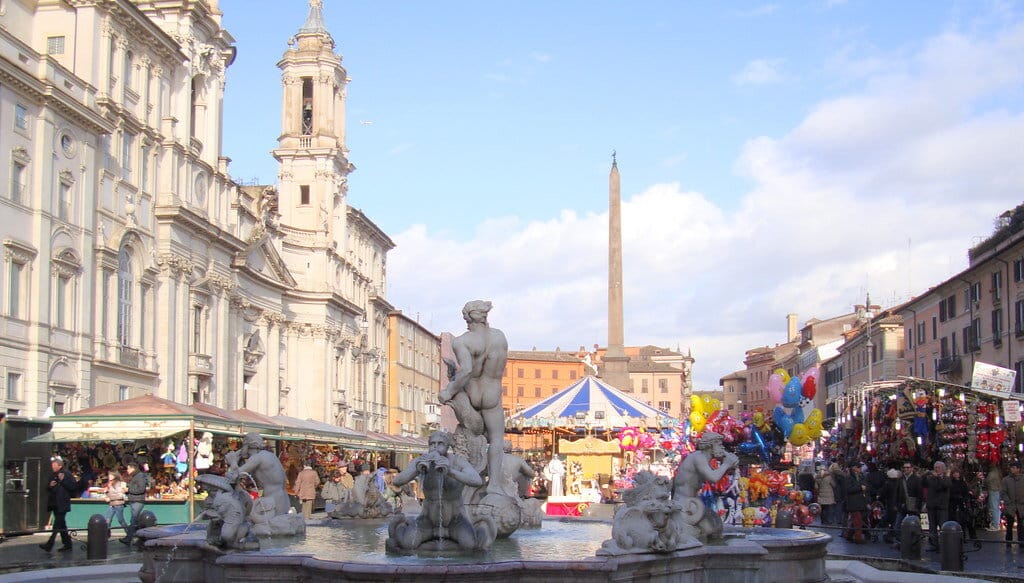
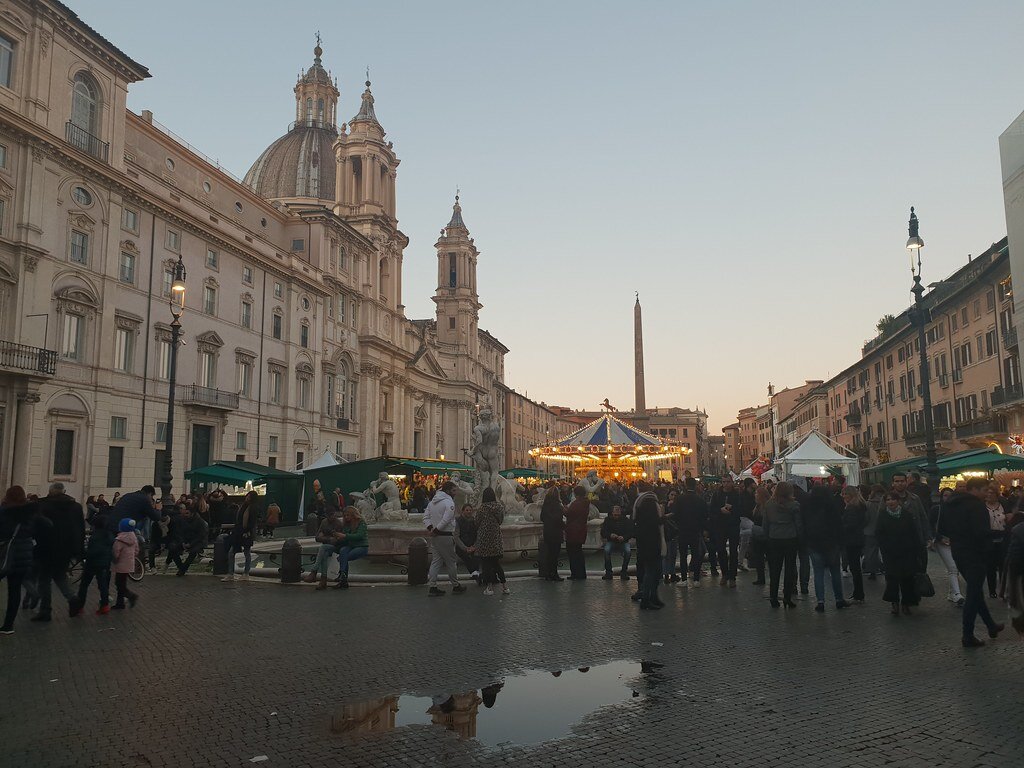
- Piazza Navona, the oval of the ancient Stadium of Domitian, with Bernini’s Fountain of the Four Rivers and Borromini’s Sant’Agnese in Agone
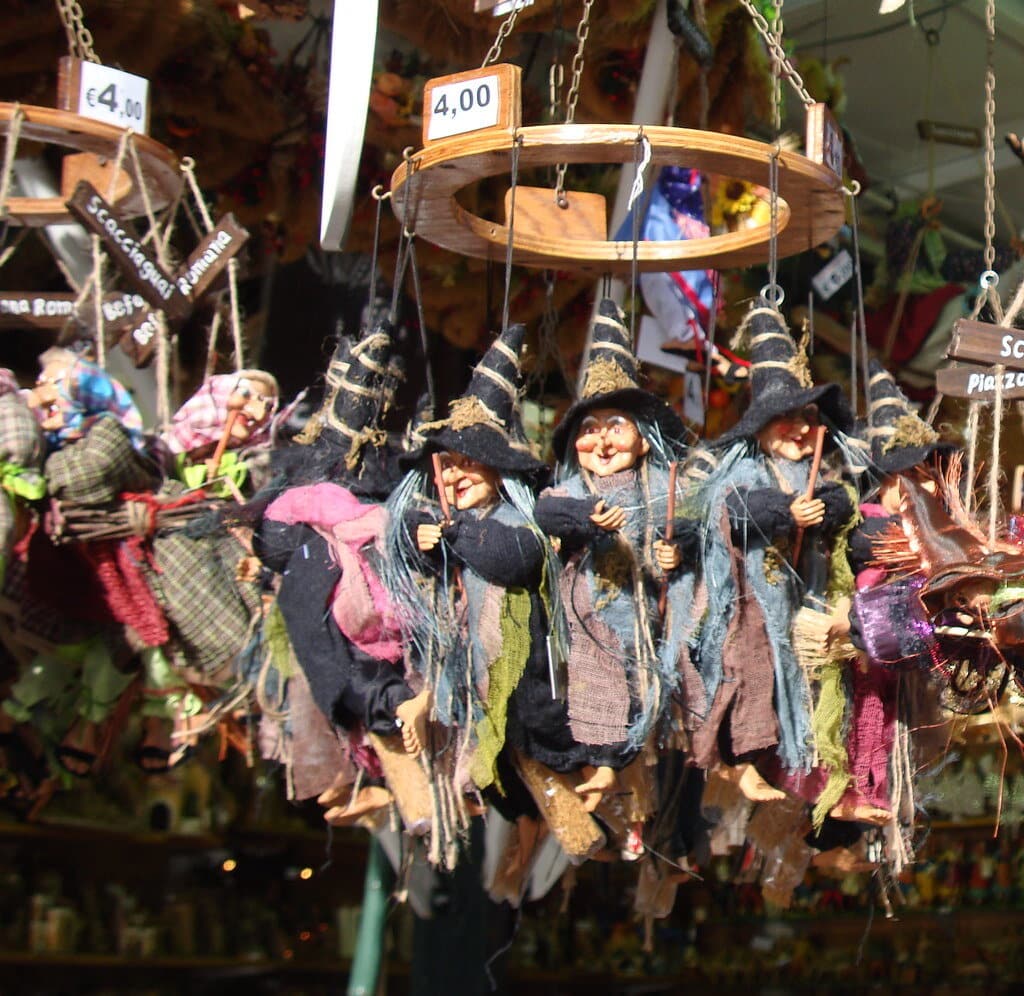
- A market square since 1477 (market moved from the Capitol by Sixtus IV), of which only the Christmas market and the Befana’s descent on 6 January remain
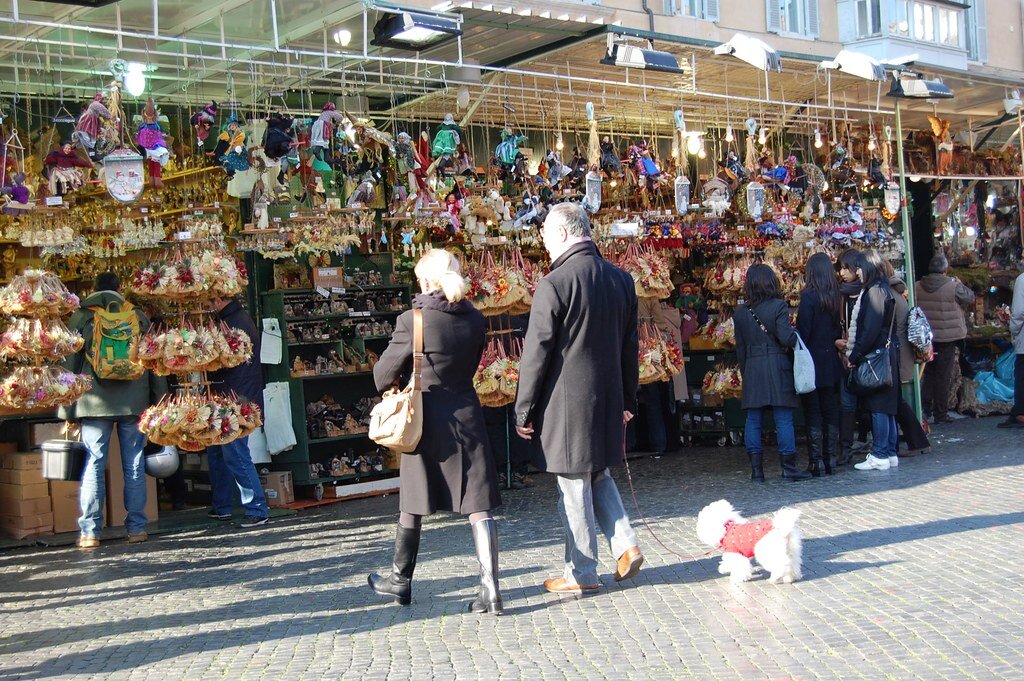
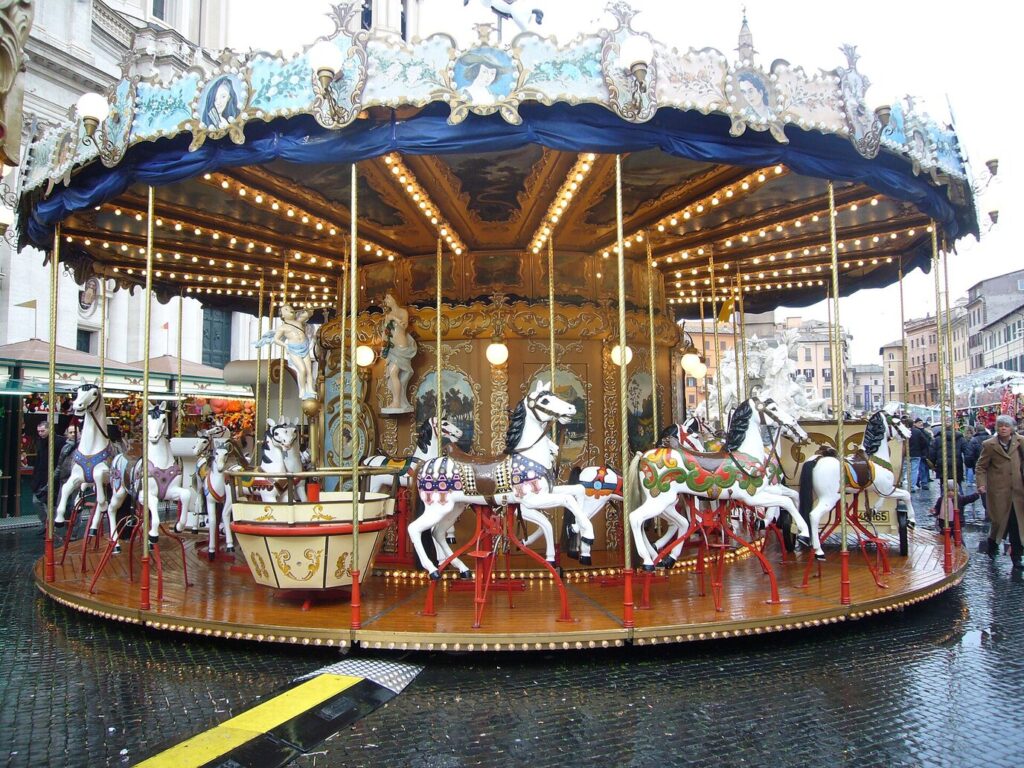
- Wooden toys, nativity scenes, leather, ceramics and produce from Lazio, a carousel and street painters
- Long evenings: open until 1am on weekdays and 2am at weekends and on public holidays in 2025
- Nearby, Christmas World at the Villa Borghese, the 100 nativity scenes of the Vatican and the EUR village
Where to stay near Rome Christmas Market
Hotels, flats and rooms around the market, for the dates of your stay.
Check availability with our partners
Rome Christmas Market in pictures
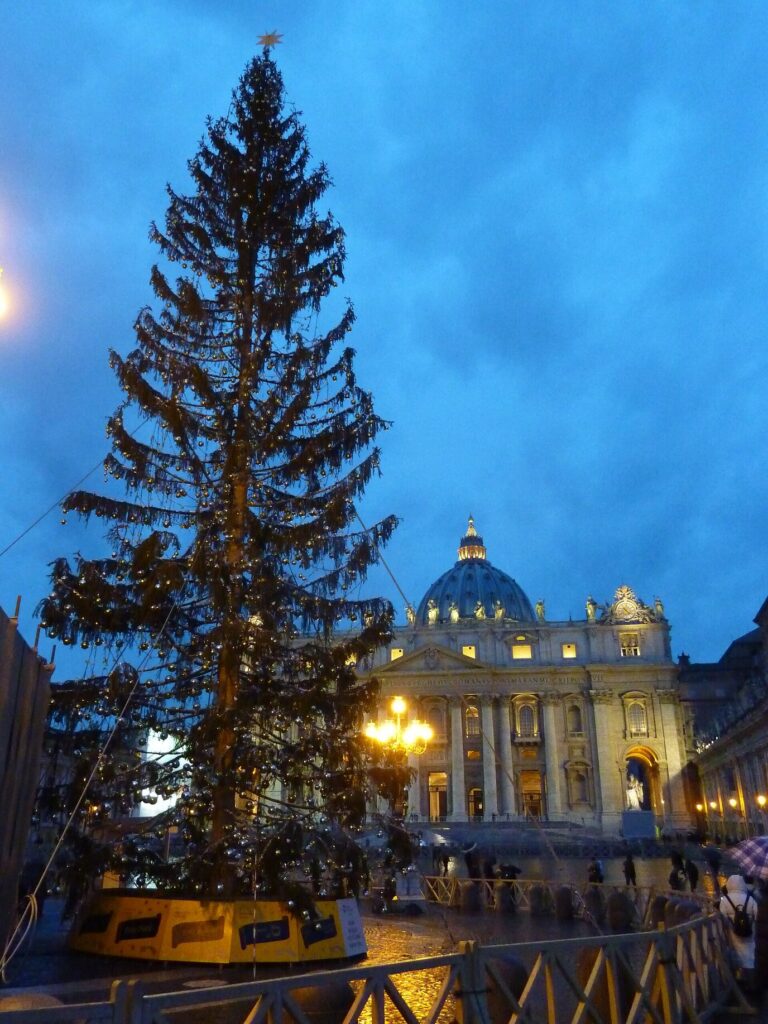
Specialities to try
The flavours that make this market what it is
Wooden toys
handmade decorations
ceramics
leather
books
sweets and produce from Lazio on the stalls of piazza Navona
with nativity scenes and their figurines
Rome celebrates Christmas on a baroque square. Every winter, Rome Christmas market fills piazza Navona, the oval traced by the ancient Stadium of Domitian, between Bernini’s Fountain of the Four Rivers and the façade of Sant’Agnese in Agone: wooden stalls piled with toys, nativity scenes and sweets from Lazio, a carousel, street painters, and on 6 January the Befana, who comes down onto the square to hand out sweets to the children. The city adds its own events, from the big paying village at the Villa Borghese to the nativity exhibition near the Vatican. The dates of the 2026 edition are to be confirmed by Roma Capitale; in 2025, Roma Capitale dated the Festa di Piazza Navona from 6 December to 6 January, with the press reporting stalls open from 1 December.
The Festa di piazza Navona, five centuries of market
The market is older than the fountains. In 1477, Pope Sixtus IV moved the city’s neighbourhood market from the Capitol to piazza Navona; it stayed there until it moved to Campo de’ Fiori, and after that the square only kept its traders at Christmas, with a high point at Epiphany. The Befana di piazza Navona, named after the old woman who brings gifts to Italian children on the night of 5 to 6 January, has become the everyday name of the festival. Since the post-war years, painters and illustrators have also set up their easels there to draw portraits or caricatures of passers-by.
The elongated shape of the square comes from the stadium that Emperor Domitian had built in 85 for Greek-style games: 265 metres long, 106 wide, 30,000 spectators by most estimates. The tiers have gone, the outline has remained, and the baroque settled onto it in the 17th century: the Palazzo Pamphilj, built between roughly 1644 and 1650, the Fountain of the Four Rivers by Gian Lorenzo Bernini, made from 1648 to 1651 with its allegories of the Danube, the Ganges, the Nile and the Río de la Plata beneath the obelisk, then the church of Sant’Agnese in Agone, begun in 1652 and taken over by Borromini the following year. The market stalls line up between these façades, around the central fountain, and it is this setting, more than the size of the market, that makes the reputation of Roman Christmas.
Wooden toys, nativity scenes and sweets from Lazio: what you find on the stalls
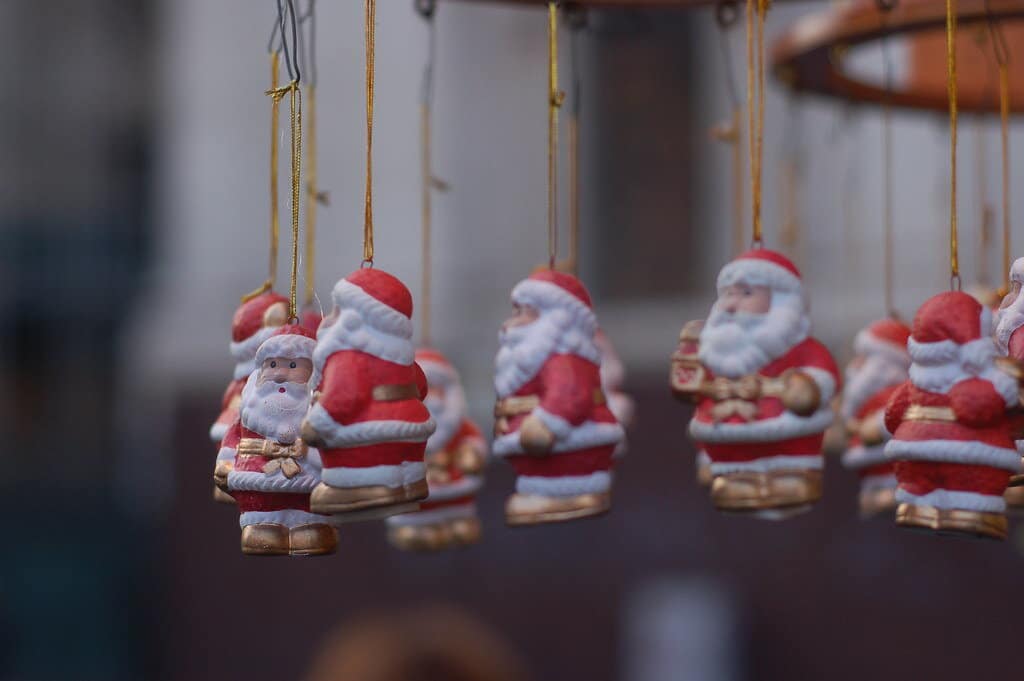
Roma Capitale dates the 2025-2026 Festa from 6 December to 6 January, with an opening by mayor Roberto Gualtieri on Saturday 6 December; the press reported stalls open from 1 December. The stallholders sold wooden toys, sweets, produce from Lazio, books, leather, handmade Christmas decorations and ceramics; the carousel turned in the centre of the square. Roma Capitale, which organises the festival through its Commerce department, highlights authentic crafts, services for residents and lively evenings: theatre, music, readings and creative workshops for children run by the municipal libraries, and even a Peace milonga, on 20 December.
The hours are Rome’s, not the Alps’: from 9am to 1am on weekdays, until 2am at weekends and on public holidays. On 6 January, the Befana arrives at 2pm, carried by the city’s firefighters, and hands out sweets to the children. At the end of 2025 the Prefect of Rome banned the sale of drinks in glass bottles on the square for New Year’s Eve, 1 January and 5 and 6 January, so large were the crowds expected. The number of stalls is not published by the city, and the market remains modest in area: you spend an hour or two there, then carry on to the Pantheon, a few minutes’ walk away.
Christmas World, EUR and the 100 nativity scenes: Rome’s other Christmases
Rome does not concentrate everything on piazza Navona. The largest event, by area, is Christmas World, a paying village set up at the Galoppatoio of the Villa Borghese: according to the programme relayed by the Mercatini di Natale website, more than 60,000 square metres of installations, an ice rink and shows, open from 10am to 8pm for a ticket of €12 to €15, with an edition announced from 1 December 2026 to 6 January 2027, to be checked with the organiser before buying. At EUR, “Il Natale a Roma” gathers more than 100 stalls, an ice rink and a Santa’s house in the lake park, from 1 to 26 December 2026 according to the same source. As for nativity scenes, the “100 Presepi in Vaticano” exhibition, on via della Conciliazione, is free and announced from 8 December 2026 to 6 January 2027. Cinecittà World, the studios’ theme park, adds a Christmas village and a trail of luminarie from mid-November.
For a real nativity market, you have to go down to Campania: via San Gregorio Armeno and Naples Christmas market are linked to Rome by high-speed trains. And in Lazio itself, the living nativity of Greccio re-enacts every winter, in the Rieti valley, the first nativity of Saint Francis, the one of 1223.
Rome Christmas market 2026: dates, hours and practical info
The 2026 edition had not yet been announced by Roma Capitale as of 23 September 2026; the festival returns every year on the same calendar, from the start of December to Epiphany, and the dates will be added here as soon as they are published.
- Where: piazza Navona, 00186 Rome, in the historic centre, between the Pantheon and Campo de’ Fiori.
- When: 2026 dates to be confirmed; in 2025, from 6 December to 6 January according to Roma Capitale (stalls open from 1 December according to the press), opening on 6 December, Befana on 6 January at 2pm.
- How much: free access to the square and the market; carousel paying; Christmas World at the Villa Borghese by ticket.
- Getting there: no metro on the square; on foot from the Pantheon or Campo de’ Fiori, by bus from Termini station; a car is no help in the centre.
- Nearby: the living nativity of Greccio, Assisi Christmas market in Umbria and Naples Christmas market.
Getting to Rome from France: by air, train or car
Flying is the simplest way. Leonardo da Vinci airport at Fiumicino, Italy’s busiest, is linked to Paris-Charles de Gaulle by Air France and to Lyon, Nice and Marseille by easyJet; from there, Trenitalia’s Leonardo Express reaches Termini station non-stop in 32 minutes, with a departure every 15 to 30 minutes, for €14 a journey.
By train, everything goes through Milan. The TGV and Frecciarossa Paris-Turin-Milan services have been running again through the Maurienne valley since spring 2025; the direct trains are suspended for engineering work from 11 September to 9 October 2026, so before the season. Seat61 describes the shortest combination: departure from Paris-Gare de Lyon at 6.28am, change at Milan, arrival at Roma Termini at 5.40pm, with tickets from €35 for Paris-Milan and €29.90 for Milan-Rome, to be booked early. The variant via Turin leaves at 6.45am and arrives at 6.10pm. The Thello Paris-Italy night train, suspended in March 2020, was withdrawn in 2021 and will not be back: it is a full day of travel, or a stopover in Milan, Florence or Turin. By car, you go through the Mont Blanc or Fréjus tunnel (toll), then the A1 from Milan to Rome, a toll motorway too: a very long day from Lyon, more from Paris, for a car that will be of no further use once you are in the centre. Rome is visited on foot and by public transport.
Our tip
Stay until 6 January if you can: the Befana comes down onto piazza Navona at 2pm with the firefighters, and the market then makes complete sense, sweets included
Reviewed and approved by the editorial team
Checked on against 10 official sources. Detailed sources available on request.
A question, a mistake or a problem on this page? Write to us
Markets nearby
Activities nearby
Parks and sites running a Christmas programme less than an hour's drive away. They aren't Christmas markets, and admission is charged.
 Dates to be confirmed
Event
Dates to be confirmed
Event
Christmas in Greccio: the living nativity
Greccio
Day out · Event
 Opens in 43 days
Event
Opens in 43 days
Event
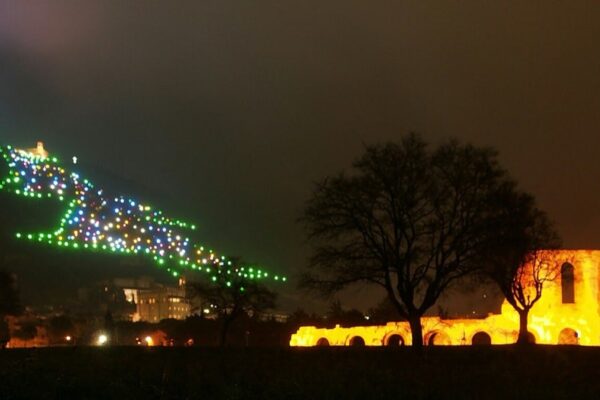
Christmas in Gubbio: the giant tree and the markets
Gubbio
From 21 November to 6 January 2027
Day out · Event
 Opens in 36 days
Event
Opens in 36 days
Event
Christmas in Salerno: the Luci d’Artista
Salerno
From 14 November to 1 February 2027
Day out · Event