
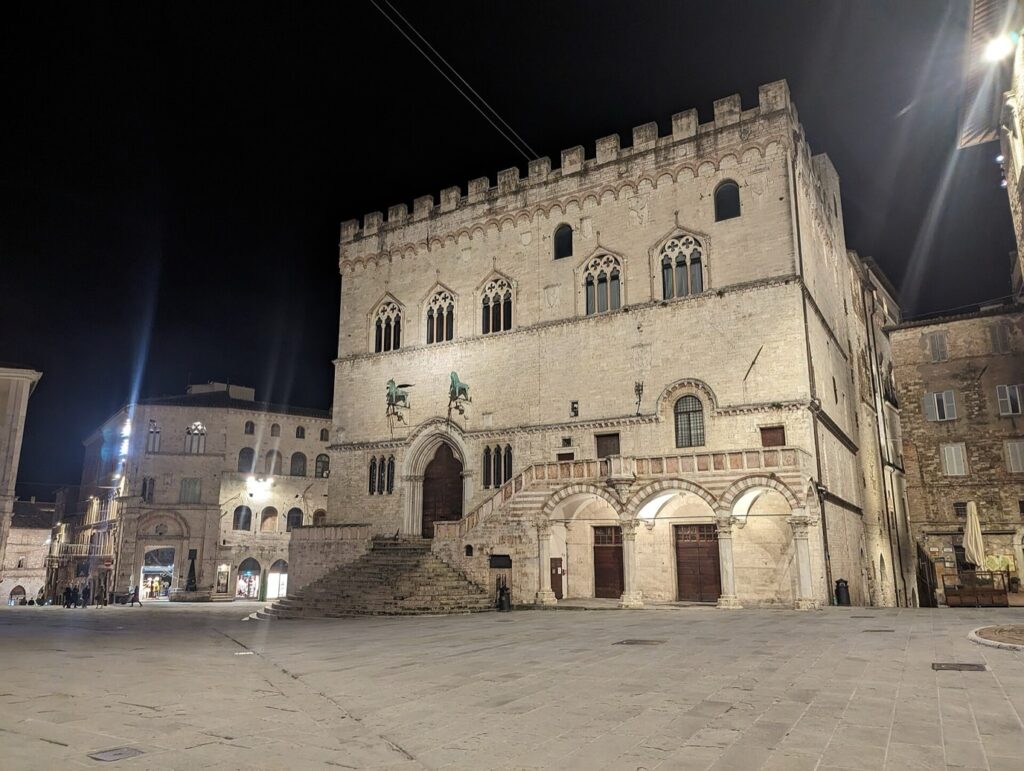
Where to find Perugia Christmas Market
Highlights of Perugia Christmas Market
- Natale alla Rocca, a market beneath the vaults of the papal fortress begun in 1540
- Wooden chalets on corso Vannucci, between the Fontana Maggiore and piazza Italia
- Lights designed by Mimmo Paladino in 2025, with two video mappings
- A panoramic ice rink on the terrace of the former covered market
- Baci Perugina, hot chocolate and torciglione in the city of chocolate
Where to stay near Perugia Christmas Market
Hotels, flats and rooms around the market, for the dates of your stay.
Check availability with our partners
Specialities to try
The flavours that make this market what it is
Baci Perugina and hot chocolate
cured meats from Norcia
lentils
Umbrian oil and pecorino
torta al testo
almond torciglione
apple and walnut rocciata
vin brulé made with red wine from Montefalco or Torgiano
Perugia, the capital of Umbria, sits on an acropolis nearly 500 metres up, ringed by Etruscan and medieval walls, with a corso Vannucci running from the Fontana Maggiore to the gardens of piazza Italia. Its Christmas market has two faces: wooden chalets along this pedestrian corso throughout the season, and “Natale alla Rocca”, a market set up in the underground halls of the Rocca Paolina, what remains of the papal fortress built over a medieval quarter of the city. Perugia Christmas market is thus visited indoors and out, between 16th-century brick vaults and Gothic façades lit by artists’ installations.
Perugia Christmas market: corso Vannucci and the Rocca Paolina
The 2026 programme has not yet been published: the city council usually presents “Perugia, un Natale insieme” towards the end of November. In 2025 the season ran from 29 November to 6 January. The wooden chalets on corso Vannucci, described by the council as elegant, were open throughout the period with traditional Christmas products, crafts and food. Beneath the city, the Rocca Paolina exhibition centre, the CERP, hosted “Natale alla Rocca” from 6 to 28 December 2025, preceded by charity markets from 27 November to 4 December.
The Rocca is what gives the Perugia market its character. Pope Paul III had it built from 1540 to 1543 to hold the city after a revolt, burying an entire Baglioni quarter beneath its foundations; the Perugians demolished it from 1860 onwards, but the lower levels survive and today you move through them by escalators between piazza Italia and the lower town. The market stalls are spread through these vaulted halls, sheltered from the wind, which makes the visit pleasant in cold or rainy weather, and you come back out into daylight in the middle of the corso.
Mimmo Paladino’s lights, a panoramic ice rink and the Children House
Perugia does not settle for fairy lights. In 2025 the illuminations on corso Vannucci were designed by Mimmo Paladino, in dialogue with a retrospective devoted to him by the Galleria Nazionale dell’Umbria, in the Palazzo dei Priori. Two video mappings ran on the Cassero and on the terrace of the former covered market, where a panoramic ice rink, presented as eco-friendly, had been set up by the Città del Cioccolato with a view over the valley. A 12-metre tree stood on piazza della Repubblica, another of 7 metres on piazza Matteotti.
For children, the Children House at the Borsa Merci, via Mazzini, opened every weekend from 5 December to 6 January with games and workshops for ages 0 to 10. The antiques fair on piazza Italia took place on the weekends of 29 November and 27 December. All of this belongs to the 2025 edition; the format repeats from year to year, but the 2026 dates remain to be confirmed.
Baci, torciglione and vin brulé beneath the vaults
Perugia is the city of chocolate: the Perugina factory, now part of the Nestlé group, makes the Baci here, those gianduja morsels with a whole hazelnut wrapped in a little note, and every autumn the city hosts Eurochocolate. In December, hot chocolate is drunk thick in the cafés on the corso, and the chalets sell what Umbria has at its simplest: cured meats from Norcia, lentils, oil, pecorino, torta al testo filled to order, and the Christmas pastries, snake-shaped almond torciglione and apple and walnut rocciata.
Vin brulé is served on the corso, made with red wine from the region, Montefalco or Torgiano; beneath the vaults of the Rocca, it warms you more than the ice rink does. If you want to compare this central Italian mulled wine with the Alsatian, Tyrolean or Nordic versions, it is all in mulled wine and its variations.
Practical information and getting there from France
Perugia’s historic centre is hilltop and pedestrian. Perugia Fontivegge station is down below, on the Foligno-Terontola line; a hundred metres away, the Minimetrò, a small automatic metro, climbs to the centre in a few stops, and the city buses do the same. By car, you leave the car in one of the lower-town car parks and go up by the escalators, including those that pass through the Rocca Paolina to piazza Italia, at the end of the corso. The market takes two hours to visit, the city a day.
December weekends, and above all the Immaculate Conception long weekend around the 8th, fill the corso and the halls of the Rocca in the late afternoon; a Friday or a Sunday morning leaves more room to look at the stalls. The cold is felt on this windswept acropolis: the Rocca, with its even temperature, serves as a refuge, and the cafés on the corso do the rest of the day. Beneath the fortress, via Bagliona, the old buried street with its walled-up houses, is walked on the way to the market and gives the measure of what Paul III covered over.
- Where: corso Vannucci for the chalets, Rocca Paolina (CERP exhibition centre, entrance on piazza Italia) for Natale alla Rocca.
- When: 2026 dates to be confirmed by the city council; in 2025, chalets from 29 November to 6 January and Natale alla Rocca from 6 to 28 December.
- How much: free entry; ice rink and attractions, 2026 prices to be confirmed.
- Getting there: Perugia Fontivegge station then Minimetrò; from Florence, train via Terontola; from Rome, train via Foligno; Perugia airport; by car, A1 (Valdichiana exit) then the Bettolle-Perugia raccordo via Lake Trasimeno.
- Nearby: Assisi Christmas market, the giant tree and Gubbio Christmas market, and Montepulciano Christmas market on the Tuscan side.
From France, the train does the job in a very long day, with a possible stopover. The TGV and Frecciarossa Paris-Turin-Milan trains have been running again via the Maurienne valley since spring 2025; direct services are suspended for works from 11 September to 9 October 2026, before the season. In Milan, a Frecciarossa takes you to Florence, then a regional train reaches Perugia via Terontola; via Rome, you come up through Foligno. Fontivegge station sees mostly regional trains and a few long-distance services. By air, Perugia San Francesco d’Assisi airport is the nearest; Rome, Florence and Bologna complete the options, with the train afterwards.
By car, the Mont Blanc or Fréjus tunnel (toll), the A1 to the Valdichiana exit (Bettolle) then the Bettolle-Perugia raccordo along the north shore of Lake Trasimeno, or, coming via the Adriatic, the A14 to Cesena then the E45. Italian motorways are tolled the whole way, the raccordo and the E45 are not. From Lyon, a long day; from Paris, two days with a night in Turin, Florence or Arezzo, whose Christmas market opens from mid-November.
Perugia, Umbria from on high
The city was one of the twelve Etruscan cities, and its Arch of Augustus, with its Etruscan blocks raised by Rome, keeps the memory of it. The Middle Ages left it the Fontana Maggiore and its medieval sculptures, the Palazzo dei Priori and its Galleria Nazionale dell’Umbria, which brings together Umbrian painting, and the cathedral of San Lorenzo. The Baglioni, the family that dominated Renaissance Perugia in a climate of vendettas, gave the city its dark legend before Paul III crushed the revolt of 1540 and built the Rocca.
Perugia has the temperament of a hill city: you climb up, lose yourself in lanes that pass under arches and open onto belvederes, and come back down by escalator. Perugia is also a student city, with a university founded in 1308 and the Università per Stranieri, which welcomes students from all over the world, and that keeps the corso lively even on a December weekday. Umbria Jazz in July and Eurochocolate in autumn are its two big events; Perugia Christmas market 2026, more low-key, fits into a city used to receiving visitors. For a weekend, combine it with Assisi, 26 kilometres away, and with Gubbio, whose tree of lights comes on on 7 December.
Our tip
Start underground, with the Rocca Paolina from piazza Italia, then walk back up corso Vannucci in the late afternoon to the Fontana Maggiore, as the light installations come on across the façades
Reviewed and approved by the editorial team
Checked on against 8 official sources. Detailed sources available on request.
A question, a mistake or a problem on this page? Write to us
Markets nearby
 Dates to be confirmed
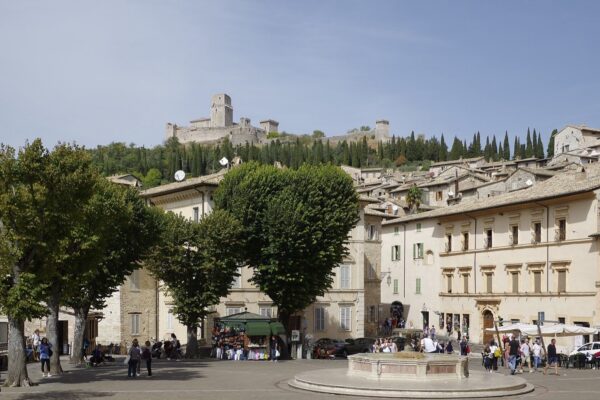
Assisi Christmas Market
Assisi
Day out
 Opens in 43 days
Event
Opens in 43 days
Event
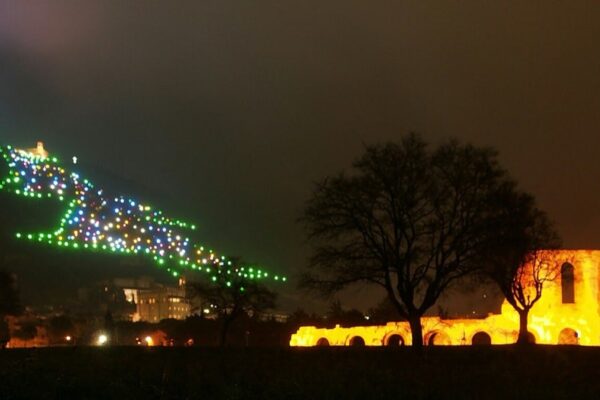
Christmas in Gubbio: the giant tree and the markets
Gubbio
From 21 November to 6 January 2027
Day out · Event
 Opens in 43 days
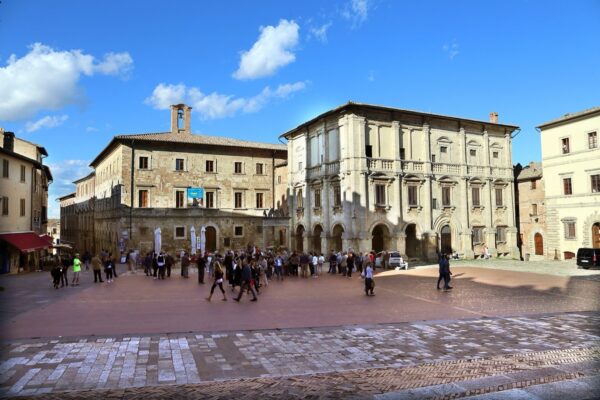
Montepulciano Christmas Market
Montepulciano
From 21 November to 6 January 2027
Worth the weekend
Activities nearby
Parks and sites running a Christmas programme less than an hour's drive away. They aren't Christmas markets, and admission is charged.
Opens in 43 days
Event
Christmas in Gubbio: the giant tree and the markets
Gubbio
From 21 November to 6 January 2027
Day out · Event
 Dates to be confirmed
Event
Dates to be confirmed
Event
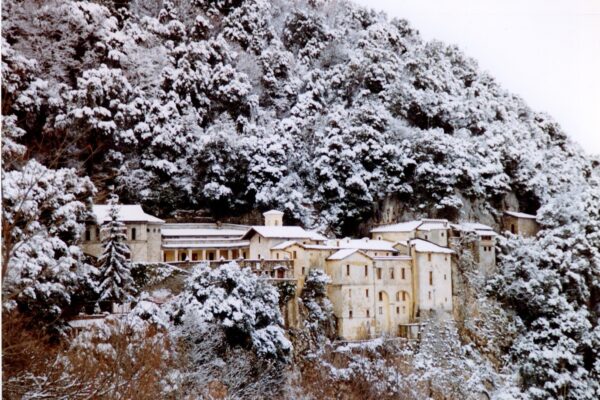
Christmas in Greccio: the living nativity
Greccio
Day out · Event
 Opens in 36 days
Event
Opens in 36 days
Event
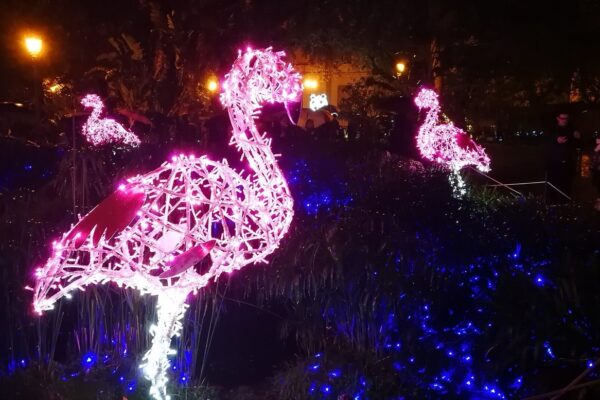
Christmas in Salerno: the Luci d’Artista
Salerno
From 14 November to 1 February 2027
Day out · Event