
Where to find Frankfurt Christmas Market
Highlights of Frankfurt Christmas Market
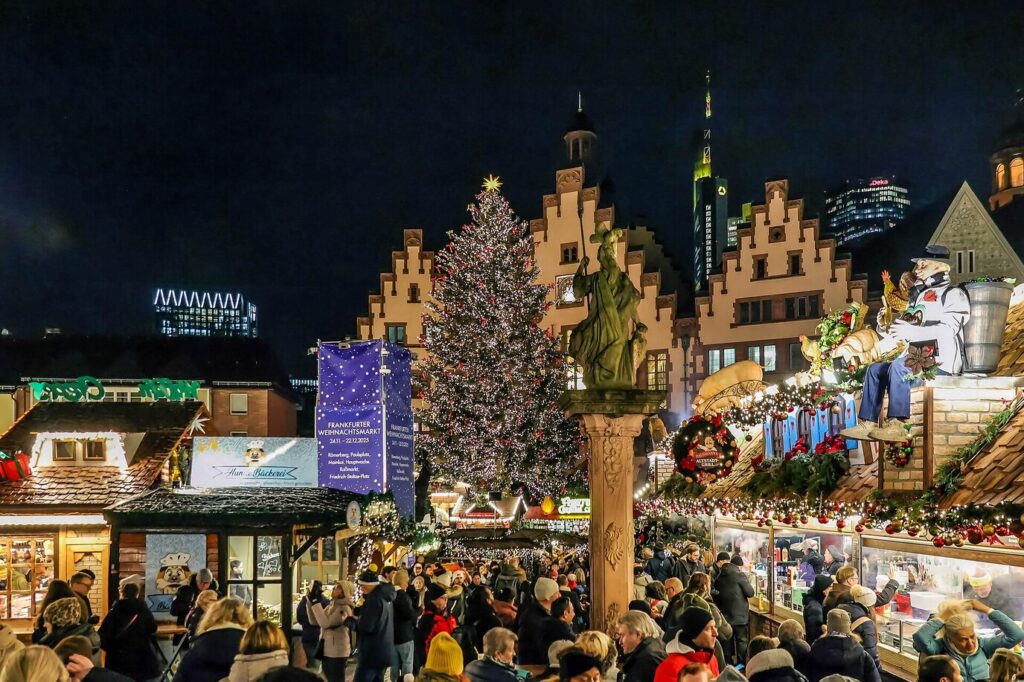
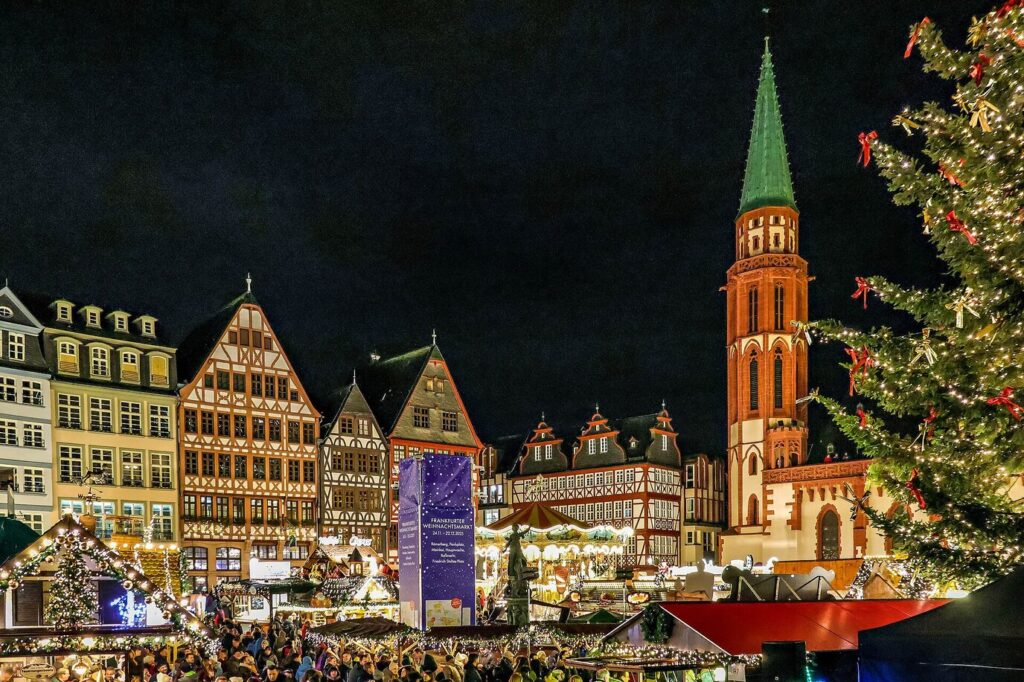
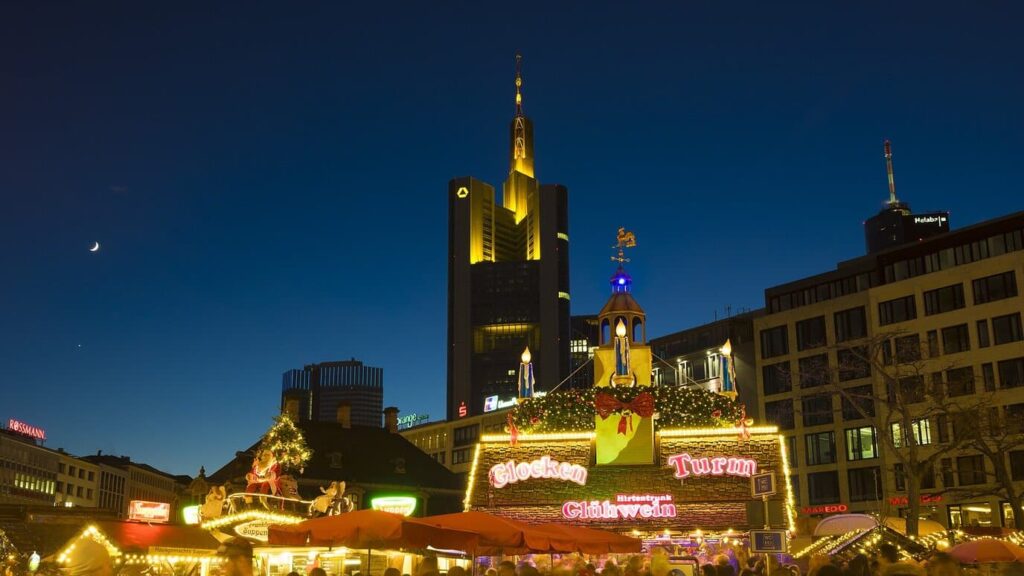
- Tall illuminated Christmas tree in the heart of the Römerberg, surrounded by restored half-timbered façades
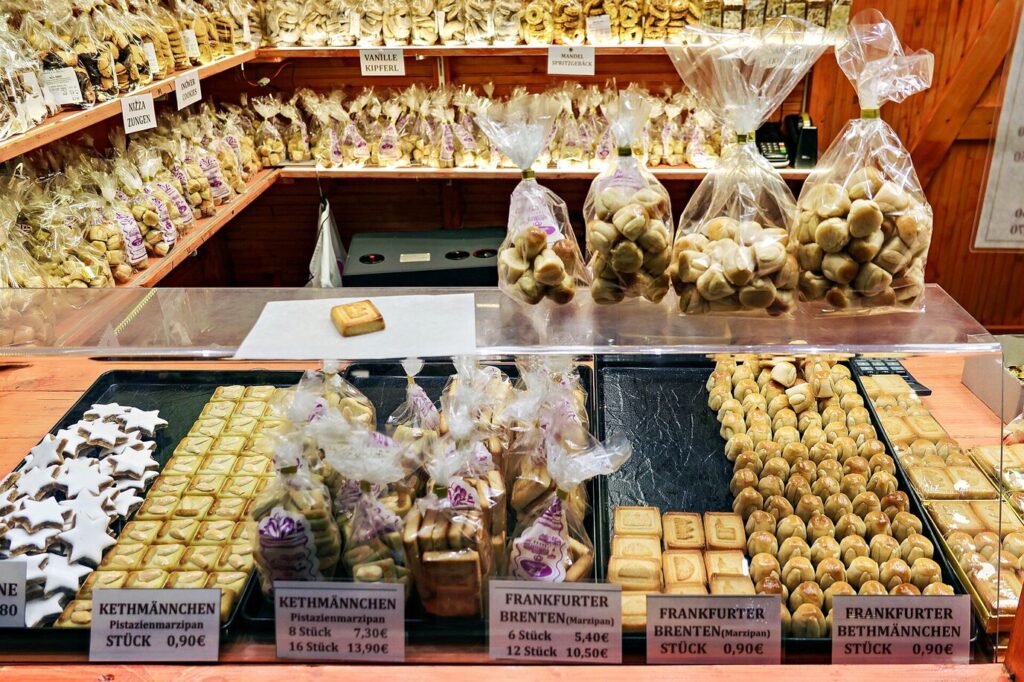
- Bethmännchen, Frankfurter Brenten and hot Apfelwein, local specialities served at most stalls
- Pink and fuchsia market on Friedrich-Stoltze-Platz, an original extension of the traditional route
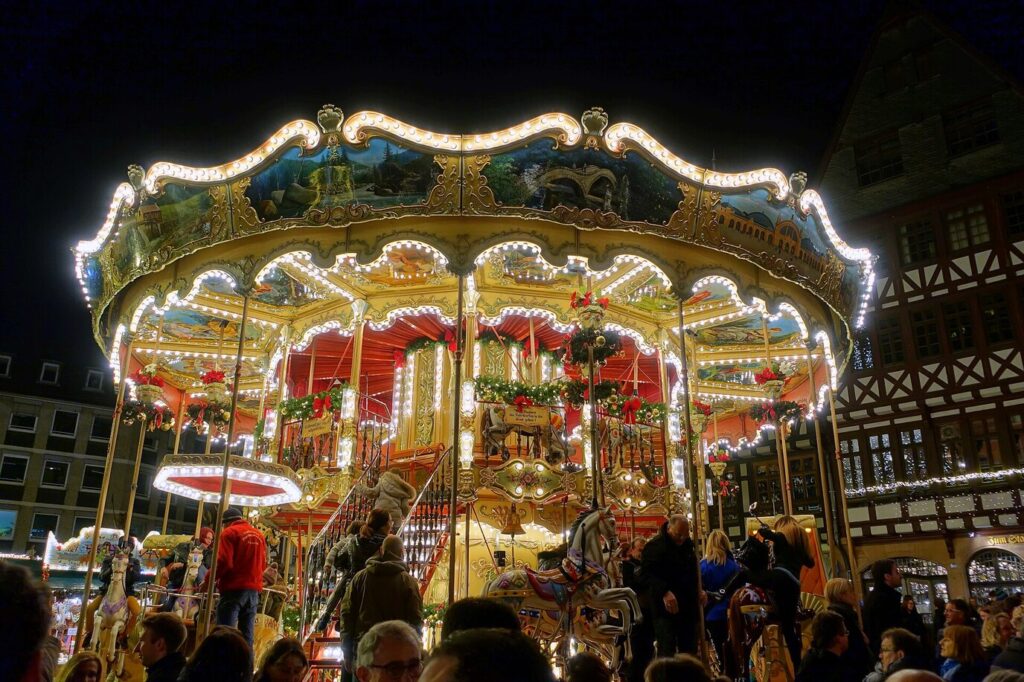
- Children’s market on the Mainkai with creative workshops, a story tent and a merry-go-round
- Direct ICE or TGV access from Paris and Strasbourg, with no complicated connections
Where to stay near Frankfurt Christmas Market
Hotels, flats and rooms around the market, for the dates of your stay.
Check availability with our partners
Frankfurt Christmas Market in pictures
Specialities to try
The flavours that make this market what it is
Marzipan Bethmännchen
spiced Frankfurter Brenten
dried-prune Quetschemännchen and hot Apfelwein
the local apple cider served warm
Frankfurt, known for its skyline of bank towers and its giant railway station, also hides a traditional Christmas. Every winter for decades, Frankfurt Christmas market has turned the Römerberg, Paulsplatz and the banks of the Main into a setting of wooden chalets, fairy lights and wafts of hot cider. More than 200 stalls are spread across the squares of Frankfurt’s old town, beneath a tall Christmas tree standing in the heart of the Römerberg. The atmosphere stays family-friendly and indulgent, carried by well-established local specialities: Bethmännchen, Frankfurter Brenten and hot Apfelwein. Between the skyscrapers of the financial district and the rebuilt half-timbered façades, the contrast gives the market an identity few European financial capitals can claim. For anyone visiting Germany in December from France, Frankfurt Christmas market has the advantage of fast, direct access, with no complicated connections from Paris or Strasbourg.
The Römerberg, heart of Frankfurt Christmas market
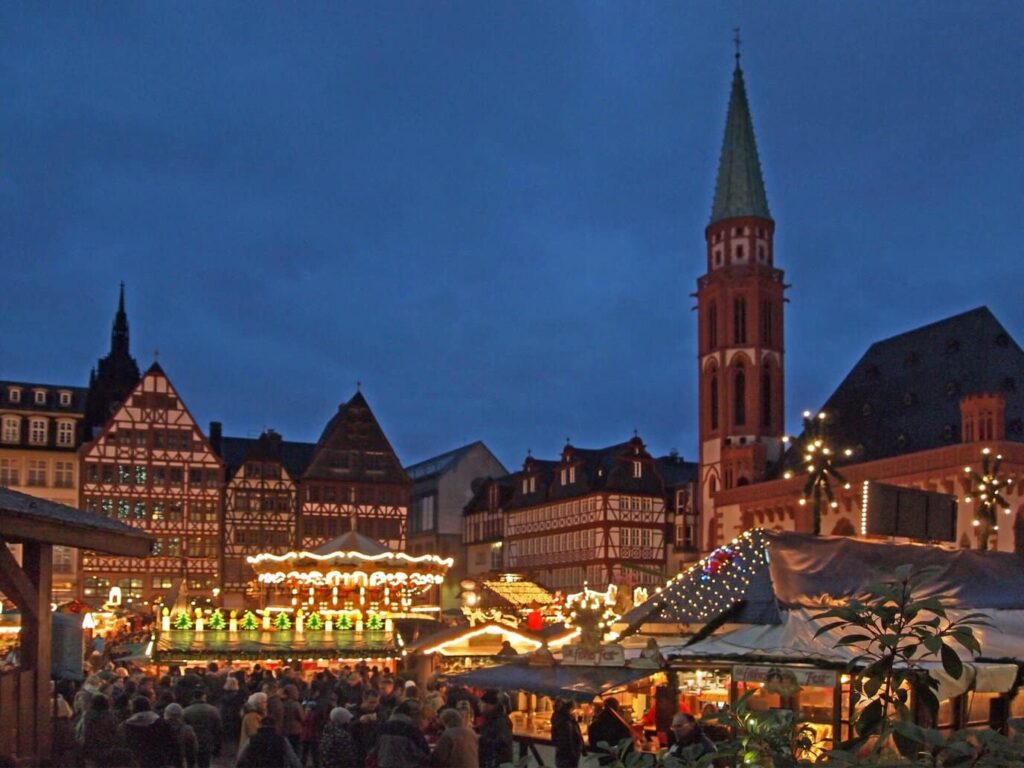
The Römerberg forms the central backdrop of the market: restored half-timbered façades, the Gothic town hall (the Römer, which gave the square its name) and cobblestones that echo under visitors’ feet. The tall Christmas tree in the middle of the square serves as a landmark from the side streets and can be seen from afar in the evening, when its lights come on above the steep rooftops. The chalets then climb towards Paulsplatz, home to St Paul’s Church, before running along the Mainkai towards the river.
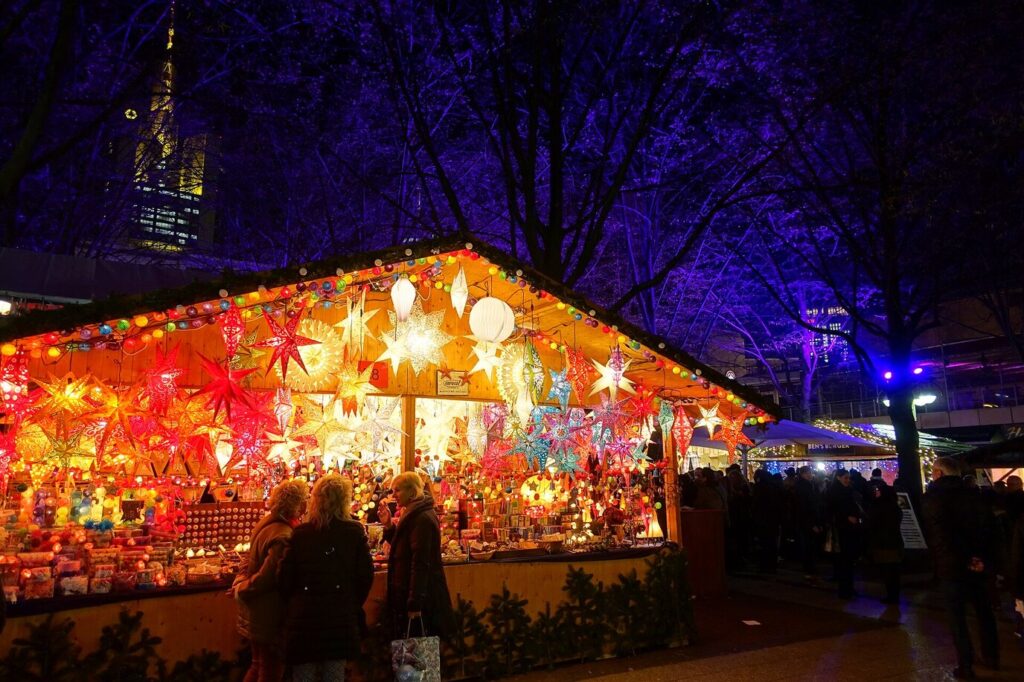
This continuity across several squares gives the market a generous scale for a city the size of Frankfurt. You will find stalls of wooden toys, hand-blown decorations and gingerbread, as well as food kiosks serving grilled Bratwurst and hot chestnuts. In the evening, the glow of the stalls contrasts with the towers of the business district visible in the distance: you go from a half-timbered lane to a view of the Commerzbank Tower in a few dozen metres, which remains one of the market’s most recognisable images.
Just north of the Römerberg, St Bartholomew’s Cathedral (Frankfurter Dom) raises its red sandstone tower above the roofs of the old town and rounds off a visit to the area outside market hours. The Kleinmarkthalle, a covered market hall open all year round, offers another way into the local food scene: charcuterie, cheeses and dried fruit sit alongside stalls run by the same families for several generations. Both addresses fit nicely into a day spent among the chalets of the Römerberg and Paulsplatz.
Bethmännchen, Frankfurter Brenten and hot Apfelwein
The local pastry has a name all its own: the Bethmännchen, a small marzipan treat topped with three almond halves, is on offer at almost every stall on the market. Alongside it, Frankfurter Brenten, spiced biscuits typical of the region, complete the platters of seasonal sweets. Quetschemännchen, little figures made from dried prunes and figs, serve as edible souvenirs as much as decorations to hang on the tree.
When it comes to drinks, Frankfurt claims its own speciality: hot Apfelwein, the local apple cider served warm and spiced in stoneware cups, is drunk as readily as the classic Glühwein offered at most stalls. Both are enjoyed standing up between two stalls, in a convivial rather than formal atmosphere. Here, mulled wine shares the stalls with hot Apfelwein; to see how the French red wine version compares with Glühwein, read our guide to mulled wine variations.
On the savoury side, the stalls cover the reliable favourites of German markets: grilled Bratwurst, Reibekuchen (potato pancakes) and hot chestnuts share the same braziers as the sweet stalls. Vegetarian options are gaining ground at most German Christmas markets, Frankfurt included, without replacing the traditional pork and game recipes that remain the norm at the majority of stalls.
Practical information: 2026 dates, opening hours and prices
The 2026 edition of Frankfurt Christmas market runs from 23 November to 22 December, on the Römerberg, Paulsplatz and the Mainkai. The announced opening hours are Monday to Saturday 10am-9pm, and Sunday 11am-9pm. Access to the chalets is free, with no ticket or booking, as at most German Christmas markets of this size.
A market just for children takes over the Mainkai, with creative workshops, a story tent and a merry-go-round: an area designed for families, on the banks of the Main. At weekends, crowds build in the late afternoon and evening; weekday mornings remain a good time to enjoy the chalets and spot a handmade gift among the stalls.
For somewhere to stay, the city centre near the Römerberg has most of the hotels within walking distance of the market; the Sachsenhausen district, on the other bank of the Main, is an alternative ten minutes’ walk away via the Eiserner Steg bridge, with its traditional Apfelwein taverns open all year round. The euro is the local currency, which keeps shopping simple for visitors coming from France. Weather-wise, the region has damp, chilly winters typical of central Germany: a good pair of closed shoes and several layers of clothing are your best allies for a whole evening among the chalets.
- A children’s market is held on the Mainkai, with creative workshops, a story tent and a merry-go-round, in an atmosphere designed for families.
- Dom/Römer metro station (lines U4 and U5) drops you right by the Römerberg, so there is no need to hunt for a parking space in the city centre.
- For a longer weekend along the Rhine, Cologne Christmas market is just over an hour by train from Frankfurt.
- Less than an hour to the south, Heidelberg Christmas market adds a castle and an old town on a hillside.
- On the French side, Strasbourg Christmas market shares the same direct railway line and rounds off a cross-border tour nicely.
Getting there from Paris and eastern France: train, plane and car
Frankfurt can be reached by direct ICE or TGV from Paris, in about 3 hours 50 minutes. From Strasbourg, the direct service or the connection via Karlsruhe takes about 2 hours 10 minutes, which makes a day trip possible for visitors from Alsace. Frankfurt’s central station, one of the largest in Europe, sees trains all day long, which guarantees frequent connections to the rest of the German ICE network.
Frankfurt am Main Airport, one of Europe’s major hubs, welcomes direct flights from several French cities and is linked to the city centre by regional train in about fifteen minutes. By car, Frankfurt sits at the junction of the A5 and A3 motorways; several underground car parks serve the historic centre, although the pedestrian zone around the Römerberg stays closed to traffic for the duration of the market. The drive from the Alsace border takes just over two hours depending on the route.
The central station has left-luggage lockers, which makes a short stop between two trains easy for visitors combining Frankfurt with another German city in the same weekend. The ICE network also links Cologne and Karlsruhe (gateway to Baden-Baden and the Black Forest) in under two hours, opening the way to a tour of several Christmas markets without getting back in the car.
The pink market on Friedrich-Stoltze-Platz and the heritage of Paulsplatz
On Friedrich-Stoltze-Platz, an extension of the market goes for a pink and fuchsia look, with cocktails and matching decorations: an unapologetic twist on the traditional market rather than a separate event. This contemporary touch sits well with the rest of the route, more classic with its wooden architecture and golden garlands.
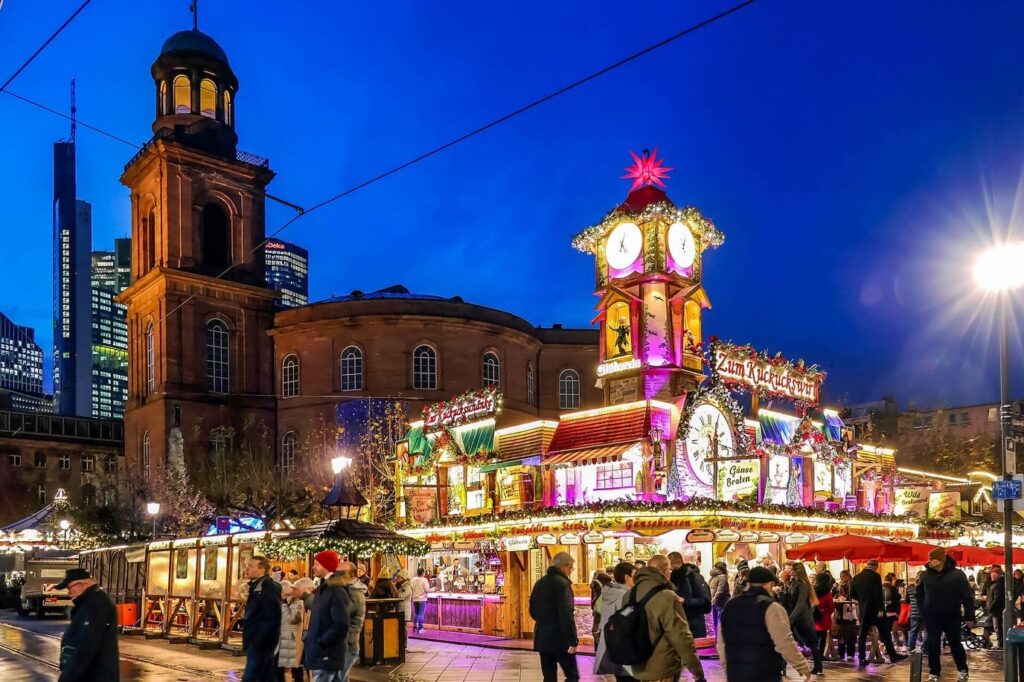
Neighbouring Paulsplatz adds a heritage dimension to the visit: St Paul’s Church (Paulskirche), which borders it, hosted the first democratic German parliament in 1848, before becoming a place of republican remembrance for the whole country. The market therefore occupies a festive setting as much as a chapter of German history, which sets Frankfurt apart from purely commercial markets. Around it, the banking district is a reminder that the city is also the country’s leading financial centre, home to the European Central Bank: a contrast that makes a winter visit to Frankfurt’s old town so rewarding.
Our tip
Pick a weekday morning to enjoy the Römerberg chalets before the evening crowds, and save some time for the nearby Kleinmarkthalle
Reviewed and approved by the editorial team
Information checked against 2 official sources. Detailed sources available on request.
A question, a mistake or a problem on this page? Write to us
Markets nearby
 Opens in 38 days
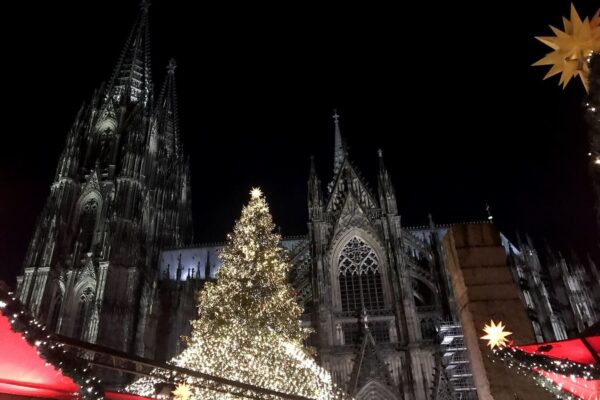
Cologne Christmas Market
Cologne
From 16 November to 23 December 2026
Worth the trip
 Opens in 45 days
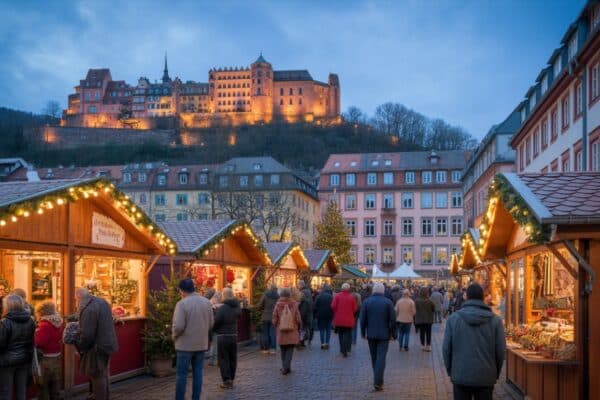
Heidelberg Christmas Market
Heidelberg
From 23 November to 22 December 2026
Day out
 Dates to be confirmed
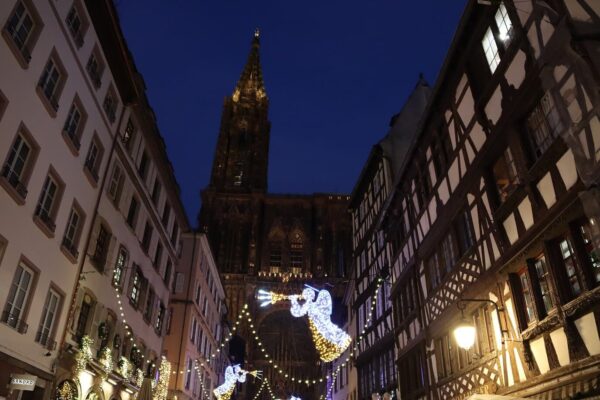
Strasbourg Christmas Market
Strasbourg
Worth the trip
Activities nearby
Parks and sites running a Christmas programme less than an hour's drive away. They aren't Christmas markets, and admission is charged.
 Opens in 36 days
Park
Opens in 36 days
Park
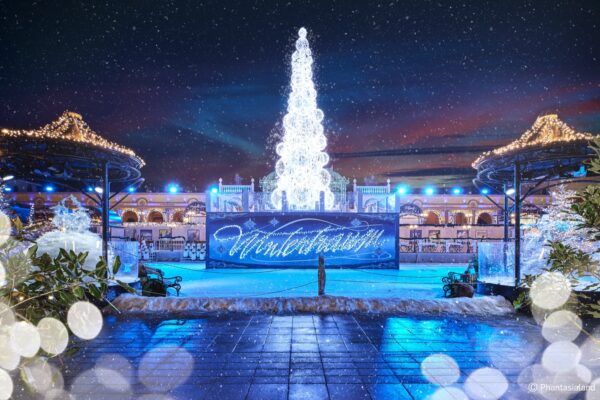
Phantasialand at Christmas: Wintertraum
Brühl
From 14 November to 24 January 2027
Worth the trip · Park
 Dates to be confirmed
Park
Dates to be confirmed
Park
Parc de Sainte-Croix at Christmas: Lumières d’Hiver
Rhodes
Worth the weekend · Park
 Opens in 49 days
Park
Opens in 49 days
Park
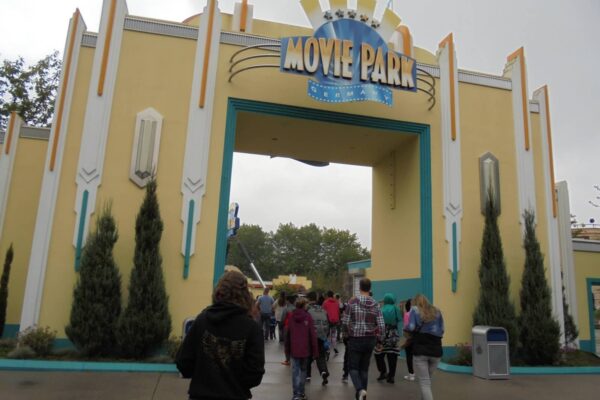
Movie Park Germany at Christmas: Hollywood Christmas
Bottrop
From 27 November to 5 January 2027
Day out · Park